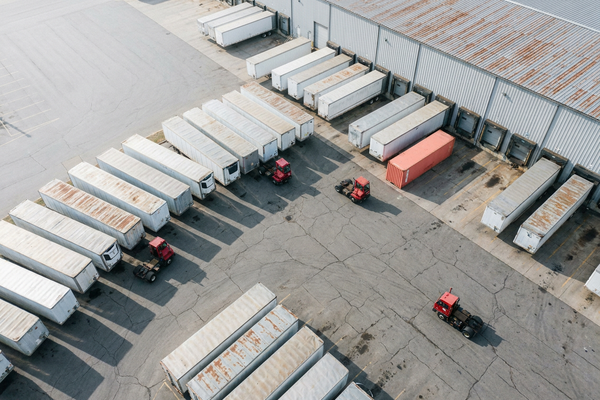

The yard is the most overlooked square footage in your entire supply chain. Trailers sit. Drivers wait. Dock doors clog. Detention fees pile up. And no one inside the four walls can tell you exactly where trailer #4287 is parked, what is inside it, or how long it has been sitting there.
Industry research from groups like the American Transportation Research Institute (ATRI) and the American Trucking Associations consistently estimates that excessive driver detention and yard dwell cost U.S. shippers and carriers more than a billion dollars annually, while also driving the driver shortage, lowering fleet productivity, and inflating Scope 3 emissions. With trailer pools, drop yards, and cross-dock operations expanding to handle e-commerce, nearshoring, and reshoring volumes, the yard has quietly become the single biggest source of avoidable cost in modern logistics.
A Yard Management System (YMS) closes that visibility gap. It connects gate, yard, and dock into one real-time operational picture. In this guide, we will walk through what a YMS actually is, why it matters now more than ever, the hard ROI data behind modern deployments, the core capabilities that define a modern YMS, the vendor landscape, the emerging 2026 trends to plan for, and how to choose the right platform for your operation.
What is Yard Management Software (YMS)? Definition, Core Features, and 2026 Logistics Trends
Yard Management Software, often called a Yard Management System (YMS), is software that orchestrates trailer, container, and vehicle movement across a facility’s gates, yard slots, and dock doors. Industry analyst Gartner defines a YMS as a system that monitors the movement of trucks and trailers in the yard of a manufacturing or distribution facility. In practical terms, think of it as the air-traffic-control layer between transportation (what is coming in and going out on the road) and warehousing or production (what gets loaded, unloaded, staged, or sequenced inside the four walls).
A modern YMS combines four core functions:
- Gate management: Digital check-in and check-out, driver appointments, document scanning, license plate recognition (LPR), and security validation at the perimeter.
- Trailer and asset tracking: Real-time location of every trailer, chassis, container, and yard tractor across yard slots, dock doors, and staging lanes.
- Dock scheduling: Self-service carrier appointment booking, dock door assignment, and live status updates for inbound and outbound freight.
- Yard task orchestration: Move requests, spotter and jockey dispatch, dwell-time alerts, and load prioritization driven by AI.
The biggest 2026 trend shaping this category: the move from event-based YMS, where status updates depend on someone clicking a button, to continuously sensed yards, where BLE asset tags, GPS, satellite, and computer-vision cameras feed location and condition data automatically. Use cases extend well beyond traditional distribution. Automotive plants use YMS to sequence just-in-time parts deliveries. Healthcare and pharma distributors use it to protect cold-chain integrity at the dock. Construction laydown yards rely on it to locate trailers full of high-value materials. Cross-border logistics teams use it to manage customs paperwork and trailer pool turnover. Fleet operators and 3PLs use it to manage detention chargebacks across multiple customers and trailer pools.
Supply Chain Pain Points: How to Reduce Detention Fees and Driver Dwell Time
In most operations, the yard is the only part of the supply chain where real-time visibility goes dark. The truck has GPS. The warehouse has a WMS. The transportation team has a TMS. But the moment a trailer crosses the gate and gets unhitched, it disappears into a paper-based, walkie-talkie world.
That blind zone is expensive in ways that show up directly on the P&L:
- Detention and demurrage fees: Carriers commonly charge $50 to $100 per hour after free-time windows expire. For shippers running thousands of trailers per week, this becomes a six- to seven-figure annual line item. Operations that move to real-time YMS technology routinely cut this exposure by more than 75%.
- Driver dwell and turnover: The American Trucking Associations has repeatedly linked excessive detention to driver retention problems, accident rates, and an industry-wide capacity squeeze. Cutting dwell time is one of the fastest ways to become a “shipper of choice” with quality carriers.
- Lost or misplaced trailers: Industry surveys consistently show that 5% to 15% of trailers in a typical yard cannot be located on the first attempt, forcing yard jockeys to hunt by truck and burn fuel.
- Dock door bottlenecks: Without real-time scheduling, doors sit idle or get overloaded, throttling throughput on both sides of the four walls.
- Sustainability and Scope 3 reporting: Idling trucks, redundant yard moves, and empty miles inflate carbon footprint metrics that increasingly affect customer contracts and ESG disclosures.
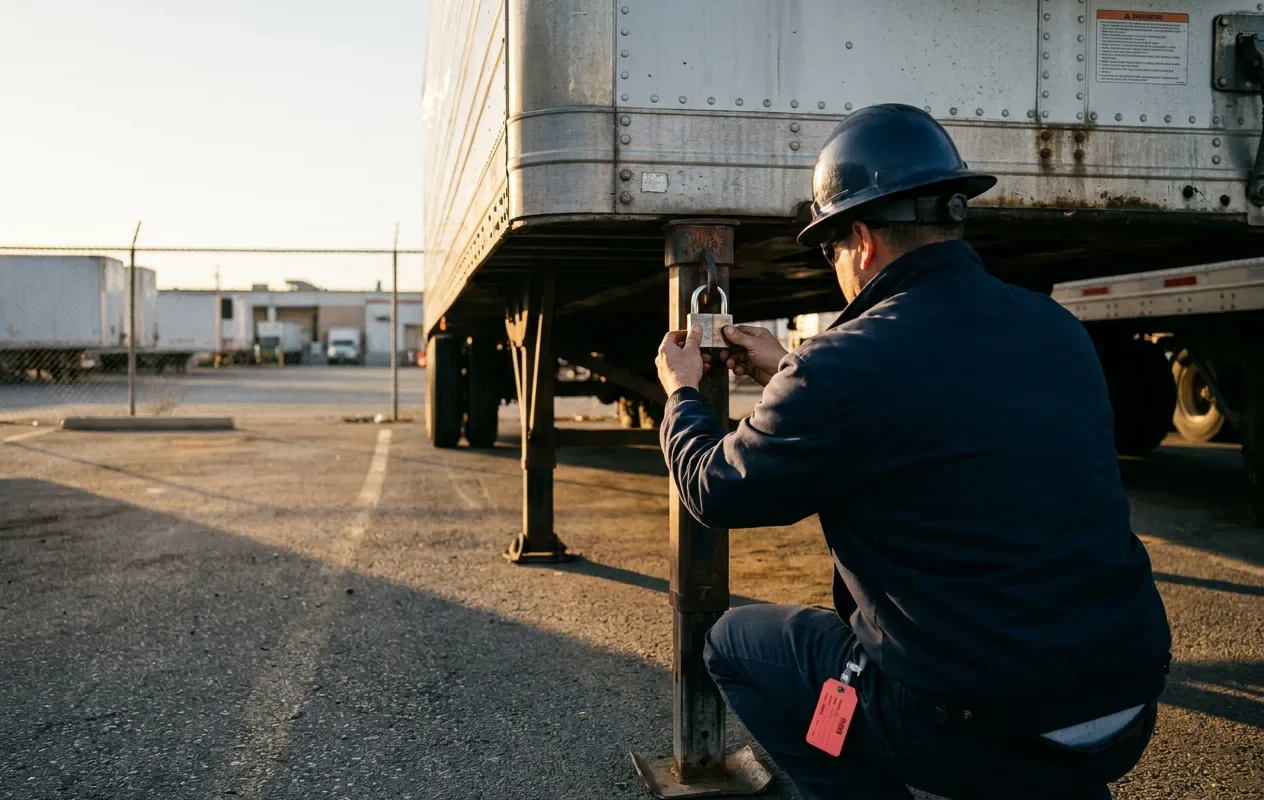
- Theft and tamper risk: Unmonitored trailers, especially overnight or during long dwell windows, are a known soft target for cargo theft, which industry trackers like CargoNet and Overhaul show is at record highs.
Reducing detention fees and driver dwell time is no longer a back-office concern. It is the single highest-leverage operational lever most logistics teams have available in 2026.
The Real ROI of a Yard Management System: What Industry Data Shows
The financial case for a modern YMS is increasingly hard to ignore. Recent industry analysis and published case studies quantify what most yard operators already feel intuitively:
- 20% throughput erosion: Analysis from McKinsey indicates that yard inefficiency can quietly consume up to 20% of a facility’s throughput capacity, a hidden tax on every operation running without real-time yard visibility.
- 75% to 80% detention fee reduction: Published case studies, including a widely cited example from Pactiv, document detention and demurrage fee reductions in the 75% to 80% range after deploying modern YMS technology.
- 25% to 30% workforce efficiency gains: Vendor and analyst ROI ranges commonly report 25% to 30% improvements in yard workforce efficiency after digitizing gate, yard, and dock processes.
- 20% to 40% dock throughput improvement: Operations with real-time dock scheduling and predictive ETAs typically report 20% to 40% gains in dock door throughput.
- Specific operator results: A large packaging operator reported a 25% reduction in yard driver labor hours after digitizing operations. A logistics provider documented a 19% productivity gain and a 30% reduction in the number of yard trucks needed once a modern YMS was in place.
- Low adoption, big opportunity: Industry estimates indicate that only around 21% of supply chain operations were running a modern YMS just a few years ago. For most shippers, distributors, and 3PLs, a connected yard is still a competitive advantage waiting to be claimed, not table-stakes maturity.
The takeaway: a YMS is no longer a defensive cost-avoidance tool. It is a measurable revenue and capacity lever. The faster trailer volume grows and the tighter customer SLAs become, the larger the gap between yards that operate on real-time sensing and yards that operate on clipboards and radios.
Top Yard Management Challenges a Modern YMS Solves
Across automotive, healthcare, construction, retail-adjacent distribution, cross-border freight, and 3PL operations, the same yard-level challenges keep surfacing in 2026:
- Manual gate processes: Paper logs, clipboard check-ins, and radio communication slow down driver flow and create errors that cascade into detention disputes.
- No real-time trailer location: Yard jockeys hunt for trailers on foot or by truck, wasting fuel, time, and labor on every move.
- Misaligned dock schedules: Appointments collide because dock teams, yard teams, and carriers are working from different versions of the schedule.
- Trailer pool inefficiency: Drop yards and dedicated trailer pools see a large share of inventory sit idle simply because no one knows what is empty and what is loaded.
- Disconnected systems: The TMS knows the trailer arrived. The WMS knows the load is needed. Neither knows where the trailer physically is or how long it has been there.
- Reactive problem solving: Issues only surface when a driver complains, a customer escalates, or a detention invoice lands. By then, the cost is locked in.
- Carrier scorecarding gaps: Without clean gate-in and gate-out timestamps, shippers cannot fairly evaluate carrier performance or contest unjustified detention claims.
A modern YMS eliminates these gaps by giving every stakeholder, from the gate guard to the dock supervisor to the customer service rep, the same real-time picture of the yard.
Top Yard Management System Features: AI, Digital Twins, and Automated Gates
Not all YMS platforms are created equal. The capabilities that separate a modern YMS from a glorified spreadsheet are increasingly built around AI, digital-twin visualization, automated gates, and real-time IoT sensing:
- Real-time trailer and container visibility: Continuous location data from BLE asset tags, cellular GPS trackers, satellite trackers, and yard cameras, not just status updates entered manually.
- Yard digital twin: A graphical, real-time map of every trailer, slot, and dock door, giving operators a single-glance view of the entire yard with live position, dwell, and status.
- Automated gate management: License plate recognition (LPR), computer vision cameras, RFID, mobile driver check-in, e-BOL handling, and digital gate passes that replace clipboard processes at the perimeter.
- AI-driven predictive ETAs: Machine learning models that forecast trailer arrival times based on in-transit visibility data, allowing dock plans and yard slot assignments to adjust before a trailer ever reaches the gate.
- Dynamic dock scheduling: Self-service carrier appointment portals, capacity-based door allocation, and live appointment updates that flex with predicted ETAs.
- Yard task management: Digital move requests to spotters and jockeys, GPS-routed assignments, and automated dwell-time alerts.
- Geofencing and exception alerts: Automated notifications for unauthorized movement, overstays, temperature deviations, tamper events, and after-hours activity.
- AI-driven analytics and KPI dashboards: Live tracking of yard-level metrics including dwell time, dock door utilization, gate-to-dock time, on-time-in-full (OTIF), carrier scorecards, and detention exposure, with natural-language analytics for ad-hoc questions.
- API integration: Out-of-the-box connectivity with TMS, WMS, ERP, and supply chain visibility platforms.
- Driver and carrier experience tools: Mobile apps for self check-in, appointment confirmations, gate directions, and digital paperwork.
The most important shift happening right now is the move from event-based YMS, where status updates only happen when someone clicks a button, to a continuously sensed yard, where BLE tags, GPS, automated gate cameras, and AI feed location and condition data automatically.
How a Yard Management System Works: From Gate-In to Gate-Out
Most modern yard operations move through four operational phases: Receiving (inbound trailers and gate intake), Staging (yard slot assignment and dwell control), Shipping (outbound dock execution and gate-out), and Maintenance (yard equipment health, spotter readiness, and infrastructure care). A modern YMS digitizes each phase end to end, typically through the following workflow:
- Pre-arrival: Carrier books a dock appointment through a self-service portal. The driver receives gate instructions, appointment confirmation, and digital paperwork.
- Gate check-in: License plate or QR code is scanned at the gate. Driver identity, load, and seal numbers are verified. A digital gate pass is issued.
- Yard assignment: The system routes the driver to a specific yard slot or dock door based on real-time availability, load priority, and dock readiness.
- Trailer tracking: Once unhitched, the trailer is tracked continuously via BLE asset tag, cellular GPS, satellite tracker, or yard camera. Location updates flow to the dock team and TMS in real time.
- Dock execution: Spotters are dispatched to move the trailer to the dock door at exactly the right moment. Loading or unloading is logged and tied to the appointment.
- Departure: The trailer is released, the gate pass is closed out, and detention timers are calculated automatically.
- Analytics: Every event is captured for carrier scorecards, dwell analysis, dock utilization, and continuous improvement.
The compounding benefit: every step generates clean, structured data that feeds dwell models, predictive ETAs, AI exception management, and Scope 3 sustainability reporting.
Yard Management Approaches Compared: Manual vs. Basic YMS vs. Connected Yard Visibility
The single most important decision in a YMS evaluation is not which software vendor to pick. It is what level of physical-world sensing the platform supports. The table below compares the three most common yard management approaches against the operational dimensions that actually move the P&L.
| Approach | Trailer Visibility | Gate Process | Dock Scheduling | Dwell & Detention Control | Best Fit |
|---|---|---|---|---|---|
| Manual / Paper-Based | None; whiteboards and clipboards | Paper logs and walkie-talkies | Static, frequently double-booked | Reactive; discovered on the invoice | Small, low-volume yards |
| Basic YMS Software | Manual status entries only | Digital check-in, limited automation | Calendar-based appointment booking | Post-event reporting | Mid-size single-site yards |
| Connected Yard with BLE + GPS + AI (GPX-powered) | Continuous, real-time, no-gap indoor and outdoor coverage | Automated LPR, QR, computer vision, and mobile check-in | Dynamic, AI-prioritized, ETA-aware | Predictive alerts that prevent detention | High-volume, multi-site, multi-industry operations |
Industries That Need a Yard Management System the Most
YMS demand is not evenly distributed. The strongest business cases tend to show up in:
- Automotive and discrete manufacturing: Just-in-time parts sequencing, returnable container pools, and very high inbound trailer volume.
- Healthcare, pharma, and cold-chain distribution: Temperature-sensitive freight, controlled-substance handling, and SLA-bound deliveries to hospitals, pharmacies, and clinics.
- Construction and heavy equipment: Laydown yards, project material staging, mobile equipment fleets, and high-value asset protection across remote sites.
- Retail and CPG distribution: High-velocity inbound flow, cross-docking, and tight carrier appointment windows.
- Cross-border and intermodal logistics: Customs holds, drayage pool management, and chassis utilization at ports and rail ramps.
- Fleet operators and 3PLs: Multi-tenant yards, mixed customer trailer pools, and detention chargeback management.
- Yard and supply chain visibility programs: Operations rolling out a unified visibility layer across in-transit logistics and indoor sites.
YMS vs. TMS vs. WMS vs. Supply Chain Visibility Platforms: Understanding the Stack
One of the most common points of confusion in 2026 is where a YMS sits relative to a TMS, a WMS, and a broader supply chain visibility platform.
- TMS (Transportation Management System): Plans, executes, and pays for freight movement on the road. Owns the trip and the carrier relationship.
- WMS (Warehouse Management System): Manages inventory, picking, packing, and labor inside the four walls of the building.
- YMS (Yard Management System): Owns the gap between TMS and WMS, every trailer, container, chassis, and yard tractor at the gate, in the yard, and at the dock door.
- Supply Chain Visibility Platform: The horizontal layer that pulls signals from TMS, YMS, WMS, GPS, BLE, and IoT sensors to give end-to-end shipment and asset visibility across the network.
The strongest modern operations do not view these as competing systems. They treat the YMS as the gate-to-dock orchestration layer that closes the data loop between transportation and warehousing, and the visibility platform as the customer- and executive-facing dashboard that ties it all together.
The YMS Vendor Landscape: Where Different Platforms Compete
YMS platforms generally fall into one of five strategic categories. Knowing which type of vendor you are evaluating matters as much as the feature checklist itself:
- Mega-suite ERP vendors: Oracle and SAP offer YMS modules as part of broad ERP and SCM stacks. Best for operations already deeply standardized on those ecosystems.
- Supply chain suite vendors: Manhattan Associates, Blue Yonder, Kaleris, and similar vendors offer unified WMS, TMS, and YMS suites for organizations consolidating onto a single supply chain platform.
- Specialist YMS vendors: C3 Solutions, PINC, YardView, DataDocks, and others focus narrowly on yard and dock orchestration with deep configuration depth for complex sites, ports, and multi-tenant 3PL yards.
- Visibility-led platforms: FourKites, project44, and similar vendors extend in-transit visibility into the yard, with predictive ETAs as the differentiator.
- IoT and sensing platforms: Hardware-first providers like GPX Intelligence deliver the real-time BLE, GPS, and satellite data layer that powers any YMS, regardless of which software vendor sits above it.
GPX intentionally operates as the sensing layer. The platform integrates cleanly with mega-suite, specialist, and visibility-led YMS software through open APIs, which means operators do not have to rip and replace their current YMS to gain real-time, no-gap trailer visibility. The hardware and AI sit underneath the software you already own and feed it the physical-world signal it has been missing.
Emerging Yard Management Trends in 2026: Autonomous Yard Trucks, Computer Vision, and Reverse Logistics
Yard technology is entering its most aggressive innovation cycle in two decades. The shippers and 3PLs leading the curve in 2026 are already piloting capabilities that were science-fiction five years ago. Five trends are reshaping yard operations the fastest:
- Autonomous and electric yard trucks (driverless yard dogs): Autonomous yard tractors from vendors like Outrider, ISEE, and Forterra are moving from pilot to production at large distribution and manufacturing campuses. Combined with electric yard spotters, they reduce labor cost, lower emissions, and run 24/7 without driver detention exposure. A modern YMS must integrate with autonomous dispatch APIs and feed real-time trailer location data directly into the autonomous truck’s mission queue.
- Computer vision at the gate: AI-powered cameras are replacing human gate guards for instant check-ins. Computer vision systems can read license plates, USDOT numbers, trailer numbers, seal integrity, container damage, and driver credentials in seconds, eliminating the bottleneck of manual gate processing while creating a tamper-proof audit trail.
- Reverse logistics and the e-commerce returns bullwhip: E-commerce return volume continues to grow faster than forward logistics, and unscheduled return trailers are becoming one of the largest sources of yard congestion. A modern YMS treats returns as a first-class workflow with dedicated yard zones, prioritized dock allocation, and AI that distinguishes high-value returns from low-value salvage for routing decisions.
- Private 5G and edge AI: Private 5G networks at large yards are enabling real-time video analytics, edge-AI on yard trucks, and millisecond-latency telemetry from IoT tags, removing the connectivity gaps that hobbled earlier yard digitization attempts.
- Sustainability-driven yard design: Idle reduction, route-optimized spotter dispatch, and BLE-driven container utilization are becoming primary Scope 3 levers for shippers facing customer-mandated emissions targets.
Operations that fail to plan for these trends today will inherit a YMS that is obsolete by 2028. Choose a platform with an open API architecture, a credible IoT roadmap, and integration paths to autonomous-truck and computer-vision vendors.
IoT Yard Tracking: How GPX Uses BLE, GPS, and Satellite for Real-Time Trailer Visibility
This is where physical-world IoT becomes the difference between a YMS that reports and a YMS that knows.
GPX Intelligence closes the yard visibility gap with a hybrid hardware and platform approach engineered specifically for the kind of indoor, outdoor, and in-transit blend that yard operations live in:
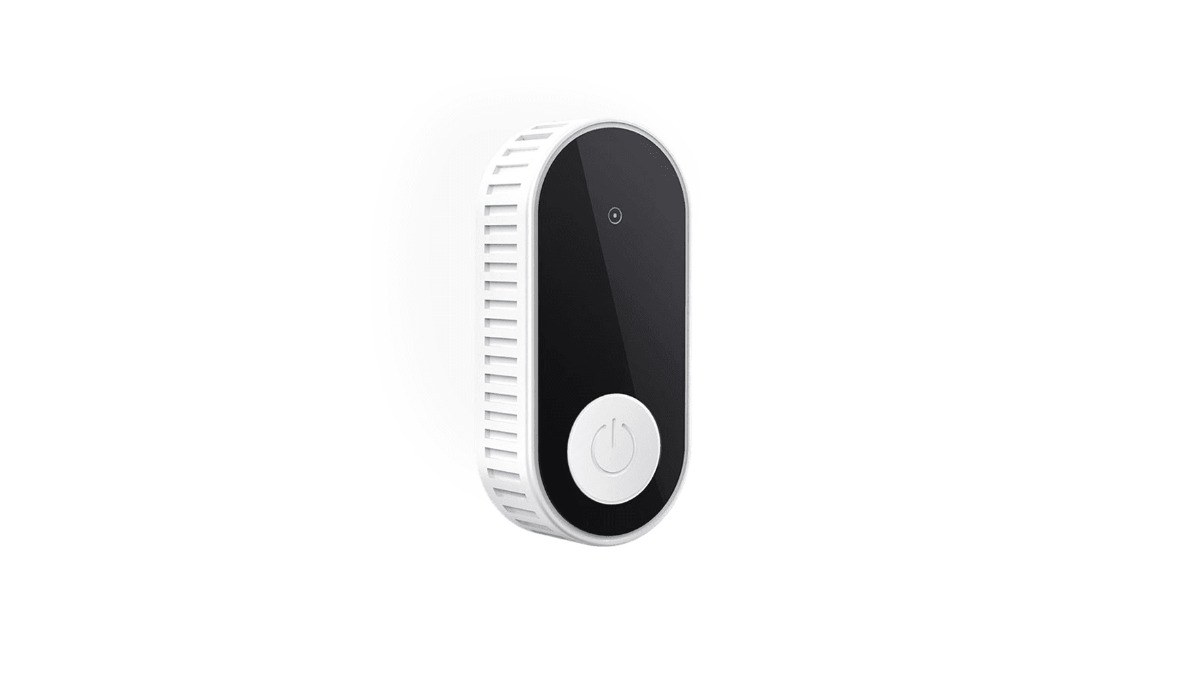
- AssetTag (BLE): Rugged, IP67-rated Bluetooth asset tags with a 5-year replaceable battery, ideal for tagging trailers, chassis, containers, yard tractors, and high-value equipment. Tags connect to GPX’s commercial Bluetooth gateway network for continuous yard-level location, indoors and outdoors.
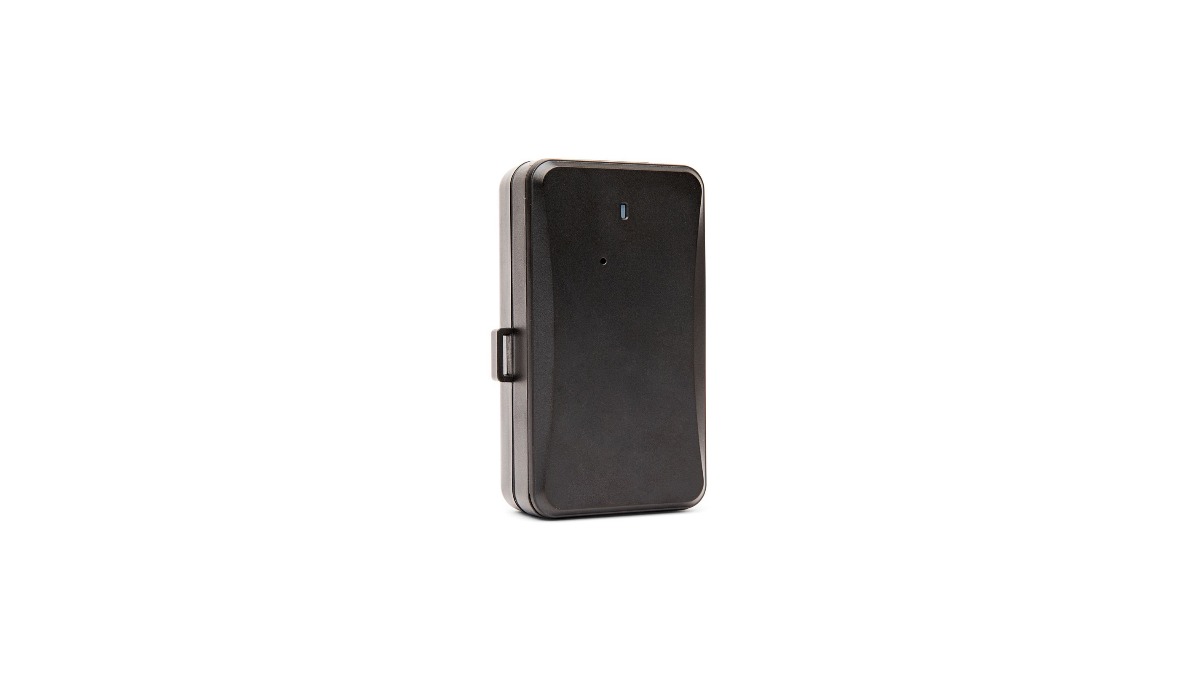
- Cellular GPS trackers: For trailers in motion or sitting in remote drop yards without dense BLE coverage, cellular GPS delivers wide-area, over-the-road tracking with sensor data for temperature, shock, tamper, and motion.
- Satellite-enabled tracking: For cross-border, port, intermodal, and remote-yard environments where cellular coverage falters, satellite keeps assets visible end to end.
- BLE RoadWired: Yard tractors, forklifts, and gate vehicles double as mobile BLE gateways, so coverage scales with operations rather than requiring fixed infrastructure bolted to every dock.
- Scout AI: A built-in AI analyst that lets yard managers ask plain-English questions like “Which trailers have been dwelling more than 48 hours?” or “What is our average detention exposure this week by carrier?” without building a single report.
- Open APIs: Real-time location and event data pushes cleanly into the YMS, TMS, WMS, and supply chain visibility platforms operations teams already run.
The result is a connected yard where every trailer, container, and high-value asset has a persistent digital footprint, and where exceptions are surfaced in real time instead of discovered on a detention invoice three weeks later.
How to Choose the Right Yard Management System for Your Operation
The right YMS depends on yard size, trailer volume, industry, multi-site footprint, and how much real-time visibility your operation actually needs. Use the following criteria to evaluate platforms:
- Real-time location depth: Does the platform support continuous BLE, GPS, and satellite tracking, or only manual status updates? Continuous sensing is what separates a reporting tool from an orchestration tool.
- Integration coverage: Does it connect cleanly with your TMS, WMS, ERP, and any supply chain visibility platform you run? Look for prebuilt connectors, not just “open APIs.”
- Industry fit: Automotive, healthcare cold chain, construction, cross-border, and 3PL multi-tenant yards each have very different operating models. A YMS built for one may struggle in another.
- Hardware flexibility: The best platforms support a mix of BLE, cellular GPS, satellite, RFID, LPR, and camera-based sensing rather than locking you into one technology.
- AI and analytics maturity: Predictive dwell modeling, detention risk scoring, carrier scorecards, and natural-language analytics are no longer optional in 2026.
- Driver and carrier experience: Self-service appointment booking, mobile gate check-in, and digital paperwork directly reduce dwell time and improve carrier relationships in a tight capacity market.
- Implementation timeline and TCO: Modern cloud-based YMS deployments should be measured in weeks, not quarters. Watch for hidden hardware costs, gateway maintenance fees, and per-trailer pricing.
- Future-readiness: Confirm the vendor has a credible roadmap for autonomous yard truck integration, computer-vision gate automation, reverse-logistics workflows, and Scope 3 reporting.
- Security and compliance: Enterprise yards should require SOC 2, GDPR alignment, role-based access control, and audit logging as baseline requirements.
If your priority is closing the visibility gap between TMS and WMS with continuous, real-time sensing of every trailer and high-value asset, a platform that combines BLE, GPS, and satellite, like GPX, will outperform a software-only YMS every time.
Stop Paying for Yard Blindness: Calculate Your YMS ROI
Every week your yard runs on paper logs, walkie-talkies, and end-of-day spreadsheets, you are leaving margin on the table in detention fees, dwell time, lost trailers, missed dock appointments, and bloated Scope 3 emissions. Industry case studies have documented detention cost reductions of 75% to 80% and workforce efficiency gains of 25% to 30% after deploying modern yard tracking technology. Talk to GPX Intelligence about a real-world ROI assessment for your operation, with documented yard visibility wins across automotive, healthcare, construction, fleet, and 3PL deployments. Stop discovering yard losses on the next detention invoice.
Frequently Asked Questions (FAQs)
1. What is a Yard Management System (YMS) in simple terms?
A Yard Management System (YMS) is software that tracks and orchestrates every trailer, container, and yard vehicle as it moves between the gate, the yard, and the dock door. It closes the visibility gap between your TMS and your WMS using real-time IoT tracking.
A modern YMS adds continuous sensing through BLE asset tags, GPS, and satellite, so trailer location is real-time and automatic rather than dependent on someone clicking a status button. It also automates gate check-in, dock scheduling, and spotter dispatch from a single unified interface, replacing paper logs and walkie-talkies with structured digital data.
2. Why is a Yard Management System important for modern supply chains?
A YMS matters because the yard is typically the single largest source of avoidable cost in a supply chain. McKinsey estimates yard inefficiency can erode up to 20% of a facility’s throughput capacity. A modern YMS recovers that lost capacity through real-time visibility and AI-driven orchestration.
Detention and demurrage fees, trailer dwell, lost assets, dock door bottlenecks, cargo theft, and idle drivers all happen in the yard. A YMS converts that blind zone into a data-driven operation that protects margin, supports Scope 3 reporting, and helps shippers earn “shipper of choice” status with carriers in a tight capacity market.
3. Is a yard management system a WMS or a TMS?
No, a Yard Management System (YMS) is neither a WMS nor a TMS. It sits between them. A TMS plans freight movement on the road. A WMS manages inventory inside the warehouse. A YMS owns everything in between: gates, yard slots, trailer pools, and dock doors.
The strongest modern operations run all three as a connected stack, with the YMS acting as the orchestration layer between transportation and warehousing. A supply chain visibility platform typically sits above all three, pulling location, ETA, and event data into a single dashboard for customers and executives.
4. What is the difference between a YMS and dock scheduling software?
Dock scheduling software handles carrier appointment booking and dock door assignment, which is just one function inside a comprehensive Yard Management System. A full YMS adds gate management, real-time trailer tracking, yard slot orchestration, spotter dispatch, geofencing, and end-to-end analytics on top of dock scheduling.
Many operations start with dock scheduling software because the appointment-booking pain is the most visible. Most outgrow it within 12 to 24 months, because dock scheduling alone cannot tell you where a trailer physically sits, how long it has been dwelling, or which carrier is contributing most to detention exposure. A modern YMS solves all of that with sensing hardware (BLE asset tags, GPS, satellite) plus AI analytics layered on top.
5. How does IoT improve yard management?
IoT improves yard management by replacing manual status updates with continuous, real-time sensing. BLE asset tags, GPS trackers, satellite trackers, and computer-vision cameras automatically report trailer location, condition, and movement, so a YMS knows where every asset is without anyone clicking a button.
For example, the GPX AssetTag uses a 5-year replaceable battery to deliver yard-level visibility on trailers, chassis, containers, and yard tractors. Combined with cellular GPS for over-the-road trips and satellite for cross-border or remote drop yards, this creates a no-gap visibility layer. The result: predictive ETAs, automated dwell alerts, faster spotter dispatch, and detention disputes resolved with clean timestamps instead of arguments.
6. How much does a Yard Management System cost?
YMS pricing varies widely by yard size, trailer volume, vendor category, and hardware needs. Most platforms use a subscription model. Basic cloud-based YMS software starts in the low thousands of dollars per site per year. Full enterprise multi-site deployments can scale into six figures annually plus per-trailer hardware costs.
Real-time sensing hardware, including BLE asset tags, GPS trackers, and satellite trackers, is typically priced per device or per trailer per month. The strongest ROI cases combine software, sensing hardware, and AI analytics. Published case studies have documented detention fee reductions of 75% to 80% and workforce efficiency gains of 25% to 30%, often paying back the deployment within the first year.
7. How do I know if my operation needs a Yard Management System?
Your operation needs a YMS if you pay recurring detention fees, cannot locate every trailer within five minutes, run dock door utilization below 80%, hear consistent driver wait-time complaints, or operate multiple yards. The faster your trailer volume grows, the steeper the ROI on a connected yard.
Other strong indicators include TMS and WMS teams disagreeing about trailer arrival times, yard jockeys hunting for trailers on foot, paper-based gate logs, frequent appointment collisions at dock doors, and the inability to produce a clean carrier scorecard. If any of these sound familiar, a modern YMS with real-time BLE and GPS tracking will pay for itself measurably within the first 6 to 12 months.