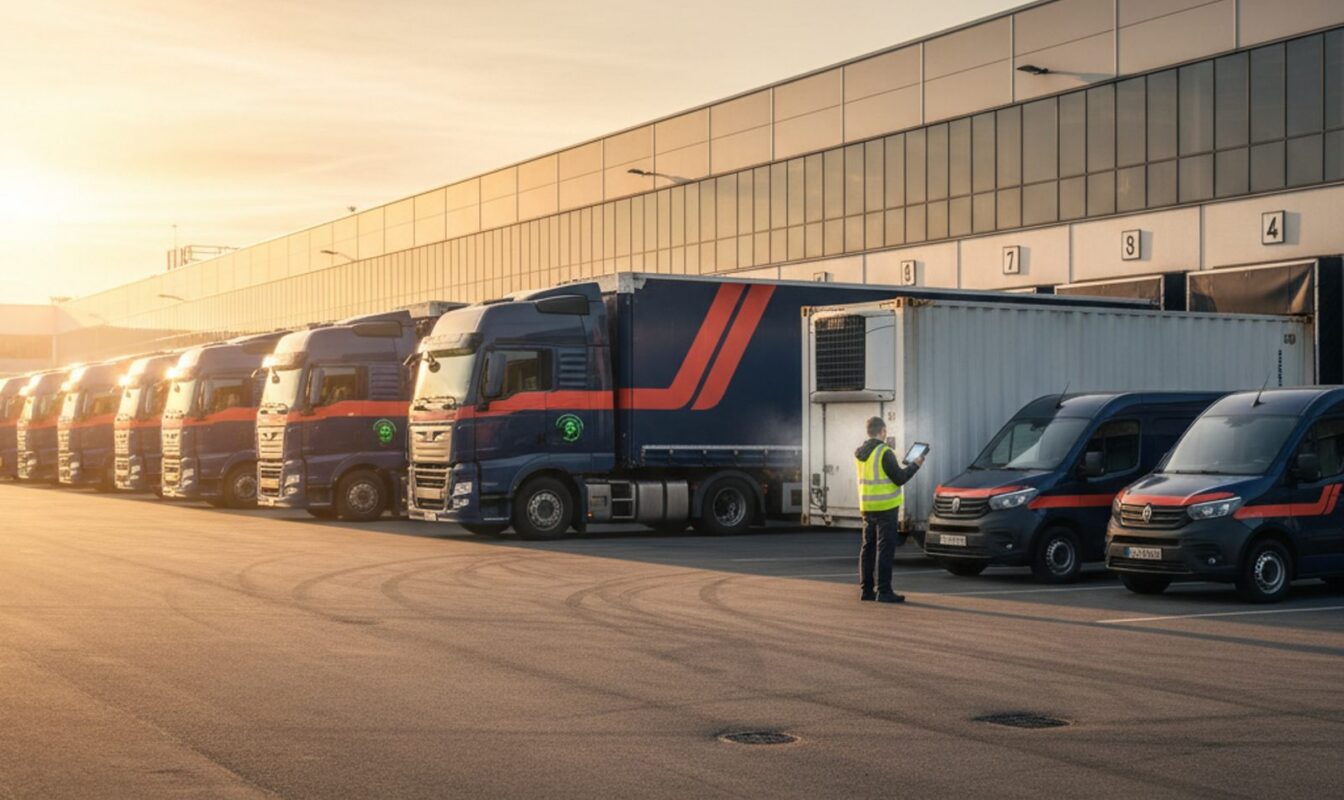

Traceability software gives operations leaders a confidence the yard does not always support. A digital record proving an item was built, labeled, and scanned onto a pallet does nothing to keep that pallet from disappearing out of a staging yard. CargoNetrecorded 3,625 cargo theft incidents across the United States and Canada in 2024, a 27 percent increase on 2023. Recovering equipment, returnable containers, and high-value freight takes a live physical location, not a paperwork trail.
Two separate jobs get treated as one: software lot genealogy and physical asset custody. Most operations run on warehouse systems that report the last manual barcode scan and then go silent. The result is a widening gap between the digital record and where the freight actually sits. End-to-end traceability needs both layers running together, not one standing in for the other.
The Two Meanings of Supply Chain Traceability
Split traceability into two buckets before you shop for software: digital genealogy and physical custody. They solve different problems and run on different technology stacks. End-to-end traceability only exists when both are in place.
Lot and Batch Genealogy (ERP and WMS)
Genealogy proves what a product is and where its components came from. That work belongs to ERP and warehouse management systems. FSMA 204and DSCSArequire detailed digital records of ingredients and ownership changes. Neither rule requires GPS. They exist so a contaminated or counterfeit batch gets traced on paper and pulled fast.
Physical Asset-Level Custody
Custody tracking proves where the trailer, container, or machine sits right now. A lot number will not locate the trailer a driver dropped in the wrong regional yard. That job needs hardware on the asset itself. Operations teams that need continuous location data run asset traceability software across GPS, BLE tags, and cellular uplinks.
Traceability Platforms Compared
| Platform | Core Focus | Traceability Type | Primary Technology |
|---|---|---|---|
| GPX Intelligence | Asset & supply chain visibility | Asset-level proof | GPS, BLE, cellular, satellite |
| Solochain WMS | Warehouse execution | Lot & batch genealogy | Barcode, RFID, ERP |
| Infor WMS | Global distribution | Lot & batch genealogy | Barcode, ERP integration |
| Roambee | Supply chain analytics | Asset-level proof | IoT sensors, cloud analytics |
| Tive | Shipment condition | Asset-level proof | 5G tracker hardware |
1. GPX Intelligence
GPX Intelligencedelivers AI-powered asset tracking and real-time supply chain visibility for enterprises that move high-value physical goods. The platform goes past dots on a map and turns location data into prescriptive intelligence for manufacturing, agribusiness, medical logistics, and heavy construction. Multi-sensor hardware reports location and condition on its own schedule, so no one waits on a scan event.
Best for:Universal asset & fleet tracking.
Pricing:AssetTag Pro as low as $45/yr per tagwith the hardware included; SmartLabel as low as $13 per label; GPS trackers quoted per deployment.
Advantages
- Reports autonomous location data across GPS, BLE, cellular, and satellite networks.
- Answers plain-English questions through Scout AI, including predictive ETA and fleet dwell time.
- Closes the blind spot between the dock exit scan and the final delivery.
- Tracks returnable transport packaging and leased equipment continuously, including idle time at customer sites.
2. Solochain WMS
Solochain WMS from Generix Group is a warehouse execution and management system built for regulated manufacturing and distribution. It tracks origins, ingredients, and processing history inside the four walls of a facility. Teams running serialized pharmaceutical or food production shortlist it for internal batch control and audit readiness.
Best for:Regulated manufacturing and internal warehouse execution.
Pricing:Custom enterprise quotes based on facility size and user seats.
Advantages
- Keeps rigorous digital records of batches and serialized inventory.
- Supports directed put-away and internal labor management.
- Integrates tightly with manufacturing execution systems.
Disadvantages
- Visibility ends at the dock door.
- Every location update depends on a person scanning a barcode or passing an RFID portal.
3. Infor WMS
Infor WMS runs inventory management and fulfillment for global distribution operations. Evaluations against Solochain usually come down to throughput, slotting, and outbound order execution rather than what happens after the truck pulls out. Infor handles enormous inventories spread across international distribution centers.
Best for:Tier-one global distribution centers and complex omnichannel fulfillment.
Pricing:Enterprise SaaS model with custom implementation scoping.
Advantages
- Absorbs extreme transaction volumes for global retail and 3PL networks.
- Delivers strong internal lot control and expiry management.
- Includes 3D visual warehouse analytics for slotting and space planning.
Disadvantages
- Does not track the physical location of outgoing trailers or equipment.
- Implementations run long and cost real money before the first benefit lands.
4. Roambee
Roambee runs as a supply chain analytics platform built on IoT supply chain solutions for shipments and returnable assets. It pulls location and condition signals into one view so planners see network performance outside the four walls.
Best for:Supply chain planners who need aggregated analytics across multi-modal transit.
Pricing:Custom, based on hardware leasing and platform data usage.
Advantages
- Monitors temperature and location on sensitive global shipments.
- Combines multiple transport modes into a single dashboard.
- Offers sensors as a service, which keeps hardware off the capital budget.
Disadvantages
- Built around shipment analytics rather than heavy equipment and yard assets.
- Deployments lean on the vendor’s managed services model.
5. Tive
Tive builds 5G cellular trackers and software for in-transit shipment visibility. Teams attach a tracker to a pallet or container and watch temperature, humidity, shock, and location through the trip.
Best for:Cold chain monitoring and single-trip high-value freight.
Pricing:Per-tracker purchase plus monthly software fees.
Advantages
- Strong shock and temperature monitoring for fragile and perishable cargo.
- Peel-and-stick deployment on outbound freight with no installation crew.
- Tracks shipments across global cellular networks.
Disadvantages
- Built for shipments, not durable equipment tracked over years.
- Single-trip tracker programs add recurring hardware spend every shipment.
Where Digital Records Fail Physical Operations
Lot records break the moment freight leaves a controlled facility. Warehouse systems depend on human compliance: someone scans a barcode or drives past a fixed RFID portal. Miss that scan, and the system freezes on the last known status.
A spotless digital ledger returns nothing operational when high-value assets go missing in the field. Teams then burn hours calling drivers, pulling gate logs, and walking yards to reconcile the system with reality. That reconciliation work is pure overhead, and it repeats every week.
Concrete Gaps in Legacy Distribution Tracking
- Manual scan dependency:Locations update only when an employee triggers a reader, leaving hours or days of undocumented transit between events.
- Third-party handoff blind spots:Every carrier and 3PL handoff resets accountability, and partner systems rarely push location events back into your ERP on a schedule you control.
- Reverse logistics tracking gaps:Returnable transport packaging (RTP) leaves on a dispatch record and comes back on trust, which is the gap returnable container trackingcloses. Racks, totes, and dunnage sit at customer sites for weeks because the ERP logs the outbound date and never confirms the return.
- Integration friction:Legacy ERPs trade nightly batch files while modern IoT supply chain solutions publish event streams over APIs, so the two layers disagree about asset status for most of the working day.
- Phantom yard inventory:Dashboards show assets as available after they were moved, stolen, or damaged with no system update.
- Coverage dead zones:Agribusiness and remote construction routes need satellite fallback and accurate GPS in rough terrain to keep the location record unbroken.
- No recovery signal:A lot number gives law enforcement nothing to follow toward stolen cargo or machinery.
How Autonomous Hardware Secures Physical Custody
Active hardware replaces manual scan checkpoints. Multi-sensor devices on pallets, returnable containers, and trailers create a data stream independent of the WMS. The hardware calculates position and reports over cellular or satellite on its own schedule.
That real-time supply chain visibilitychanges daily operations. Alerts fire the moment an asset crosses a geofence it should not cross. Predictive ETA fuses live traffic and transit history so receiving docks staff the right shift. The operations team stops guessing whether the paperwork matches the yard.
What Comes Next: The Autonomous Control Tower
Modern logistics teams treat tracking as an intelligence layer, not a status page. The next move is agentic asset intelligence: software that reads every asset stream and acts before a human opens a dashboard. Supply chain resilience now depends on that reflex speed rather than on a fuller archive of scan history.
Ask Scout AI “Which trailers have sat idle longer than 48 hours?” and the answer lands in seconds with no report builder involved. That shift from passive record-keeping to autonomous control tower workflows separates traceability programs that protect margin from programs that document losses after the fact.
Where to Put Your Next Traceability Dollar
Start with where your losses actually happen. If the exposure sits in internal compliance, component origins, and FDA record-keeping, a full WMS built for lot genealogy is the right buy. If the losses come from misplaced equipment, unreturned transport packaging, theft, and blind spots past the fence line, fund active asset-level tracking first.
Most enterprises need both, running in parallel. The WMS owns the batch record. The tracking layer owns the physical truth. Put the next dollar wherever your reconciliation hours and write-offs are piling up this quarter.
Stop trusting manual scans to protect high-value assets. Talk to GPX and get a demoof autonomous multi-sensor tracking across your yards, fleets, and transit lanes.
Frequently Asked Questions (FAQs)
How do end-to-end supply chain traceability solutions differ from real-time supply chain visibility platforms?
End-to-end supply chain traceability solutions record the digital history, ingredients, and lot numbers of goods for regulatory compliance and recall readiness. Visibility platforms deliver real-time supply chain visibility and location data for assets outside the warehouse, using active hardware fixed to the asset itself. One proves what a product is, the other proves where it sits.
How does WMS lot genealogy compare to IoT asset tracking in supply chains?
WMS lot genealogy, as handled by platforms such as Solochain and Infor, records batch and serial history so a recall or audit resolves quickly inside the four walls. IoT asset tracking reports position and condition from hardware on the asset, so the location stays current after freight leaves the dock. Regulated manufacturers run both: the WMS owns the batch record, the IoT layer owns physical custody.
What is the ROI of implementing asset-level supply chain visibility?
Four cost lines move first: recovery rate on stolen or misplaced equipment, dwell time on returnable transport packaging parked at customer sites, replacement spend on assets written off as lost, and the labor hours staff burn reconciling the ERP against the yard. Price the tracking layer against those four numbers in your own operation rather than against a generic industry multiple.
Which supply chain traceability platforms do global brands and retailers use?
Large brands run a combination. Enterprise WMS platforms such as Infor and Solochain own internal batch genealogy, while active visibility platforms such as GPX and Roambee own physical custody in transit and in the yard.
Do FSMA 204 or DSCSA require GPS tracking?
No. Both rules require digital record-keeping on product origins, ingredients, and ownership changes so a recall moves quickly. Neither mandates live GPS on vehicles or assets, though many operators add active tracking to cut theft and dwell time.
How does AI asset tracking differ from traditional GPS?
Legacy GPS plots coordinates on a map and stops there. AI-powered asset tracking reads that data continuously to predict ETAs, flag abnormal dwell, and surface answers on request. Scout AI takes plain-English questions and returns the answer without a report builder or a dashboard hunt.