
The global real-time location systems (RTLS) and RFID market is projected to cross 19 billion dollars in 2026, driven by a simple reality: supply chains can no longer afford blind spots. Retailers want item-level inventory accuracy. Hospitals want to find equipment in seconds. Construction firms want to know which materials landed on which lot. Done well, RFID drives inventory accuracy past 98 percent and removes the manual scan from daily work. A crowded field of RFID and RTLS providers promises to deliver all of it, and the hard part is separating the companies that fit your assets and your environment from the ones that simply have the loudest marketing.
This guide breaks down the leading RFID tracking providers in 2026, what each one does best, and where RFID shines versus where real-time GPS and BLE tracking takes over. By the end, you will know how to choose a provider that matches the way your assets actually move.
Key Takeaways (TL;DR)
- RFID is built for counting and identifying assets at fixed read points, not for following them in real time.
- The tags are cheap. Fixed readers, antennas, and cabling are the hidden cost, and it scales with every read zone you add.
- For continuous real-time visibility across indoor and outdoor sites, a GPX hybrid of GPS and BLE tracks assets as they move, on a far leaner infrastructure footprint.
Core Capabilities of Enterprise RFID Systems: Tags, Readers & IoT Integration
An RFID tracking provider supplies the hardware, software, and integration support that turn radio frequency identification into usable asset data. Radio Frequency Identification reads a unique identifier from a tag using radio waves, with no line of sight required and the ability to read many tags at once. That single capability drives most enterprise adoption, because it removes the manual barcode scan from the workflow.
A complete provider stack includes several layers:
- RFID tags and inlays: The chips and antennas attached to each asset. These split into passive tags that draw power from the reader and active tags that carry their own battery.
- RFID readers and antennas: Fixed portal readers, handheld scanners, and overhead arrays that capture tag data as assets pass through a read zone.
- Software and middleware: The platform that filters reads, removes duplicates, and turns raw signals into inventory counts, location events, and dashboards.
- Integration and support: Connectors into your ERP, WMS, or asset management system, plus the deployment expertise to tune read rates in your space.
The best providers own more of that stack and tune it for a specific use case. The weakest ones sell hardware and leave you to solve the data problem alone.
How RFID Technology Works in 2026: Passive UHF, Active Systems, and Cloud Data
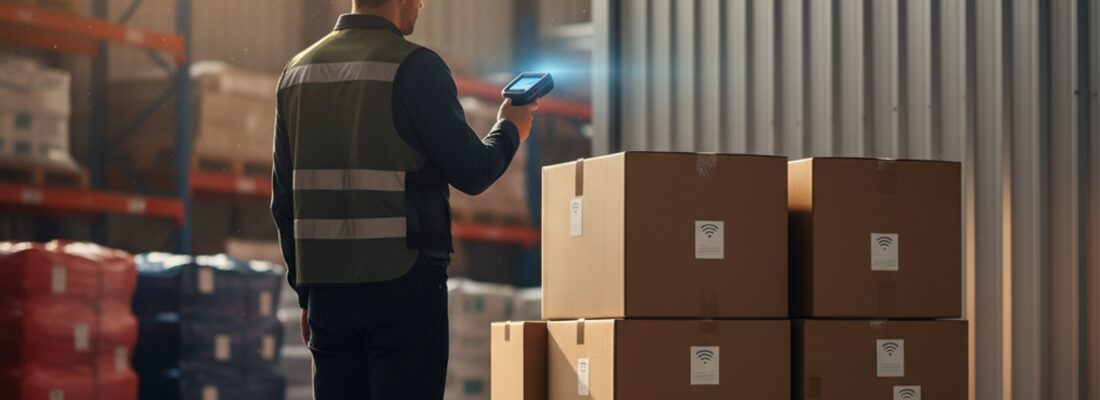
RFID tracking starts when a reader emits a radio signal. Tags in range respond with their stored identifier. The reader passes that identifier to software, which matches it to an asset record and logs the event. Because radio waves pass through cardboard, plastic, and clothing, a reader captures dozens of tags at once without anyone pointing a scanner at each item.
Two design choices shape every RFID deployment. The first is frequency. Ultra-high frequency RFID, often branded as RAIN RFID, delivers the longest read range and the fastest bulk reads, which is why it dominates supply chain and retail. The second is tag type, which controls how far and how often you can read an asset.
- Passive RFID: Low cost per tag, no battery, read range of a few centimeters to several meters depending on frequency. Ideal for high-volume inventory and choke-point scanning.
- Semi-passive RFID: Battery-assisted tags that use onboard power to run the chip and sensors while still relying on the reader to transmit. They extend range and reliability over passive tags and cost less than fully active tags, which suits cold chain and sensor-rich tracking.
- Active RFID: Battery-powered tags that broadcast on their own, reaching tens of meters and supporting near real-time tracking in defined zones. Higher cost per tag and ongoing battery management.
The takeaway for buyers is simple. RFID excels at identifying assets quickly and accurately inside a controlled read zone. It is an identification and counting technology first, and a location technology second.
Top RFID Tracking Providers in 2026: Leading RTLS & IoT Asset Management Companies
The companies below lead the RFID market in 2026 across chips, hardware, tags, and software. Each one earns its place for a different reason, so match the strength to your assets rather than chasing a single ranking.
- Impinj: A global leader in RAIN RFID. Impinj builds the reader chips, gateways, and tag chips that power a large share of the market, plus an item intelligence platform for real-time inventory data. Strong fit for retail, logistics, and healthcare at scale.
- Zebra Technologies: The broadest enterprise hardware ecosystem. Zebra delivers fixed and handheld RFID readers, encoders, and printers that slot into existing warehouse and retail operations, backed by deep channel and integration support.
- NXP Semiconductors: A chip maker behind a huge volume of RFID and NFC tags. NXP UCODE silicon sits inside tags used across retail apparel, supply chain, and product authentication, making it foundational rather than customer-facing.
- Avery Dennison: The volume leader in RFID inlays and tags. Avery Dennison produces billions of tags a year and pairs them with a digital identity platform, dominating apparel and retail item-level tagging.
- HID Global: The identity and access specialist. HID applies RFID to credentials, secure access, and healthcare asset and people tracking, where authentication matters as much as location.
- Alien Technology: A focused UHF RFID maker. Alien supplies tags, inlays, and readers tuned for supply chain, manufacturing, and asset management deployments.
- Atlas RFID Solutions: A strong vertical player in construction. Atlas pairs RFID hardware with materials tracking software built for the way components arrive, stage, and install on a job site.
- Honeywell: A broad industrial technology player. Honeywell delivers RFID readers, printers, and mobile computers that fit large logistics, manufacturing, and supply chain operations already running its hardware.
- GAO RFID: A turnkey systems provider. GAO bundles readers, tags, and software into packaged solutions across healthcare, logistics, and field operations for buyers who want a single source.
For harsh, metal-heavy, and outdoor environments, a set of specialists earns a place on the shortlist. Confidex and Omni-ID build rugged on-metal tags that survive heat, chemicals, and abrasion, while Metalcraft manufactures durable American-made metal tags for industrial assets. Construction, energy, and heavy industry buyers should weigh these names alongside the broad-line vendors above.
The table below compares the leaders side by side, including how a real-time GPS and BLE provider fits the picture when RFID alone leaves blind spots.
| Provider | Primary Strength | Technology Type | Ideal For |
|---|---|---|---|
| Impinj | RAIN RFID chips, readers, and inventory intelligence | Passive UHF RFID | Retail, logistics, healthcare at scale |
| Zebra Technologies | Fixed and handheld reader ecosystem | Passive and active RFID | Warehouse and retail operations |
| Honeywell | Readers, printers, and mobile computers | Passive and active RFID | Large logistics and manufacturing |
| Avery Dennison | High-volume inlays and tag manufacturing | Passive UHF RFID | Apparel and item-level retail tagging |
| HID Global | Identity, access, and secure tracking | Passive RFID and NFC | Healthcare and access control |
| Alien Technology | UHF tags, inlays, and readers | Passive UHF RFID | Manufacturing and supply chain |
| Atlas RFID Solutions | Materials tracking software plus hardware | Passive UHF RFID | Construction job sites |
| GAO RFID | Turnkey packaged RFID systems | Passive and active RFID | Single-source deployments |
| GPX | Continuous real-time location across indoor and outdoor sites | GPS plus BLE mesh | Mobile, high-value, and roaming assets |
Active vs. Passive vs. Semi-Passive RFID Tags: Choosing the Right Asset Tracking Solution
The tag type decision drives both cost and capability, so settle it before you shortlist providers. Three options sit on the table.
Passive RFID is the right call when you need accurate identification and counting at a known point. A passive tag costs cents, lasts for years with no battery, and reads instantly as an asset crosses a portal or sits on a smart shelf. The trade-off is that the asset is only visible when it enters a read zone. Between scans, the system has no new data.
Semi-passive RFID, also called battery-assisted passive, adds a small battery that powers the chip and any onboard sensors while the reader still triggers the transmission. That design extends read range and reliability over passive tags and reads temperature or shock data along the way, which fits cold chain shipments and sensitive equipment. It costs more than passive and less than active.
Active RFID earns its higher price when assets move continuously inside a defined area and you need to know where they are without a manual read. The tags broadcast on their own, reach tens of meters, and refresh more often. The cost shows up in the tag price and in battery replacement across a large fleet.
Use this quick test:
- If you count and identify assets at fixed points, passive RFID wins on cost and simplicity.
- If assets roam a yard, plant, or campus and you need their position throughout the day, active RFID or a real-time location system fits better.
- If assets leave your facility entirely and travel across roads, cities, or regions, RFID alone will not reach them.
Blind Spots and Range Limits in Passive RFID
RFID delivers real value, and it carries real limits. Knowing them upfront prevents an expensive deployment that misses the goal.
- Read range stops at the reader: Passive RFID visibility ends a few meters from an antenna. Once an asset leaves the read zone, the system goes dark until the next scan.
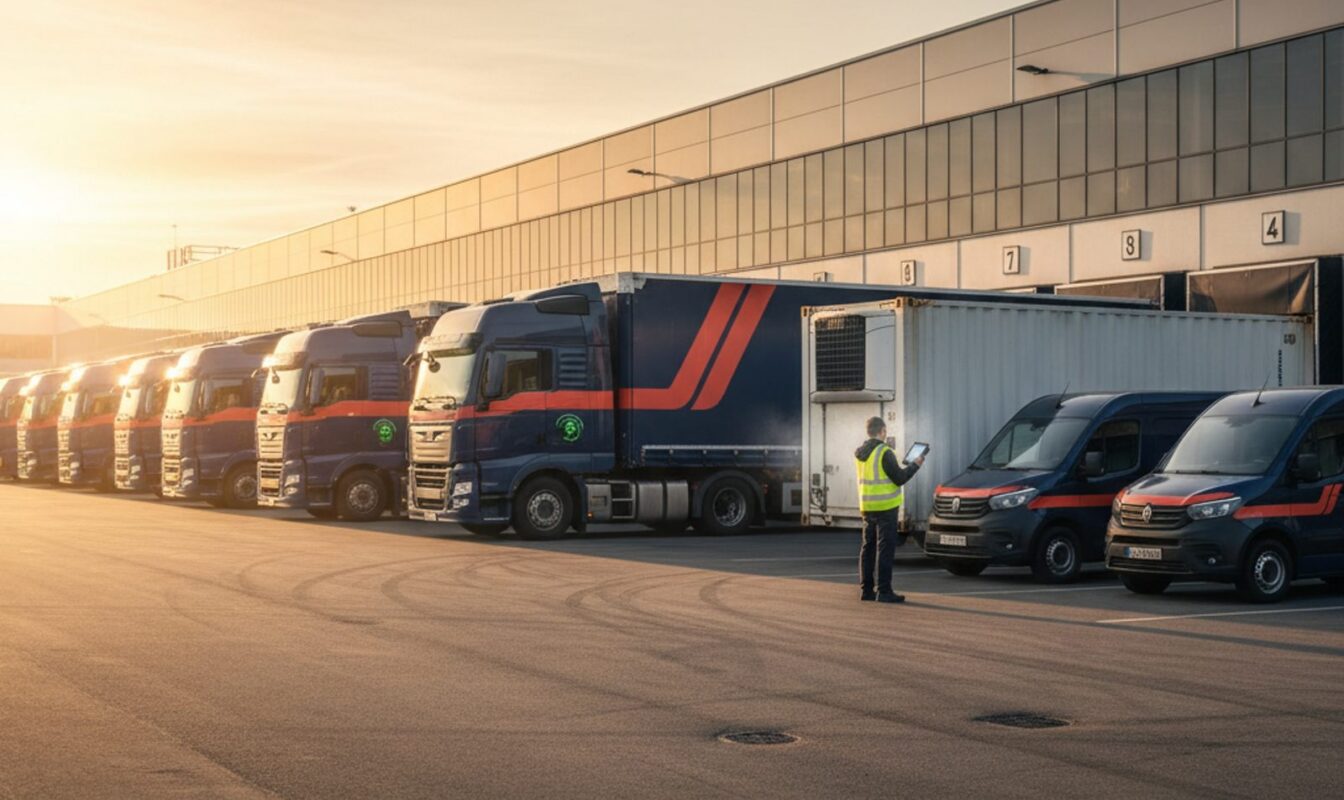
- The handoff gap between warehouse and yard: The widest blind spot in logistics sits between the building, where RFID covers the dock, and the yard or highway, where you need GPS. With no handoff between the two, you lose the asset at the exact moment it starts moving and value is most at risk.
- Metal and liquid interference: Chemicals, beverages, and other liquids absorb UHF signals, while machinery and metal containers reflect them, which wrecks read rates. Rugged on-metal tags from specialists such as Confidex, Omni-ID, and Metalcraft solve much of this, but their higher unit price erases the cents-per-tag ROI that justified RFID in the first place.
- The CapEx of fixed infrastructure: Scaling passive RFID across a large facility means cabling, network drops, and portal readers at every choke point. That capital expense climbs fast and quietly turns a low cost-per-tag into a high cost-per-site.
- No native outdoor coverage: RFID was built for controlled indoor zones. It does not follow an asset across a yard gate, down a highway, or onto a job site across town.
- Dumb scans and data silos: A scan event that does not feed a workflow is wasted data. Enterprise buyers need actionable intelligence, not raw ping data, which means the platform has to filter reads and connect them to the systems your team already runs.
These limits are not reasons to avoid RFID. They are reasons to match the technology to the asset. For fixed inventory inside four walls, RFID is excellent. For assets that move and leave the building, the answer changes.
RFID Tracking System Costs: Pricing & ROI for Tags, Readers, and RTLS Software
Budget for the full system, not the tag price. The tags are the cheap part. Readers, antennas, cabling, installation, and software carry most of the cost, and a reader-heavy facility runs higher than the tag count suggests. The ranges below reflect typical US pricing in 2026.
| Component | Typical Cost Range | What Drives the Price |
|---|---|---|
| Passive RFID tags | 0.25 to 5 dollars each | Volume, form factor, and frequency |
| Rugged on-metal tags | A few dollars to 10 dollars and up | Durability and metal mounting |
| Active RFID tags | 25 to 100 dollars each | Battery, range, and sensors |
| Handheld RFID readers | 1,000 to 2,000 dollars | Read performance and ruggedization |
| Fixed readers and antennas | Higher, plus cabling and installation | Number of read zones to cover |
| Software subscription | 35 to 75 dollars per month | User count and feature depth |
The hidden line item is fixed infrastructure. Every read zone needs a reader, antennas, and cabling, so covering a large indoor and outdoor footprint multiplies the install cost. A GPS and BLE model removes that fixed-reader spend, since the device travels with the asset and reports on its own, which reshapes the total cost of ownership for sites where assets move.
RFID vs. GPS vs. BLE (Bluetooth Low Energy): Hybrid Asset Tracking for Indoor & Outdoor Coverage
No single technology wins every scenario. The strongest asset tracking programs combine the right tool for each asset type. Here is how the three core technologies compare on the factors that decide deployments.
- Range: RFID covers a few meters per reader. BLE reaches across a building or open yard through gateways. GPS spans entire regions with no range limit.
- Real-time visibility: Passive RFID updates only on a read event. BLE and GPS report continuously, so you see movement as it happens.
- Indoor versus outdoor: RFID and BLE excel indoors. GPS owns outdoor and in-transit tracking. A mesh of GPS and BLE delivers both.
- Cost per asset: Passive RFID is cheapest per tag for high volumes. BLE and GPS cost more per device but remove the fixed-reader infrastructure spend.
- Maintenance: Passive RFID needs no battery. BLE and GPS devices use batteries, with modern designs reaching multi-year life.
The practical answer for most operations is a layered approach. Use passive RFID for high-volume, fixed-point inventory. Use BLE for indoor real-time location of tools and equipment. Use GPS for anything that travels beyond the gate.
Why Modern Supply Chains Require Real-Time GPS & BLE Mesh Networks
RFID answers the question “is this asset here right now in this read zone?” It struggles with the question “where is this asset at any moment, indoors or out?” That second question drives loss prevention, fleet utilization, and field equipment recovery, and it is where a mesh of GPS and BLE outperforms a reader-based system.
GPX builds that mesh for exactly this gap. Instead of waiting for an asset to pass a fixed reader, GPX devices report continuously and hand off between GPS outdoors and BLE indoors. That BLE-to-GPS handoff is the part RFID cannot do, and it closes the warehouse-to-yard blind spot so coverage follows the asset across the dock, through the gate, down the road, and back into the building. The result is continuous real-time visibility rather than a string of disconnected scan events.
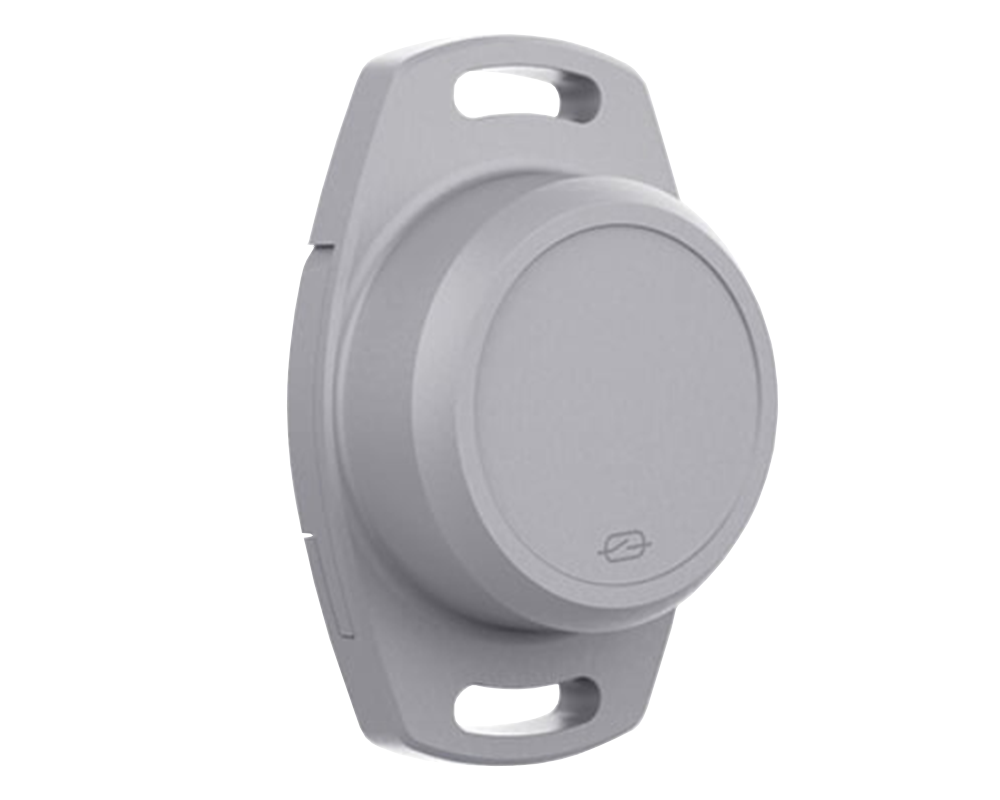
The GPX AssetTag uses BLE to deliver indoor location for tools, equipment, and high-value mobile assets, with a replaceable battery and a 4-year battery life that keeps maintenance low across a large fleet. Pair it with GPX GPS trackers for assets that leave the site, and a single platform shows every asset on one map. For construction crews tracking equipment across lots, fleet managers monitoring trailers and gear, healthcare teams locating mobile devices, and automotive operations watching inventory across a dealership campus, that continuous coverage closes the blind spots a reader-only system leaves open.
Here is how a GPX hybrid stacks up against a traditional RFID deployment on the factors that decide a rollout.
| Factor | Traditional RFID | GPX Hybrid RTLS (GPS + BLE) |
|---|---|---|
| Infrastructure cost | High. Fixed readers, antennas, and cabling at every read zone | Lean. Devices report on their own with no fixed-reader grid |
| Outdoor range | None. Built for controlled indoor zones | Nationwide via GPS |
| Indoor range | Strong within a few meters of a reader | Building-wide via BLE mesh |
| Battery life | Passive tags need no battery. Active tags need periodic replacement | Replaceable battery with 4-year battery life |
Top Industries Using AI-Driven RFID & RTLS: Logistics, Healthcare, and Construction
Adoption is accelerating as labor shortages and supply chain volatility push organizations toward automated visibility. Brands like Zara, Amazon, and Lululemon run RFID for item-level retail accuracy, Boeing tags high-value components and tools in manufacturing, and Delta tracks baggage and returnable assets across its network. The use cases vary by sector, and so does the right mix of technology.
- Construction: RFID tracks materials and components as they arrive and stage, while GPS and BLE follow tools, generators, and equipment that move between lots and back to the yard.
- Fleet and logistics: RFID handles dock and gate scanning, while GPS tracks trailers, containers, and cargo across long-haul routes in real time.
- Healthcare: RFID and BLE locate mobile medical equipment, infusion pumps, and wheelchairs across a facility, cutting the time staff spend searching.
- Automotive: RFID supports parts identification on the line, while real-time tracking monitors vehicle inventory across large dealership and storage campuses.
- Supply chain visibility: RFID drives item-level accuracy in the building, while GPS extends that visibility to goods in transit between facilities.
The pattern repeats across every sector. RFID owns the controlled indoor count. Real-time GPS and BLE own the asset that moves and the asset that leaves.
5 Costly RFID Deployment Mistakes and How to Avoid Them
Most RFID deployments that disappoint fail on execution, not on the technology. The same mistakes show up again and again, and each one is avoidable.
- Underestimating the environment: Metal racking, liquids, and dense product wreck read rates when teams use standard tags in conditions that demand rugged on-metal versions.
- Ignoring tag placement and orientation: The same tag reads at 99 percent or fails outright depending on where and how it sits on the asset. Placement is a tuning step, not an afterthought.
- Neglecting system integration: Reads that never reach the ERP, WMS, or asset platform create data with nowhere to go. Plan the integration before buying hardware.
- Skipping the pilot: Rolling out facility-wide before a controlled pilot turns small problems into expensive ones. Test in your own space with your own assets first.
- Overlooking employee training: A system staff do not trust gets bypassed. Build training and clear workflows into the rollout, not after it.
How to Choose the Best RFID Asset Tracking Partner for Enterprise Operations
The right provider is the one that fits how your assets behave, not the one with the longest feature list. Work through these criteria before you sign anything.
- Start with the asset, not the technology: Map whether each asset class is fixed or mobile, indoor or outdoor, high-value or commodity. That map tells you whether you need passive RFID, active RFID, BLE, GPS, or a combination.
- Test the read environment: If your assets sit on metal or near liquids, confirm the provider has hardware and placement expertise for those conditions, and ask for a pilot read-rate result in your own space.
- Define your real-time requirement: Decide whether scan-event data is enough or whether you need continuous location. This single choice separates a reader-based RFID provider from a real-time GPS and BLE provider.
- Weigh total cost of ownership: Add fixed readers, antennas, cabling, tags, software, and battery maintenance, not just the per-tag price. Reader-heavy facilities often cost more than the tag count suggests.
- Demand software depth: Confirm the platform filters reads, integrates with your ERP or asset system, and presents location data in a way your team will use daily.
- Check the support model: Deployment tuning, integration help, and responsive support separate a finished system from a box of hardware.
Run those six checks against any shortlist and the right partner becomes clear. If your assets stay put inside a controlled space, a top RFID provider delivers the accuracy you need. If your assets move and travel beyond the gate, a real-time GPS and BLE provider gives you the continuous visibility a reader can never reach.
GPX Hybrid RTLS: Unifying GPS & BLE for Continuous Enterprise Asset Tracking
RFID is the right tool for fixed, high-volume inventory inside four walls. The moment your assets start moving across yards, roads, and job sites, you need continuous real-time location that follows them everywhere. GPX delivers that with a unified GPS and BLE mesh and the GPX AssetTag, built for replaceable, 4-year battery life and reliable indoor coverage. See how GPX closes the blind spots a reader-only system leaves behind. Talk to the GPX team and put every asset on one live map.
Frequently Asked Questions (FAQs)
What are the major RFID technology trends for 2026?
In 2026, the biggest trends in RFID include AI-driven data intelligence, integration with IoT (Internet of Things) platforms, automated MRO (maintenance, repair, and operations) tracking, and the shift toward hybrid real-time location systems (RTLS) that combine RFID with GPS and BLE for seamless indoor-to-outdoor visibility.
Which is better for asset tracking: RFID, GPS, or BLE?
It depends on your environment. Passive UHF RFID is best for high-volume, low-cost inventory counting at fixed choke points. BLE (Bluetooth Low Energy) is ideal for continuous, real-time indoor tracking of high-value tools. GPS is required for outdoor, long-range tracking of vehicles and fleet assets.
Can RFID tags track location in real time?
Passive RFID cannot track assets in real time. It only logs a location when an asset passes a fixed reader. Active RFID provides closer to real-time data but requires expensive tags. For true real-time, continuous location tracking without massive infrastructure costs, a hybrid GPS and BLE mesh network is the superior choice.
How much does an enterprise RTLS or RFID system cost?
Passive RFID tags cost 0.25 to 5 dollars, but the hidden costs lie in the infrastructure, since fixed readers and antennas can run thousands of dollars per read zone. BLE and GPS systems cost more per device, from 25 to 100 dollars and up, but drastically reduce fixed infrastructure and installation costs.
Which industries benefit most from RFID and RTLS asset tracking?
Logistics, healthcare, and construction lead adoption, followed by manufacturing, automotive, and retail. Logistics uses it for fleet and supply chain visibility, healthcare locates mobile medical equipment, and construction tracks tools and materials across job sites. The strongest results come from hybrid systems that pair RFID counting with GPS and BLE real-time location.
What inventory accuracy rate can RFID realistically achieve?
Done well, RFID drives inventory accuracy past 98 percent and removes the manual scan from daily operations, closing the gap between what records show and what is physically on the shelf, truck, or job site.