
Construction equipment and tool theft drains an estimated $300 million to $1 billion from American job sites every year, with single-item tool recovery rates dropping below 7 percent according to the National Equipment Register and the National Insurance Crime Bureau. Inside the hospital, the picture is just as bleak: industry research finds the true cost of a single lost infusion pump exceeds $6,500 once replacement, rentals, and overstock are factored in, and most facilities buy 15 to 20 percent more equipment than they actually need to compensate for chronic loss.
The math tells you why operations managers keep losing the same battle. The instinct is to bolt a GPS device onto every drill, IV pump, and IT cart. The reality is that you cannot strap a four-inch GPS brick onto a hand drill, an infusion pump, or a returnable tote without ruining the tool, blocking the chassis, or breaking the workflow that runs around it.
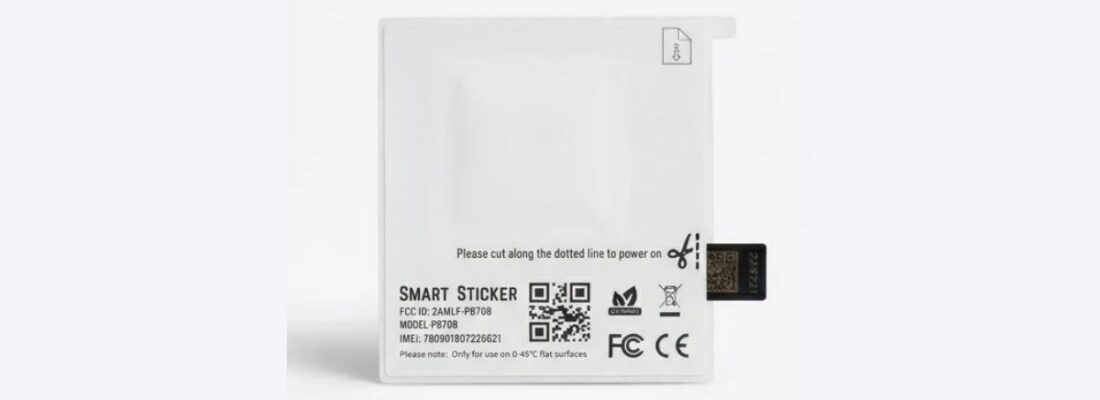
That gap is exactly what a micro GPS sticker tracker closes. Engineered into a millimeter-thin, peel-and-stick form factor, the GPX SmartLabel and AssetTag deliver enterprise-grade visibility without ever interfering with how the asset is actually used.
When Traditional Trackers Are Too Bulky for the Job
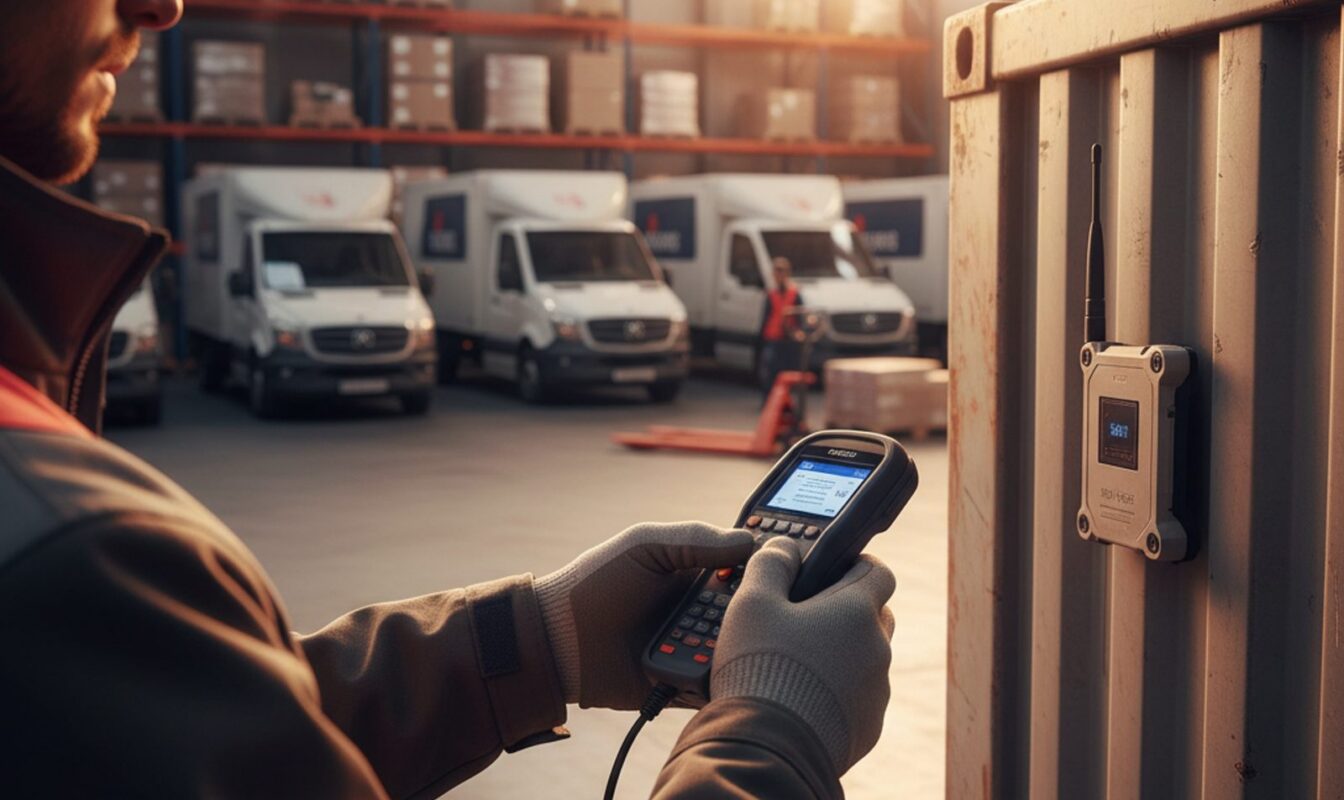
The standard cellular GPS puck was designed for trailers, generators, and Class 8 tractors. These are assets with surface area to spare and crews that never touch the device. Drop the same hardware onto a 7-pound rotary hammer and the tradeoffs start stacking up.
- Form interference: The puck sits on top of a recessed grip or molded handle, changing how the operator holds the tool.
- Function interference: On medical carts and infusion pumps, a bulky tracker collides with sterilization wipes, IV tubing, and the recessed mounts where the device clamps to a pole.
- Removal risk: If a tracker is large enough to spot in three seconds, a thief can pry it off in five.
- Battery and rollout logistics: A cellular puck needs charging, wiring, or a hardware deposit. Multiply that by 600 cordless drills and the program never gets past the pilot.
Power tools, IT laptops, AV equipment, hospital infusion pumps, and returnable plastic totes all share the same constraint. The asset is too small, too mobile, or too workflow-sensitive to absorb a traditional tracker. They demand a tracking form factor that disappears.
What Makes an Enterprise-Grade Micro GPS Sticker Tracker
An enterprise-grade micro sticker is not a consumer Bluetooth tag with a louder logo. It is a different class of device, engineered for fleet-scale visibility on assets that move through dense, indoor, and high-vibration environments.
The GPX SmartLabel and low-profile AssetTag pack four things into a sub-millimeter footprint:
- Bluetooth Low Energy radio tuned for room-level indoor range and millimeter-thin antennas, not the 10-meter consumer chipsets used in retail tags.
- Industrial adhesive backing rated for the dust, oil, vibration, and temperature swings of an active job site or sterilization cycle.
- Up to a four-year battery life using deterministic BLE pinging schedules, which means no charging cradle, no swap cycle, and no service deposit.
- Connection to the GPX terrestrial gateway network of more than 3 billion ambient receivers across smartphones, vehicles, and BLE RoadWired hubs, plus optional anchor points inside warehouses and hospitals.
The result is the smallest GPS sticker tracker footprint on the market, backed by the largest passive receiver network. The asset gets visibility. The operator does not feel a thing.
How Micro Tracking Compares to the Alternatives
Operations leaders generally arrive at micro stickers after exhausting three other options. Here is how the four approaches stack up for tracking small, mobile, high-value assets.
| Approach | Form Factor | Indoor Visibility | Battery Life | Per-Unit Cost | Best For |
|---|---|---|---|---|---|
| GPX Micro GPS Sticker (SmartLabel / AssetTag) | Sub-millimeter peel-and-stick | Room-level via 3B+ BLE network and mobile hubs | Up to 5 years | From ~$45 per year flat subscription | Power tools, IT and AV gear, hospital carts, returnable totes |
| Cellular GPS Puck | 3 to 5 inches, hardwired or magnetic | Poor; GPS fails inside structures | Days to weeks (rechargeable) or years (hardwired) | $150 to $300 device plus monthly service | Trailers, vehicles, large machinery |
| Passive RFID | Sticker or tag, no internal battery | Only at fixed reader gates | Indefinite (no battery) | Low per tag, high per reader infrastructure | Inventory check-in, gated warehouse zones |
| Consumer Bluetooth Tag | Coin-sized, plastic shell | Reliant on consumer phone density | 1 to 2 years | $25 to $35 per tag | Personal items, low-density environments |
The micro sticker wins specifically where the asset is small, the environment is indoor, outdoor or mixed, and the fleet is in the hundreds or thousands. That is the exact zone where tools, mobile medical equipment, and IT assets live.
Zero Workflow Disruption: Tracking Without Slowing the Crew
The reason micro stickers stick (literally) inside enterprise rollouts is operator trust. A tracker that gets in the way of the work gets peeled off, ignored, or covered with tape inside the first week.
A low-profile AssetTag fits in places no traditional GPS puck can reach:
- The recessed grooves on the underside of a rotary hammer, jigsaw, or impact driver. The sticker sits flat against the housing where the operator never touches.
- Underneath the IV pole grip on an infusion pump, behind the asset tag plate where biomedical engineering already does its labeling work.
- Inside the casing of a returnable tote, an AV flight case, or a Pelican-style equipment bin.
- Behind the access panel of a server rack, network switch, or laptop docking station.
The asset does its job. The sticker silently logs every BLE handshake against the GPX network. The operations dashboard shows the tool moving from the truck to the third-floor electrical room and back again, with zero crew action required.
Where Micro GPS Stickers Pay Off in the Real World
The form factor unlocks visibility in environments where traditional tracking has failed for years.
Construction and Trades
Cordless drills, impact drivers, rotary hammers, and laser levels are the most-stolen power tool categories on U.S. job sites. With recovery rates below 7 percent for single-item thefts, prevention beats recovery every time. A tool tracking sticker on every $400-plus power tool gives the foreman a real-time inventory check at the truck, the gang box, and the site fence. When a tool walks off after Friday lockup, Scout AI flags the deviation before Monday morning, not three weeks later when the missing inventory shows up on a re-order request.
Healthcare and Hospital Operations
A 300-bed hospital manages more than 25,000 mobile equipment items. When a clinician cannot find a clean infusion pump in five minutes, they hide one in a supply closet, and the hospital ends up buying 15 to 20 percent more equipment than it actually needs. A hospital cart tracker on every IV pump, ventilator, vital signs monitor, and wheelchair turns artificial scarcity into real utilization data, often releasing 20 to 30 percent of inventory that was sitting hidden on a single floor.
IT, Audiovisual, and Returnable Packaging
Laptops, projectors, conference room kits, and high-value returnable totes routinely walk out of buildings. A low-profile equipment tracker tucked inside a laptop sleeve or a tote handle catches the asset the moment it leaves an authorized zone, without forcing IT to redesign its hardware refresh cycle. For returnable shipping containers, the sticker also closes the chronic loss column where 5 to 10 percent of every fleet of totes and reusable packaging silently disappears each year.
The Economics of Tracking at Scale
The economic case for a micro tracking sticker collapses the resistance the moment you do the math at fleet scale. In the 2026 capital environment, with elevated interest rates pushing finance teams to scrutinize every line of working capital, writing off $24,000 in walking tools every year is no longer a quiet rounding error on the balance sheet. It is a hard cost the CFO is being asked to defend, and “shrinkage” is no longer a defensible answer.
A general contractor with 600 cordless tools at $400 average value carries $240,000 in tool inventory exposure. A 5 to 10 percent annual loss rate, which industry surveys consistently report for portable tools, translates to $12,000 to $24,000 in walking inventory every year, before factoring in delays, rentals, and rework. A flat $45-per-year AssetTag subscription on the same 600 tools costs $27,000 annually with zero hardware deposit. The recovery and prevention math closes the gap inside year one. After that, the tracking program is a margin expansion line.
The healthcare math is even more aggressive. A hospital running 200 infusion pumps at a true loss cost of $6,500 per missing unit can absorb the entire annual cost of the tracking program from a single recovery event.
The ROI Reality: A single recovered infusion pump pays for the tracking program across the entire 200-pump fleet for the year.
By the time the same fleet is running for two years, the hospital is reclaiming the 30 percent of “missing” pumps that were actually hiding in supply closets the whole time, and the capital expenditure committee is approving fewer net-new equipment purchases against the same patient load.
Lock Down Your Tool and Asset Inventory Before the Next Loss Cycle
Asset tracking inside the enterprise is moving from passive visibility to active orchestration. The autonomous control tower for physical assets is no longer a bolt-on dashboard. It is a real-time, agent-driven view of every tool, cart, and laptop in the fleet that does not just show where the drill is, but acts on the answer. Plain-English queries (Where is every drill issued to the West-side crew? Which pumps haven’t moved in 72 hours? Which laptops left the building after 6 pm?) become the entry point to a fleet that re-balances itself.
The most powerful application of that shift is auto-reallocation. When Scout AI detects that every drill issued to the West-side crew has been sitting idle for 48 hours while the East-side crew is two tools short on a critical pour, it does not wait for a foreman to file a request. It flags the imbalance, suggests a transfer, and routes the closest cordless drill across the site before the next shift even starts. The same logic runs across hospital floors, IT depots, and warehouse cages. Idle inventory on one side of the building stops being a hidden cost the moment the orchestration layer can see it and act on it.
That kind of orchestration only works if every asset is tagged, and every tag stays put. Explore the GPX AssetTag lineup or request a pilot to start tagging the assets that have been walking off your books.
Frequently Asked Questions (FAQs)
What is the smallest GPS sticker tracker for construction tools?
The GPX SmartLabel and low-profile AssetTag are engineered to be millimeter-thin, fitting into the recessed grooves of drills, saws, and impact drivers without altering the tool’s grip or balance. The form factor is purpose-built for tools that crews are holding in their hands all day.
How long does the battery last on a micro tracking sticker?
Despite their miniature footprint, GPX AssetTags use ultra-efficient Bluetooth Low Energy to deliver up to a four-year battery life. That eliminates the operational drag of recharging or swapping batteries on hundreds of small tools and turns the device into a deploy-and-forget asset.
Will a tracking sticker fall off a vibrating power tool?
No. Enterprise-grade micro stickers use high-bond industrial adhesives engineered for high-vibration, dusty, oily, and temperature-cycling environments. The adhesive is rated for active construction sites, sterilization wipe-downs in hospitals, and outdoor storage swings.
Do miniature tracking stickers work inside buildings or hospitals?
Yes. Cellular GPS fails indoors because satellite signals do not penetrate concrete and steel. Micro BLE stickers ping ambient terrestrial gateways across phones, vehicles, and fixed mobile hubs, providing seamless room-level visibility inside warehouses, hospitals, and multi-floor facilities where GPS goes dark.
Are micro tracking stickers cost-effective for small equipment?
Yes. Because they require no hardware deposit and run on a flat $45-per-year subscription, fleets can scale visibility across thousands of low-to-mid value tools, IT assets, and hospital carts where a $200 GPS unit would never make financial sense.