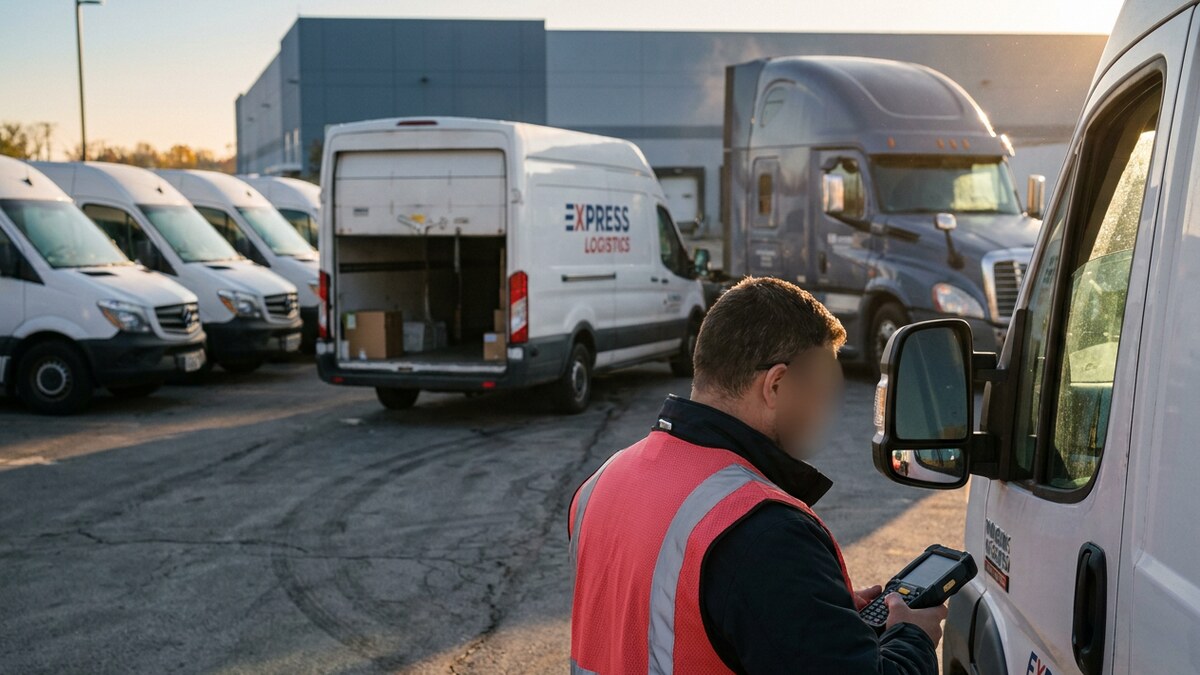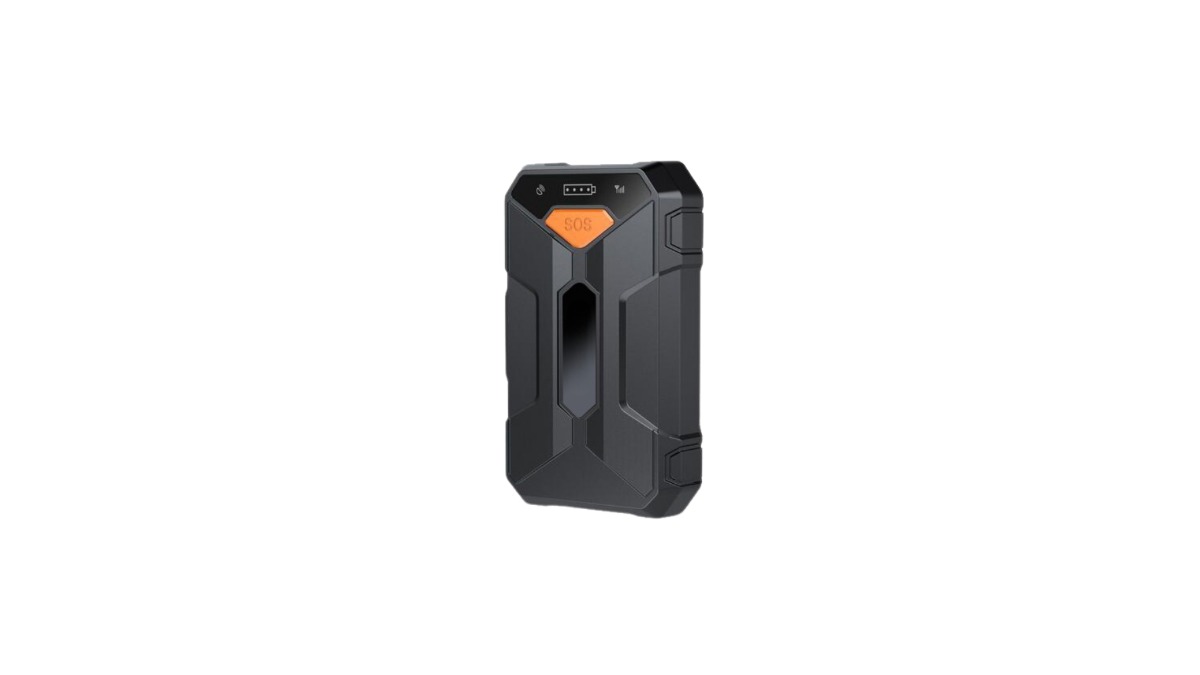


Cargo theft hit a multi-year high in 2024, with CargoNet’s 2024 supply chain crime trend analysis reporting more than 3,600 incidents across the U.S. and Canada and an average loss approaching $200,000 per event. For shippers running thin margins on tight ETAs, every missing trailer is more than a stolen load. It is a broken SLA, a lost customer, and a compounding operational failure.
The companies pulling ahead are the ones treating in-transit shipment tracking as an intelligence layer, not a status page. Modern logistics management depends on shipment visibility that flows directly into decision-making, not into a dashboard nobody opens. That gap, between knowing and acting, is where AI-powered asset tracking earns its keep.
This guide breaks down how modern in-transit tracking actually works, what data points matter, and how to move your operation beyond dots on a map.
What is Real-Time In-Transit Freight Tracking & Visibility?
In-transit shipment tracking is the continuous, real-time monitoring of freight location, condition, and predictive ETA from origin to destination. Modern platforms utilize a mix of GPS, IoT sensors, and AI to transform raw telemetry into actionable logistics data.
The legacy definition stopped at location. The current one includes condition, context, and prediction: where the load is, what state it is in, what is likely to happen next, and what your team should do about it. That shift matters because end-to-end visibility is no longer a back-office report. It is the input layer for customer experience, insurance claims, dock scheduling, and capital planning. When your tracking platform misses a 6-hour dwell at a yard in Laredo, your downstream sales team finds out from an angry buyer.
The three layers of modern tracking
- Location layer: GPS and cellular pings answer the “where” question with continuous coordinates, speed, and heading data that update every few seconds across the active lane.
- Condition layer: IoT sensors capture temperature, humidity, shock, tilt, and door-open events so receivers know the state of the load, not just its position on a map. For cold chain logistics, this condition layer is non-negotiable for maintaining FSMA (Food Safety Modernization Act) compliance and proving unbroken cold chain integrity to receivers.
- Decision layer: AI models turn raw telemetry into predictive ETAs, exception alerts, and recommended actions that move shipment visibility from data feed to decision feed.
Most providers stop at the first two. The decision layer is where data converts to dollars.
Solving Supply Chain Blind Spots: Reducing Detention, Demurrage & Chargebacks
The cost of poor in-transit visibility shows up in places finance teams rarely connect back to tracking. Expedited shipments to recover from missed ETAs. Safety stock inflation to buffer unpredictable lead times. Detention and demurrage fees from blind dwell. Lost sales when a key SKU misses a promotional window.
Industry coverage of 2024 disruption data consistently links weak shipment visibility to higher landed costs and rising chargeback exposure, with supply chain resilience now treated as a board-level KPI rather than an operations metric. Companies that invested in real-time tracking after the 2020-2022 shocks have spent the years since translating that data into faster recovery cycles and tighter exception handling.
Five hidden costs of weak tracking
- Detention and demurrage fees pile up when undetected port and yard dwell goes unchallenged for hours after the free-time window closes.
- Insurance premiums get priced upward when carriers cannot demonstrate continuous monitoring against rising theft and damage exposure on high-value lanes.
- Customer service labor balloons as agents spend up to 40% of their day fielding WISMO (Where Is My Order) calls that a self-serve status feed would have answered automatically.
- Excess safety stock sits in warehouses to cover ETA uncertainty, tying up working capital that inventory optimization would otherwise release.
- Contract renewals fall through when on-time-in-full performance dips below the thresholds enterprise buyers now write into their service-level agreements.
Across the supply chain function, the pattern repeats. Operations leaders can name the disruption that hurt them last quarter. Few can name the visibility gap that caused it.
The IoT Logistics Tech Stack: GPS, BLE, Satellite & Smart Label Tracking
Choosing the right shipment tracking technology is not about picking the “best” sensor. It is about matching the sensor to the asset, the lane, and the risk profile. A $40,000 reefer load moving through cold chain logistics needs different telemetry than a pallet of branded apparel on a domestic dry van.
| Technology | Best For | Trade-Off |
|---|---|---|
| Smart Labels (GPX) | Disposable, peel-and-stick tracking for high-volume parcels and one-way shipments | Single-use design (intentional) |
| Cellular GPS | Over-the-road freight, trailers, fleet vehicles | Coverage gaps in remote lanes |
| Satellite | Ocean containers, cross-border lanes, rail | Higher per-unit cost, lower ping frequency |
| BLE beacons | Pallet and tote-level visibility inside yards and DCs | Requires gateway infrastructure |
| IoT condition sensors | Pharma, food, electronics with temp or shock risk | Battery and calibration management |
Smart Labels are worth pausing on. At roughly $10 each, they bring carton-level visibility to lanes where reusable hardware never penetrated. Freight forwarders use them on international LCL moves. D2C shippers use them on first-mile pickups. The economics finally work below the trailer level.
AI in Logistics: Leveraging Predictive ETAs & Automated Exception Management
The shift from reactive to predictive is the most important change in this category in a decade. Traditional GPS told you a truck was 60 miles out. AI asset intelligence tells you the truck will arrive 47 minutes late because of a known I-80 closure, that your receiving dock will be at capacity when it lands, and that the load should be diverted to a secondary DC to protect the next outbound wave.
The platforms doing this work continuously parse millions of telemetry events, weather feeds, traffic data, and historical lane performance, then surface the three or four decisions a dispatcher actually needs to make today. No dashboards to interpret. No alerts to triage manually. The job of the operations team shifts from monitoring to deciding, which is where the productivity unlock lives.
What predictive intelligence delivers
- Predictive ETA: Arrival times stay accurate to the minute because the model recalculates continuously against live traffic, weather, and historical lane behavior rather than a static schedule.
- Exception forecasting: The platform flags dwell, deviation, and damage risk hours before they become billable incidents, giving dispatch a window to reroute or escalate.
- Prescriptive recommendations: The system suggests specific actions on rerouting, dock scheduling, and customer notification timing instead of leaving interpretation to the operator.
- Theft pattern detection: Behavioral models flag routes and stop sequences that match known cargo theft signatures so security teams engage before the load disappears.
Beyond ETAs, predictive tracking helps fleet managers maintain ELD (Electronic Logging Device) and Hours of Service (HoS) compliance by preemptively routing drivers around major delays before they burn through their legal driving windows. The dispatcher who sees a three-hour I-95 backup forming at 11 a.m. can reroute or re-sequence loads before drivers run out of legal hours at a truck stop with no available parking. That single capability moves AI from a nice-to-have into a compliance backbone.
Cargo Theft Prevention Strategies: AI, Geofencing & Real-Time Freight Security
Cargo theft is no longer opportunistic. Industry reporting on 2024 and early 2025 incidents documents organized rings using strategic identity theft, fictitious pickups, and lane-specific targeting against shippers with predictable schedules. Static tracking, the kind that pings every 15 minutes and lights up after the fact, has stopped being a deterrent.
Modern cargo security treats risk mitigation as the core design goal. Geofencing tied to behavioral models triggers an automated escalation the moment a trailer deviates from an approved route at 2 a.m. near a known hotspot, often before the asset crosses the next state line. Door-open events at unauthorized GPS coordinates push immediate alerts to recovery teams and local law enforcement, which is the single biggest factor in load recovery rates.
What fleet managers consistently report is that the ROI on advanced tracking shows up first in insurance. Carriers that demonstrate continuous monitoring, tamper sensors, and rapid-recovery protocols routinely negotiate lower cargo premiums and faster claims resolution.
The ROI of GPS Freight Tracking: Cutting Logistics Costs & Insurance Premiums
Tracking is an operational investment. It should be evaluated like one. Operational efficiency gains compound across the P&L, and the ROI of a real-time visibility platform usually surfaces in five line items:
| Cost Center | Typical Reduction | Mechanism |
|---|---|---|
| Detention & demurrage | 20-40% | Real-time dwell alerts, dock pre-staging |
| Expedite spend | 15-30% | Predictive ETA, earlier exception handling |
| Cargo loss claims | 25-50% | Geofencing, tamper detection, faster recovery |
| Safety stock | 10-20% | Tighter ETA confidence intervals support inventory optimization |
| Customer service labor | 30-50% | Self-serve shipment status, proactive WISMO notifications |
The numbers vary by lane, commodity, and starting maturity. The pattern does not. Operations teams that pair advanced sensors with AI analysis typically recover their platform investment inside the first year, often inside two quarters.
How to Integrate a Freight Tracking Platform with Your TMS & ERP
The fastest deployments share a pattern. Start with a single high-value lane or asset class. Instrument it end to end. Prove the data flow into your existing TMS or ERP. Then scale. Trying to instrument the whole network on day one is how most rollouts stall before they reach a single decision-maker.
A 30-60-90 day rollout
- Days 1-30: Pick one lane or asset class, install hardware or Smart Labels, and wire the telemetry into a pilot dashboard so the operations team can see live data within the first month.
- Days 31-60: Integrate the platform with TMS, WMS, or ERP and train dispatch and customer service on the new alert workflows so the data lands where decisions actually happen.
- Days 61-90: Turn on AI exception and ETA features, then measure against baseline detention, expedite, and claim metrics to validate the business case before the next lane goes live.
Integration is where most stalls happen. The platform should ship with documented APIs into the systems your team already runs: SAP, Oracle, Manhattan, Blue Yonder, and the major TMS providers. If your vendor demands middleware just to send an ETA into your TMS, that is a tell.
Future-Proofing Logistics: Next-Gen Asset Tracking with GPX Intelligence
Modern AI tracking does not just tell you where your assets are. It predicts where they will be, flags what is about to go wrong, and tells you what to do about it. That is the difference between a status page and an autonomous control tower, and it is the difference operations leaders are using to win their next renewal cycle.
The next decade of logistics belongs to operators who treat visibility as the foundation for agentic orchestration, not as a status check. The teams moving fastest are not the biggest fleets or the best-resourced. They are the ones who picked one lane, proved the data, and let the wins compound. Insurance premiums drop. On-time-in-full climbs. WISMO escalations quiet down. Capital that was buffering ETA uncertainty gets freed up for something that actually grows the business.
When your team is ready to move from reactive tracking to autonomous orchestration, GPX Intelligence unifies GPS, BLE, satellite, cellular, and Smart Labels into a single visibility layer, with Scout AI delivering the predictive ETAs, exception forecasting, and prescriptive recommendations that turn telemetry into decisions — and decisions into macro-resilience.
Frequently Asked Questions (FAQs)
How does real-time freight tracking actually work?
Real-time tracking combines hardware on the asset (GPS units, BLE beacons, Smart Labels, or IoT sensors) with a cloud platform that ingests telemetry, weather, traffic, and historical lane data. AI models turn that raw stream into predictive ETAs and exception alerts. The platform pushes status into your TMS, ERP, and customer-facing tools so teams act on the same data simultaneously.
Does in-transit tracking actually prevent cargo theft?
Advanced tracking reduces both theft frequency and severity. Geofencing flags route deviations the moment they happen. Door sensors detect unauthorized access. Behavioral models trigger alerts on stop patterns matching known theft signatures. Recovery teams and law enforcement engage in minutes rather than hours, and faster engagement is consistently the strongest predictor of whether a stolen load is recovered.
What is the difference between basic tracking and advanced visibility platforms?
Basic tracking answers a single question: where is the asset right now. Advanced visibility platforms add condition monitoring, predictive ETAs, exception forecasting, and prescriptive recommendations on top of that location feed. They support multiple sensor types in one pane of glass, integrate with TMS and ERP systems, and turn raw telemetry into decisions rather than dashboards. The gap shows up fastest on disruption days.
What are the most common technologies used for in-transit tracking?
The four core technologies are cellular GPS for over-the-road freight, satellite for ocean and remote lanes, BLE beacons for yard and DC-level visibility, and IoT condition sensors for temperature, shock, and tamper data. Smart Labels add a disposable, peel-and-stick option for carton-level and one-way shipments at roughly $10 per unit. Most modern platforms support all of them.
How long does deployment usually take across a fleet?
A focused pilot on one lane or asset class runs 30 days from kickoff to live telemetry. Full integration with your TMS, WMS, or ERP and rollout to dispatch and customer service teams typically lands inside 90 days. The pace is set by your integration appetite, not the hardware. Smart Label deployments compress that further because there is no install step.