Infrastructure-Free Asset Tracking: How Tag Networks Solve RTP Loss at Scale

The global Returnable Transport Packaging market crossed $130 billion entering 2026 and is on track for $196.84 billion by 2032 according to Fortune Business Insights. The fleets driving that growth are also moving fast on visibility. By mid-2025, roughly 59 percent of global manufacturers had integrated IoT and RFID into their returnable containers, cutting asset loss by 28 percent in automotive and pharmaceutical fleets. The leading-edge cohort is doing better than that. According to Mordor Intelligence, AI-enabled asset tracking is now pushing shrinkage rates on reusable plastic Returnable Transport Packaging below 2 percent. The shift behind those numbers is not better RFID hardware. It is the arrival of infrastructure-free asset tracking, a model that finally makes per-unit economics work for the asset class that has historically defied tracking: the returnable container.
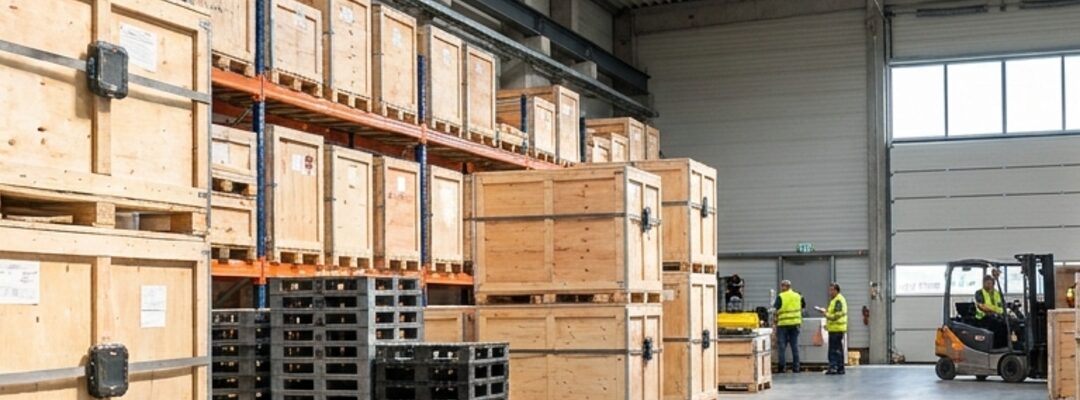
Custom racks, stillages, IBCs, totes, and pallets cycle constantly between OEMs and tier-one suppliers, and historically a logistics director had two unappealing options for tracking them. Buy a $150 cellular GPS unit per container and watch the math fall apart at any scale beyond a few hundred units. Or rely on barcode and manual scans and accept that anything happening between facilities was somebody else’s problem. Infrastructure-free asset tracking is the third option that finally fits the asset class.
What Is Infrastructure-Free Asset Tracking?
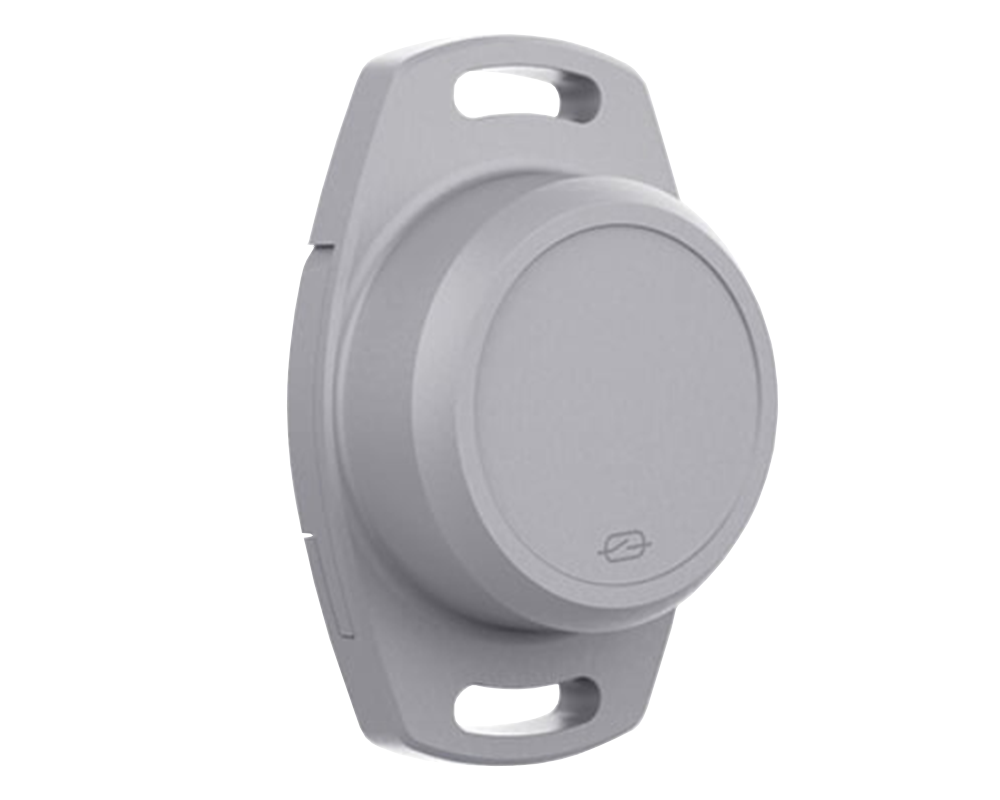
Infrastructure-free asset tracking is a location method that uses a globally distributed terrestrial network of connected devices to relay asset positions to the cloud, eliminating the need for any localized hardware on the part of the asset owner. A low-power Bluetooth Low Energy tag is fixed to the container, broadcasts a unique encrypted identifier, and that identifier is picked up and forwarded by the millions of smartphones, vehicle hubs, forklifts, and dedicated nodes that already exist in the world. There are no Wi-Fi access points to install, no cellular plans to provision, no RFID readers to wire, and no scanner chokepoints to staff.
For a deeper comparison of how infrastructure-free BLE stacks up against RFID, Wi-Fi RTLS, and cellular GPS across capability and cost, see why gateway-less BLE is replacing legacy RFID across logistics in 2026. The remainder of this article focuses specifically on what infrastructure-free tracking unlocks for returnable transport packaging.
The Real Cost of an Untracked RTP Fleet
The 5 percent to 15 percent annual loss rate on returnable assets is not a single number. It is a distribution shaped by where the assets travel, who handles them, and how visible they are between handoffs. The loss number that ends up on a finance report is the average. The story underneath it is what determines whether a tracking investment pays back.
For a fleet of 10,000 mid-cost returnable containers (think custom automotive racks at $200 to $300 per unit), the typical hidden cost looks like this in a year:
| Loss Category | Typical Annual Cost at 10,000 Containers |
|---|---|
| Direct shrinkage (5 to 15 percent loss rate) | $100,000 to $450,000 |
| Emergency repurchasing premium (rush manufacturing, expedited freight) | $50,000 to $200,000 |
| Manual asset hunt labor (FTEs assigned to find missing fleet) | $100,000 to $300,000 |
| Production-line disruption from JIT shortfalls | $250,000 to $2,000,000 |
| Supplier dwell exposure (capital tied up in held assets) | $150,000 to $500,000 |
| Total hidden cost per year | $650,000 to $3,450,000 |
The largest line item on most fleets is the one finance teams have the hardest time costing accurately: production-line disruption. A single JIT shortfall caused by a missing rack of sequenced parts cascades into hours of downtime, expedited reshipment costs, and overtime labor at the assembly plant. The shortfall is rarely traced back to a missing container. The container just becomes part of the operations team’s accepted noise.
Supplier dwell is the second-largest line item and the one infrastructure-free tracking solves most cleanly. A custom rack sitting in a tier-one supplier’s yard for 60 days past its return contract is not a 60-day inconvenience. It is a real-dollar opportunity cost on the capital invested in that rack, and it is what forces the periodic emergency repurchasing cycle that finance teams hate.
Why Per-Unit Economics Killed Cellular GPS for RTP at Scale
The reason 90 percent of returnable container fleets remained untracked through 2024 was not a lack of GPS technology. It was that the math never closed. A standard cellular GPS device costs $50 to $300 in hardware plus $100 to $300 per year in cellular service. At 10,000 containers, that is $1.5 million to $6 million in first-year hardware spend and another $1 million to $3 million in annual recurring cost. For a fleet of containers each worth $200 to $300, the tracker costs more than the asset. The economics do not pencil.
The peel-and-stick BLE tag breaks the model. Hardware cost goes to zero (the tag is included in the subscription), and the annual cost per asset comes in at $45. The same 10,000-container fleet now tracks for $450,000 a year, all in, with no infrastructure to amortize and no IT overhead. That is the economic shift behind the wave of RTP tracking deployments closing in 2026.
$450,000 per year. Zero infrastructure. Tracking 10,000 returnable containers with the GPX AssetTag covers indoor, outdoor, and in-transit visibility, with no readers to wire, no cellular plans to manage, and no IT staff to dedicate.
Consumer tags do not solve this problem either. A 10,000-pallet AirTag, Tile, or Samsung SmartTag deployment locks the fleet to a single platform’s relay network, runs on coin cells that need replacement roughly once a year, exposes drivers and supplier workers to anti-stalking alerts that broadcast tracking notifications to nearby phones, and offers no enterprise API or fleet console for managing assets at scale. The asset class is enterprise. The toolset has to match.
How Infrastructure-Free Networks Change the RTP Math
What makes infrastructure-free tracking work for returnable containers specifically is that the relay network covers exactly the places RTP fleets travel. The GPX BLE network draws from billions of connected devices, including the smartphones carried by every yard worker, the mobile hubs mounted in delivery trucks, and the forklifts moving inventory inside any modern distribution center. Wherever a returnable container goes, that network is already there.
The strategic implication is significant. Tracking a custom rack through a tier-one supplier’s yard no longer requires the supplier to install a single piece of GPX hardware. Drivers carrying connected devices, plant workers with phones, and the supplier’s own facility vehicles all act as relay nodes, anonymously and securely. The asset stays visible across the entire supply chain whether the partner has bought into the tracking program or not.
Layered on top of the network sits Scout AI, the analytics platform that turns relay pings into operational decisions. For RTP fleets specifically, Scout AI flags supplier dwell exceeding contract terms, identifies containers cycling slower than fleet average, predicts which assets are statistically likely to disappear based on lane and handler patterns, and answers natural-language questions like “Which of my custom racks have been at Supplier X for more than 21 days?” The model is predictive, not reactive. Instead of telling a logistics director that a rack went missing last week, Scout AI flags the dwell pattern that predicts the rack will go missing if no one acts in the next 72 hours, the kind of foresight that protects Just-in-Time production schedules from cascading disruption.
Beyond alerting, Scout AI exposes webhooks that integrate directly into agentic AI environments and workflow automation platforms like n8n, Make, Zapier, and custom internal orchestration. When a container breaches a geofence or dwell threshold, the platform can automatically trigger downstream workflows including supplier invoices, replenishment orders, ERP updates, or alerts to a Slack or Teams channel, all without a human in the loop. This is the operational pattern enterprise supply chains are converging on in 2026: tracking data is the input, agentic automation is the output, and human attention gets reserved for exceptions the system cannot resolve on its own.
Where the 18x ROI Comes From
The 18x average first-year ROI on RTP tracking deployments is not a single lever. It is the sum of six measurable cost recoveries that compound across a year of fleet operations.
Shrinkage reduction. Continuous visibility, automated geofence alerts, and supplier dwell flags push annual loss rates from the historical 5 to 15 percent band toward the sub-2 percent benchmark documented in recent industry data. On a $2 million fleet, that recovery alone covers the program cost several times over.
Avoided emergency repurchasing. Without visibility, fleets buy ahead of expected losses, creating a permanent surplus that ties up working capital. Tracking eliminates the safety stock and the rush manufacturing premium that comes with last-minute reorders.
Reduced search labor. The two-FTE asset hunt team becomes one part-time analyst working from a Scout AI dashboard. Direct labor savings are typically $100,000 to $250,000 a year on a mid-sized fleet.
Faster cycle times. When containers move predictably and dwell is enforced, the same fleet completes more turns per year. A 10 percent improvement in cycle time effectively expands fleet capacity by 10 percent without buying a single additional unit.
JIT and line-stop avoidance. Predictive dwell alerts catch problems before they cascade into a production disruption, which is where the largest hidden cost in the original loss table lives.
Supplier accountability. Automated dwell reports turn contract enforcement from a manual quarterly review into an exception-based daily workflow, recovering capital that suppliers would otherwise hold past terms.
For operations teams running continuous improvement programs, infrastructure-free tracking turns fleet visibility into a daily operational discipline rather than a quarterly review, with continuous data on supplier behavior, dwell, and cycle-time variance feeding directly into Scout AI’s automated alerts and exception workflows.
$1.2M to $3M in typical first-year savings on a 10,000-container deployment, against a $450,000 annual program cost. That is the math behind the 18x ROI figure most enterprise RTP tracking deployments cite.
Industries Seeing the Fastest RTP Tracking Adoption
Automotive and Heavy Manufacturing
Sequenced delivery operations between OEMs and tier-one suppliers run on custom racks, stillages, and engineered totes that are expensive to replace and impossible to substitute. These programs are the original use case for infrastructure-free tracking. Per-asset values often exceed $500, supplier dwell is a chronic problem, and a single missing rack of sequenced engine carriers can stop an assembly line. Most major North American OEMs are now deploying or piloting BLE-based RTP tracking on their highest-value rack fleets.
Food, Beverage, and Cold Chain
Pooled crates, beverage kegs, and reusable produce containers cycle through retailer distribution centers, foodservice operators, and a long tail of third-party handlers. The fleet sizes are large, the per-unit values are moderate, and the loss rates are historically high because no single operator owns the full visibility chain. Infrastructure-free tracking solves the visibility-handoff problem without requiring every cooperator to install hardware.
Pharmaceutical and Medical Distribution
Reusable pharma totes, medical equipment cases, and cold chain shippers move through hospital networks, distribution hubs, and patient-facing facilities where dedicated tracking infrastructure is impractical. The combination of high asset values, regulated chain-of-custody requirements, and dispersed handling environments makes BLE-based infrastructure-free tracking the dominant approach for new deployments in this segment.
The Path to a Tracked RTP Fleet Starts With the Math
The strongest signal in returnable transport packaging this year is that the per-unit economics have finally crossed the threshold where every container in a fleet can carry a tracker. The hardware cost is gone. The infrastructure cost is gone. What remains is a $45-per-asset-per-year subscription that delivers continuous visibility, predictive dwell management through Scout AI, and the platform-agnostic relay coverage of the GPX BLE network.
If you are running a returnable container fleet and you are still pricing the loss into your operating budget instead of pricing the visibility into your tracking budget, infrastructure-free asset tracking deserves a serious look at your next planning cycle.
Frequently Asked Questions (FAQs)
How do you track returnable containers at scale without buying GPS hardware for every unit?
The most economical approach is infrastructure-free BLE tracking. A peel-and-stick tag attaches to each container at no upfront hardware cost and runs on a flat $45 per asset per year subscription. The tag broadcasts an encrypted signal to a globally distributed terrestrial network of connected devices, which relays the location to the cloud without any localized infrastructure or cellular plan per unit.
What is the typical loss rate on returnable transport packaging without tracking?
Industry data places untracked RTP fleet loss rates between 5 percent and 15 percent annually depending on asset class, handling environment, and supplier behavior. With AI-enabled tracking and predictive dwell management, leading fleets are now operating below 2 percent shrinkage.
How does infrastructure-free tracking handle assets at third-party supplier yards?
The terrestrial relay network does not require the supplier to install any hardware. Connected devices already present in the supplier’s environment, including driver phones, plant worker phones, and mobile vehicle hubs, relay the GPX AssetTag signal anonymously and securely. Visibility is automatic across every yard the asset visits.
How is supplier dwell time measured and enforced with infrastructure-free tracking?
Scout AI applies a geofence around each supplier facility and starts a dwell timer the moment a tagged asset enters. When dwell exceeds a contractually defined threshold, the platform issues an automated alert to the responsible account owner and logs the exception for monthly supplier scorecards. Most fleets see measurable improvement in dwell compliance within 90 days of deployment as suppliers respond to the visibility, not the alerts.