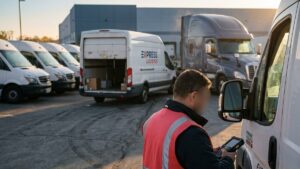

A single stolen excavator is rarely a one-line loss. It stalls the schedule, triggers an emergency rental at peak rates, inflates the next insurance renewal, and ties up a project manager in police reports for a week. Multiply that across a fleet of skid steers, generators, light towers, and tool chests scattered over open job sites, and the math behind heavy equipment tracking stops being a nice-to-have and starts looking like basic financial hygiene.
The numbers explain the urgency. Construction equipment theft costs the U.S. industry an estimated $300 million to $1 billion every year, with fewer than 25 percent of stolen machines ever recovered. On top of that, more than 11,000 construction equipment theft incidents are reported annually, roughly 1,000 per month, and most of them happen between quitting time and sunrise when nobody is watching the yard.
Heavy equipment tracking closes that gap between what is happening in the field and what the office assumes is happening. The right system does far more than drop a pin on a map. It fences your yard digitally, alerts you the second an asset moves without authorization, logs engine hours for maintenance, and surfaces the idle iron you are paying to own but barely using. This guide breaks down the top 7 heavy equipment tracking solutions for 2026 and the evaluation criteria that actually move the needle, so you can protect assets, cut downtime, and keep crews moving.
Key Takeaways
- Theft protection that pays for itself: IoT-enabled tracking platforms with geofencing and real-time alerts recover stolen assets at far higher rates than the sub-25 percent industry baseline, often within hours.
- Lower operating costs: Cloud-based asset analytics expose idle iron, fuel-burning over-idling, and equipment hoarding, helping cut redundant rentals and reduce insurance premiums on tracked, recoverable fleets.
- Predictive maintenance telematics: Live engine hours and diagnostic data let you service machines before they fail, reducing unplanned downtime and extending asset life.
- Coverage for every asset: GPS units protect powered machines, battery-powered trackers cover non-powered assets with up to 10-year battery life, and low-cost BLE tags handle tools and attachments.
- Integration with your stack: The strongest platforms push engine hours and utilization data straight into ERP, accounting, and project management systems like Procore, so location data improves billing and scheduling automatically.
How AI-Driven Heavy Equipment Tracking and IoT Telematics Work
Heavy equipment tracking is the use of GPS, cellular, Bluetooth, and satellite technology to monitor the location, usage, and condition of machinery and tools across job sites, yards, and in transit. A small hardware device is mounted on or inside each asset, and that device reports back to a cloud platform where managers can see where every machine is, how long it has been idle, and whether it has crossed a boundary it should not have.
Modern systems split into a few hardware categories, and most serious operations run a blend of them:
- Powered GPS trackers: Hardwired or self-powered devices for high-value, powered assets like excavators, loaders, dozers, and trucks. These report frequent location, engine hours, and movement.
- Battery-powered asset trackers: Self-contained GPS units for non-powered assets such as generators, light towers, trailers, and containers, with multi-year battery life so there is no wiring and no maintenance burden.
- Bluetooth (BLE) tags: Small, low-cost tags for tools, attachments, and smaller equipment that relay their location through a nearby gateway device, ideal for the high-volume items that are easy to lose and rarely worth a full GPS unit.
The platform layer is where the value compounds. Geofencing, automated alerts, utilization reporting, and AI-driven analytics turn raw location pings into decisions about theft response, maintenance timing, and whether you actually need to buy that next machine.
Why Predictive Maintenance and Cloud-Based Asset Analytics Are Mission Critical in 2026
The pressure on equipment-heavy businesses has only intensified. Replacement machinery is more expensive than it was two years ago, lead times remain long, and theft rings have grown more organized and faster at moving stolen iron across state lines. Certain assets are targeted again and again because they are portable, valuable, and easy to resell. The most frequently stolen heavy equipment includes:
- Skid steer loaders and compact track loaders
- Mini excavators and backhoes
- Portable generators, light towers, and air compressors
- Towable equipment, trailers, and attachments
- Power tools and high-value hand tools
Here are the pain points the right tracking solution is built to solve:
- Theft and low recovery rates: Heavy machinery often lacks the standardized identification numbers that cars have, so once it is repainted or shipped, recovery odds collapse. GPS-equipped assets with geofencing and live alerts are recovered at dramatically higher rates, frequently within hours instead of never.
- Idle iron and poor utilization: Equipment that sits unused is pure cost. Tracking utilization and dwell time exposes the machines you can redeploy, rent out, or sell instead of buying more, which directly lowers total cost of ownership.
- Fuel shrinkage and over-idling waste: Diesel is one of the biggest line items on a job site, and excessive idling burns it for nothing. Fuel consumption monitoring and idle-time alerts pinpoint the machines and operators leaving engines running for hours, which cuts fuel spend and supports CO2 emissions reporting for sustainability goals.
- Equipment hoarding across sites: Project managers often hold onto generators, light towers, and other shared gear so they do not lose it to another site, which forces the company to rent redundant equipment it already owns. Geofencing and utilization tracking make hoarding visible, so idle assets get reallocated instead of duplicated.
- Unplanned downtime and missed maintenance: When engine hours are logged manually or not at all, preventive maintenance slips, and a missed service window turns into a breakdown that idles a crew. Automated engine-hour tracking keeps service on schedule.
- Billing disputes and proof of presence: Verifiable on-site time data settles client disputes and ensures you get paid for every hour your equipment was actually working.
- Rising insurance costs: Insurers increasingly reward tracked, recoverable fleets. Tracking can reduce premiums while protecting you from the deductible-eating losses that fall below your coverage threshold.
- Multi-site blind spots: When equipment moves between yards and job sites, spreadsheets fall apart. A single real-time view across all locations is the only reliable inventory.
The upside is as measurable as the risk. Construction firms that adopt digital asset management and mobile workflows report a 28 percent improvement in maintenance labor productivity, a 15 to 25 percent reduction in maintenance costs from preventive maintenance, and a 25 to 30 percent drop in duplicate or unnecessary tool purchases once teams can see what they already own. Beyond location, modern trackers capture engine hours, idle time, fuel usage, mileage, and operator behavior, which is the data that powers predictive maintenance, accurate utilization, and cleaner client billing.
Top 7 Heavy Equipment Tracking and Telematics Solutions Compared (2026 Fleet Guide)
The market ranges from purpose-built equipment trackers to broad fleet telematics suites. The right fit depends on whether you need rapid-deploy hardware for mixed powered and non-powered assets, deep engine diagnostics, or construction-specific workflows. Here is an at-a-glance comparison, followed by a detailed look at each solution.
| Solution | Tracking Technology | Power / Battery | Best For | Standout Advantage |
|---|---|---|---|---|
| GPX Intelligence | GPS, BLE, WiFi positioning, cellular | Self-powered up to 10 years (AssetTrack); replaceable-battery BLE AssetTag | Mixed fleets of powered and non-powered assets needing fast install | AI platform with Scout AI plus flat-rate pricing and hardware included |
| Samsara | GPS, cellular, telematics gateways | Wired and battery-powered options | Large mixed fleets wanting diagnostics plus cameras | Unified telematics, video, and engine data |
| Geotab | GPS, OBD telematics, asset trackers | Wired GO device; battery asset trackers | Data-driven fleets needing deep integrations | Open platform with a large add-on marketplace |
| Trackunit | GPS, cellular, BLE tags | Hardwired and battery-powered (tags) | Construction-first fleets and OEM integrations | Purpose-built for heavy construction equipment |
| Tenna | GPS, BLE, asset tags, QR | Wired and battery hardware tiers | Contractors tracking equipment, tools, and materials together | One platform across every asset class |
| Verizon Connect | GPS, cellular telematics | Wired and rugged battery trackers | Fleets wanting carrier-backed coverage and support | Mature fleet suite with strong reporting |
| CalAmp | GPS, cellular, modular hardware | Wired and battery device range | Operations needing flexible, customizable hardware | Rugged, configurable devices for harsh use cases |
1. GPX Intelligence
GPX Intelligence is built for exactly the problem most equipment owners face: a mixed fleet of powered and non-powered assets that needs protection now, not after a multi-week wired installation. The hardware lineup pairs rugged GPS trackers with low-cost Bluetooth tags, all reporting into a single AI-driven platform, so a contractor can cover everything from a $200,000 excavator down to a tool chest in one system.
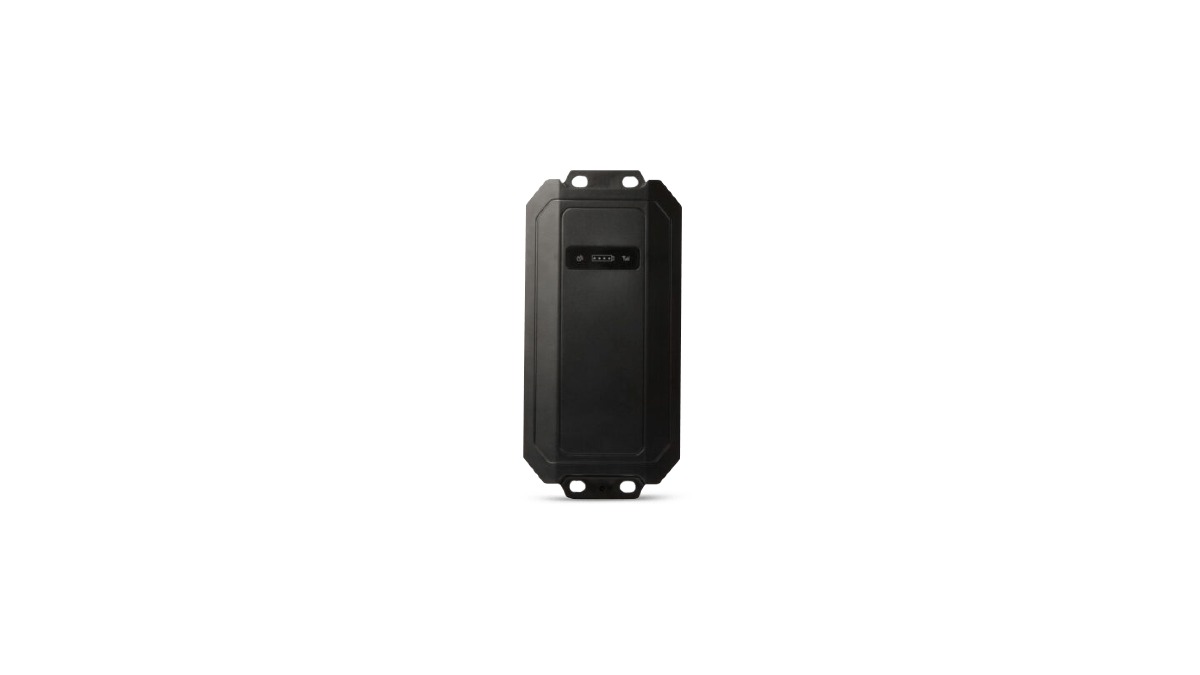
The flagship AssetTrack is a self-powered GPS device with battery life up to 10 years when reporting once per day, an IP67 weatherproof housing, magnetic and flange mounting, and WiFi positioning for location visibility even in basements, parking decks, and steel-heavy structures where GPS struggles. It also reads nearby BLE AssetTags, turning each tracker into a gateway that extends coverage to smaller items. The AssetTag itself runs on a replaceable coin-cell battery good for 3 to 4 years, installs by sticker or screw in under a minute, and needs no wiring or power source on the asset.
On the software side, the GPX platform includes Scout AI, a built-in analyst that answers plain-English questions like which assets have been idle for more than 48 hours, replacing clunky report builders with a conversation. Geofencing, automated theft alerts, dwell analytics, and engine-hour tracking come standard.
Key features:
- Rapid-deploy GPS and BLE hardware for powered and non-powered assets, installable in minutes
- Battery life up to 10 years on the AssetTrack, with no recharging or wiring
- Geofencing, instant movement and theft alerts, and dwell-time analytics
- Scout AI for natural-language queries and predictive monitoring
- Flat-rate annual pricing with hardware included and no per-ping fees
Best for: Construction, fleet, automotive, healthcare, and in-transit operations that want one platform covering yellow iron, trailers, generators, and tools without budget surprises. See the GPX heavy equipment tracking page for the full hardware and pricing breakdown.
2. Samsara
Samsara is a broad telematics platform that bundles location tracking with engine diagnostics, dash cameras, and driver safety tools. For operators running large mixed fleets of trucks and equipment who want video and telematics in a single pane of glass, it is a strong contender.
Key features: Real-time GPS, engine and diagnostic data, AI dash cameras, geofencing, and a wide integration ecosystem. Considerations: The hardware leans toward wired installs and the platform is priced and scoped for larger fleets, which can be more than a smaller equipment-focused operation needs.
Best for: Enterprise fleets that want telematics, video, and equipment data unified across vehicles and machines.
3. Geotab
Geotab is known for its open, data-rich approach. Its GO device plugs into vehicle diagnostic ports, and a marketplace of add-ons lets fleets extend the platform with asset trackers and third-party tools. It appeals to operations that want to mine telematics data deeply and integrate it with other business systems.
Key features: Extensive vehicle data capture, a large add-on marketplace, strong reporting, and open APIs. Considerations: Getting full value often requires choosing the right resellers and add-ons, which adds setup complexity for teams that want a turnkey equipment solution.
Best for: Data-driven fleets with the appetite to configure and integrate.
4. Trackunit
Trackunit focuses squarely on construction and heavy equipment, with deep OEM relationships and hardware designed for harsh job-site conditions. It pairs hardwired telematics units for powered machines with Bluetooth tags for smaller assets, all surfaced in a construction-oriented platform.
Key features: Construction-specific telematics, OEM integrations across major equipment brands, BLE tagging for tools and attachments, and machine health insights. Considerations: The model is oriented around hardwired installs and the construction vertical, which is ideal if that is your world and less flexible if your fleet spans many industries.
Best for: Construction fleets that want a vendor built around heavy machinery and OEM data.
5. Tenna
Tenna is a construction technology platform designed to track equipment, vehicles, tools, and materials together in one system. It offers a tiered range of GPS, BLE, and tag-based hardware so contractors can match the device cost to the value of each asset.
Key features: Unified tracking across every asset class, maintenance and inspection workflows, and hardware tiers from rugged GPS down to QR and BLE tags. Considerations: As a platform spanning many asset types and workflows, it rewards teams ready to standardize their processes around it.
Best for: Contractors who want a single source of truth for heavy equipment, light vehicles, tools, and materials.
6. Verizon Connect
Verizon Connect is a mature fleet management suite backed by a major carrier. It combines GPS tracking, telematics, and rugged battery-powered asset trackers with extensive reporting and a large support organization, which appeals to fleets that value carrier-backed reliability.
Key features: Real-time tracking, asset trackers for non-powered equipment, robust reporting and dashboards, and broad fleet management tooling. Considerations: The suite is comprehensive and contract-based, which can feel heavy for operators who only need equipment tracking.
Best for: Fleets that prioritize a long-established vendor with deep support and reporting.
7. CalAmp
CalAmp provides modular, rugged tracking hardware that other platforms and integrators frequently build on. For heavy equipment and construction-specific use cases that demand durable, configurable devices, CalAmp offers flexible options across wired and battery-powered form factors.
Key features: Durable, customizable hardware, telematics edge devices, and flexibility for specialized deployments. Considerations: CalAmp is often strongest as a hardware and platform foundation, so the experience depends on the software layer you pair with it.
Best for: Operations and integrators that need rugged, configurable hardware for demanding environments.
GPS vs BLE vs Cellular vs Satellite: Choosing the Right Anti-Theft Tracking Hardware
One of the most common questions is which technology to put on which asset. There is no single right answer, because the best fleets layer technologies based on asset value, location, and movement. Here is how the main options compare for heavy equipment:
- GPS: The backbone for outdoor location on high-value powered and non-powered assets. Accurate to within a few meters outdoors, GPS is the standard for excavators, loaders, generators, and trailers. It struggles indoors and in deep structures, which is where WiFi positioning and BLE fill the gap.
- BLE (Bluetooth Low Energy): Short-range, low-cost, and battery-efficient, BLE tags are ideal for tools, attachments, and smaller equipment. They relay location through a nearby gateway, so a BLE tag on a tool chest reports through the GPS tracker on the truck it rides in. This is the most affordable way to cover the high-volume items that go missing most often.
- Cellular: The transport layer that carries location data back to the platform. Coverage and network quality matter, which is why leading devices use carrier networks with strong rural reach plus fallback options for spotty areas.
- Satellite: The fallback for the most remote sites with no cellular coverage, common in mining, energy corridors, and rural infrastructure work. It keeps assets visible where cellular alone would go dark.
The practical takeaway: put GPS on the iron, BLE tags on the tools, and choose a platform that unifies both, with WiFi and satellite fallback for the hard locations. A system that forces you to choose only one technology will leave blind spots somewhere in your fleet.
Key Features to Evaluate: Geofencing Alerts, Utilization Rates, and API Integrations
Once you move past the marketing, a handful of practical criteria separate a system that pays for itself from one that becomes shelfware. Evaluate every candidate against these factors:
- Install method and speed: Can you protect an asset in minutes with a battery-powered or peel-and-stick device, or does every install require wiring and downtime? Rapid deployment means you can tag a delivery the day it arrives, not weeks later.
- Coverage across environments: The system should handle outdoor, indoor, and in-transit tracking. Look for GPS plus WiFi positioning and BLE so assets stay visible inside structures and yards, not just in open lots.
- Geofencing and real-time alerts: Automated boundaries around yards and job sites, with instant notifications when an asset moves after hours, are the difference between intercepting a theft and filing a claim weeks later.
- Mixed-fleet support: One platform should cover powered machines, non-powered assets, and small tools. Running three vendors for three asset types multiplies cost and confusion.
- Engine hours and utilization data: Look for automated engine-hour logging and dwell analytics so you can schedule maintenance on time and identify idle iron you can redeploy instead of replace.
- AI and reporting: Platforms with built-in AI analysis, like natural-language querying, turn data into answers faster than report builders. Ask whether you can simply ask the system a question.
- Total cost and pricing model: Watch for hidden hardware fees, per-ping charges, and multi-year lock-ins. Flat-rate pricing with hardware included makes budgeting predictable and lowers the barrier to covering your whole fleet.
- Battery life and maintenance: Multi-year, low-maintenance batteries on non-powered assets mean you deploy once and forget it, rather than chasing dead trackers across job sites.
- Durability for harsh conditions: Job sites are dusty, wet, and rough. Devices should carry an IP67 weatherproof rating and rugged housings so they survive vibration, temperature swings, and the elements without failing when you need them most.
- Integration with your business systems: Tracking data is most valuable when it flows into the tools you already run. Look for API integrations and prebuilt connectors to ERP, accounting, payroll, and construction project management platforms like Procore, so engine hours and utilization push straight into billing, costing, and maintenance scheduling instead of living in a standalone dashboard.
- Compliance support: For mixed fleets with on-road vehicles, look for features that help with DOT requirements, and for crews where equipment usage ties to labor, automated usage logging supports cleaner labor and payroll records.
- Scalability and support: The system should grow from a pilot of a few assets to a full fleet across multiple sites without a re-platform, backed by responsive support and onboarding that does not require heavy employee training.
Mapping Your Fleet Before You Pick a System
The right choice comes down to matching the system to your fleet, not chasing the longest feature list. Start by mapping your assets: how many are powered versus non-powered, how many tools and attachments need coverage, and how spread out your sites are. That inventory tells you whether you need deep engine diagnostics, broad asset coverage, or both.
If your priority is rapid, no-wiring protection across a mixed fleet of powered iron, non-powered equipment, and small tools, with predictable flat-rate pricing and an AI platform that answers questions in plain English, GPX Intelligence is built for exactly that profile. If you run a large vehicle-heavy fleet that needs video and driver safety alongside equipment data, a broad telematics suite may fit better. If you are a construction-only operation that wants OEM-level machine data, a construction-first vendor earns a close look.
Whatever you choose, the cost of waiting is measured in stolen excavators, missed maintenance, and idle machines you keep buying because you cannot see the ones you already own. Protecting an asset the day it lands on a job site is always cheaper than replacing it after a quiet long weekend. To see how rapid-deploy GPS and BLE tracking covers your full fleet under one flat-rate plan, explore the GPX asset and equipment tracking solutions or request pricing to start tagging your equipment before the next holiday weekend.
Frequently Asked Questions (FAQs)
Can you track heavy equipment without hardwiring or a power source?
Yes. Battery-powered GPS trackers and Bluetooth tags require no wiring and no connection to the asset’s power. A self-powered device like the GPX AssetTrack installs with a built-in magnet or flange and runs for years on its internal battery, while the BLE AssetTag attaches by sticker or screw and runs on a replaceable coin-cell battery good for 3 to 4 years. This makes it possible to protect non-powered assets like generators, trailers, light towers, and tools that have no power source of their own.
How does predictive maintenance telematics reduce equipment downtime?
Predictive maintenance telematics reduces downtime by logging live engine hours and diagnostic data so servicing happens before a small issue becomes a catastrophic failure. Instead of reacting to a breakdown that idles an entire crew, managers schedule maintenance around real usage and condition data. The result is fewer unplanned failures, longer asset life, and crews that keep working instead of waiting on a repair.
What is the ROI of an IoT-enabled heavy equipment tracking system?
Many operations reach return on investment within 6 to 12 months. The payback comes from several sources at once: recovered or deterred theft losses, lower insurance premiums on tracked and recoverable fleets, fewer redundant rentals once hoarding and idle iron are visible, reduced fuel waste from over-idling, and a 15 to 25 percent drop in maintenance costs through preventive servicing. Because the savings compound across theft, utilization, and maintenance, a single recovered excavator can cover the cost of tracking an entire fleet for a year.