
Modern businesses run on physical power like excavators, tractors, generators, trailers, and high-value medical devices. However, as operations expand across multiple job sites and vast territories, keeping track of these physical assets has moved beyond simple logistics. It is now a matter of survival.
A recent report by the National Equipment Register (NER) estimates that construction equipment theft costs the industry up to $1 billion annually with recovery rates as low as 21%. With fuel costs fluctuating and “ghost assets” (equipment you pay for but cannot find) eating into margins, organizations can no longer depend on whiteboard schedules or manual spreadsheets to manage their yellow iron and non-powered assets.
This is why modern GPS equipment tracking solutions have become essential. Today’s Heavy Equipment Telematics platforms provide real-time visibility into every bulldozer and trailer. They automate maintenance schedules and use AI-driven predictive insights to prevent breakdowns before they kill your project timeline.
Why Should You Care About Tracking Your Physical Equipment?
Without proper construction asset tracking systems, organizations face critical operational bleeds such as theft, unauthorized side-jobs, fuel wastage, and safety compliance risks. Companies lose thousands of dollars annually simply because they cannot prove where a generator was over the weekend.
Effective heavy equipment tracking delivers real, measurable benefits:
- Theft Recovery: Instant geofencing alerts and real-time location data drastically increase recovery chances.
- Predictive Maintenance: AI algorithms analyze engine hours and fault codes to schedule service. This prevents catastrophic engine failures.
- Utilization Optimization: Stop renting equipment you already own. Utilization reports show you what is sitting idle.
- Fuel & Carbon Reporting: Precise idling data helps cut fuel costs and simplifies ESG/Sustainability reporting.
Modern equipment tracking software integrates Satellite and Cellular IoT, Edge Computing, and mixed fleet visibility to enable smarter decisions based on real numbers. Whether you are managing a farm in Nebraska or a construction site in NYC, these tools are your command center.
7 Best Equipment Tracking Software
1. GPX Intelligence
Best For: Companies needing full visibility across tools, trailers, heavy equipment, and high-value shipments.
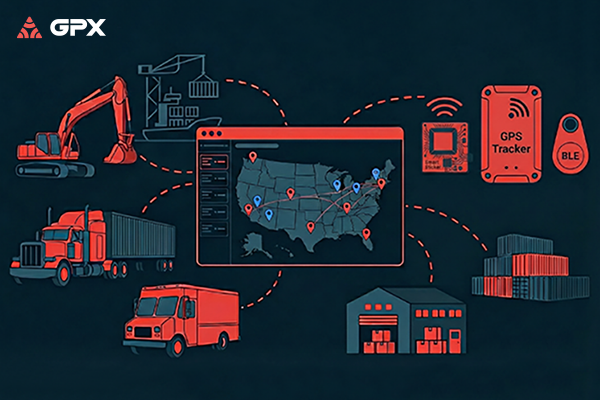
GPX Intelligence offers a modern, mixed-fleet tracking system that covers everything from small tools to large construction assets. Their platform combines GPS, Bluetooth, and cellular IoT to deliver real-time visibility for powered and non-powered equipment. GPX is also known for its Smart Label technology, which provides low-cost tracking for one-way shipments and high-value cargo.
Key Features:
- Rugged GPS trackers for trailers, generators, and heavy equipment
- Smart Labels for pallets, medical devices, and one-way shipments
- BLE + GPS hybrid tracking for indoor/outdoor visibility
- Theft-alert geofencing and off-hours movement notifications
- Usage reports and maintenance insights for reducing downtime
Pricing: Flexible per-device and per-shipment options.
2. Tenna
Best For: Construction companies needing Total Equipment Control (from drills to cranes).
Tenna is built specifically for construction and markets itself as “The Construction Technologists.” Unlike generic trackers, Tenna handles everything from $50 drills (via QR codes) to $500,000 excavators (via GPS). It solves the “Mixed Asset” problem better than almost anyone.
Key Features: QR/Barcode scanning for small tools, hardwired GPS for heavy iron, loose equipment management, and deep integration with construction ERPs like Procore.
Pricing: Custom based on asset volume.
3. Verizon Connect
Best For: Organizations prioritizing Reliability and Network Coverage across the USA.
Leveraging Verizon’s massive cellular network, this solution offers superior connectivity for assets in semi-remote areas. It is a powerhouse for Field Service Management and tracking high-value trailers and yellow iron.
Key Features: High-fidelity map replays, geofencing, power take-off (PTO) monitoring (know when the lift bucket is actually moving, not just the truck), and harsh usage alerts.
Pricing: Tiered subscription plans.
4. Motive (formerly KeepTruckin)
Best For: Logistics and Fleets needing Compliance + Asset Tracking.
Motive has made a strong push into the asset gateway space. If you already use Motive for ELD (Electronic Logging Devices) for your trucks, adding their asset gateways to your trailers and flatbeds creates a connected setup.
Key Features: Solar-powered asset gateways, AI-powered load matching, detention time tracking (know how long your trailer sits at a customer’s dock), and theft prevention mode.
Pricing: Custom quote-based.
5. Geotab
Best For: Data-heavy fleets wanting Open Platform Flexibility.
Geotab is the “data scientist’s choice.” Their GO9 Rugged device is IP67 rated for harsh weather. Geotab excels because it is an open platform. This means you can integrate third-party cameras, sensors, and tire pressure monitors seamlessly.
Key Features: Advanced telematics data normalization, collision reconstruction, “IOX” expandability for satellite add-ons, and robust EV (Electric Vehicle) heavy equipment support.
Pricing: Sold via authorized resellers.
6. Samsara
Best For: Large enterprises requiring a unified platform for Mixed Fleets (Vehicles + Heavy Equipment).
Samsara is the market leader in Connected Operations. It bridges the gap between on-road fleet management and off-road equipment tracking. Its “unpowered” asset gateways (AG26) and powered gateways (IG21) are well-known for being tough and reliable.
Key Features: Real-time GPS, AI Dashcams, engine utilization reports, fuel usage analysis, and a single dashboard for trucks and heavy equipment.
Advanced Features: Edge computing capabilities that process data locally for instant alerts even in low-connectivity zones.
Pricing: Custom quote-based (Enterprise focus).
7. Tive
Best For: Supply Chain and High-Value Cargo visibility (Medical/Perishable).
While the others track the vehicle, Tive tracks the shipment itself. This is crucial for medical equipment or sensitive high-value cargo. It provides real-time visibility into condition (temp/humidity) as well as location.
Key Features: Multi-sensor trackers (Shock, Light, Temp), disposable/recyclable tracker options, and reliable global coverage.
Pricing: Per-tracker/shipment model.
How to Choose the Best Equipment Tracking Solution?
Choosing the best equipment tracking software depends on your specific physical asset mix:
- All-in-one AI-powered tracking (Fleet, Tools, Trailers, Equipment): GPX with Scout AI is the best option if you want a single platform that combines GPS, BLE, and AI-driven insights to track vehicles, heavy equipment, small tools, trailers, and field assets in one place.
- Mixed Fleet (Trucks + Diggers): Samsara for a unified view.
- Pure Construction (Tools + Iron): Tenna for managing small tools and big machines together.
- Remote/Rural Operations: Verizon Connect for superior cellular reliance or look for Satellite Hybrid options.
- Trailers & Logistics: Motive for detention tracking and solar power.
- Medical/Cargo: Tive for condition monitoring (shock/temp).
Modern equipment tracking systems with 5G IoT connectivity, predictive maintenance AI, and solar-harvesting hardware make asset tracking easier and more efficient for your team.
Frequently Asked Questions (FAQs)
How does GPS tracking work for non-powered assets like trailers or containers?
For non-powered assets, we use battery-operated or solar-powered Asset Gateways. These devices wake up periodically (e.g., twice a day or upon motion) to ping their location via cellular or satellite networks. This ensures years of battery life without needing a connection to an engine’s power source.
What is the ROI of heavy equipment tracking software?
The ROI is often realized within 6 to 9 months. By eliminating ghost assets (unnecessary rentals), recovering just one stolen machine (avg value $30k+), and reducing fuel idling by 20%, the system pays for itself. Additionally, insurance providers often offer premiums discounts for GPS-equipped fleets.
Can tracking software predict when my excavator needs maintenance?
Yes. modern platforms use predictive maintenance telematics. They pull real-time ECU (Engine Control Unit) data to analyze engine hours, fault codes, and usage intensity. AI algorithms then predict failure points before they happen. This automates the work order process to prevent costly downtime.
What is the difference between Cellular and Satellite asset tracking?
Cellular tracking (4G/5G/LTE-M) is cheaper and updates faster but requires cell tower range. Satellite tracking works anywhere on earth (ocean, deep mines, deserts) but is more expensive and updates less frequently. For remote heavy industries, a Hybrid (Dual-Mode) tracker is the best future-proof solution.
How does geofencing prevent equipment theft?
Geofencing creates a virtual digital boundary around your job site or yard. If a piece of equipment moves outside this boundary during off-hours (e.g., 2 AM on a Saturday), the system instantly triggers a “Theft Alert” to your phone. It can even disable the starter on supported machines, allowing police to intercept the asset quickly.