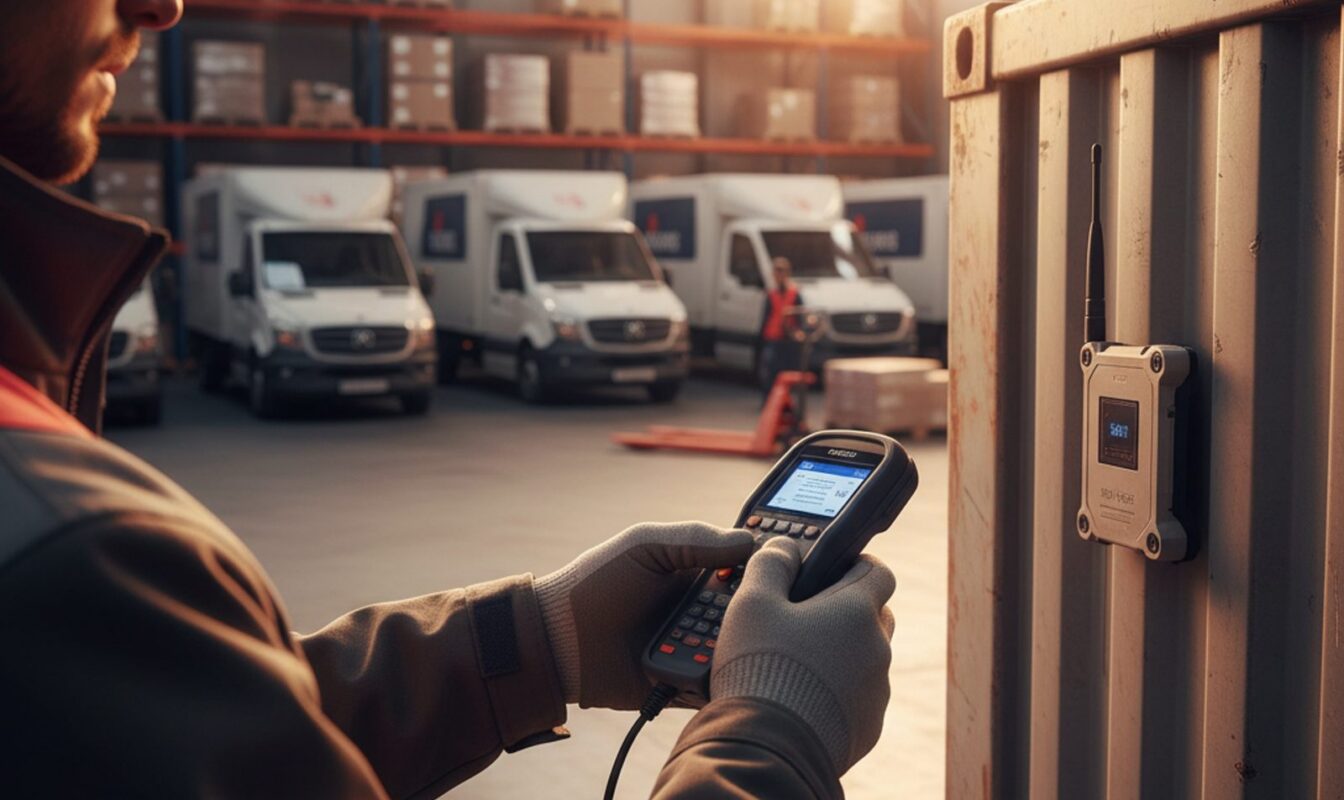
Top 7 Cold Chain Logistics Tracking Solutions (Cold Chain Temperature Monitoring) for 2026


One four-hour temperature excursion inside a refrigerated trailer can wipe out a $180,000 pallet of biologics, a truckload of strawberries, or an entire run of frozen seafood before anyone on the receiving dock knows the load is dead. The economics are unforgiving and the regulatory environment is tightening. The global cold chain logistics market sat at USD 382.3 billion in 2025 and is forecast to climb to USD 1.37 trillion by 2035 at a 13.8% CAGR, driven by biologics, frozen food, and the FDA Food Safety Modernization Act (FSMA 204) traceability rule. At the same time, the United Nations Food and Agriculture Organization estimates that 526 million tonnes of food, roughly 12% of the global total, are lost or wasted every year because of insufficient refrigeration. Industry analysts put the per-vertical pain even sharper: up to 20% of food spoils in transit, and the global pharmaceutical industry loses an estimated $35 billion every year to transport-related temperature failures. The installed base of refrigerated trucks alone is forecast to grow from 4.22 million in 2023 to 5.41 million by 2032.
Cold chain logistics tracking solutions, also called cold chain temperature monitoring platforms, exist to close that gap. They combine GPS, Bluetooth Low Energy (BLE), cellular and satellite connectivity, calibrated temperature and humidity sensors, AI-powered analytics, and audit-ready reporting so shippers, carriers, 3PLs, pharma manufacturers, and grocery retailers can prove an unbroken cold chain and act on excursions in real time instead of discovering them at the receiving door.
This guide ranks the top 7 cold chain tracking solutions for 2026, starting with the comparison table, then a deeper look at each platform, the pain points buyers are trying to solve, the AI and IoT trends shaping the category, and a decision framework for choosing the right one.
What Is Real-Time Cold Chain Temperature Monitoring? 2026 IoT and FSMA 204 Standards
A real-time cold chain monitoring system is an IoT platform that continuously tracks temperature, humidity, location, and shock during transit and storage using cellular, BLE, and satellite connectivity, delivering instant alerts, audit-ready records, and AI analytics that satisfy FSMA 204, GDP, HACCP, and 21 CFR Part 11.
Cold chain logistics tracking solutions, sometimes called real-time cold chain temperature monitoring platforms, exist to close the gap between an excursion happening and a quality team finding out about it. They continuously monitor location, temperature, humidity, light, shock, and door-open status across temperature-sensitive shipments and storage facilities, then surface alerts, audit trails, and predictive insights through a software platform. Modern cold chain tracking platforms combine four layers:
- Hardware: Calibrated data loggers, BLE temperature tags, cellular GPS trackers, satellite-capable trackers, and reefer telematics units. Most platforms support both reusable, multi-year tags and single-use disposable trackers for one-way shipments.
- Connectivity: A mix of 4G LTE-M, NB-IoT, 5G, satellite, BLE gateway networks, and Wi-Fi to keep data flowing across trucks, warehouses, ocean containers, last-mile vans, and walk-in coolers.
- Software platform: A web and mobile dashboard with geofencing, alerting, shipment timeline view, sensor heatmaps, exception management, and an exportable audit trail that satisfies FSMA 204, Good Distribution Practice (GDP), HACCP, and customer cold-chain SLA requirements.
- AI and analytics: Predictive ETAs, anomaly detection, lane risk scoring, mean kinetic temperature (MKT) calculations, and natural-language analytics that let supply chain teams ask plain-English questions about their cold chain performance.
Cold chain tracking matters in 2026 for three reasons. First, FSMA 204 enforcement begins in January 2026 and requires batch-level digital traceability for high-risk foods, with audit-ready data retrievable within 24 hours. Second, biologics, cell and gene therapies, and GLP-1 weight-loss drugs are driving record volumes of temperature-sensitive pharmaceutical freight. Third, cargo theft and reefer-targeted strategic theft continue to climb, so cold chain visibility is now a loss-prevention layer, not just a quality layer.
Supply Chain Friction: Solving Pharma Spoilage, Sensor Drift, and FSMA 204 Compliance
Before evaluating vendors, it helps to name the specific operational pain points that drive cold chain tracking purchases. Most buyers walk in with three or four of the following on their list:
- Silent excursions discovered at delivery. Loads arrive at the customer dock already spoiled because the temperature breach was only logged on a USB stick or chart recorder that nobody read until unloading.
- Audit and compliance exposure. FSMA 204, FDA 21 CFR Part 11, EU GDP, USP <1079>, and customer cold-chain SLAs all require defensible, time-stamped, tamper-evident temperature records. Manual logs and spreadsheets do not survive a regulatory inspection.
- Last-mile blind spots. Once a pallet leaves the refrigerated trailer and moves into a sortation hub, cross-dock, or last-mile van, traditional reefer telematics goes dark.
- Reefer fuel and uptime. Diesel reefer units burn fuel even when idle. Without real-time setpoint, return-air, and supply-air visibility, fleets waste fuel and discover unit failures only after the cargo is damaged.
- Cargo theft and tampering. Reefer trailers and pharma loads are now top targets for strategic cargo theft. Buyers want geofence breach alerts, door-open events, and covert backup trackers as part of the cold chain stack.
- Returnable asset loss. High-value reefer containers, insulated shippers, and reusable thermal packaging walk off and never come back without a tagging program.
- Data silos. Reefer telematics, in-pallet loggers, WMS, TMS, and ERP rarely talk to each other, so the cold chain story has to be reconstructed manually after an incident.
- Cost of disposables at scale. Single-use loggers and BLE labels are cheap individually but expensive at fleet scale, so finance teams want a mix of reusable and disposable hardware tuned to lane economics.
- False temperature claims and disputed deliveries. Receivers reject loads citing temperature breach, and without continuous, time-stamped, tamper-evident data, the shipper absorbs the chargeback or credit. Operators using real-time cold chain monitoring have documented up to 30% reductions in customer credits tied to false temperature claims by embedding sensor records directly into proof of delivery (POD).
- Sensor drift and recalibration fatigue. Every NIST-traceable temperature probe drifts over time. Most pharma quality programs require annual recalibration, and consumer-grade sensors can drift outside spec inside 12 months. The hidden cost of cheap hardware is the recurring expense of pulling devices out of service, sending them to a calibration lab, and revalidating them against an ISO 17025 reference.
- The reverse logistics problem for reusable trackers. Reusable cellular and BLE trackers run $40 to $200 per device, but they only pay back if they come home. Receivers routinely throw them in the trash, send them back inside scrap pallets, or simply lose them. A real cold chain tracking program needs a documented return-merchandise workflow, prepaid return mailers, or a disposable-hardware option for one-way lanes where recovery economics do not work.
B2B Hardware Checklist: 5G RedCap, BLE Gateways, and NIST-Traceable Sensors
The strongest cold chain logistics tracking solutions in 2026 share a consistent hardware and software feature set. Use this as a screening checklist when shortlisting vendors:
- Calibrated, NIST-traceable temperature and humidity sensors with documented accuracy (typically ±0.5°C or better for pharma, ±1.0°C for food) and a defined recalibration interval (12 months is the pharma quality default, against an ISO 17025 reference).
- 5G RedCap, LTE-M, and NB-IoT connectivity options. 5G RedCap (Reduced Capability) is emerging as the 2026 standard for low-bandwidth, low-power, long-life cellular sensors. LTE-M and NB-IoT remain the workhorse fallbacks for cross-border lanes where 5G coverage is still patchy. Top platforms support all three, plus satellite for ocean and remote routes.
- Real-time cellular or satellite reporting, not just end-of-trip data dumps. Mid-shipment intervention requires mid-shipment visibility.
- BLE backbone for last-mile and indoor visibility, including warehouse, yard, and cross-dock environments where GPS goes dark. Global BLE gateway networks make this scalable.
- Configurable alerting thresholds and escalation rules with SMS, email, and webhook delivery. Native API and EDI webhook support is what allows alerts to flow directly into TMS, WMS, ERP, and incident management systems without manual reconciliation.
- Mean kinetic temperature (MKT) calculation and exportable audit reports in formats receivers and regulators accept.
- AI-powered predictive ETAs and lane risk scoring that flag at-risk shipments before the excursion happens.
- Native FSMA 204, GDP, HACCP, and 21 CFR Part 11 readiness, including immutable audit logs and electronic signatures where required.
- Multi-IMSI global connectivity for cross-border lanes (US-Canada-Mexico, EU, Asia) without manual SIM swaps.
- A flexible hardware mix spanning reusable BLE tags with multi-year batteries, single-use disposable trackers for one-way shipments, and reefer telematics for refrigerated fleet assets.
- FAA-compliant air cargo and lithium battery handling. Air-shipping a cellular tracker triggers FAA and IATA lithium battery rules. Top devices include a “flight safe” mode that automatically disables cellular transmissions during takeoff and landing while continuing to log temperature locally, so the cold chain record stays intact and the shipment stays compliant.
- Open APIs and pre-built integrations for TMS (MercuryGate, McLeod, Oracle TMS), WMS (Manhattan, Blue Yonder, Korber), and ERPs.
- AI-native analytics that let operators query the cold chain in natural language and surface patterns of loss and risk.
The 4 R’s of Cold Chain Monitoring: Right Temperature, Right Place, Right Time, Right Documentation
Across the food and pharma industries, the operating principles of effective cold chain monitoring are often summarized as the “4 R’s.” They are a useful screening lens when comparing platforms, because a vendor that can deliver all four is rare and a vendor missing any one of them is leaving exposure on the table.
- Right Temperature. Continuous, calibrated, NIST-traceable temperature readings within the product’s required range, plus humidity, light, and shock data where the product profile demands it. This is the floor, not the ceiling.
- Right Place. Real-time location intelligence at every leg of the journey, including indoor warehouses, ocean containers, cross-docks, and last-mile vans where pure cellular GPS goes dark. Hybrid cellular plus BLE gateway networks are how modern platforms close this gap.
- Right Time. Predictive ETAs and excursion alerts delivered fast enough to intervene mid-shipment, not after the load is on the receiving dock. AI-driven lane risk scoring is moving this from reactive to proactive.
- Right Documentation. An immutable, audit-ready record that satisfies FSMA 204, EU GDP, FDA 21 CFR Part 11, HACCP, and customer cold-chain SLA requirements, with retrieval inside the 24-hour window FSMA 204 now expects.
Cold Chain Logistics Tracking Solutions: Comparison Table
| Provider | Best For | Hardware | Connectivity | AI & Analytics |
|---|---|---|---|---|
| 1. GPX Intelligence | Mixed cold chain fleets, returnable assets, in-transit pharma and food shipments | TempTrack, AssetTag (4-year replaceable battery), Smart Labels, RoadTrack Wired | 4G LTE-M, BLE (3B+ gateway network), Wi-Fi | Scout AI natural-language analytics |
| 2. Sensitech (Carrier) | Pharma and biologics shippers with deep GDP/21 CFR needs | TempTale data loggers, real-time trackers | Cellular, satellite, USB download | ColdStream platform, MKT reports |
| 3. Tive | One-way real-time shipment tracking for food and pharma | Solo 5G single-use tracker (temp, humidity, light, shock) | 5G/LTE-M global cellular | Predictive ETAs, lane risk scoring |
| 4. Controlant | Pharma manufacturers and vaccine distribution at global scale | Reusable Saga cellular loggers | Cellular, global multi-IMSI | Aurora cloud platform, real-time SaaS |
| 5. ORBCOMM | Reefer trailer and intermodal container telematics fleets | Reefer telematics units, satellite trackers | Dual-mode cellular and satellite | FleetEdge, reefer health analytics |
| 6. Roambee | High-value in-transit shipments and verifiable delivery | Bee multi-sensor reusable trackers | Cellular, BLE, satellite | Honeycomb AI, predictive delivery |
| 7. SmartSense by Digi | Fixed-location monitoring for grocery, foodservice, pharmacy | Wireless sensor probes, gateways | Wi-Fi, cellular, LoRa | Automated task management, FSMA 204 reporting |
1. GPX Intelligence: AI-Powered Cold Chain Visibility for Mixed Fleets and Returnable Assets
GPX Intelligence sits at the intersection of cold chain tracking, returnable-asset visibility, and AI-powered supply chain analytics. The platform was purpose-built for shippers, 3PLs, and manufacturers that need to monitor temperature-sensitive freight while also tracking the trailers, containers, returnable shippers, and last-mile assets that carry it. The hardware portfolio is unusually deep, covering reusable BLE tags, single-use disposable labels, reefer-grade telematics, and a dedicated cold chain device:
- TempTrack delivers continuous temperature and humidity monitoring with calibrated sensors, configurable thresholds, and exportable audit reports for FSMA 204, GDP, and customer cold-chain SLAs.
- GPX AssetTag is a Bluetooth Low Energy asset tag with a 4-year replaceable battery and IP67 enclosure. It pairs with the global GPX BLE gateway network of more than 3 billion gateways to deliver indoor and yard-level visibility for returnable thermal shippers, reusable totes, and last-mile assets.
- GPX Smart Labels are single-use BLE-based shipment tags that ship at the pallet level, then pair with cellular gateways on the truck or in-container to relay temperature, humidity, light, and shock in real time without the per-unit cost of cellular hardware.
- RoadTrack Wired provides hardwired vehicle and reefer-tractor telematics with ignition, route, and harsh-event data.
- Scout AI is the natural-language analytics layer that lets operators ask plain-English questions like “show me every load that breached 8°C last quarter” or “which lanes are driving our cold chain claims” and get answers backed by real telemetry.
Best for: Mid-market and enterprise cold chain operations that want one vendor across in-transit shipments, returnable assets, and reefer fleet telematics, plus AI analytics on top.
2. Sensitech (Carrier): The Pharma Cold Chain Incumbent
Sensitech, part of Carrier Global, has been a pharma cold chain mainstay for decades. The TempTale family of data loggers is still the most widely referenced piece of hardware in pharma quality audits, and the company’s real-time GeoView trackers extended the portfolio into in-transit visibility. The ColdStream platform aggregates data across loggers and real-time devices and produces the MKT reports, deviation summaries, and 21 CFR Part 11 documentation that pharma QA teams expect.
- Deep installed base across pharma manufacturers, biopharma cold chain 3PLs, and food shippers.
- Strong calibration program with NIST-traceable accuracy and clear SOP documentation.
- Long-standing presence in pharmaceutical GDP audits, which lowers buyer risk for regulated programs.
Best for: Pharma and biologics shippers that prioritize regulatory pedigree and an established audit footprint.
3. Tive: Real-Time Single-Use Visibility
Tive built its reputation on the Solo 5G single-use tracker, a multi-sensor disposable device that combines temperature, humidity, light, shock, and location in a single small form factor. The platform layers on predictive ETAs, lane risk scoring, and a clean operator dashboard. Tive is widely used for fresh produce, seafood, dairy, biologics, and high-value food and beverage shipments where one-way tracking is the cleanest economic fit.
- 5G/LTE-M cellular with global coverage for cross-border lanes.
- Strong single-use unit economics for produce, perishables, and biologics.
- Predictive ETAs and intuitive shipment-timeline UI.
Best for: Shippers running one-way perishable lanes where reusable hardware is impractical.
4. Controlant: Pharma at Global Scale
Controlant became globally visible during the COVID-19 vaccine distribution effort and has since extended its reusable-cellular logger model into broader pharma and biologics cold chain programs. The Saga loggers are designed to be returned, reused, and centrally calibrated, and the Aurora cloud platform handles real-time alerting, MKT reporting, and exception management at enterprise scale.
- Reusable hardware model is favored by sustainability-focused pharma programs.
- Strong real-time alerting for high-value biologics and clinical trial logistics.
- Multi-IMSI cellular for global lanes without manual SIM management.
Best for: Global pharma manufacturers and vaccine distribution programs that want a reusable, returnable cold chain logger backed by a managed-service model.
5. ORBCOMM: Reefer Trailer and Intermodal Telematics
ORBCOMM operates at a different layer of the cold chain than the in-pallet logger vendors. Its strength is reefer telematics for refrigerated trailers, reefer containers, and intermodal assets. The platform delivers two-way control over reefer setpoints, return-air and supply-air temperatures, fuel level, runtime, and unit health. Two-way reefer control means fleet managers can change setpoints, switch run modes (continuous, start-stop, defrost), clear alarms, and reboot units remotely from the dashboard, including direct integrations with Thermo King and Carrier refrigeration platforms. Dual-mode cellular and satellite connectivity keeps reefer data flowing across ocean, rail, and over-the-road movements.
- Two-way reefer control, not just monitoring.
- Satellite coverage for ocean and remote-region reefer movements.
- Reefer health analytics that flag failing units before cargo is damaged.
Best for: Reefer fleets, refrigerated 3PLs, and intermodal operators managing a population of refrigerated trailers and containers.
6. Roambee: Verifiable Delivery for High-Value Cold Chain
Roambee positions itself around “verifiable delivery” meaning real-time, sensor-based proof that a shipment arrived on time, in full, and within spec. The Bee multi-sensor trackers handle temperature, humidity, shock, light, and tilt, and the Honeycomb AI platform layers predictive delivery, anomaly detection, and exception management on top. Roambee leans into high-value pharma, electronics, and specialty cold chain segments.
- Reusable multi-sensor hardware with cellular, BLE, and satellite options.
- AI-driven predictive delivery and exception management.
- Strong fit for high-value international and intermodal cold chain lanes.
Best for: Shippers of high-value temperature-sensitive freight that need verifiable proof of in-spec delivery.
7. SmartSense by Digi: Fixed-Location Cold Chain Monitoring
SmartSense by Digi anchors the fixed-location side of the cold chain, walk-in coolers, refrigerated cases, prep tables, freezers, and pharmacy refrigerators across grocery, foodservice, and healthcare locations. Wireless sensor probes report to gateways that escalate temperature, humidity, and door-open events to the SmartSense platform, which also automates HACCP task management and FSMA 204 reporting.
- Multi-site fixed-location coverage at scale.
- Built-in HACCP and FSMA 204 task management workflows.
- Strong fit for retail grocery, foodservice chains, and pharmacy refrigeration.
Best for: Multi-location retailers, foodservice operators, and pharmacy chains that need to monitor refrigeration assets across hundreds or thousands of stores.
Cold Chain Tracking by Vertical: Pharma GDP vs. Food Grade FSMA 204
Cold chain logistics tracking solutions show up differently in each vertical. The common thread is that real-time visibility moves cold chain from a reactive cost center into a proactive margin protector. The single most important distinction in the field is between the pharma cold chain and the food cold chain. The food cold chain exists primarily to preserve commercial value: spoilage, off-spec product, retailer rejection. The pharma cold chain exists primarily to protect patient safety, because the degradation of a vaccine, biologic, or cell therapy is often invisible. That difference drives stricter sensor accuracy, tighter alert thresholds, stability budget tracking, mean kinetic temperature (MKT) calculations, and the deeper documentation pharma quality teams need to satisfy 21 CFR Part 11 and EU GDP audits.
- Pharmaceuticals and biologics: Vaccines, biologics, cell and gene therapies, and GLP-1 drugs ship under strict 2°C to 8°C, controlled-room-temperature (15°C to 25°C), or ultra-cold (-70°C and below) profiles. Audit-ready loggers, MKT calculations, stability budget tracking, and 21 CFR Part 11 e-signatures are non-negotiable. Clinical trial logistics for investigational medicinal products (IMPs) run even tighter tolerances and demand a fully validated cold chain monitoring stack.
- Food and beverage: Fresh produce, seafood, meat, dairy, frozen foods, and prepared meals run on tight margins. FSMA 204 requires batch-level traceability with audit data retrievable within 24 hours, and a single temperature excursion can flip a load from profit to total loss.
- Reefer fleet operations: Refrigerated carriers and 3PLs use reefer telematics to manage fuel burn, setpoint compliance, and unit uptime across hundreds of trailers, then layer in-pallet loggers for high-value loads.
- Last-mile and direct-to-consumer cold chain: Meal kits, online grocery, biologics direct-to-patient, and same-day pharmacy delivery have created a new last-mile cold chain segment where small, low-cost trackers travel inside insulated shippers.
- Returnable thermal packaging: Reusable insulated shippers, gel packs, and active cold-chain containers cost hundreds to thousands of dollars per unit. BLE asset tags with multi-year batteries make it economical to track and recover them at scale.
- Floral, seafood, and live cargo: Specialty cold chain segments often run tighter tolerances than mainstream food and benefit from continuous humidity and ethylene monitoring alongside temperature.
Technical Callout: Why Mean Kinetic Temperature (MKT) Matters for Biologics
Pharma compliance does not rely on simple temperature averages. Instead, it relies on Mean Kinetic Temperature (MKT) to express the overall impact of temperature fluctuations on product potency. Top-tier cold chain platforms automate the MKT calculation from raw sensor data using the Arrhenius equation:
Tk = (ΔH / R) ÷ { −ln [ ( e−ΔH/RT1 + e−ΔH/RT2 + … + e−ΔH/RTn ) / n ] }
Where Tk is the Mean Kinetic Temperature, ΔH is the activation energy of the product reaction, R is the universal gas constant, Ti is the temperature reading at each interval (in Kelvin), and n is the number of samples. MKT applies to refrigerated and controlled-room-temperature products under EU GDP and USP <1079>. It does not apply to frozen products, which use cumulative time-out-of-spec instead. Pairing MKT with a stability budget (the total allowable time the product may spend outside its labeled storage condition over its lifecycle) is the auditable backbone of any pharma cold chain monitoring program.
AI, IoT, and 5G Trends Reshaping Cold Chain Temperature Monitoring
The next 24 months of cold chain tracking are being shaped by five converging trends that buyers should weigh against any vendor decision:
- AI-native cold chain analytics. Platforms like Scout, Honeycomb, and Aurora are moving cold chain from dashboard-and-alert tooling into conversational, predictive analytics. Operators ask questions in plain English and get answers backed by real telemetry, lane history, and weather context.
- Predictive excursion prevention. Machine-learning models now flag at-risk shipments before the excursion happens, using lane history, weather forecasts, traffic, and reefer-unit health data. The shift is from “what happened” to “what is about to happen and what should we do.”
- FSMA 204 readiness as a default capability. The January 2026 compliance deadline is forcing platforms to expose batch-level traceability, lot-linked sensor data, and 24-hour audit retrieval out of the box.
- BLE gateway networks and hybrid connectivity. Pure cellular trackers go dark indoors, inside metal containers, and in dense urban canyons. Hybrid stacks that combine cellular GPS, BLE, and global BLE gateway networks close those blind spots without exploding hardware cost.
- Sustainability and Scope 3 reporting. Reefer fuel burn, empty-mile reduction, returnable-shipper recovery, and spoilage prevention are now Scope 3 line items in food and pharma sustainability reports. Cold chain telemetry is becoming sustainability telemetry.
- Two-way reefer control and POD-grade evidence. Reefer telematics platforms increasingly support remote setpoint adjustment, run-mode changes, and alarm clearing, with native integrations to Thermo King and Carrier refrigeration units. The same continuous temperature record gets embedded directly into proof of delivery (POD) documentation, which is how shippers fight and win disputes over false temperature claims at the receiving dock.
Which Cold Chain Solution Fits Your Lanes and Cargo
The right cold chain tracking solution is the one that matches your shipment economics, regulatory exposure, and operational footprint. Walk through this five-step decision framework when evaluating vendors:
- Step 1: Map your lanes and asset mix. List the cold chain lanes (one-way vs round-trip), the assets (trailers, containers, returnable shippers, pallets, last-mile bags), and the temperature profiles (frozen, chilled, controlled-room-temperature, ultra-cold) you actually run. Hardware mix should follow lane economics, not the other way around.
- Step 2: Define the regulatory floor. Pharma programs need 21 CFR Part 11, GDP, and MKT reporting. Food programs need FSMA 204 and HACCP. Retail and foodservice need fixed-location monitoring with audit logs. Strike any vendor that cannot demonstrate the specific regulatory artifacts you will be audited against.
- Step 3: Audit the connectivity stack. Cellular-only platforms go dark in warehouses, ocean containers, and cross-docks. Ask each vendor exactly how they cover indoor, yard, and container environments, and whether they own (or rent) a BLE gateway network.
- Step 4: Pressure-test the analytics layer. Beyond dashboards, ask how the platform surfaces patterns of loss, predicts excursions, and integrates with TMS, WMS, and ERP. A vendor that cannot answer plain-English questions about your data will leave you doing it in spreadsheets.
- Step 5: Run a 60-day pilot on a real lane. Pick a high-stakes pharma or food lane and run the top two finalists side by side. Measure excursion detection latency, false-alert rate, audit-report turnaround, and integration friction. Award the contract on outcomes, not slideware.
For shippers and 3PLs that want one vendor across in-transit cold chain, returnable thermal assets, reefer fleet telemetry, and AI-powered analytics, GPX Intelligence is the platform built for that exact combination. TempTrack handles continuous temperature and humidity monitoring with audit-ready reporting. The AssetTag, with its 4-year replaceable battery and IP67 enclosure, makes long-duration tracking of returnable shippers and last-mile assets practical at scale. Smart Labels deliver pallet-level visibility on one-way lanes without per-unit cellular cost. RoadTrack Wired covers reefer-tractor telematics. And Scout AI sits on top of all of it as the natural-language analytics layer that turns cold chain telemetry into decisions.
Frequently Asked Questions (FAQs)
1. How much does a real-time IoT temperature data logger cost versus a passive logger?
Passive USB temperature data loggers typically run between $15 and $25 per device for one-way shipments and need to be plugged in at receiving to download the trip record. Single-use real-time cellular trackers run between $40 and $90 per device, deliver continuous in-transit visibility, and include the cellular service in that price. Reusable real-time BLE and cellular trackers run $40 to $200 per device but amortize over multiple trips, and BLE pallet labels can come in lower per shipment when paired with cellular gateways. The real cost calculus is not the $40 hardware delta. It is the avoided cost of a single $100,000 load rejection, a regulatory finding, or a chargeback that the continuous record would have prevented.
2. What is the difference between 5G RedCap, LTE-M, and NB-IoT for cold chain container tracking?
5G RedCap (Reduced Capability) is the 2026 cellular standard for low-bandwidth, low-power, long-life sensor data. It delivers 5G-grade reliability and global roaming without the power draw of full 5G, which makes it the emerging choice for battery-powered cold chain trackers that need multi-year life. LTE-M is the reliable workhorse fallback for cross-border lanes where 5G coverage is still patchy, with strong indoor and in-vehicle penetration. NB-IoT (Narrowband IoT) is a deep-penetration, ultra-low-power option for fixed-location and slow-update use cases like in-warehouse sensors. Top cold chain platforms support all three, with automatic network selection across regions.
3. Are cellular cold chain trackers FAA-approved for air cargo shipments?
Cellular cold chain trackers ship by air millions of times a year, but the lithium battery inside them triggers FAA and IATA dangerous-goods rules. Top-tier devices include a “flight safe” mode that automatically disables cellular transmissions during takeoff and landing while continuing to log temperature locally, then resumes transmission once the aircraft is at altitude or has landed. Look for devices with documented FAA, IATA, and PHMSA air-shipping compliance, lithium battery test reports under UN 38.3, and a clear list of approved airline cargo programs. Without flight-safe mode, a cellular tracker is not legal to fly in passenger or cargo aircraft.
4. How does GPX TempTrack support FSMA 204 and GDP compliance?
GPX TempTrack delivers continuous, time-stamped, tamper-evident temperature and humidity data with calibrated sensors and configurable alerting thresholds. The platform produces exportable audit reports that include shipment timeline, deviation events, mean kinetic temperature, and corrective-action documentation. Combined with the AssetTag for returnable thermal shippers and Scout AI for batch-level analytics, GPX gives food and pharma shippers a defensible cold chain record that satisfies FSMA 204 traceability and GDP Good Distribution Practice expectations.
5. Can a cold chain tracker work indoors, inside reefer containers, and at cross-docks?
Standard cellular and satellite GPS trackers do not work indoors, inside metal reefer containers, or at dense cross-docks, because the satellite signal cannot penetrate the structure. This is the single biggest blind spot in legacy cold chain tracking and where most “excursion discovered at delivery” incidents originate. Modern platforms close the gap by pairing GPS with BLE asset tags that connect to a global BLE gateway network, including the 3 billion-plus gateways in the GPX network, and by deploying in-container or in-trailer gateways that relay BLE data to cellular for in-transit visibility. The result is continuous cold chain visibility from origin warehouse, through cross-docks and yards, all the way to the receiving dock.