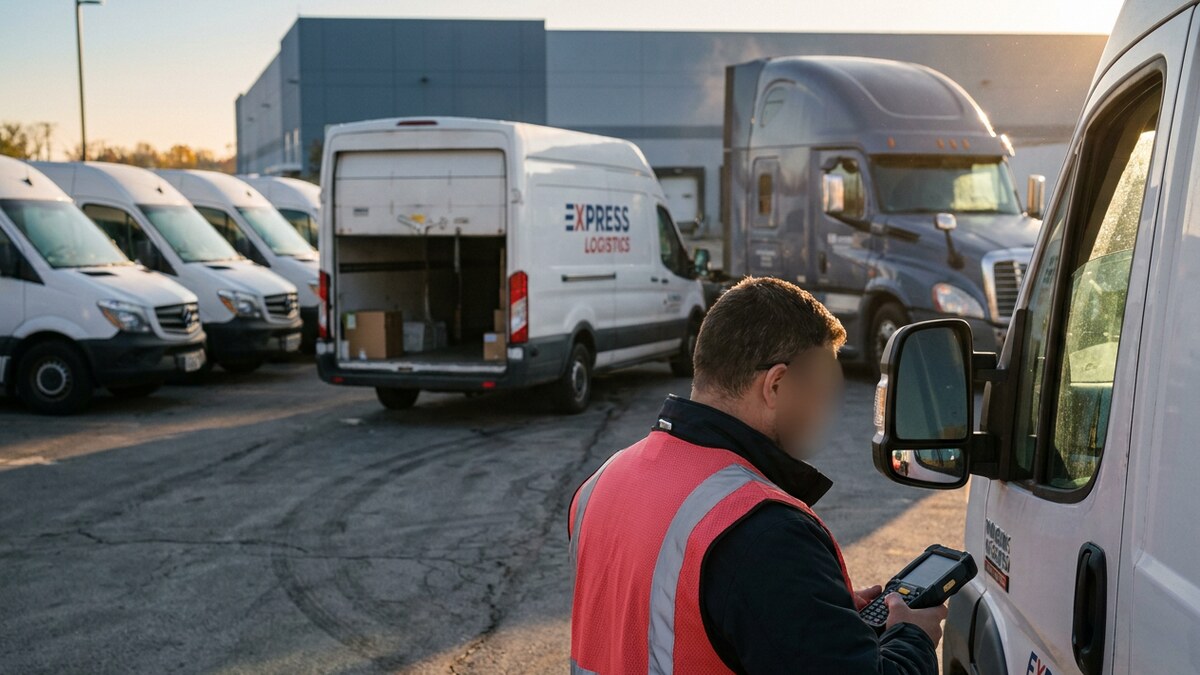


Asset-heavy fleets hit a specific wall. Broad platforms like Samsara bundle features built for vehicles, then charge for the parts you never touch and lock you into multi-year contracts. Operations leaders want a focused, flexible platform that fits a mixed pool of powered and unpowered assets, not a truck-first system with tracking bolted on.
The market backs that up. Fact.MR values the global fleet management market at $65.1 billion in 2024, projected to reach $300 billion by 2034. Within that, MarketsandMarkets expects the heavy equipment telematics market to hit $3.21 billion by 2032, growing 13.4% a year. Both point the same way: buyers are trading generic platforms for tools tuned to their exact asset mix.
For fleets loaded with construction equipment, trailers, containers, and other high-value gear, the right platform does more than drop dots on a map. It cuts downtime, controls fuel spend, keeps you audit-ready, and sharpens your edge. The right Samsara alternative is a partner that understands asset management, not just vehicle telematics.
| Platform | Network | Best For | Starting Price | Key Strength |
|---|---|---|---|---|
| GPX Intelligence | GPS, Cellular, BLE, Satellite | Enterprise asset and supply chain visibility | $3.50/mo | AI-powered prescriptive intelligence |
| Geotab | Cellular, GPS, Satellite | Construction and heavy equipment fleets | $10/mo (software only) | Extensive Marketplace integrations |
| Motive | Cellular, GPS | Small to mid-size fleets needing ELD | $25/mo (Starter) | AI-powered safety cameras |
| Verizon Connect | Cellular, GPS | Mid-sized fleets needing all-in-one | $50/mo (estimate) | Comprehensive reporting suite |
| GPS Insight | Cellular, GPS | Diverse fleets and field service management | Custom | Responsive product support |
| Trimble | Cellular, GPS, Satellite | Complex construction and agriculture ops | $30/mo (estimate) | Scalable all-in-one platform |
Where Generic Fleet Software Falls Short on Equipment
Start with the problems you need to solve. Generic fleet software handles vehicles well but falls short on diverse, high-value equipment. Here is where asset-heavy operations feel the strain.
- Minimizing Unplanned Downtime: Every idle hour on a stalled machine is lost revenue. You need predictive maintenance built on real usage data, not just mileage and reactive alerts.
- Controlling High Operational Costs: Fuel burn, unauthorized use, and sloppy routing inflate budgets fast. Granular data on idling and fuel levels lets managers catch costly behavior and stop theft.
- Ensuring Regulatory Compliance: Rules for Hours of Service, emissions, and safety shift constantly. A strong platform automates ELD reporting for vehicles and documents off-road equipment for audits.
- Gaining Real-Time Visibility: Losing a trailer, container, or machine is not an option. You need the exact location and status of every asset, powered or unpowered, in the yard or across the country. Plain GPS rarely covers it.
- Managing the Total Cost of Ownership: The monthly fee is one line item. Rigid multi-year contracts, hardware costs, and charges for unused features turn a cheap quote into an expensive commitment.
- Breaking Down Data Silos: Location data trapped in one system, work orders in another, and shipment status in a third forces manual reconciliation. An open API that feeds your ERP, EAM, and TMS turns scattered feeds into one operational picture.
- Surviving Harsh Environments: A tracker that fails in dust, vibration, or extreme cold is worse than none. Asset-heavy operations need IP-rated hardware and multi-year battery life on unpowered assets, so devices outlast the equipment cycle instead of forcing constant swaps.
- Driving Team Adoption: A platform only pays off when drivers and field crews actually use it. A cluttered interface and a heavy training load stall rollout, so the tool has to be simple enough that adoption happens without a change-management project.
1. GPX Intelligence
GPX Intelligence goes past basic tracking to deliver an AI-powered asset intelligence platform. It is built for construction, logistics, and manufacturing operations that run heavy, mixed asset pools. Vehicle telematics systems retrofit assets as an afterthought. GPX started with assets first, giving deep visibility into every machine, container, trailer, and tool. It pulls data from GPS, BLE, cellular, and satellite sensors into one view, then turns that data into decisions that save money.
Pros
- True Asset-First Focus: The platform handles mixed fleets of powered and unpowered assets, from heavy machinery down to hand tools.
- AI-Powered Prescriptive Analytics: Scout AI predicts problems instead of just flagging them, with guidance on maintenance, utilization, and logistics that heads off downtime.
- Flexible, Multi-Sensor Hardware: The lineup runs from rugged, long-life trackers to disposable Smart Labels, so every asset gets the right device with no vendor lock-in.
- No-Lock-In Contracts: Flexible terms match your business instead of trapping you in the multi-year deals common across the industry.
- Open API and Direct Integration: The platform connects to your existing ERP, EAM, and other systems, so data lands where your team needs it.
- Autonomous Control Tower: Automated workflows handle yard checks, inventory counts, and shipment monitoring, freeing your team to work the exceptions.
2. Geotab
Geotab is a major name in fleet management, with an open, scalable platform that serves fleets of every size. It runs strong in construction, government, and other heavy-equipment sectors. Its Marketplace sets it apart, offering hundreds of third-party hardware and software integrations for deep customization.
- Location: Toronto, Ontario, Canada
- Best for: Construction fleets, heavy equipment, and general fleet management that needs strong asset tracking and compliance.
- Pricing: Around $10 per vehicle each month for software; hardware is separate and resellers set final pricing.
- Connectivity: Cellular, GPS, Satellite, BLE.
- Standout features: Marketplace with 400+ integrations, open API, ruggedized GO RUGGED devices, and strong ELD/HOS compliance tools.
Pros
- Flexible platform that scales across fleet sizes and needs.
- Strong asset tracking with rugged devices for harsh conditions.
- Open API and a deep Marketplace for custom integrations.
Cons
- A reseller network sets pricing, which creates inconsistency and limited transparency.
- Hardware is almost always a separate cost on top of the software subscription.
3. Motive (formerly KeepTruckin)
Motive earned its reputation with small and mid-sized fleets through easy ELD compliance and safety tools. Once KeepTruckin, it now spans AI dash cams, fleet management, and asset tracking. On-road vehicles stay its core, with safety and compliance as the main draw.
- Location: San Francisco, California, USA
- Best for: Small to mid-size fleets that prioritize ELD compliance and AI safety features on on-road vehicles.
- Pricing: Around $20 to $25 per vehicle each month; hardware costs extra and official pricing needs a sales call.
- Connectivity: Cellular, GPS.
- Standout features: AI Omnicam with 360-degree coverage, automated IFTA and HOS compliance, Smart Load Matching, and vehicle health monitoring.
Pros
- Clean, easy interface and a driver-friendly mobile app.
- Top-tier ELD and HOS compliance.
- Advanced AI safety cameras and driver coaching.
Cons
- Often locks users into multi-year contracts with auto-renewal.
- Weak on unpowered assets, which need separate hardware.
- Proprietary hardware creates lock-in and compatibility headaches.
- Customer service quality runs inconsistent.
4. Verizon Connect
Verizon Connect, part of the telecom giant, combines GPS tracking, fleet management, and workforce management in one platform. It targets mid-sized to large fleets that want to manage vehicles, assets, and mobile workers together. Buyers know it for deep reporting and scale.
- Location: Alpharetta, Georgia, USA
- Best for: Mid-sized fleets that want GPS tracking, compliance, and asset management on one platform.
- Connectivity: Cellular, GPS.
- Standout features: Extensive reporting, payroll reporting integration, Google Earth location view, route optimization, and video telematics.
Pros
- One scalable platform for asset tracking, maintenance, and payroll support.
- Wide range of detailed, customizable reports.
- Strong compliance features for state-specific rules.
Cons
- Usually requires a minimum three-year contract, a heavy commitment.
- Pricing is bespoke and often runs higher than competitors.
- The 30-second refresh rate lags faster real-time trackers.
- Reviews frequently cite mixed customer service experiences.
5. GPS Insight
GPS Insight delivers flexible fleet and asset tracking for organizations with diverse fleets. It serves construction, landscaping, and field services. Buyers value its reliable GPS, customizable alerts, and tight field service integrations, which suit companies running both vehicles and mobile crews.
- Location: Scottsdale, Arizona, USA
- Best for: Diverse fleets of vehicles, trailers, and mobile assets that also need field service management.
- Connectivity: Cellular, GPS.
- Standout features: Integrations with QuickBooks Online, AI smart cameras, customizable alerts, and built-in field service tools.
Pros
- Intuitive platform with easy mobile apps and dashboards.
- Reliable GPS accuracy and real-time data.
- Strong reviews for product support and responsiveness.
Cons
- Customers report frequent upselling for extras like video.
- Installation gets tricky on older heavy-duty equipment.
- Camera and tracking features sometimes live in separate apps, which disjoints the experience.
6. Trimble
Trimble is an industrial technology company with a broad portfolio across construction, agriculture, and transportation. Its fleet and asset management tools tie into its industry-specific technology, which suits companies running complex, multi-part operations. The platform scales from heavy machinery and civil construction to long-haul trucking.
- Location: Westminster, Colorado, USA
- Best for: Complex operations across heavy machinery, construction, agriculture, and logistics, with scalable options for varied fleet sizes.
- Pricing: Around $30 per vehicle each month as an estimate, since pricing is highly customized.
- Connectivity: Cellular, GPS, Satellite.
- Standout features: Deep integration with civil construction technology (Earthworks, Siteworks), route planning, predictive maintenance, and AI analytics.
Pros
- Broad platform for diverse, complex operations.
- Highly adjustable and scalable to unique fleet requirements.
- Improves driver performance, planning, dispatching, and safety.
Cons
- Gets expensive, especially for smaller businesses not using the full suite.
- Some users report a steep learning curve and a dated interface in certain modules.
- Higher ownership costs price out buyers who only need a focused tool.
How to Choose the Right Samsara Alternative for Your Fleet
Picking your Samsara replacement comes down to how well a platform solves your operational problems, not how long its feature list runs. Use these four criteria.
First, assess your asset mix. Are you mostly tracking on-road vehicles, or does your work depend on trailers, containers, heavy equipment, and tools? If it is the latter, choose an asset-first platform. Vehicle telematics always treats non-vehicle assets as an afterthought. Look for hardware that spans powered trackers to unpowered BLE tags so you cover every asset affordably.
Second, scrutinize the contract. Restrictive multi-year lock-in is a top reason fleets leave Samsara. Refuse long-term commitments. A vendor confident in its product offers flexible terms, lets you scale up or down, and earns your business every month.
Third, look past the monthly price. Add up the Total Cost of Ownership: hardware, installation, feature charges, and the cost of proprietary lock-in. An open-API platform that integrates with your systems and mixes hardware often lands a lower TCO, even when the per-asset fee looks similar.
Fourth, demand more than dots on a map. Asset management now runs on intelligence, not just location. Choose a platform that uses AI to deliver predictive and prescriptive insight. It should tell you where your assets are and what to do next to protect their value, prevent downtime, and lift your bottom line.
Ready to move past simple tracking into real operational intelligence? See how the GPX AI-powered platform gives asset-heavy fleets the visibility and control they need. Explore our solutions today.
Frequently Asked Questions (FAQs)
What’s the main difference between Samsara and alternatives like GPX?
Focus. Samsara is a vehicle-centric telematics platform built for ELD compliance and video safety on on-road fleets. GPX is an asset-first intelligence platform that tracks a mixed pool of powered and unpowered assets and uses AI to deliver predictive insight beyond location.
Why are multi-year contracts a concern with fleet tracking platforms?
Long contracts lock you to one provider no matter how your needs, the technology, or the service change. That rigidity blocks you from switching to better, cheaper options and triggers penalties if you leave early. Vendors that offer flexible terms show more confidence in their product.
How does asset-focused tracking differ from vehicle-focused telematics?
Vehicle telematics pulls data from the OBD-II port to watch mileage, driver behavior, and engine health. Asset-focused tracking uses a wider sensor set (GPS, BLE, satellite, environmental) and hardware from rugged trackers to disposable labels. It monitors location, status, and utilization for everything from heavy equipment to returnable containers, many of which have no power source.
What is the true cost of a fleet tracking platform beyond the monthly fee?
The monthly per-asset fee is only the starting point. True Total Cost of Ownership adds hardware, installation, charges for features you never use, and the switching cost of proprietary lock-in and multi-year contracts. A platform with an open API, flexible terms, and a mix of hardware, from rugged trackers to disposable Smart Labels, often delivers a lower total cost than a cheaper-looking quote padded with add-ons.
How does AI improve asset tracking beyond GPS?
AI turns raw GPS data into business intelligence. Instead of a dot on a map, it predicts arrival times, flags underutilized assets, forecasts maintenance before failures, and detects theft or unauthorized use. That shifts your operation from reactive to proactive.
How large is the fleet management market and where is it heading?
Fact.MR values the global fleet management market at $65.1 billion in 2024, projected to reach $300 billion by 2034, as buyers shift toward platforms tuned to their specific asset mix.