Alternatives to AirTags: A Business Perspective on Real Asset Tracking


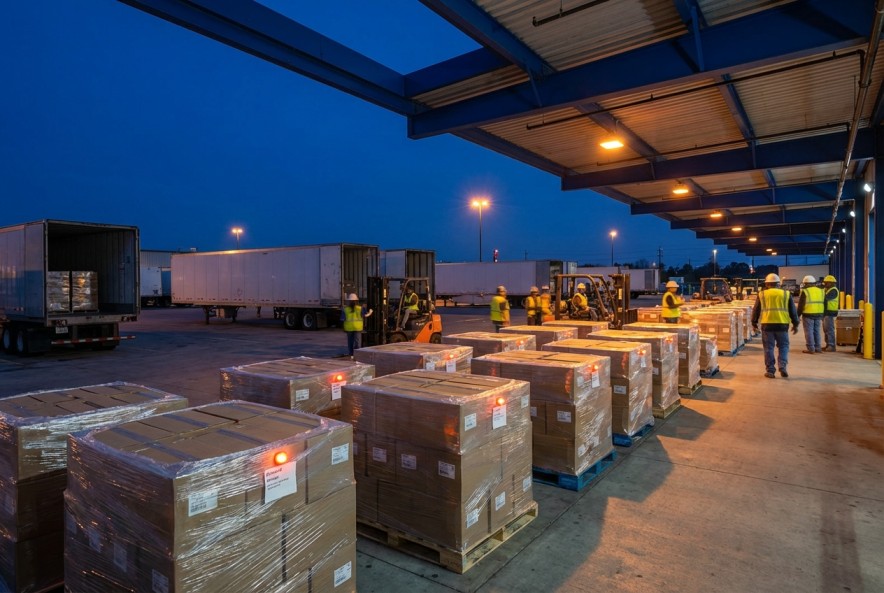
Last year, cargo theft losses in the United States exceeded $35 billion. Equipment vanishes from job sites. Trailers disappear from distribution yards. High-value shipments go dark somewhere between origin and destination. When operations teams try to locate missing assets using consumer Bluetooth trackers, they discover the tracker stopped updating the moment it left a populated area.
AirTags are often the first tracking solution people encounter. They are widely available, simple to deploy, and tightly integrated into the Apple ecosystem. From a business standpoint, however, AirTags define the starting point, not the solution. Once tracking extends beyond keys, bags, or occasional luggage, the limitations become clear. For businesses managing vehicles, equipment, shipments, or high-value assets, that distinction matters. This guide breaks down the most effective alternatives to AirTags and explains how to choose the right tracking solution based on real business use cases.
Consumer Trackers vs Business GPS
| Feature | AirTag / Tile | Logistimatics | GPX Intelligence | Samsara |
|---|---|---|---|---|
| Technology | Bluetooth | GPS + cellular | BLE + GPS + Satellite | GPS + AI |
| Real-time tracking | No | Yes | Yes | Yes |
| Hardware cost | $20-35 | $50-85 | $0-150 | $100-200 |
| Monthly fee | $0 | $15-25 | From $3.50/mo | $30-45 |
| Battery life | 1 year | Up to 18 months | Up to 10 years | Hardwired |
| Best for | Personal items | Personal / SMB | Any asset, any industry | Large fleets |
Why Businesses Look for Alternatives to AirTags
AirTags rely on Bluetooth, not GPS. This means location updates only occur when another Apple device is nearby. No nearby iPhone means no update, no movement history, and no real-time visibility.
For personal items, this limitation may be acceptable. For logistics teams, fleet managers, and asset owners, it is a critical failure point. Businesses typically move away from AirTags for four core reasons:
- Limited real-time tracking in remote or industrial areas
- Lock-in to the Apple ecosystem
- Privacy alerts that expose legitimate tracking
- Lack of enterprise-grade data, alerts, and reporting
When assets are mobile and valuable, estimation is not enough. Reliable tracking requires purpose-built solutions.
Bluetooth Tracker Alternatives for Consumer-Level Solutions
Bluetooth-based alternatives offer broader device compatibility or minor feature improvements, but they share the same structural limitation: dependence on nearby phones.
Tile Trackers
Tile is one of the most recognized alternatives to AirTags. It supports both iOS and Android, offers multiple form factors, and benefits from a large user network. The Tile Pro offers a 500-foot Bluetooth range and replaceable batteries lasting up to three years. However, the underlying limitation remains unchanged. Without nearby smartphones, there are no location updates. Tile improves ecosystem flexibility, not tracking certainty.
For users who need actual GPS tracking at consumer-friendly prices, Logistimatics offers an accessible step up. Their Mobile-200 tracker provides real-time GPS with live audio monitoring starting around $60 hardware and $15-25 monthly subscriptions.
Best suited for:
- Keys, wallets, backpacks
- Mixed Android and iOS environments
Not suitable for:
- Vehicles
- Remote or moving assets
- Time-sensitive operations
Samsung SmartTag
Samsung SmartTag is designed specifically for the Samsung Galaxy ecosystem. It performs reliably in dense urban areas and integrates well with Samsung devices. Like AirTags, however, it depends entirely on nearby phones and locks users into a single ecosystem. Outside that ecosystem, functionality drops to zero.
Best suited for:
- Samsung-only environments
- Urban, short-range tracking
GPX Intelligence: Smart Labels, BLE Tags, and Commercial GPS Trackers
For businesses looking for a direct upgrade from consumer Bluetooth trackers, GPX Intelligence offers the clearest path forward. Where AirTags depend on random iPhones and lock users into Apple’s ecosystem, GPX delivers platform-agnostic tracking across all devices and operating systems, covering indoor, outdoor, and in-transit environments from a single platform.
The key difference: AirTags rely on nearby iPhones for location updates. GPX connects to a purpose-built network of over 3 billion interconnected Bluetooth gateways globally, including smartphones, forklifts, facility vehicles, and dedicated infrastructure, providing consistent commercial-grade coverage that consumer networks cannot match.
Smart Labels are the most direct AirTag alternative in the GPX lineup. These peel-and-stick disposable BLE trackers are less than 1mm thick, start at approximately $9.75 per unit, and activate on placement with no SIM card, wiring, charging, or reverse logistics required. They are designed for single-use shipment tracking where traditional reusable hardware would require costly retrieval.
AssetTag and AssetTag Edge provide rugged, long-term proximity tracking for businesses needing the enterprise-grade answer to AirTags and Tile:
- IP67-rated with 3-4 years of battery life on a replaceable watch battery
- Precise indoor location within 75-150 feet of any BLE-enabled GPX device
- Mount via adhesive, screws, or zip ties on any asset type
- Indoor tracking inside warehouses and job sites where GPS signals cannot penetrate, using anchored GPS trackers and mobile hubs on forklifts and vehicles
AssetTrack GPS family covers longer distances with battery life up to 10 years, WiFi positioning for indoor accuracy, and multi-network connectivity across cellular (4G/5G), BLE, and satellite. The platform includes Scout AI, a built-in AI analyst for querying tracking data in plain English, plus environmental sensors for temperature, humidity, shock, and tamper monitoring.
GPX serves businesses of all sizes across 50+ industries. Major automotive manufacturers use GPX to track over 246,000 returnable containers, achieving a 95% recovery rate and saving $2.1 million annually. One OEM client realized an 18x ROI on returnable containers. The platform also supports companies like Airbus, Toyota, and SpaceX with SOC 2 compliant security and full API integration.
Best suited for:
- Businesses of any size needing a direct upgrade from consumer Bluetooth trackers
- Supply chain and logistics operations requiring end-to-end indoor and outdoor visibility
- One-way shipment tracking where hardware retrieval is impractical
- Construction, medical device, automotive, and high-value asset tracking
- Mixed device environments (iOS, Android, web) requiring OS-agnostic access
GPS-Based Alternatives: Built for Real Tracking
This is where AirTags and Bluetooth trackers stop competing. GPS trackers communicate directly with satellites and cellular networks. They do not depend on nearby phones. They report location regardless of surroundings. For businesses, GPS is not a premium feature. It is a requirement.
Vehicle GPS Trackers
Vehicle-mounted GPS trackers are designed for continuous, autonomous visibility. They typically offer:
- Live location updates
- Speed and movement alerts
- Geofencing
- Trip and route history
These solutions are essential for cars, motorcycles, delivery fleets, and rental vehicles. Unlike Bluetooth trackers, they continue reporting in remote areas, warehouses, and highways. Whenever an asset moves independently, GPS tracking is the appropriate standard.
Asset and Equipment Trackers
For construction equipment, trailers, containers, and industrial assets, compact GPS trackers are the industry norm. These devices are engineered to:
- Operate on long-life batteries
- Withstand harsh environments
- Trigger alerts when assets move unexpectedly
For large fleet operations requiring AI-powered safety features alongside tracking, platforms like Samsara combine GPS with dash cameras and driver behavior monitoring. In this category, Bluetooth trackers are not an alternative. They are a risk. When asset loss translates directly into financial loss, GPS tracking becomes non-negotiable.
GPS Trackers vs AirTags: The Operational Difference
The difference is not price. It is intent.
AirTags answer one basic question: “Is my item nearby?”
GPS tracking answers operational questions:
- Where is the asset right now?
- Where has it been?
- When did it move?
- Why did it stop?
One approach is reactive. The other enables decision-making.
Privacy, Alerts, and Control
AirTags include anti-stalking alerts designed for consumer safety. In business environments, these alerts frequently disrupt legitimate tracking. Drivers are notified. Recipients receive warnings. Trackers are disabled before assets reach their destination.
Enterprise GPS platforms operate differently. They provide controlled access, configurable alerts, and customizable data retention. Businesses decide who sees the data, when alerts trigger, and how information is used. That level of control is essential for professional operations.
Key Features Consumer Trackers Cannot Deliver
Enterprise tracking requirements extend far beyond simple location data. Businesses evaluating alternatives to AirTags must consider several capabilities that consumer devices fundamentally lack.
- Anti-stalking alerts and theft risks: Consumer trackers are designed with privacy features that alert nearby smartphone users if an unknown tag travels with them. This function inadvertently warns thieves that the stolen asset is being tracked, allowing them to find and destroy the device. Professional GPS hardware remains silent and covert for effective asset recovery.
- Environmental condition monitoring: Pharmaceutical and food logistics buyers require continuous temperature, humidity, and shock data throughout the supply chain. Consumer tags only provide location data and fail basic regulatory compliance audits for cold chain verification.
- Enterprise API integration: IT departments require tracking platforms that feed positioning data directly into legacy ERP or WMS systems through secure REST APIs and webhook configurations. Consumer tags remain isolated in personal user accounts with no enterprise connectivity.
- Role-based access and security: Corporate governance requires audit trails, multi-user access controls, and centralized administration. Consumer trackers tied to single personal IDs fail SOC 2 compliance standards and cannot support enterprise security requirements.
- Battery life and power architecture: Consumer tags use coin cell batteries with limited lifespan requiring frequent replacement. Commercial tracking solutions offer hardwired installation for continuous power, extended-life battery systems lasting up to 10 years, or disposable form factors like Smart Labels that eliminate battery management entirely.
- Indoor and facility tracking: Consumer Bluetooth trackers cannot provide reliable indoor positioning because they depend on random passersby. Enterprise BLE systems use anchored GPS trackers and mobile hubs to create precise indoor location grids inside warehouses, manufacturing plants, and job sites where GPS signals cannot penetrate.
Real-Time Visibility for Modern Businesses
Consumer trackers fail entirely at this stage. Businesses do not operate on “last seen.” They operate on arrival times, delays, exceptions, and predictions. When a shipment is four hours late, operations teams need to know immediately, not after someone checks an app and discovers the tracker last updated two days ago.
Modern GPS tracking platforms support:
- Live operational dashboards with customizable views
- Automated alerts for geofence violations and schedule deviations
- Historical analytics and reporting for performance optimization
- API integrations with existing ERP, WMS, and TMS systems
- AI-powered insights that identify patterns and predict delays
Tracking itself is not the end goal. Informed decisions are. The value of a tracking system lies in the operational improvements it enables: faster response to exceptions, better resource allocation, reduced dwell times, and improved customer communication. Platforms with AI capabilities like Scout AI can answer natural language questions about asset location and status, eliminating the need to navigate complex reporting interfaces.
Cost Considerations
AirTags appear inexpensive at purchase: $29 per device or $99 for a four-pack with no monthly fees. Tile trackers range from $20 to $35, with optional Tile Premium service at $30 per year for location history.
GPS and BLE tracking solutions require varying levels of investment. Disposable Smart Labels start at approximately $9.75 per unit with service starting at $3.50 per month, making per-shipment visibility affordable at scale. Rugged BLE tags with multi-year battery life cost more upfront but eliminate recurring hardware costs. Full GPS trackers range from $50 for basic portable units to $150 or more for ruggedized industrial devices, with monthly cellular subscriptions typically running $15 to $45 per device depending on features and reporting frequency.
Five-Year Total Cost of Ownership
| Solution | Hardware | Monthly Fee | 5-Year Total |
|---|---|---|---|
| Apple AirTag | $29 | $0 | $29 |
| Tile Pro + Premium | $35 | $2.50 | $185 |
| GPX Intelligence (BLE) | $0 | $3.50 | $210 |
| Logistimatics GPS | $60 | $20 | $1,260 |
| Enterprise GPS (general) | $100-150 | $25-45 | $1,600-2,850 |
However, comparing these costs directly misses the real calculation:
- One stolen trailer: $15,000 to $50,000
- One lost equipment unit: $25,000 to $500,000
- One missed delivery window: $5,000 to $100,000 in penalties
Any single incident can exceed years of tracking costs. Industry data shows over 85% of stolen vehicles equipped with GPS are successfully recovered, and 45% of fleet managers report positive ROI within 11 months of deployment. From a business perspective, tracking is evaluated by risk reduction, not sticker price.
How to Make the Right Tracking Decision
The decision comes down to a single question: What is the cost of losing visibility?
- Minor inconvenience: Bluetooth tracking
- Financial or operational impact: GPS and BLE tracking
Practical guidance:
- Keys and wallets: Bluetooth tracker (AirTag, Tile)
- Luggage: Bluetooth or GPS hybrid
- Shipments and parcels: Smart Label tracking (GPX Intelligence)
- Indoor assets and warehouse inventory: BLE tags with GPS anchors (GPX Intelligence)
- Personal vehicles: Entry-level GPS (Logistimatics)
- Commercial fleets: Enterprise GPS with driver safety tools (Samsara)
- Equipment, containers, and supply chain: Full visibility platform with AI (GPX Intelligence)
When evaluating options, consider these key questions: Does the asset move through areas without consumer smartphone coverage? Is the financial exposure from loss greater than the annual tracking cost? Do you need historical data and reporting for compliance or optimization? Will the tracking data integrate with existing business systems? Do you need indoor tracking inside warehouses or job sites where GPS cannot reach? Does your organization use a mix of iOS and Android devices? If the answer to any of these is yes, professional tracking with GPS and BLE is the appropriate standard.
AirTags are often the first step because they are simple. However, businesses move beyond them because simplicity is not the same as reliability. Alternatives to AirTags are not about brand preference. They are about capability. If proximity is enough, Bluetooth works. If certainty is required, GPS and BLE tracking is the standard. And in business, visibility is not optional.
Where Asset Tracking Is Headed
Bluetooth trackers solved a narrow consumer problem: finding misplaced keys and wallets. Modern supply chains and asset security demands are far more complex. Professional tracking now means predicting delays before they impact customers, preventing losses through proactive monitoring, and integrating location intelligence into broader business workflows.
Businesses do not wait for signals from nearby phones. They deploy systems that report directly, consistently, and accurately. The global asset tracking market reached $28.97 billion in 2026 and is projected to grow at a 15% CAGR as organizations recognize that real-time visibility is not optional infrastructure. The question is no longer whether to track assets, but how comprehensively.
Frequently Asked Questions (FAQs)
Why do consumer Bluetooth trackers fail in commercial supply chains?
Consumer trackers rely entirely on crowdsourced networks and the proximity of consumer smartphones. If a shipment moves through a remote area or a private industrial yard without nearby consumer devices, the location data goes completely dark.
How do anti-stalking features impact commercial theft recovery?
Consumer tracking devices are designed with privacy features that alert nearby smartphone users if an unknown tag travels with them. This function inadvertently warns thieves that the stolen asset is being tracked, allowing them to find and destroy the device. Professional GPS hardware remains silent and covert.
What is the true cost difference between Bluetooth tags and professional GPS?
Bluetooth tags require a small upfront investment but offer limited operational visibility. Professional tracking solutions range from disposable BLE Smart Labels starting at $3.50 per month with hardware included to full GPS trackers with monthly cellular subscriptions. However, logistics directors evaluate this cost against the massive financial impact of a single lost shipment or missed delivery window.
Can enterprise tracking hardware monitor environmental conditions?
Yes. Professional tracking solutions integrate sensors with GPS to monitor temperature, humidity, and shock events. This continuous environmental data is required for strict pharmaceutical and food logistics compliance.
How does GPS tracking integrate with existing warehouse software?
Commercial tracking platforms use open API architecture to push real-time location data directly into enterprise resource planning and warehouse management systems. This creates automated workflows for dock scheduling, arrival predictions, and inventory availability.
Why is data security a problem with consumer tracking tags?
Consumer tags are linked directly to personal user accounts. They lack the role-based access controls, secure encryption standards, and centralized audit trails required by corporate IT departments to maintain data security compliance.
What are Smart Labels and how do they compare to AirTags for business use?
Smart Labels are ultra-thin, disposable BLE tracking labels less than 1mm thick that activate on placement and connect to a global network of over 3 billion Bluetooth gateways. Unlike AirTags, they do not require a specific phone ecosystem, provide consistent coverage in commercial environments, and are designed for single-use shipment tracking with zero reverse logistics. Starting at approximately $9.75 per unit with service from $3.50 per month, they deliver real-time business-grade visibility at a fraction of traditional GPS tracker costs.
Can BLE tracking work inside warehouses and facilities where GPS cannot?
Yes. BLE-based systems use anchored GPS trackers placed in fixed positions within facilities to relay the location of all nearby BLE tags. Mobile hubs mounted on forklifts and vehicles extend this coverage automatically as they move through the facility, creating an infrastructure-light indoor tracking grid without the heavy gateway deployments that competing systems require.