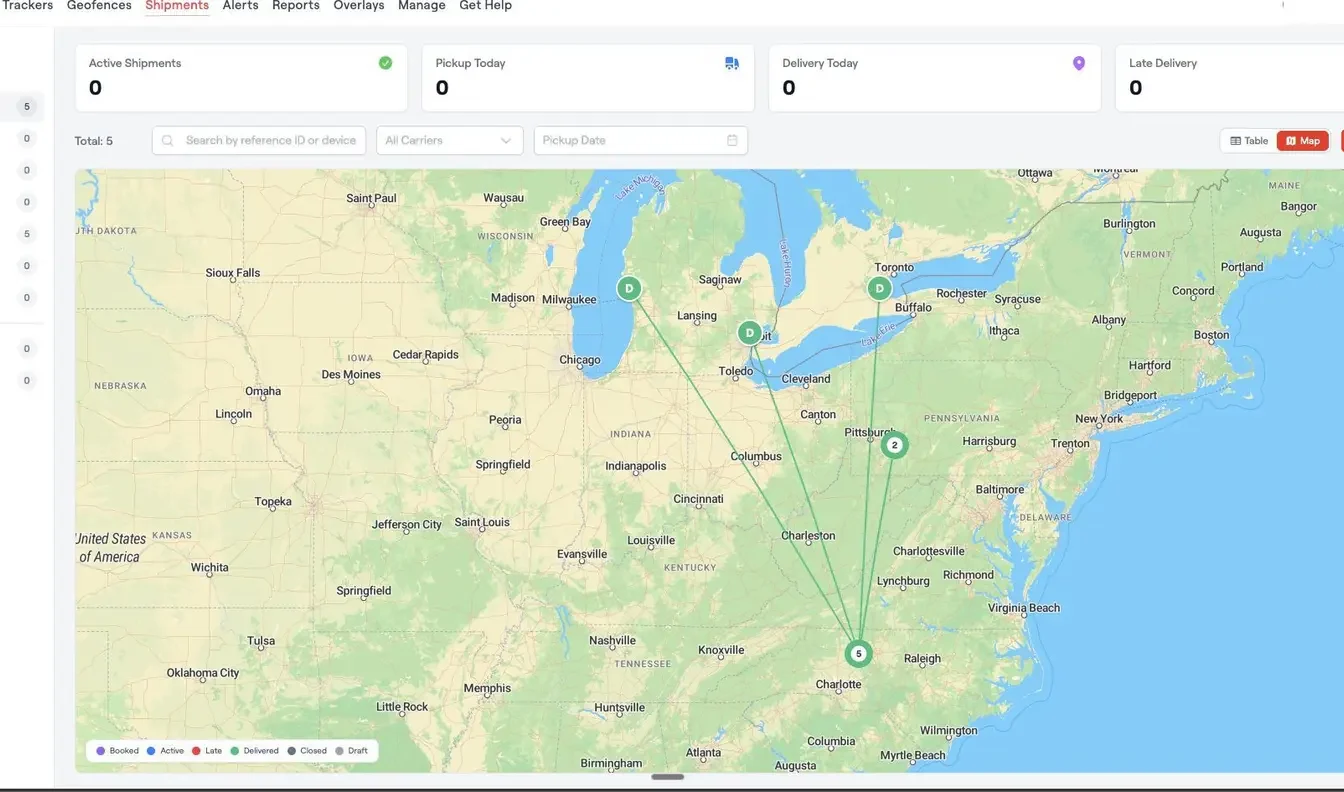

The supply chain visibility conversation has changed. Two years ago, shippers were still asking whether they needed real-time tracking. Today, the question is sharper. Why is artificial intelligence rewriting the rules of supply chain visibility so quickly, and what does that mean for the freight, fleet, construction, and healthcare logistics teams that have to act on the data? The short answer is that AI is no longer an add-on feature inside a tracking dashboard. It has become the operating system of modern visibility itself, powering everything from predictive ETAs and TMS integrations to API-driven control towers and edge-computing BLE asset tags.
The numbers explain the urgency. Gartner reports that over 70 percent of supply chain leaders have either deployed or are actively piloting AI in their visibility stack in 2026, and McKinsey estimates that AI-driven supply chain optimization can reduce logistics costs by 15 percent, improve service levels by 65 percent, and cut inventory levels by up to 35 percent. The supply chain visibility software market itself is projected to grow from roughly $3.5 billion in 2026 to more than $11 billion by 2031, a CAGR above 13 percent. AI is the reason that curve is bending upward.
This guide breaks down exactly how AI is impacting supply chain visibility in 2026, the technologies driving the shift, the pain points it is solving for B2B logistics teams, and how to choose the right AI-powered visibility platform for your operation.
Key Takeaways:
- AI is shifting logistics from reactive tracking to predictive forecasting, with ETA accuracy gains of 40 to 60 percent and direct reductions in detention and demurrage (D&D) fees.
- Agentic AI is automating exception management, ending the “swivel chair” analyst fatigue caused by jumping between 15 carrier portals and TMS dashboards.
- Pairing AI with edge-computing GPX IoT hardware eliminates the “black hole” of 3rd-party carrier data and gives shippers a single source of truth to stop cargo theft and double brokering fraud.
Why AI-Driven Supply Chain Visibility Software Is Disrupting Global Logistics in 2026
Legacy visibility platforms were built around a simple promise. Show the shipper where the freight is. That promise has aged badly. In a world of tariff shocks, port congestion, cyber-hijacked loads, ESG reporting requirements, and customer expectations set by next-day delivery, knowing where freight is no longer creates a competitive edge. Knowing what will happen to it next does.
AI-driven supply chain visibility software changes the fundamental nature of logistics data. A traditional platform records events. An AI-driven platform interprets them, predicts what comes next, and recommends or executes a response. That single shift impacts four areas at once:
- From reactive to predictive. AI models forecast ETAs, dwell times, and disruption windows hours or days before they materialize, replacing the after-the-fact “your shipment is late” alert that has plagued global logistics for decades.
- From siloed to unified. Machine learning fuses GPS, BLE asset tag, IoT sensor, carrier EDI, weather, port, and traffic data into a single source of truth, eliminating the data fragmentation that traditional TMS, ERP, and visibility tools never solved.
- From dashboard to decision. Generative and agentic AI summarize, recommend, and increasingly act on visibility data, turning a human analyst’s eight-hour exception workload into minutes and ending logistics dashboard fatigue.
- From location to context. AI adds risk intelligence, condition monitoring, cargo theft detection, and Scope 3 emissions scoring on top of raw location data, transforming a tracking pixel into a strategic asset.
The impact is structural. Visibility is no longer a reporting layer. It is becoming a real-time control tower for the entire supply chain.
Core AI Logistics Technologies: Machine Learning, Generative AI & Agentic Workflows
The phrase “AI in supply chain visibility” is shorthand for a stack of distinct technologies, each impacting visibility in a different way. Understanding the stack is essential before evaluating any AI logistics platform or signing a multi-year vendor contract.
Machine Learning and Predictive Analytics
Machine learning is the workhorse of AI logistics. ML models trained on years of shipment data predict ETAs with 40 to 60 percent higher accuracy than carrier-provided estimates, forecast dwell time at ports and yards, identify shipments at high risk of delay, and detect anomalies in routes or transit times that signal theft, diversion, or double brokering. This is the layer that turns a visibility dashboard into a forecasting engine and a direct weapon against detention and demurrage fees.
Computer Vision
Computer vision processes images and video from yard cameras, dock cameras, in-cab dashcams, and drone footage to verify pickup and delivery events, detect damage on arrival, count assets in a yard, and confirm seal integrity. For construction and fleet operators, computer vision turns previously manual visual inspections into automated, time-stamped, AI-verified data points that feed directly into the TMS via API webhooks.
Generative AI and Large Language Models
Generative AI is changing how teams interact with visibility data. Instead of building reports, operators ask a chat interface, “Which shipments to the Southeast are at risk of missing tomorrow’s delivery window, and which carriers are driving most of those delays?” The model queries the visibility platform, summarizes the answer, and drafts the customer communication. This is one of the fastest-growing impact areas in 2026.
Agentic AI Workflows
Agentic AI is the next frontier and the most-discussed topic in supply chain visibility this year. Instead of recommending an action, agents execute multi-step workflows. An agent can detect a delay, evaluate rerouting options, contact the new carrier through an API, update the customer, log the exception in the TMS and ERP, and close the ticket without human intervention. Gartner predicts agentic AI will handle a meaningful share of routine supply chain exceptions by 2027.
IoT and AI Fusion (AIoT)
Visibility data is only as good as the signal feeding it. AI models that depend on carrier EDI feeds inherit every gap, lag, and error in that data. Fusing AI with IoT hardware, including GPS trackers, BLE asset tags, temperature and shock sensors, and edge-computing devices, gives the AI a continuous, verified, carrier-agnostic data stream. This is why hardware-plus-AI platforms consistently outperform software-only visibility tools.
Measuring ROI: How AI Supply Chain Optimization Reduces Costs & Delays
The fastest way to understand the ROI of AI supply chain optimization is to map each AI capability to the visibility outcome it produces and the measurable cost or delay reduction. The comparison below summarizes where AI is driving the largest, most-cited financial gains in 2026 supply chain visibility programs, with benchmarks B2B logistics teams can take to a CFO.
| AI Capability | Visibility Impact | Measurable ROI (2026 Benchmarks) |
|---|---|---|
| Machine Learning ETAs | Replaces carrier-provided ETAs with predictive ETAs trained on historical and live data. | 40 to 60 percent improvement in ETA accuracy; up to 25 percent reduction in detention & demurrage fees. |
| Computer Vision | Automates yard checks, damage detection, and proof-of-delivery verification. | 30 to 50 percent faster yard turnaround; sharp drop in damage-claim disputes. |
| IoT + AI Fusion (GPX layer) | Feeds AI with verified, carrier-agnostic GPS, BLE, temperature, and shock data. | Up to 95 percent shipment recovery rates and continuous cold-chain integrity monitoring. |
| Generative AI Assistants | Converts dashboards into natural-language Q&A and auto-drafted exception communications. | 60 to 80 percent reduction in time spent on manual reporting and customer updates. |
| Agentic AI Workflows | Executes multi-step exception workflows autonomously across TMS, ERP, carriers, and customers. | Routine exceptions resolved in minutes instead of hours; 24/7 coverage without added headcount. |
| Edge AI on IoT Devices | Runs anomaly detection on the tracker itself, firing alerts in seconds without a cloud round-trip. | Real-time theft, tamper, and route-deviation alerts that beat traditional cloud-only systems. |
| Digital Twins | Creates a live simulation of the supply chain for what-if planning and disruption modeling. | 10 to 20 percent improvement in network resilience and faster recovery from disruption events. |
Industry Use Cases: AI Freight Tracking in Construction, Fleet & Healthcare Cold Chains
The impact of AI freight tracking is not uniform. Different industries are absorbing the change at different speeds and on different problem sets.
Construction Asset Management and Heavy Equipment
Construction supply chains have historically been visibility deserts. Equipment moves between yards and remote job sites, materials get delivered to gates without confirmation, and theft losses run into hundreds of millions annually. AI visibility platforms paired with rugged BLE asset tags and GPS trackers now give project managers a live map of every piece of equipment, predict when a missing asset has likely been stolen versus simply relocated, and automate utilization reporting that used to require manual yard walks. The impact on equipment ROI is significant.
Fleet Tracking Software and Over-the-Road Logistics
For fleet operators, AI is rewriting the economics of every load. Predictive ETAs reduce detention fees, machine learning identifies underperforming lanes and carriers, computer vision verifies driver compliance, and agentic AI is starting to handle routine dispatch exceptions through TMS and ERP integrations. The fleet operators who adopted AI visibility first are seeing measurable reductions in empty miles, fuel costs, and customer service overhead.
Healthcare Cold Chain AI
Healthcare logistics has the lowest tolerance for visibility failure in the entire supply chain. A temperature excursion on a vaccine shipment is not a delay, it is a destroyed payload and a regulatory event. AI visibility paired with IoT temperature and humidity sensors now predicts cold-chain failures before they happen, automatically reroutes at-risk shipments, and produces the chain-of-custody documentation regulators expect. The impact on spoilage rates and FDA audit readiness is the biggest win in this vertical.
Automotive and Just-in-Time Manufacturing
The automotive industry built modern just-in-time logistics, and AI visibility is what is keeping it alive in the era of tariff and geopolitical disruption. Predictive visibility platforms help OEMs and Tier 1 suppliers model the impact of port closures, tariff changes, and component shortages before they hit the assembly line. The visibility platform has effectively become a supply chain resilience tool.
In-Transit Logistics and High-Value Shipments
For high-value freight, AI is having its biggest security impact. ML models trained on theft patterns flag shipments entering high-risk corridors, detect unscheduled stops in real time, and trigger automated alerts before cargo loss becomes irreversible. Combined with edge-computing GPS hardware, the impact on cargo theft recovery rates has been dramatic.
Solving Major Supply Chain Pain Points: Cargo Theft, Tariff Disruptions & Scope 3 ESG Compliance
AI is not impacting visibility in a vacuum. It is being deployed against a specific set of 2026 B2B supply chain pain points that legacy tools could not address. The most common, and most expensive, ones include:
- The “black hole” of 3rd-party carrier data. Every shipper knows the frustration of EDI and API latency the moment freight switches hands between carriers. Standard visibility tools go dark for hours, sometimes days. AI plus carrier-agnostic IoT hardware closes the blind spot by feeding the AI a continuous, verified location stream that does not depend on any single carrier’s data quality.
- Skyrocketing detention and demurrage (D&D) fees. D&D is the silent killer of logistics margins. Predictive ETAs are the most direct weapon against it. AI models forecast detention risk hours in advance and trigger yard-scheduling or appointment adjustments before the meter starts running, cutting D&D exposure by up to 25 percent for shippers that operationalize the alerts.
- Ghost freight and double brokering fraud. Double brokering is the fastest-growing fraud category in U.S. logistics in 2026. AI flags abnormal pickup patterns, identity mismatches, and route deviations in real time, and pairing AI with physical GPS hardware on the freight itself becomes the ultimate truth source. The reported location from the broker has to match the verified location from the tracker, or the alert fires.
- The “swivel chair” analyst fatigue. Logistics coordinators are burning out swinging between 15 carrier portals, the TMS, the ERP, and customer email all day. Generative AI assistants and agentic AI workflows are the cure for logistics dashboard fatigue and exception management overload, consolidating the answer in one natural-language interface.
- Tariff and trade disruption. 2026 has been defined by tariff volatility. AI-powered visibility platforms model the financial impact of each disruption scenario across hundreds of lanes simultaneously, letting procurement and logistics teams act on the same data.
- Scope 3 ESG compliance and reporting. Boards and regulators now demand carbon and sustainability data tied to actual shipments. AI extracts and aggregates Scope 3 emissions data automatically from visibility feeds, replacing the spreadsheet exercises that used to take weeks.
Next-Gen Logistics: Supply Chain Digital Twins, Edge AI & Autonomous Freight Orchestration
The 2026 impact is significant, but the trajectory matters more than the snapshot. Three trends are converging that will redefine next-gen logistics and visibility again by 2028:
- Autonomous freight orchestration. AI agents will handle entire categories of exception management end to end, including carrier negotiation, customer communication, and TMS and ERP updates, while humans focus on strategic decisions.
- Supply chain digital twins. Live simulation environments will let shippers test disruption scenarios, tariff changes, and capacity shifts in a virtual replica of their network before committing to action.
- Edge AI trackers. The combination of edge AI on IoT devices, agentic AI, and digital twins is moving the industry toward supply chains that detect, decide, and respond at the device level without a human in the loop for routine events.
The companies investing now in AI visibility platforms anchored on quality IoT data and verified API webhooks are positioning themselves to ride this wave. Those still relying on carrier-feed-only software are falling further behind every quarter.
Why Smart IoT Hardware & B2B GPS Trackers Are the Backbone of Predictive Visibility
AI is only as good as the signal it consumes. This is where the conversation about predictive visibility eventually circles back to hardware. GPX Intelligence is the carrier-agnostic IoT layer that feeds AI visibility platforms with verified, edge-computed data across in-transit logistics, fleet, construction, healthcare, automotive, and yard operations.
- GPX AssetTag (BLE). A rugged, IP67-rated BLE asset tag with a 4-year replaceable battery and global gateway coverage, ideal for high-density asset tracking across yards, sites, and indoor environments.
- GPX AssetTrack GPS family. Cellular B2B GPS trackers with edge-computed alerting that fire in seconds at the tracker itself, not minutes after a cloud round-trip, designed for high-value shipments, fleet assets, and security-sensitive freight.
- GPX SmartLabels. Disposable, low-cost tracking labels engineered for high-volume shipment tracking programs where recovering a tracker from every box is not practical.
- Scout AI Platform. The AI-powered supply chain visibility platform that fuses GPX hardware data with predictive analytics, risk scoring, agentic exception workflows, and direct API webhooks into your TMS and ERP.
The pattern is consistent across every successful AI visibility deployment. Software-only platforms hit a ceiling when carrier data quality runs out. Hardware-plus-AI platforms keep scaling.
Buyer’s Guide: How to Evaluate AI Supply Chain Control Towers and Visibility Platforms
Selecting the right AI supply chain control tower in 2026 is a different exercise than it was three years ago. The vendor landscape has consolidated, AI capabilities vary wildly between providers, and the wrong choice now creates a multi-year technical debt problem. Use the following criteria to evaluate any platform on your shortlist:
- AI depth, not AI marketing. Ask vendors which specific AI models they run, what data they are trained on, and what measurable accuracy improvements they deliver against carrier-provided ETAs. Demand benchmarks.
- Hardware and software integration. A platform that owns or tightly integrates with IoT hardware will outperform a pure-software control tower every time. Verify the device portfolio, BLE asset tag battery life, indoor and outdoor coverage, and edge-computing capability.
- Predictive and agentic capability. Confirm the platform offers predictive ETAs, anomaly detection, generative AI assistants, and a roadmap to agentic AI workflows. Static dashboards are not enough in 2026.
- Industry fit. Construction, fleet, healthcare cold chain, automotive, and in-transit logistics each have specific requirements. Make sure the vendor has reference customers and product capability in your industry, not just a generic platform.
- TMS, ERP, and API openness. AI visibility is most valuable when it integrates with your TMS, ERP, and BI stack. Confirm RESTful APIs, API webhook support, and clear data ownership terms.
- ESG and compliance support. Confirm the platform captures Scope 3 emissions data, supports cold-chain regulatory reporting, and produces audit-ready records.
- Cyber-security and fraud posture. AI visibility is now a security tool. The platform should detect cyber-hijacking patterns, broker identity fraud, double brokering, and route deviation in real time.
- Total cost of ownership. Look beyond per-shipment pricing. Replaceable batteries, reusable hardware, and predictable software subscriptions matter more than headline rates.
The right AI control tower is the one that pairs deep AI capability with reliable IoT hardware, fits your industry, and gives you a clear path to the agentic, autonomous visibility model the next five years are heading toward.
Bring AI-Powered Visibility Into Your Supply Chain
AI has moved from supporting actor to lead role in supply chain visibility. The platforms that combine verified IoT data with predictive, generative, and agentic AI are the ones delivering measurable ROI today and positioning their customers for the autonomous logistics era. Explore the GPX Scout AI Platform and the full GPX hardware portfolio to see how AI-driven visibility, grounded in USA-engineered IoT, can transform your operation.
Frequently Asked Questions (FAQs)
What is the ROI of using AI for supply chain visibility and freight tracking?
The ROI of AI supply chain visibility typically shows up in four buckets: 40 to 60 percent better ETA accuracy, up to 25 percent reduction in detention and demurrage (D&D) fees, 60 to 80 percent less time spent on manual reporting and exception management, and shipment recovery rates as high as 95 percent when AI is paired with IoT hardware. Most B2B shippers see payback inside the first year, with the strongest ROI coming from platforms that combine predictive ETAs with carrier-agnostic GPS and BLE asset tags.
How does AI improve ETA accuracy in logistics?
AI improves ETA accuracy by training machine learning models on millions of historical shipments and fusing live GPS, IoT, weather, traffic, and port congestion data. This produces ETAs that are 40 to 60 percent more accurate than carrier-provided estimates, which directly reduces detention fees, missed delivery windows, and customer service workload across the TMS and ERP stack.
How does AI-integrated GPS hardware stop cargo theft and double brokering in real-time?
AI-integrated GPS hardware stops cargo theft and double brokering by giving shippers a physical, carrier-agnostic source of truth that the broker or carrier cannot spoof. The tracker reports verified location data to the AI platform, which compares it to the location the broker is reporting and to historical theft-pattern data. When the two locations diverge, when the freight enters a high-risk corridor, or when an unscheduled stop occurs, edge AI on the tracker fires an alert in seconds rather than minutes after a cloud round-trip. Shippers running this stack report shipment recovery rates as high as 95 percent.
What is a supply chain digital twin, and how does it prevent disruption?
A supply chain digital twin is a live, AI-powered simulation of a company’s entire logistics network, including suppliers, lanes, carriers, ports, warehouses, and inventory positions, that mirrors the real supply chain in near-real time. It prevents disruption by letting logistics and procurement teams model “what-if” scenarios, such as a tariff change, port closure, carrier failure, or supplier bankruptcy, before they hit. The digital twin runs the scenario, identifies bottlenecks and cost impacts, and recommends rerouting or sourcing alternatives, giving the business 10 to 20 percent improvement in network resilience and dramatically faster recovery from real disruption events.