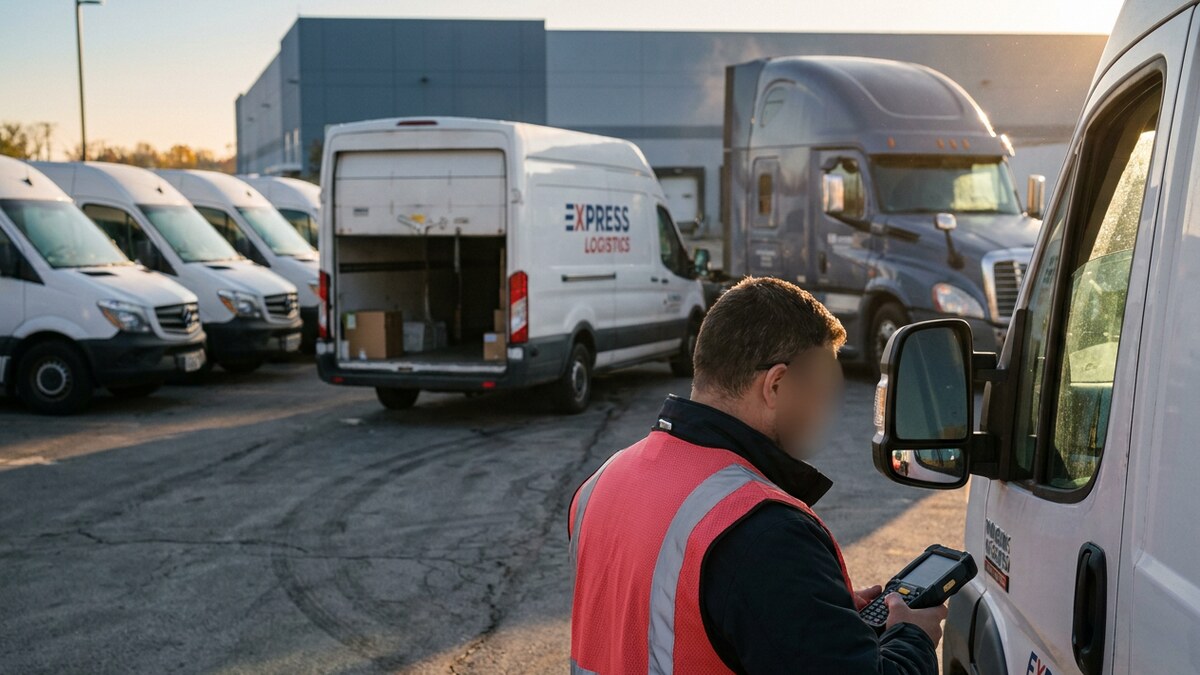


Cargo theft across the United States and Canada set a record in 2024. Verisk CargoNet recorded 3,625 reported incidents, up 27 percent from 2023, at an average loss of $202,364 per event.
The quieter losses cost more. IHL Group puts inventory distortion, meaning stockouts plus overstocks, at $1.7 trillion a year, or 6.2 percent of global retail sales. Theft and distortion share one root cause: nobody can say where the asset is right now.
Asset tagging closes that gap. The programs that work start with three decisions: what to tag, what technology goes on it, and how to mount and name it. The programs that fail skip straight to buying hardware.
Why Untagged Equipment Costs More Than It Looks
- Ghost assets stay on the books. You keep paying property tax, insurance, and maintenance reserves on equipment that left the yard months ago.
- Crews wait. A superintendent spending an hour driving a large yard for one attachment stops the whole pour. Idle labor is the most expensive line on any site.
- Audits fail. Medical and pharmaceutical operations have to physically produce the equipment listed on their compliance records. One missing pump turns a routine inspection into a finding.
- Theft goes unnoticed for weeks. A stolen generator usually surfaces when someone tries to check it out, long after the trail goes cold.
- You buy the same asset twice. Shortages get solved with purchase orders. The original turns up later in a trailer nobody opened.
What to Tag, and What to Skip
Tagging everything wastes money. Every tag carries hardware cost, mounting labor, and in most cases a subscription. Three filters decide what earns one.
Replacement cost. Set a floor based on what one loss actually costs you to replace, including rush freight and downtime. Below that floor, the recurring cost of active tracking outruns the risk. Generators, welders, compressors, trailers, and returnable containers clear almost any floor. Safety cones and hand tools do not.
Operational criticality. Criticality overrides cost. A cheap calibration fixture that gates a production line is worth more to the operation than the excavator parked next to it. If losing the item stops revenue, tag it regardless of purchase price.
Movement frequency. Assets that cross gates, sites, or carriers need active tags. Assets bolted to a floor need a barcode and an annual look. Match the reporting rate to how often the thing actually moves, because reporting rate drives battery life.
Skip consumables and high-turnover material. Track those at the bin level, not the item level.
Tag Technologies Compared: RFID, BLE, Cellular, and Barcodes
No single protocol covers every environment, and a real-time location system (RTLS) is only ever as good as the radio underneath it. Match the hardware to the site, not to the brochure.
Passive RFID
Passive RFID tags carry no battery. A powered reader energizes the tag as it passes, so the cost sits in fixed reader infrastructure rather than in the tags themselves. That structure works at controlled choke points: dock doors, gates, tool cribs. It falls apart in an open yard, where there is no doorway to read through and nothing to mount a reader on.
Bluetooth Low Energy (BLE)
BLE tags run on small replaceable cells and broadcast on their own schedule. Any gateway in range picks them up, including mobile gateways riding on forklifts and pickup trucks. GPX AssetTag Edge reads at 150 feet outdoors and 75 feet indoors, and runs up to four years on a replaceable CR2032. That gives you room-level and yard-level presence without wiring a building.
Cellular GPS
Cellular trackers report from anywhere with coverage, which is what unpowered trailers, containers, and heavy equipment need the moment they leave your gate. Battery is the tradeoff, and the fix schedule controls it. GPX AssetTrack runs up to 10 years on one daily GPS fix. Push it to minute-by-minute reporting and that number collapses.
QR Codes and Barcodes
Barcodes print for almost nothing and never need power. They also need a human. Someone has to walk to the asset, wipe the label clean, and scan it. A barcode tells you where an asset was the last time somebody bothered. Use them for fixed plant and low-value inventory, never for anything that walks off.
Which Tracking Platform Fits Which Asset
Most tracking vendors sell fleet telematics, which is built around the vehicle: engine data, driver behavior, hours of service. That is a different job from tracking the container, the tool crib, or the pallet that never had an engine in it.
| Provider | Primary Connectivity | Category | Best For |
|---|---|---|---|
| GPX Intelligence | Cellular, BLE, GPS, WiFi | Asset and supply chain visibility | Powered and unpowered assets across 50+ industries |
| Samsara | Cellular, GPS | Fleet telematics | Powered fleet vehicles and driver safety |
| Motive | Cellular, GPS | Fleet telematics | Trucking and freight compliance |
| Geotab | Cellular, GPS | Fleet telematics | Global fleet diagnostics and integrations |
| Verizon Connect | Cellular, GPS | Fleet telematics | Routing and dispatch for field service |
| Logistimatics | Cellular, GPS | Consumer and SMB tracking | Single trackers and small fleets |
GPX builds the tags, the trackers, the network, and the platform. Cellular trackers, BLE tags, temperature sensors, and disposable shipment labels all report into one map, and Scout AI answers plain-English questions against that IoT and location data instead of making an operations manager build a report. The BLE side rides on more than 150 million terrestrial gateways already in the field, so there is no gateway rollout to fund.
Samsara, Motive, Geotab, and Verizon Connect are strong where the asset is a powered vehicle with a diagnostic port. Compliance, dashcams, routing, and engine health are their category. Ask them to cover four thousand unpowered bins and the cost model stops working.
At the small end, single-tracker buyers are better served by consumer hardware. Logistimatics and LandAirSea both cover one car, one trailer, or a single tool chest. Once you are tagging 10 or more high-value assets, the enterprise tier earns its keep.
Placement, Adhesion, and Naming
A tag only works while it stays attached. Industrial sites destroy lazy mounting inside a month.
Clean first. Degreaser or isopropyl alcohol, then let the surface dry. Adhesive fails on dirt, grease, and flaking paint far more often than it fails on its own. On smooth metal and hard plastic, high-bond acrylic tape holds well. Press firmly across the whole tag and give the bond time to set before the asset goes back to work.
Anything that gets pressure washed, struck, or dragged needs mechanical fastening. Screw or rivet the tag down on excavators, trailers, and metal bins, and recess it so racking and passing equipment cannot shear it off. Keep cellular trackers away from large steel masses and off the underside of the asset, because the antenna needs a path to the sky.
Naming matters as much as mounting. A serial number off the factory plate means nothing to a dispatcher at 5 a.m. Use a short prefix scheme: EX for excavators, GN for generators, RC for returnable containers, then the unit number. Clean prefixes are what make a query like “show me every RC idle more than 14 days” return a usable answer.
What Breaks a Tagging Program After Rollout
Hardware is the easy part. Programs stall on three things, and every one of them costs less to solve before the purchase order than after.
- Integration friction. Tag data that lives only in a vendor portal creates a second asset register, and two registers always disagree. Ask whether the platform exposes an API or prebuilt connectors into your ERP or enterprise asset management (EAM) system, and confirm it accepts your asset IDs as the key rather than forcing the vendor’s.
- Weather and battery drain. Freeze-thaw cycles and direct summer sun break adhesive bonds that held fine indoors, and water finds any housing without an IP rating. Sustained cold pulls capacity out of coin cells, so a tag rated for four years on a bench returns less in a northern yard. Specify IP67 hardware for outdoor assets and fasten anything that lives in the weather.
- Register drift. Assets get sold, scrapped, or re-tagged, and nobody updates the record, so the exception report fills with noise the team learns to ignore. Assign one owner for tag issuance and tag retirement on day one.
Running Audits Without Stopping Work
The traditional physical count shuts down a weekend and puts staff on clipboards. Active IoT asset tags replace that with continuous real-time location system (RTLS) verification.
Gateways log every tag in range on a rolling basis. The platform compares that live picture against the register and reports only the exceptions: assets missing, assets in the wrong yard, assets that have not moved in 30 days. Your team works a short list instead of counting the whole building.
Exception reporting also surfaces the assets you pay for and never use. Idle and dwell data is what turns a tagging program from a loss-prevention expense into a use-rate improvement.
Where Asset Tagging Goes Next
The next step is not more dots on a map. It is asset data feeding an autonomous control tower that flags a late inbound before the plant schedules around it, and agentic asset intelligence that opens the exception ticket without waiting for a human to notice.
Condition data now rides along with location. Temperature and humidity sensors pair with the same tags, so a cold chain shipment carries a condition reading on every fix. That history is what makes a supply chain digital twin worth building: a model that reflects the real state of your assets instead of last quarter’s spreadsheet. Modern logistics teams treat tracking as an intelligence layer, not a status page.
How to Choose the Right Asset Tagging System
Start with the environment, not the vendor. Cellular fails underground and inside heavy steel. Passive RFID fails outdoors where there is no choke point. BLE needs a gateway in range, whether fixed, mobile, or already in the field. Most real operations need two of the three, which is why single-protocol vendors force compromises.
Then price the whole program: hardware, mounting labor, subscription, battery replacement, and the cost of re-tagging assets that lose their tags. Confirm the platform reads out to your ERP or EAM system. Confirm it scales from one yard to a national footprint without a new contract structure. GPX customers average an 18x return, and deployments go live in days rather than quarters.
Stop paying for equipment you cannot find. Talk to our team and we will map your asset classes to the right tag types before you buy a single unit.
Frequently Asked Questions (FAQs)
What is the difference between passive RFID and BLE asset tagging?
Passive RFID tags have no battery and respond only when a powered reader energizes them, so you pay for fixed reader infrastructure at every read point. BLE tags carry their own replaceable cell and broadcast on a schedule, so any gateway in range picks them up. RFID suits controlled doorways. BLE suits yards, sites, and buildings you do not want to wire.
How do you attach asset tags to heavy construction equipment?
Use mechanical fasteners, not adhesive alone. Clean the surface, drill into a recessed area that racking and rocks cannot reach, and secure the tag with rivets or security screws. Keep cellular trackers clear of large steel masses so the antenna holds a path to the sky.
How does an asset tagging system integrate with existing ERP and EAM software?
Tag data has to write back into the system your team already works in, or you end up maintaining two asset registers that disagree. Before you buy, confirm the platform offers an API or prebuilt connectors into your ERP or EAM system and that it accepts your existing asset IDs as the key. GPX is platform-agnostic and reports into the systems already running your operation rather than replacing them.
How does SmartLabel work on one-way shipments?
SmartLabel is a peel-and-stick disposable shipment label. You tear the tab to activate it, it goes live in seconds, and it cannot be powered off in transit. Nothing has to come back from the destination, which removes the reverse logistics that sinks most reusable-tracker programs on one-way freight.