

Every minute a truck sits idle at a dock, a gate, or a yard is a minute that earns nothing and costs plenty. Dwell time is the silent tax on freight operations and one of the most stubborn supply chain bottlenecks in the industry. It burns hours-of-service (HOS), delays drop-and-hook turnarounds, and pushes detention invoices onto carriers who already run on razor-thin margins.
The most frustrating part is that most of this lost time hides in plain sight. Dispatch sees a truck “on site” but has no clear picture of whether it is loading, stuck behind another trailer, or parked while paperwork crawls through an office.
Reducing dwell time starts with real-time supply chain visibility: knowing exactly where assets are and how long they have been there. This guide breaks down facility dwell time, what drives it up, and how modern IoT telematics, GPS asset tracking, and geofencing turn guesswork into measured, automated yard management.
What Is Trucking Dwell Time and How It Kills Fleet Profitability
Dwell time is the total period a commercial vehicle or trailer spends at a facility from arrival to departure. It covers the entire on-site window: gate entry, staging, dock assignment, loading or unloading, paperwork, and gate exit. When that window stretches beyond the scheduled operational time, the excess becomes pure waste.
The cost compounds fast across a fleet operation:
- HOS exhaustion. The ELD clock keeps running while a driver waits. Time burned at a loading dock is time stolen from revenue-generating miles.
- Detention fee disputes. Carriers bill shippers for excess wait time, and shippers reject those charges. Both sides need irrefutable, timestamped data to settle the bill.
- Asset underutilization. A trailer sitting idle is a trailer not moving freight. Multiplied across a nationwide fleet, the capacity loss is enormous.
- Driver turnover. Drivers rank long, unpaid waits among the top reasons they leave a carrier. High dwell time drives churn straight up.
- Supply chain cascade failures. One delayed dock turnaround ripples into missed downstream appointments, triggering a bullwhip effect of compounding delays.
The scale is documented. The U.S. DOT Office of Inspector General estimated that detention reduces the annual earnings of for-hire truckload drivers by more than $1 billion, and that a 15-minute increase in dwell time raises the average crash rate by 6.2 percent. More recent analysis from the American Transportation Research Institute (ATRI) puts detention-related productivity losses at roughly $11.5 billion a year. Reducing dwell time is not a soft efficiency goal. It protects revenue per truck, driver retention, and highway safety at the same time.
Dwell Time vs Detention Pay: Settling Shipper Disputes
Industry professionals use these terms interchangeably, but confusing them in B2B logistics costs money at billing time.
Dwell time is the full duration on site, including the standard scheduled time for legitimate loading or unloading. Some dwell is normal and factored into route planning.
Detention time is the portion of dwell that exceeds the agreed free window, set at two hours in most agreements. This is the billable, disputed slice that shows up on carrier invoices.
You cannot bill for or reduce what you cannot accurately measure. A carrier logging arrival and departure with manual clipboards has no defensible record when a shipper rejects a detention claim. Automated, location-based arrival data turns every detention claim from an argument into an objective fact.
What Causes Excessive Facility Dwell Time? Top Supply Chain Bottlenecks
Long wait times rarely stem from a single failure. They compound from operational blind spots across the facility. The highest-correlating causes include:
- Blind arrivals. Facility staff do not know a truck has reached the gate until the driver walks inside, which delays every staging protocol.
- Manual gate bottlenecks. Paper logs, legacy check-ins, and security booth queues create lines before any freight moves.
- Inefficient dock scheduling. Doors get double-booked or sit empty while trucks idle in the yard with no assignment.
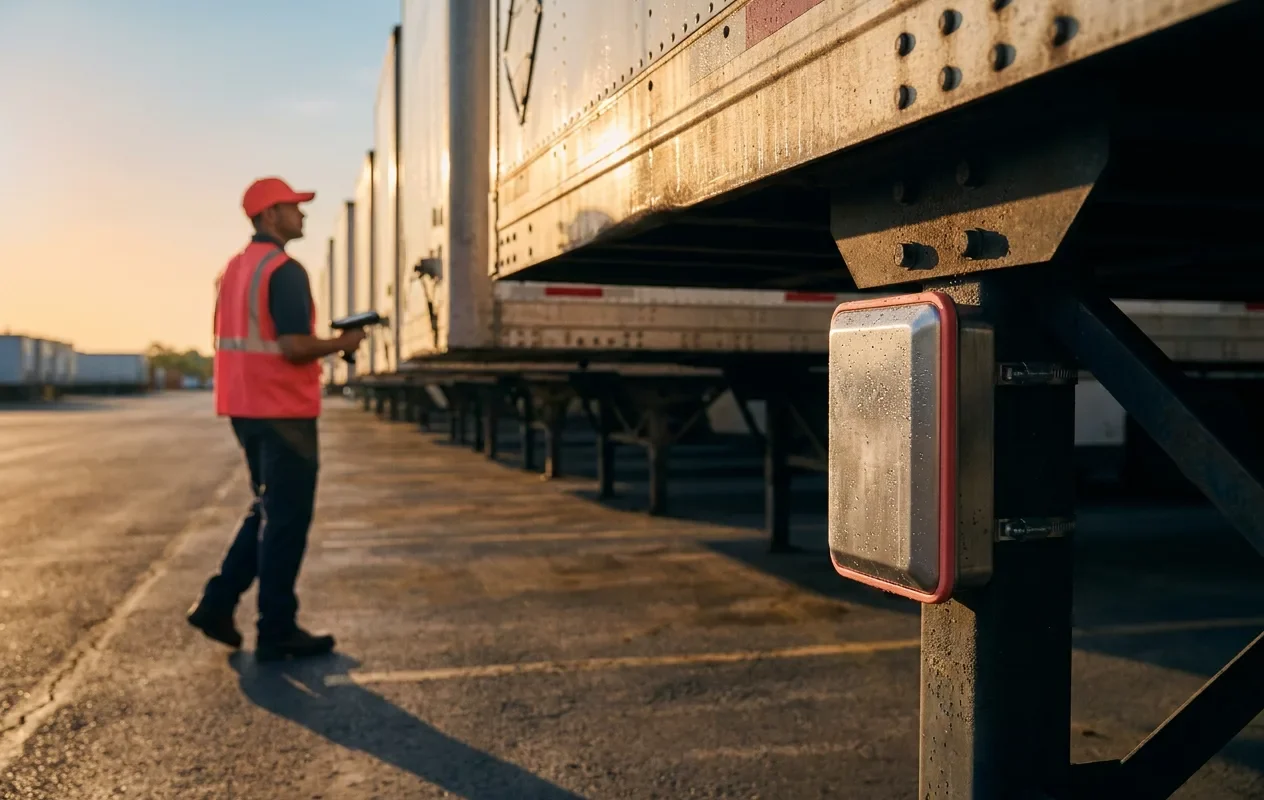
- Lost trailers in drop yards. Spotters waste hours hunting for specific assets among rows of identical trailers.
- No accountability data. When nobody can prove who caused a delay, accountability vanishes and the bottleneck repeats every day.
The common denominator is missing asset intelligence. A facility cannot act on an arrival it does not foresee, and it cannot improve a process it does not track.
How IoT and GPS Asset Tracking Reduce Idle Time
Modern GPS and Bluetooth Low Energy (BLE) tracking replace assumptions with live, timestamped data. This hybrid visibility attacks supply chain inefficiency from several angles at once.
Automated gate-in and gate-out detection. When an IoT-tracked asset crosses a virtual geofence, the system logs the exact timestamp. Dispatch and receiving get predictive ETA alerts, so staging begins before the driver parks.
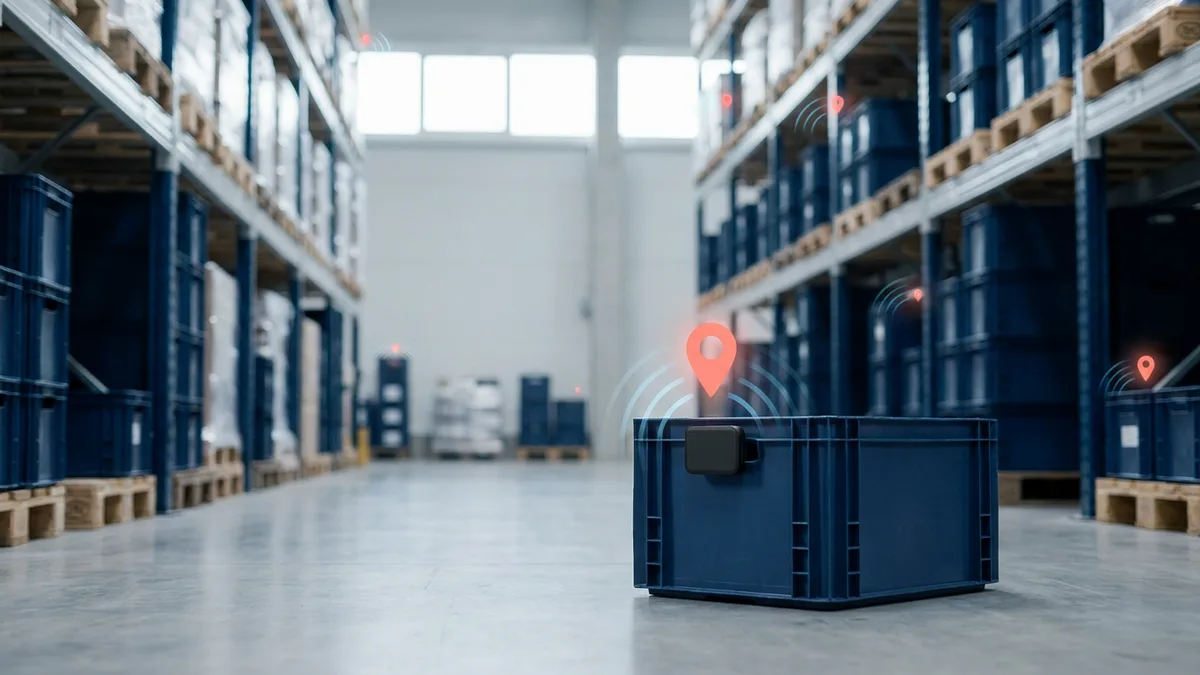
Smart yard management and instant location. Instead of sending a spotter to audit the yard on foot, the team pulls up a live digital map. BLE tags route the right unit to the right door in seconds.
Defensible detention records. Automated entry and exit timestamps give carriers a clean log for billing, which shrinks shipper pushback because both parties read from a single source of truth.
Stage-by-stage dwell analytics. Tracking reveals how long assets sit at each stage: gate, staging, dock, and exit. That pinpoints the exact bottleneck instead of leaving managers to guess.
Smart Yard Management: Using Geofencing for Faster Turnarounds
Geofencing is the engine behind automated dwell reduction. By drawing virtual perimeters around yards, docks, and staging lots, the system fires instant event triggers the moment an asset crosses a line.
Applied to enterprise logistics, geofencing delivers:
- Pre-arrival readiness. An alert at an outer geofence gives dock teams lead time to assign a door and prep the load before the truck reaches the gate.
- Stage-by-stage telemetry. Nested geofences break the on-site window into granular, measurable segments that expose exactly where time leaks.
- Automated exception alerts. When an asset dwells past the two-hour threshold, the system pushes a notification to management to rescue the stalled turnaround while there is still time.
- Performance benchmarking. Aggregated geofence data reveals average dwell by facility, customer, lane, and time of day, turning scattered observations into a clear improvement roadmap.
Manual Logs vs Smart GPS and BLE Tracking: Evaluating Fleet Tech
Carriers and facilities combat dwell with varying degrees of success. The table below shows why next-gen IoT tracking outpaces legacy systems.
| Tracking Approach | Arrival Detection | Yard Trailer Visibility | Detention Records | Data Analytics |
|---|---|---|---|---|
| Manual / paper logs | Driver reports on foot | Physical search by spotters | Handwritten, highly disputable | None |
| Tractor-only ELD | Powered-unit location only | Blind to dropped trailers | Partial, tractor-dependent | Limited to powered units |
| Yard cameras / sensors | Gate entry only | Slow manual footage review | Requires manual verification | Labor-heavy compilation |
| GPX GPS & BLE asset tags | Automated geofence alerts | Live digital map, zone-level precision | Automated, timestamped, defensible | Full stage-by-stage reporting |
Relying solely on tractor ELDs leaves fleet managers blind to dropped trailers and yard movements, which are the exact places where dwell time accumulates. Asset-level tracking covers the full operation, including the unpowered trailers and containers that telematics ignores.
The GPX Advantage: End-to-End Asset Visibility for B2B Logistics
GPX engineers tracking hardware for harsh freight environments, where assets move between high-speed highways and dense, signal-blocking drop yards. The lineup pairs cellular GPS for over-the-road visibility with BLE for precise, low-cost coverage inside facilities.
- GPX cellular GPS trackers report trailer location over robust cellular networks, delivering over-the-road visibility and predictive ETAs across the entire route.
- GPX AssetTag (BLE) delivers gate, door, and zone-level location intelligence inside facilities at a fraction of cellular cost. With a 5-year battery life and a replaceable battery, a tag deployed today keeps reporting for years without a hardware swap.
- Automated detention reporting converts raw location events into the timestamped documentation carriers use to bill, defend, and improve turnaround performance.
Combining cellular and BLE coverage closes the gap that single-method systems leave open. Trucks stay visible on the road, and trailers stay visible the moment they enter a yard, all the way to the door.
How to Choose the Right Dwell Time Solution for Your Fleet
The right solution depends on where your time leaks and how much of your fleet runs as dropped, unpowered trailers. Work through these questions to land on the system that fits:
- Where does your dwell concentrate? If trailers sit in yards and at docks, you need asset-level BLE coverage, not tractor-only telematics. If the problem is over-the-road arrival timing, cellular GPS leads.
- Do you bill or pay detention? Either way, automated timestamped records protect you in disputes. Choose a system that logs entry and exit with zero manual input.
- How many assets, and how spread out? A large trailer pool across multiple yards favors low-cost BLE tags with long battery life over expensive cellular units on every unit.
- Do you need stage-by-stage data? To fix the root cause, pick a platform with nested geofencing that measures gate, yard, and dock dwell separately.
- Will the hardware survive your environment? Yard and trailer hardware faces weather, vibration, and years of service. A long, replaceable battery keeps total cost low and uptime high.
Match the tool to the time leak. A fleet that scores well on these questions cuts dwell, defends every detention dollar, and frees drivers and trailers to do what generates revenue: move freight.
Cut Dwell Time with GPX Tracking
GPX helps carriers, shippers, and yards turn dwell time from a hidden cost into a measured, managed metric. With cellular GPS for the road, the AssetTag for the yard, and geofencing across both, your team sees every arrival, locates every trailer, and timestamps every minute on site. Contact GPX to map your dwell hotspots and build a tracking deployment that pays for itself in recovered hours and recovered revenue.
Frequently Asked Questions (FAQs)
How do I prove detention time to shippers?
The most effective way to prove detention is automated GPS tracking and geofencing data. When a truck crosses a facility geofence, the system generates a fixed timestamp for arrival and departure, giving you an objective record for detention billing that holds up when a shipper challenges the charge.
How much does dwell time cost the trucking industry?
The DOT Office of Inspector General estimated that detention reduces for-hire truckload driver earnings by between $1.1 billion and $1.3 billion a year. More recent ATRI analysis puts detention-related productivity losses at roughly $11.5 billion annually. At the fleet level, FreightWaves reported detention costs of more than $500 per trailer per week, which reaches about $390,000 a year for a 15-trailer operation.
What is a good average dwell time benchmark for freight?
Most logistics operations target a free window of two hours for loading or unloading. Efficient, tech-enabled facilities hold total dwell under that 120-minute threshold to keep drop-and-hook operations moving. The practical step is to measure your own baseline with timestamped data, then drive it down stage by stage.
Can ELDs track trailer dwell time?
No. Standard ELDs and tractor telematics track only the powered cab. Once a trailer is dropped in a yard, traditional ELDs lose sight of it. To track trailer dwell time, fleets need dedicated GPS asset trackers or BLE tags mounted directly on the trailer.
What is the difference between dwell time and detention time?
Dwell time is the full on-site duration, including the scheduled time for loading or unloading. Detention time is the portion of dwell that runs past the agreed free window, set at two hours in most agreements, and it is the billable, disputed slice on carrier invoices. You measure both, but you bill and dispute detention.