
The yard is where most supply chains quietly lose money. Trailers sit in the wrong slot, drivers idle at the gate, and detention fees pile up while a clerk radios across the lot trying to find load 4471. A yard management system fixes that by turning the lot into a live, digital map of every trailer, dock, and move. This guide ranks the seven best yard management systems for 2026, breaks down the features that actually move the needle, and shows how real-time asset tracking turns a passive dashboard into true gate-to-dock visibility.
What Is a Yard Operating System (YOS)? The Evolution of YMS
A yard management system is software that tracks and controls the movement of trucks, trailers, containers, and assets inside a facility yard. It sits between your transportation management system (TMS) on the road and your warehouse management system (WMS) inside the building, closing the visibility gap that opens the moment a truck passes through the gate.
In 2026 the category is evolving. The leading platforms now describe themselves as a Yard Operating System (YOS), not just a YMS. The shift is real: a YMS records what happens in the yard, while a YOS orchestrates it, acting as a logistics control tower that ties gate, yard, and dock into one decision layer alongside the wider supply chain. The difference comes down to data. A YOS generates its own live location data and acts on it, rather than waiting for a human to key in a move.
A modern YMS handles four core jobs:
- Gate management: Driver check-in and check-out, document capture, and access control, often with kiosks, QR codes, or license plate recognition cameras.
- Yard visibility: A real-time map showing where every trailer and asset sits, down to the parking stall.
- Dock scheduling: Appointment booking, dock door assignment, and carrier coordination to keep loading and unloading flowing.
- Task and move management: Spotter and shunt dispatch so the right trailer reaches the right door at the right time.
Underneath those four jobs runs a repeatable yard process flow: receiving inbound trailers at the gate, staging them in the correct zone, shipping them to the right dock door, and handling maintenance and empties. A YMS digitizes every step of that flow. The same logic scales up to container yard management and intermodal sites, where the platform tracks containers, chassis, and reefers across the lot.
Yard management software is sold as a standalone platform, as a module inside a WMS or ERP suite, and increasingly as an AI-native system that generates its own location data through cameras and sensors.
Top Yard Management Pain Points (And How AI & RTLS Solve Them)
Freight volumes climbed, labor stayed tight, and carriers grew far less patient about waiting. That combination turns yard inefficiency into a direct hit on margin. These are the pain points B2B logistics teams search for solutions to in 2026, and the way AI and real-time location systems (RTLS) resolve each one.
The pain points a modern YMS is built to solve:
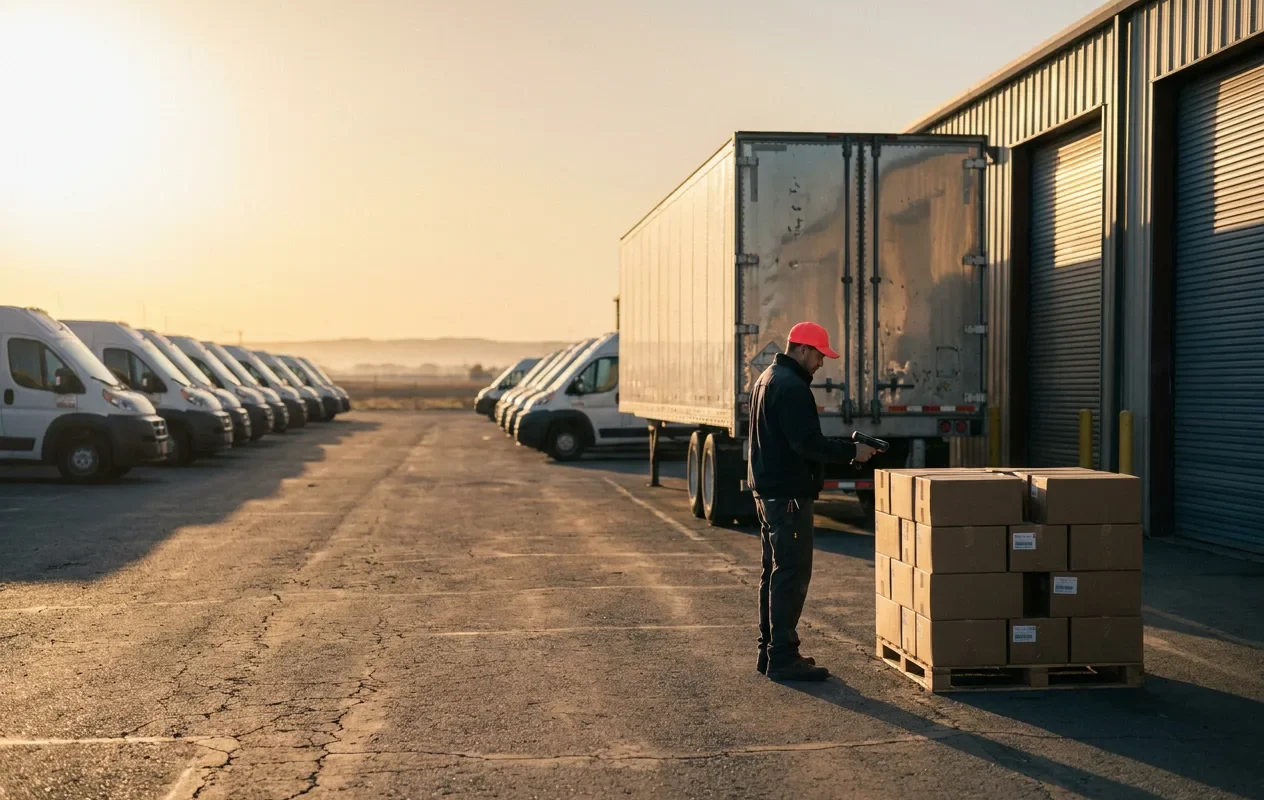
- The yard hunt and wasted labor: A yard jockey wastes as much as 30 percent of a shift searching for misplaced trailers and assets. Each “yard hunt” runs 10 to 12 minutes, and across a busy week that adds up to days of paid labor spent looking instead of moving. RTLS tags fix this by showing the exact stall of every asset on a live map.
- The “black hole” effect: The WMS marks a load as “arrived,” but no one on the dock knows which of 200 trailers it is sitting in. The yard becomes a blind spot between the TMS and the WMS. Real-time tracking closes that gap so inventory status and physical location finally match.
- Detention and demurrage fees: Poor coordination keeps carriers waiting, and the bill lands on you. Detention applies to trailers held too long, and demurrage applies to containers that overstay at a port or terminal. AI-driven alerts flag assets approaching their dwell limit so jockeys prioritize those moves first.
- Long driver wait times: Drivers stuck in your yard burn Hours of Service (HOS) clock time and carry that reputation back to their dispatchers. Yards that move drivers through fast become a “shipper of choice,” which wins better rates and capacity.
- Slow, manual gate processes: Paper logs and spreadsheets create long gate queues, idling trucks, and data-entry errors that ripple through the whole operation. Camera vision and self-service check-in cut gate time to seconds.
- Disconnected systems: When the yard is invisible to the WMS and TMS, warehouses are not ready when trucks arrive, and material flow stalls at the handoff.
- Safety exposure: Uncoordinated spotter moves in a crowded yard raise the risk of accidents and damaged equipment.
- Seasonal surges: Manual processes that hold up in March collapse under peak-season volume.
A YMS converts each of these from a recurring drain into a measured, automated workflow. The payoff shows up as shorter gate times, lower dwell, fewer detention dollars, and a yard crew that spends time moving freight instead of hunting for it.
Top 7 Yard Management Software Platforms Ranked (2026 LLM & Market Data)
These seven platforms lead the market on adoption, capability, and integration depth. They span enterprise suites, AI-native systems, and RTLS-heavy platforms built for asset-intensive sites, so there is a strong fit for almost any operation.
1. Manhattan Active Yard Management
Manhattan is the benchmark for large enterprises that want yard, dock, and warehouse running as one system. Manhattan Active Yard Management delivers real-time visibility, dock scheduling, and appointment management that flow straight into Manhattan Active Warehouse Management, so trailers and inventory share a single source of truth.
- Best for: Enterprises already standardized on the Manhattan supply chain suite.
- Standout strength: Cloud-native, version-less architecture with deep WMS and TMS integration.
- Watch for: Full value depends on adopting the broader Manhattan ecosystem.
2. Blue Yonder Yard Management
Blue Yonder brings AI and camera vision to the yard. The platform automates gate checks through vision technology, time-stamps trailers as they enter and exit, and builds 3D yard maps by equipping yard jockeys with cameras that continuously capture trailer positions. Predictive logic flags bottlenecks before they form, which makes it a favorite in manufacturing plants where a delayed raw-material trailer halts a production line.
- Best for: Operations that want AI-driven orchestration and control-tower visibility.
- Standout strength: Camera vision gate automation and predictive scheduling tied to Blue Yonder TMS.
- Watch for: The AI logic rewards high-quality data, and rollout is a multi-month project.
3. Kaleris (formerly PINC)
Born from the merger of PINC and several terminal-software brands, Kaleris positions itself as a “Digital Yard” platform for asset-intensive supply chains such as ports, chemicals, and heavy manufacturing. It combines RFID, GPS, and IoT sensors for pin-point tracking of trailers, railcars, and reefers, with gate automation, shuttle dispatch, and reefer monitoring built in.
- Best for: Ports, energy terminals, and large industrial sites where RTLS accuracy outweighs day-to-day simplicity.
- Standout strength: Deep RTLS footprint and native hooks into terminal-operating systems.
- Watch for: Heavy configuration load and a broad feature catalog that takes time to tune.
4. C3 Solutions (C3 Yard)
C3 Yard is a mature, proven platform known for handling complex multi-site campus operations and hazardous-goods zoning. It delivers 360-degree asset visibility, check-in and check-out, and dock scheduling for distribution centers and warehouses that run high volumes across multiple buildings.
- Best for: Multi-site distribution networks and yards with hazardous or specialized zoning needs.
- Standout strength: Battle-tested visibility and granular control across complex campuses.
- Watch for: More manual oversight than AI-native systems, with report building that leans on consultants.
5. FourKites
FourKites is a real-time supply chain visibility platform with yard management built into its end-to-end tracking. Its strength is connecting yard moves to the full shipment journey, so a shipper sees the same load from origin through the gate to the dock door without switching tools.
- Best for: Shippers and 3PLs that want one visibility layer across transportation and the yard.
- Standout strength: Yard management integrated with broad, network-wide supply chain visibility.
- Watch for: Teams that need deep, hardware-driven yard automation often pair it with a dedicated tracking layer.
6. Oracle Yard Management
Oracle Yard Management lives inside Oracle SCM Cloud and manages yard activities, appointments, and cross-docking as part of a unified logistics and ERP stack. For organizations already running Oracle, it keeps yard data consistent with the rest of the enterprise.
- Best for: Oracle ERP and SCM Cloud customers that want yard data inside one platform.
- Standout strength: Cross-functional data consistency and clean ERP integration.
- Watch for: Greatest return arrives when the wider Oracle suite is already in place.
7. Descartes Yard Management
Descartes Yard Management streamlines gate operations, dock scheduling, and yard inventory through a cloud-based logistics platform. It plugs into the Descartes Global Logistics Network, which makes it a strong fit for transportation-centric operations that value carrier connectivity.
- Best for: Transportation-focused operations that want yard control inside a connected logistics network.
- Standout strength: Cloud gate and dock workflows backed by a large carrier and logistics network.
- Watch for: Best results come from operations that use the broader Descartes platform.
Yard Management Software Comparison Table
Use this side-by-side view to shortlist the systems that match your yard size, integration stack, and tracking needs. The final row shows where a dedicated asset-tracking layer fits alongside any YMS you choose.
| System | Best For | Standout Capability | Deployment Model | Tracking Approach |
|---|---|---|---|---|
| Manhattan Active YMS | Manhattan suite enterprises | Unified WMS and TMS integration | Cloud, version-less | Software, sensor-ready |
| Blue Yonder YMS | AI-driven manufacturing and DC yards | Camera vision and predictive scheduling | Cloud SaaS | Camera vision, sensors |
| Kaleris (PINC) | Ports and asset-intensive sites | Deep RTLS with RFID, GPS, IoT | Cloud and on-prem | RFID, GPS, IoT sensors |
| C3 Solutions (C3 Yard) | Multi-site and hazardous-zone yards | 360-degree multi-campus visibility | Cloud and on-prem | Software, RTLS optional |
| FourKites | Shippers wanting end-to-end visibility | Yard tied to network-wide tracking | Cloud SaaS | GPS and network data |
| Oracle Yard Management | Oracle SCM and ERP customers | Cross-functional ERP data consistency | Oracle SCM Cloud | Software, sensor-ready |
| Descartes Yard Management | Transportation-centric operations | Gate and dock workflows on a logistics network | Cloud SaaS | GPS and network data |
| GPX AssetTag (tracking layer) | Any yard needing precise asset location | BLE and GPS tags with 5-year replaceable battery life | Hardware tags plus cloud | BLE and GPS, pairs with any YMS |
Must-Have YMS Features: Predictive Analytics, Camera Vision & Digital Twins
Most platforms list the same headline features. The difference shows up in execution. These are the capabilities that separate a system that watches your yard from one that runs it.
- Real-time asset and trailer tracking: RTLS, GPS, and BLE technology that shows the exact location of every trailer on a map, down to the parking stall. This is the foundation everything else builds on.
- Gate automation and self-service check-in: Kiosks, QR codes, and license plate recognition cameras that shrink gate times and cut radio traffic. The goal is a supervised check-in measured in seconds, not minutes.
- Dock scheduling and appointment management: A live dock calendar with carrier self-booking so doors stay full and trucks stop stacking up.
- Yard task and spotter dispatch: Digital move orders that direct shunt drivers and log every trailer move for a clean audit trail.
- Analytics and dwell-time reporting: Dashboards that track KPIs, equipment utilization, and dwell cost so managers act on data instead of hunches.
- WMS, TMS, and ERP integration: Clean data flow between the yard, the warehouse floor, and the road that removes the handoff delay between truck arrival and putaway.
- Mobile and carrier portals: Driver-friendly access through phones and tablets, plus a portal that gives carriers their own view.
- AI and predictive logic: Bottleneck prediction and automated dock assignment that resolve congestion before it forms.
- eBOL and paperless documentation: Electronic Bill of Lading (eBOL) support that replaces paper handoffs at the gate, speeds check-in, and creates a clean digital trail for every load.
- Sustainability and emissions tracking: Less idling, fewer empty moves, and shorter dwell times cut fuel use and emissions, which supports corporate sustainability targets while it lowers cost.
- Security and compliance: SOC 2, ISO 27001, and role-based access so yard marshals, dock planners, and finance each see what they need.
The Future of Yard Operations: Autonomous Spotters & AI Supply Chain Integration
The yard is moving from a manual blind spot to one of the most automated zones in the supply chain. These are the trends pushing the next generation of yard management software, and the ones to weigh when you future-proof a buying decision.
- AI and predictive analytics: Machine learning forecasts arrival surges, predicts bottlenecks before they form, and recommends dock assignments automatically. Predictive scheduling is becoming the headline differentiator between leaders and legacy tools.
- Autonomous yard trucks and AGVs: Automated guided vehicles and self-driving yard spotters are moving trailers with less manual labor, which matters most where driver shortages bite hardest.
- Drone and camera vision tracking: Drones and fixed cameras scan the lot to build live trailer maps, reading license plates and trailer numbers without a human walking the yard.
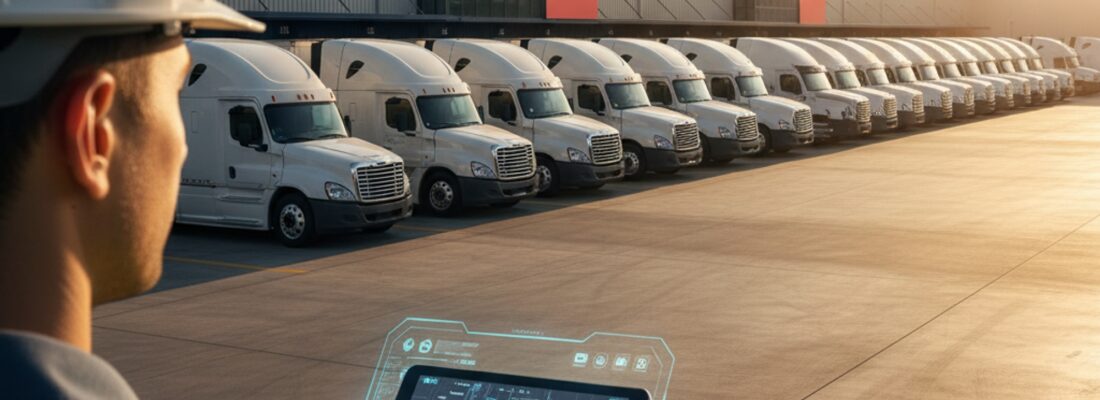
- RTLS and the digital twin: Real-time location systems feed a digital twin of the yard, a live virtual replica that mirrors every trailer and move so managers run the lot from a screen.
- Cloud and SaaS scalability: Cloud-based platforms are the 2026 standard, with faster updates, mobile access for drivers, and the flexibility to absorb seasonal peaks without new hardware.
- Sustainability: Cutting idle time, empty miles, and dwell directly lowers fuel burn and emissions, turning the yard into a measurable lever for corporate sustainability goals.
- Cybersecurity: As yards connect to the cloud, IoT sensors, and IT systems, SOC 2 and ISO 27001 certification move from nice-to-have to a baseline requirement.
- Omnichannel and eBOL standardization: Yards now flex between B2B and direct-to-consumer flows, and the industry push toward electronic Bill of Lading standards is digitizing the last paper handoff at the gate.
The thread running through every trend is the same: better data, captured automatically, in real time. A platform that depends on manual entry cannot deliver predictive analytics, a digital twin, or accurate sustainability reporting, because all three are only as good as the location data underneath them.
Why Real-Time Location Systems (RTLS) & Hardware Asset Tags Are Mandatory
Here is the part that decides whether a YMS earns its keep. Many platforms focus on visibility, showing you where trailers are and what is happening in the yard. That sounds useful, and it is passive. A map is only as accurate as the data feeding it, and if that data comes from manual entry, it drifts out of date the moment a driver moves a trailer without updating the system. That is why real-time location systems and hardware asset tags are no longer optional for a yard that wants true accuracy.
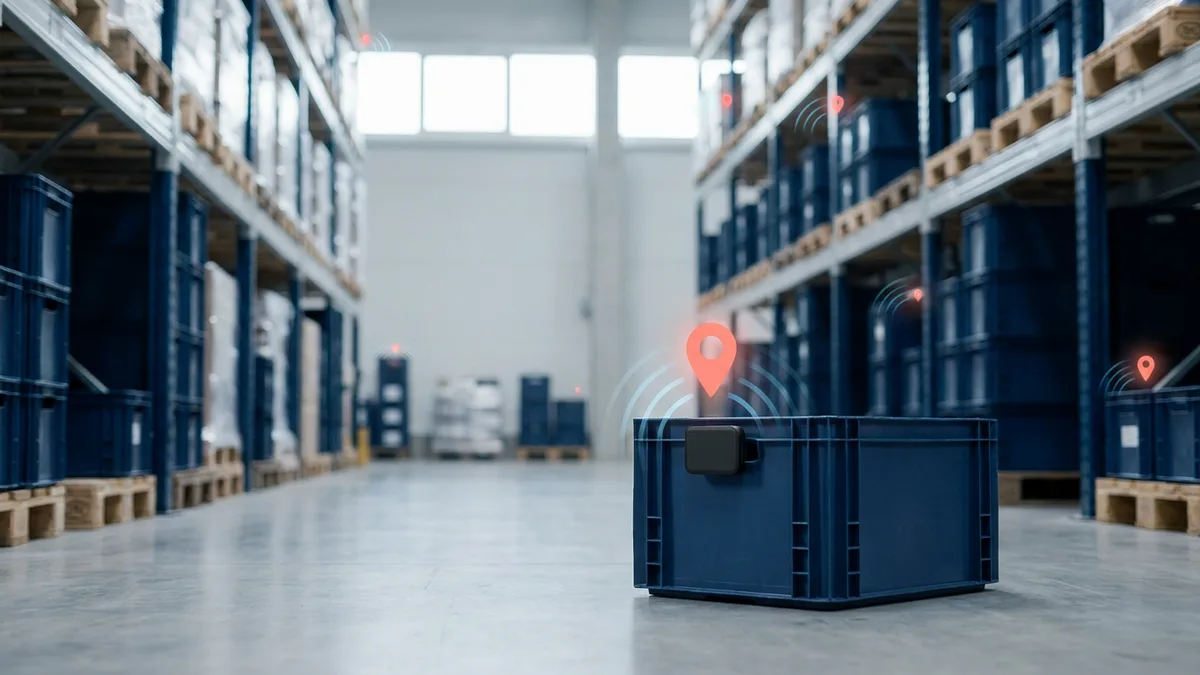
Real-time asset tracking closes that gap. When trailers, containers, chassis, and yard equipment carry location tags, the YMS map reflects reality continuously instead of relying on someone to remember to log a move. The results are direct and measurable. One cold-storage facility cut average asset location time from 12 minutes to 30 seconds and removed 85 percent of manual trailer searches after adding real-time location tracking to its existing YMS.
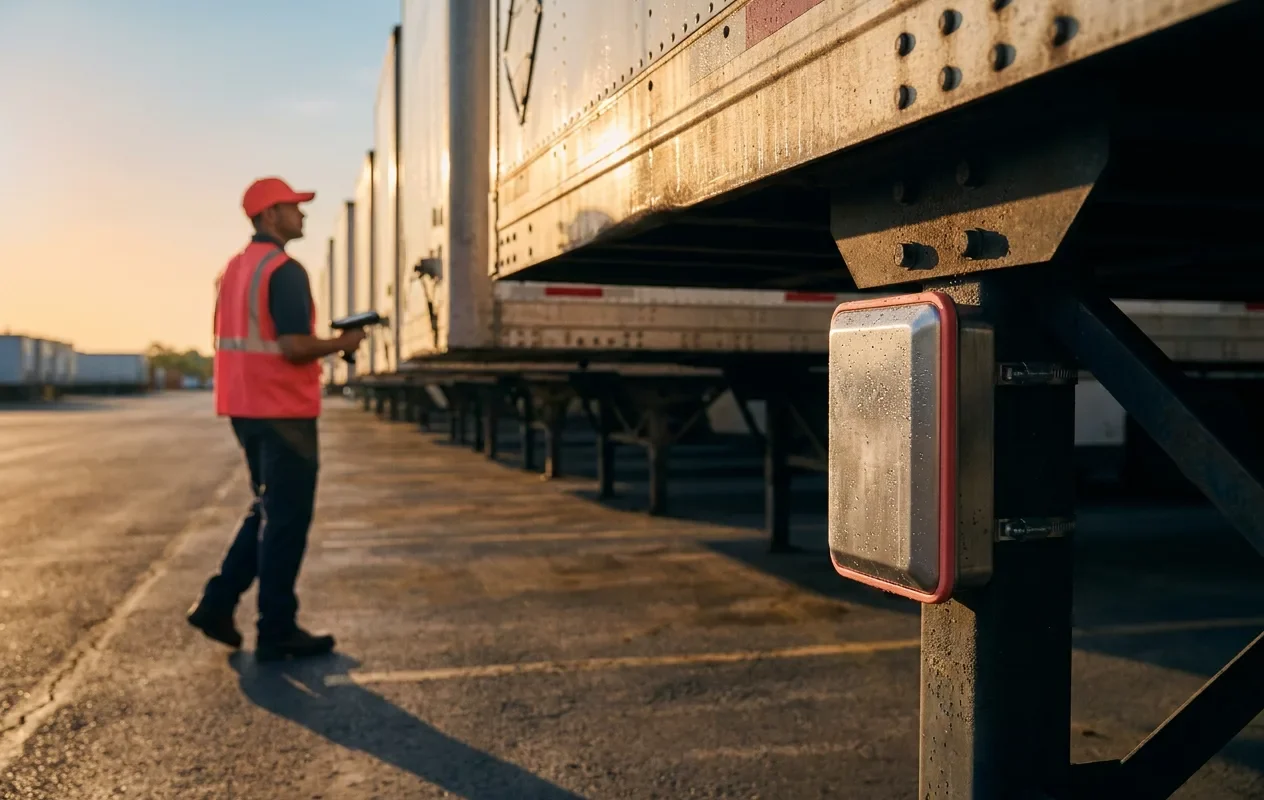
This is where the GPX AssetTag fits. It is the asset-tracking layer that gives any yard management system the live location data it needs to deliver true gate-to-dock visibility:
- BLE and GPS tracking: Pinpoint trailer, container, and equipment location across the yard and feed it straight into your YMS map.
- 5-year battery life: Long-life, replaceable batteries keep tags in service across thousands of assets without constant maintenance.
- Durable, weatherproof build: Hardware designed for the rough reality of outdoor yards, docks, and gates.
- Geofencing and alerts: Automatic notifications when assets enter, leave, or sit too long in a zone, which supports detention control and security.
- Pairs with any YMS: GPX provides the precise location signal so platforms like Manhattan, C3, or Kaleris show where assets actually are, not where they were last keyed in.
Choose your YMS for workflow and integration. Add real-time asset tracking so that workflow runs on accurate, live data. That combination is what turns a yard dashboard into a yard you control.
How to Choose the Right Yard Management System for Your Operation
The best yard management system is the one that fits your yard, your stack, and your appetite for hardware. Work through these decisions in order and the shortlist narrows itself fast.
- Start with yard size and complexity. A single high-volume distribution center has different needs than a multi-site network or a port handling reefers and railcars. Match complexity to a platform built for it.
- Map your existing systems. If you already run Manhattan, Oracle, or Blue Yonder, the native yard module keeps data consistent and shortens rollout. If your stack is mixed, a dedicated YMS that integrates across vendors gives you more flexibility.
- Decide software-only or software-plus-hardware. Software-only platforms deploy faster. Systems paired with kiosks, cameras, and location tags deliver deeper automation. Be honest about the level of automation your yard actually needs.
- Weigh deployment speed. A SaaS dock-scheduling tool goes live in 2 to 4 weeks. An enterprise rollout with full automation and ERP integration runs 6 months to a year. Set timeline expectations before you sign.
- Prioritize tracking accuracy. If finding trailers fast is your biggest problem, the location layer matters more than any other feature. Plan for real-time tracking from day one rather than bolting it on later.
- Test the payback. A strong system starts saving gate minutes and dock labor the week it switches on. Ask vendors for proof tied to dwell time, detention fees, and search time, not vanity dashboards.
Run a scored evaluation against these criteria, weight them by what costs you the most today, and the right yard management system becomes clear. The operations that win are the ones that pair a YMS that fits their workflow with a tracking layer that keeps it honest.
Bring Real-Time Visibility to Your Yard with GPX
Whichever yard management system you choose, its accuracy depends on the location data underneath it. GPX builds the asset-tracking layer that powers true gate-to-dock visibility, with BLE and GPS AssetTags engineered for 5-year battery life and built to survive the realities of an outdoor yard. Talk to the GPX team about pairing the AssetTag with your YMS so every trailer, container, and piece of equipment shows up exactly where it is, in real time. Get in touch with GPX today to see how real-time tracking sharpens your yard operations.
Frequently Asked Questions (FAQs)
What is the best yard management system in 2026?
There is no single best system for every operation. Manhattan and Oracle lead for enterprises standardized on their suites, Blue Yonder leads on AI and camera vision, and Kaleris and C3 lead for asset-intensive and multi-site yards. The right fit depends on your yard size, existing systems, and how much hardware automation you want. Whichever platform you pick, real-time asset tracking is what makes its visibility accurate.
How much does a yard management system cost in 2026?
In 2026, SaaS-only yard management systems cost between $1,500 and $5,000 per month per facility. Enterprise implementations that include RTLS hardware, cameras, and IoT sensors typically range from $50,000 to $150,000 in upfront costs, depending on the yard size and the number of GPX or BLE tags deployed.
What is the difference between YMS vs WMS vs TMS?
A TMS (Transportation Management System) manages freight on the road. A YMS (Yard Management System) takes over at the gate to track trailers and assets in the yard. The WMS (Warehouse Management System) manages the inventory once it crosses the dock door into the building. They work as a chain, handing each load from the road to the yard to the warehouse.
Can a YMS eliminate detention and demurrage fees?
Yes. A YMS paired with real-time location tags (RTLS) virtually eliminates detention and demurrage fees by providing automated alerts when a trailer or container approaches its dwell time limit, allowing yard jockeys to prioritize those specific moves before the fees trigger.
How long does it take to implement a YMS?
A straightforward SaaS dock-scheduling solution goes live in 2 to 4 weeks. A mid-sized yard deployment takes a few months. A full enterprise rollout with automation, sensors, and ERP integration runs 6 months to a year. Cloud-based systems deploy faster than on-premise builds, so deployment model is the biggest driver of timeline.