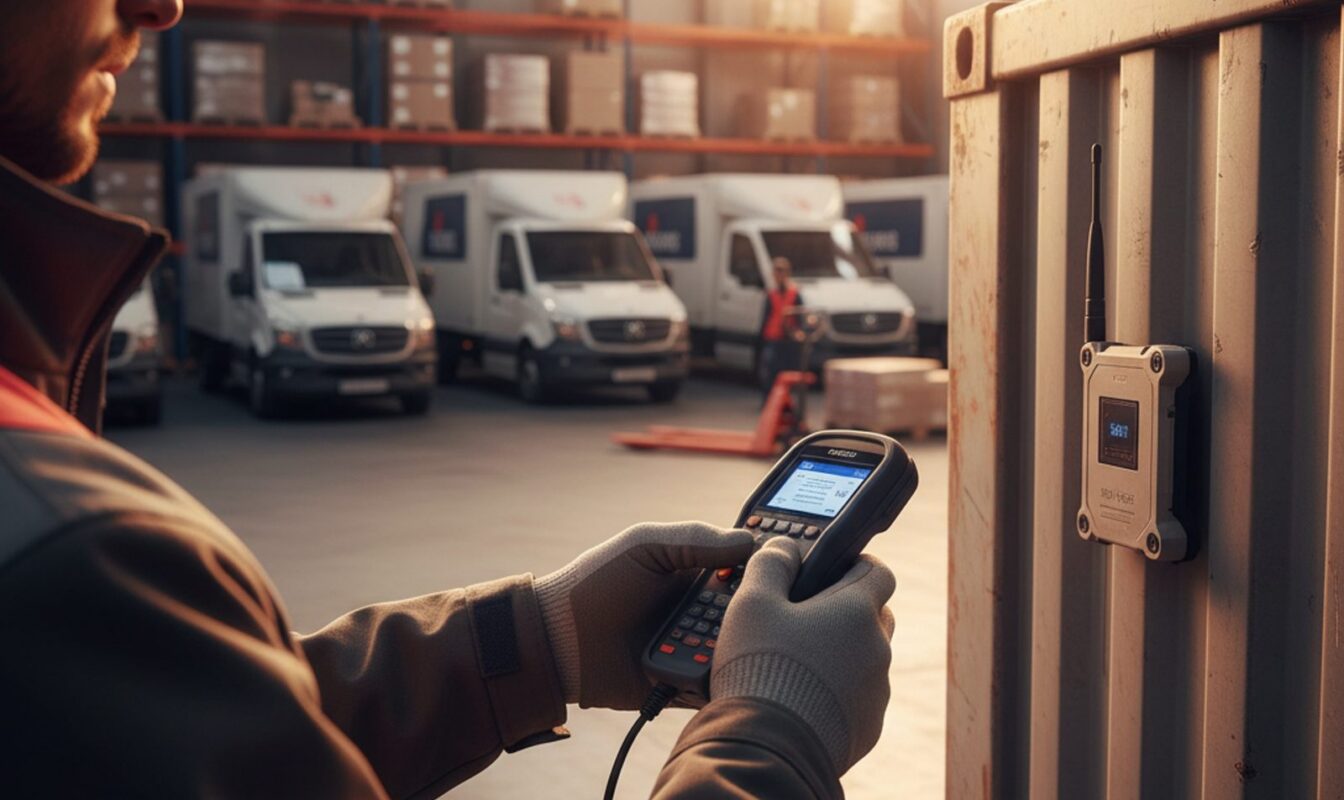

Cargo theft losses across the United States and Canada surged to nearly $725 million in 2025, a 60 percent jump from the prior year, with the average loss per theft climbing to $273,990 as organized groups shifted toward high-value freight. Every shipment that leaves a dock is now a high-stakes bet that it arrives on time, intact, and exactly where the paperwork says it should be.
The response from shippers, carriers, and 3PLs has been a rush toward real-time tracking. The global logistics market reached $11.26 trillion in 2024 and is forecast to nearly double to $20.74 trillion by 2034, and the transportation management software powering it is set to grow from $22.35 billion in 2026 to $82.43 billion by 2034. Real-time visibility sits at the center of nearly every deployment. Platforms like project44, FourKites, and a new class of AI-driven asset trackers are turning location data into the operational nervous system of modern logistics.
But the market is crowded, and the providers do not all solve the same problem. Some track trucks. Some track freight. Some track the box itself, door to door, across road, rail, ocean, and air. This guide breaks down the seven logistics and transportation tracking providers worth your shortlist in 2026, what each one does best, and how to match a platform to the way your goods actually move.
What Is Real-Time Logistics and Transportation Tracking Software?
Logistics and transportation tracking is the practice of monitoring the real-time location, status, and condition of vehicles, freight, and individual assets as they move through a supply chain. It combines hardware (GPS trackers, BLE tags, cellular sensors, telematics gateways) with software platforms that turn raw position data into predictive ETAs, exception alerts, and decisions.
The category spans three overlapping layers that buyers often confuse:
- Fleet telematics: Vehicle-centric tracking that monitors trucks, vans, and trailers using GPS and onboard diagnostics, often bundled with electronic logging devices (ELDs), driver safety cameras, and fuel data.
- Real-time transportation visibility (RTTV): Network-centric software that aggregates carrier feeds, ELD data, and telematics across thousands of partners to give shippers end-to-end shipment status without owning any hardware.
- Asset and in-transit tracking: Cargo-centric monitoring that follows the freight itself, the container, pallet, parcel, or piece of equipment, using attached sensors that report location and condition independent of the vehicle carrying it.
The strongest 2026 platforms blur these lines. The question is no longer “where is my truck” but “where is my product, what condition is it in, and when will it actually arrive.” That shift from vehicle-level to cargo-level intelligence is the defining trend of the year.
Why Multimodal Supply Chain Visibility is Critical in 2026: Solving Cargo Theft & SLA Breaches
Tracking used to be a nice-to-have. In a market shaped by theft, tighter delivery windows, and customer expectations set by next-day retail, it is now a cost-control and revenue-protection lever. Here are the operational realities pushing logistics teams to upgrade.
- Cargo theft is rising and getting smarter. Confirmed cargo theft incidents climbed 18 percent in 2025, and theft-by-deception schemes now use legitimate carrier credentials to misdirect loads. Tracking that reports independently of the carrier is one of the few defenses against this.
- ETA accuracy drives everything downstream. Inaccurate arrival times trigger missed appointments, detention and dwell charges, expedited freight costs, and stockouts. Predictive ETAs powered by live position data cut those cascading costs at the source.
- Multimodal blind spots break the chain. A shipment that disappears the moment it leaves the truck and enters a rail yard, port, or air terminal forces teams to carry excess safety stock to cover the unknown. Continuous, mode-agnostic visibility removes that guesswork.
- Customers expect parcel-grade transparency for everything. B2B buyers now want the same live tracking link they get from a consumer retailer. Providers that expose clean status data through portals and APIs win and keep accounts.
- Cold-chain and high-value freight need condition data, not just location. Pharmaceuticals, food and beverage, and electronics require proof of temperature, shock, and tamper integrity. Location alone does not protect a $300,000 load.
- Trade uncertainty rewards resilient, flexible supply chains. Tariff volatility and slow-growth conditions have pushed even the largest 3PLs to prioritize agility over scale. Real-time data is what makes a supply chain nimble enough to reroute around disruption instead of absorbing it.
- The carrier market is deeply fragmented. With more than 700,000 truckload carriers in the United States and capacity that shifts constantly, shippers cannot rely on any single carrier’s systems for a clean view. Independent, shipment-level tracking gives one consistent source of truth across a patchwork of partners.
There is also a balance-sheet reason this matters. When ETAs are unreliable, companies compensate by holding large safety stocks, inventory that sits idle purely to cover the uncertainty of when the next shipment will actually land. That trapped inventory is working capital frozen on a shelf. Accurate real-time tracking shrinks that buffer by enabling precision Just-In-Time (JIT) replenishment, freeing up cash that would otherwise sit dormant and turning visibility into a direct contribution to cash flow.
The takeaway is simple: the providers that matter in 2026 do not just show a dot on a map. They predict, alert, and protect.
Key Criteria for Evaluating B2B GPS Tracking & Fleet Telematics Providers
This is not a popularity ranking. We scored each provider against the criteria that decide real deployments, weighting the factors that separate a tool you outgrow in a year from a platform you scale on.
- Tracking depth and coverage: Does the provider track vehicles, freight, individual assets, or all three, and across which transport modes?
- Real-time accuracy and connectivity: Refresh rates, network resilience (cellular, BLE, satellite, Wi-Fi positioning), and indoor plus outdoor coverage.
- AI and predictive analytics: Predictive ETAs, anomaly detection, natural-language querying, and exception management rather than raw data dumps.
- Hardware flexibility: Range of device form factors, battery life, durability ratings, and cost per tracked unit.
- Integration and scalability: API quality, ERP and TMS connectors, and the ability to grow across industries and geographies.
- Total cost of ownership: Hardware, subscription, deployment effort, and reverse logistics over the full lifecycle.
One clarification before the list: this guide ranks providers built for tracking the movement of vehicles, freight, and assets. That is a narrower category than the broader logistics technology stack, where transportation and warehouse management leaders such as Descartes, Blue Yonder, Manhattan Associates, MercuryGate, and Uber Freight handle planning, execution, and freight matching. Those platforms often consume tracking data rather than generate it, and many integrate directly with the providers below. Our focus here is the layer that produces the live location and condition signal in the first place.
Based on those criteria, here are the seven providers leading logistics and transportation tracking in 2026.
1. GPX Intelligence: AI-Powered Asset, Fleet, and In-Transit Tracking
GPX Intelligence earns the top spot because it is one of the few providers that tracks all three layers, vehicles, freight, and individual assets, on a single AI-driven platform. While most competitors specialize in either telematics or software-only visibility, GPX combines a deep hardware portfolio with multi-network connectivity and a built-in AI analyst, making it the most versatile choice for organizations whose goods move across road, rail, yard, and facility.
The platform spans more than 13 device form factors. At the lightweight end, GPX Smart Labels are peel-and-stick BLE trackers roughly $9.75 per unit and under 1mm thick, with no SIM, wiring, charging, or reverse logistics, ideal for single-trip shipment and parcel-level tracking. The GPX AssetTag (BLE) offers an IP67-rated, ruggedized option with a replaceable battery and up to 4-year battery life for long-cycle assets and returnable containers. At the top end, the AssetTrack GPS family delivers up to 10-year battery life with multi-network reporting across 4G/5G, BLE, satellite, and Wi-Fi positioning, plus environmental sensors for temperature, humidity, shock, and tamper.
Tying it together is Scout AI, GPX’s natural-language analyst that lets teams query tracking data in plain English and surface predictive insights without building dashboards. The platform serves more than 50 industries, from automotive OEMs and construction to medical devices, pharma, and manufacturing.
Best For: Organizations that need unified asset, fleet, and in-transit tracking across mixed environments, especially those tracking returnable assets and high-value freight alongside vehicles.
Key Features:
- 13+ hardware form factors spanning disposable Smart Labels, rugged BLE tags, and long-life GPS trackers
- Multi-network connectivity (cellular, BLE, satellite, Wi-Fi positioning) for indoor, outdoor, and in-transit coverage
- Scout AI for natural-language querying and predictive analytics
- Environmental sensors for temperature, humidity, shock, and tamper on high-value loads
- SOC 2 compliant security with API integration into ERP and TMS systems
- Low cost of entry starting from roughly $4 per month per tracked unit
Considerations: Buyers who only need vehicle telematics with driver cameras may find dedicated fleet-camera vendors a more focused fit for that single use case. Explore the full GPX device lineup to match form factors to your assets.
2. Samsara: Connected Fleet Operations and Telematics
Samsara is one of the most recognized names in connected fleet operations, combining GPS telematics, AI-powered dash cameras, and ELD compliance in a single subscription. It is built for organizations that run their own vehicles and want safety, maintenance, and routing data in one console.
The platform shines in driver safety and operations. Its AI dash cams detect risky behaviors in real time, while predictive maintenance flags mechanical issues before they cause breakdowns. For carriers and private fleets managing dozens to thousands of vehicles, Samsara consolidates a lot of moving parts.
Best For: Mid-size to large fleets that want telematics, driver safety cameras, and compliance unified on one platform.
Key Features:
- Real-time GPS fleet tracking with AI dash cameras and driver coaching
- ELD and hours-of-service compliance built in
- Predictive maintenance and diagnostics
- Broad ecosystem of app and hardware integrations
Considerations: Samsara is vehicle-centric. It is strong on trucks and trailers but less suited to tracking individual freight, parcels, or returnable assets once they leave the vehicle.
3. project44: Real-Time Transportation Visibility Platform
project44 is a category leader in real-time transportation visibility, connecting shippers and 3PLs to a massive network of carrier data feeds across road, rail, ocean, and air. It is a software-only platform, meaning it delivers visibility without requiring you to install any hardware.
Its strength is the breadth of its carrier network and the quality of its predictive ETAs. The platform ingests telematics, ELD, and API data from thousands of carriers, then applies machine learning to forecast arrivals and flag exceptions before they escalate. For global, multimodal supply chains, that network effect is hard to replicate.
Best For: Enterprise shippers and 3PLs that need multimodal, network-wide freight visibility across many carriers without managing devices.
Key Features:
- Extensive multimodal carrier network spanning road, rail, ocean, and air
- Predictive ETA engine with exception management
- GenAI-assisted insights through its Movement platform
- Deep TMS and ERP integrations
Considerations: Visibility depends on carrier data quality and participation. Because it carries no hardware, it cannot independently verify a shipment’s condition or location when a carrier feed goes dark.
4. FourKites: Multimodal Supply Chain Visibility
FourKites is another heavyweight in the real-time visibility space, widely adopted across retail, manufacturing, food and beverage, and CPG. Like project44, it aggregates carrier and telematics data into a single network view, with a strong focus on predictive analytics and collaboration between trading partners.
Where FourKites differentiates is its emphasis on network intelligence and yard plus facility visibility, helping shippers see not just where freight is on the road but how it flows through their own sites. Its predictive ETA and dwell-time analytics are well regarded by large enterprise logistics teams.
Best For: Large retail, manufacturing, and CPG shippers that want collaborative, multimodal visibility with strong predictive analytics.
Key Features:
- Multimodal tracking across ocean, over-the-road, rail, and parcel
- Predictive ETAs and dwell-time analytics
- Yard and facility visibility add-ons
- Partner collaboration and data-sharing tools
Considerations: As a network software platform, its accuracy is tied to carrier integration depth, and like other RTTV tools it does not provide independent sensor-level data on the cargo itself.
5. Geotab: Open-Platform Fleet Telematics
Geotab is one of the largest telematics providers in the world, known for an open platform and a vast marketplace of third-party add-ons. It connects to vehicles through a plug-in OBD device and feeds rich data into its MyGeotab software and Ace AI assistant.
Its appeal is flexibility and scale. Fleets that want to mix and match safety, compliance, electrification, and routing tools can build a stack on Geotab’s open architecture, and its data engine handles very large vehicle counts well. It is a frequent choice for enterprise fleets and government operations.
Best For: Large, complex fleets that value an open ecosystem and want to customize their telematics stack.
Key Features:
- Open platform with a large third-party marketplace
- Plug-and-play OBD telematics devices
- Ace AI assistant for fleet data queries
- Strong electrification and sustainability reporting tools
Considerations: The open model means more configuration and partner management. It is purpose-built for vehicles, not for tracking freight or assets independent of the truck.
6. Motive: AI-Driven Fleet Safety and Compliance
Motive (formerly KeepTruckin) focuses on AI-powered fleet safety, ELD compliance, and spend management. Its AI dash cam and driver safety tools are central to its pitch, and it has expanded into fuel cards and equipment monitoring to become a broader operations platform for fleets.
For carriers that prioritize driver safety scoring, accident reduction, and compliance, Motive packages those capabilities into an approachable interface. It is popular with small and mid-size carriers as well as larger operations.
Best For: Carriers and fleets prioritizing driver safety, ELD compliance, and integrated spend management.
Key Features:
- AI dash cams with real-time driver safety alerts
- ELD and compliance management
- Fuel and spend management tools
- GPS fleet and equipment tracking
Considerations: Like other telematics platforms, Motive centers on vehicles and drivers. It is not designed to follow individual shipments or returnable assets through a multimodal journey.
7. Tive: Real-Time In-Transit Shipment Monitoring
Tive rounds out the list with a sharp focus on real-time in-transit shipment monitoring. Its cellular trackers attach directly to freight and report location alongside condition data such as temperature, humidity, shock, and light exposure, making it a favorite for high-value and sensitive shipments.
The strength here is cargo-level intelligence on the move. For pharmaceuticals, perishables, and electronics, Tive’s condition alerts help teams intervene before a load is spoiled or compromised. It pairs the hardware with a cloud platform and 24/7 monitoring services.
Best For: Shippers of high-value, temperature-sensitive, or fragile freight that need condition monitoring during transit.
Key Features:
- 5G cellular trackers with location plus condition sensors
- Temperature, humidity, shock, and light monitoring
- Real-time alerts and 24/7 monitoring services
- API integration with TMS and visibility platforms
Considerations: Tive is purpose-built for in-transit shipment monitoring rather than vehicle telematics or long-cycle returnable-asset tracking, and per-tracker economics suit higher-value loads.
Logistics and Transportation Tracking Providers Compared
The table below puts the seven providers side by side across the criteria that decide deployments. Use it as a starting filter, then weigh the deeper details for your shortlist. Here is the quick read at a glance:
- GPX Intelligence: Best for unified asset, fleet, and in-transit tracking on one AI platform, with 13+ hardware form factors and the lowest entry price.
- Samsara: Best for fleets that want telematics plus AI safety cameras in one console.
- project44: Best for enterprise, software-only multimodal freight visibility across a large carrier network.
- FourKites: Best for retail, manufacturing, and CPG shippers needing collaborative visibility and dwell analytics.
- Geotab: Best for large, complex fleets that want an open, customizable telematics platform.
- Motive: Best for carriers prioritizing driver safety, ELD compliance, and spend management.
- Tive: Best for high-value, temperature-sensitive in-transit shipments needing condition monitoring.
| Provider | Best For | Tracking Technology | Real-Time Visibility | AI & Analytics | Hardware | Starting Price |
|---|---|---|---|---|---|---|
| GPX Intelligence | Unified asset, fleet & in-transit tracking | BLE + GPS + Cellular + Satellite + Wi-Fi | Real-time | Scout AI natural-language analytics | 13+ form factors (Smart Labels, AssetTag, AssetTrack GPS) | From ~$4/month |
| Samsara | Fleets needing telematics + safety | GPS + Cellular + AI cameras | Real-time | AI dash cams, predictive maintenance | Vehicle gateways, cameras | Contact for quote |
| project44 | Enterprise multimodal freight visibility | Carrier API network + ELD/GPS feeds | Real-time | Predictive ETAs, Movement GenAI | Software only | Contact for quote |
| FourKites | Retail, manufacturing & CPG shippers | Carrier integrations + telematics | Real-time | Predictive ETA, dwell analytics | Software only | Contact for quote |
| Geotab | Large open-platform fleets | GPS + OBD telematics | Real-time | Ace AI assistant, marketplace add-ons | OBD GO devices | Via reseller plans |
| Motive | Fleet safety & ELD compliance | GPS + AI cameras + ELD | Real-time | AI dash cam, safety scoring | Vehicle gateways, cameras | Contact for quote |
| Tive | High-value in-transit shipment monitoring | 5G cellular trackers + sensors | Real-time | Condition & anomaly alerts | Solo 5G trackers | Per-tracker + platform |
Must-Have Tracking Features: Sensor Fusion, AI Co-Workers, & Cold Chain Condition Monitoring
Once you move past the brand names, the buying decision comes down to a handful of capabilities. Score every provider on these before you sign.
- Layer coverage: Decide whether you need vehicle tracking, network freight visibility, cargo-level monitoring, or all three. The most future-proof platforms cover more than one layer so you do not stitch together vendors later.
- Connectivity resilience: A single network is a single point of failure. Look for multi-network options (cellular, BLE, satellite, Wi-Fi positioning) so tracking continues indoors, in dead zones, and across borders.
- Predictive intelligence: Raw location data is table stakes. The value is in predictive ETAs, automated exception alerts, and AI that surfaces what needs attention rather than burying it in dashboards.
- Condition sensing: For cold chain, pharma, food, and electronics, demand temperature, humidity, shock, and tamper data alongside location.
- Hardware economics: Match device cost and battery life to asset value and trip type. Disposable trackers fit single-trip parcels, while long-life rugged tags fit returnable assets and equipment.
- Integration and security: Clean APIs, TMS and ERP connectors, and compliance certifications such as SOC 2 determine whether the data actually reaches your operations.
The Future of Freight: Agentic AI Co-Workers and Supply Chain Control Towers
The next phase of transportation tracking is already taking shape, and it moves the category from reporting to acting. The shift is from traditional automation, which follows fixed rules and still waits for a human to decide, to Agentic AI, where AI co-workers execute resolution workflows on their own. Gartner predicts that 40 percent of enterprise applications will include task-specific AI agents by the end of 2026, up from less than 5 percent in 2025, and logistics is one of the fastest movers. These forces define what comes next.
- Agentic AI co-workers: Traditional automation flags a delayed truck and waits. Agentic AI acts. Modern tracking agents independently reroute the shipment, push a revised ETA to the customer, flag the SLA risk, and execute the resolution workflow without human prompting, turning the tracking platform from a monitor into a teammate.
- Sensor fusion: Combining GPS, BLE, cellular, satellite, and Wi-Fi positioning into one continuous signal eliminates the gaps where shipments traditionally vanish, especially at ports, yards, and intermodal handoffs.
- Predictive and prescriptive ETAs: Machine learning models trained on weather, traffic, port congestion, and historical lane data are pushing ETA accuracy high enough that teams can shrink safety stock and tighten delivery promises with confidence.
- Digital twins and supply chain control towers: Live tracking data now feeds digital twins and control-tower dashboards that simulate disruptions and orchestrate responses across the entire network, from yard management to global trade management.
- Sustainability and reverse logistics: Tracking is becoming central to green logistics, with location and route data powering CO2 and carbon footprint reporting, and returnable-asset visibility cutting waste across reverse logistics flows.
- Last-mile and autonomous freight: As same-day delivery and driverless trucking scale, granular real-time tracking becomes the connective tissue that lets autonomous and human-driven legs hand off cleanly.
Providers that pair rich hardware data with AI that reasons over it, rather than just displays it, will define logistics visibility for the rest of the decade. The data layer and the intelligence layer are converging fast.
Getting Logistics Tracking Right for Your Freight Type
The best provider is not the biggest name. It is the one that matches how your goods actually move and what you most need to protect. Work through these questions in order.
- What do you need to track? If the answer is your own vehicles and drivers, a telematics platform like Samsara, Geotab, or Motive fits. If it is freight across many carriers you do not own, a visibility network like project44 or FourKites is the match. If it is the cargo, containers, or assets themselves, you need attached sensors.
- How many layers do you cross? Organizations that need to track vehicles, freight, and assets together are best served by a unified platform rather than three separate contracts. This is where GPX Intelligence stands apart, covering all three on one AI-driven system.
- What is the value and sensitivity of your freight? High-value or temperature-sensitive loads justify condition-sensing trackers and independent reporting that does not rely on a carrier feed.
- What is your total cost of ownership? Weigh hardware, subscription, deployment effort, and reverse logistics. Disposable Smart Labels and long-life replaceable-battery tags can dramatically lower lifecycle cost versus one-size-fits-all devices.
- Will it scale with you? Choose APIs, integrations, and an industry footprint that support where your operation is going, not just where it is today.
- How smoothly will your team adopt it? The most common barriers to logistics digitalization are not the technology itself but digital culture, training, and data security. Favor providers with clean interfaces, strong onboarding, and certifications such as SOC 2 so the rollout sticks and your data stays protected.
If your goods cross modes, sites, and ownership boundaries, and you want one platform that follows the vehicle, the freight, and the asset with AI doing the heavy lifting, GPX Intelligence is built for exactly that. Explore the GPX tracking platform to see how unified visibility works, or get started with GPX to map the right device mix to your shipments and assets.
Frequently Asked Questions (FAQs)
What is the difference between fleet telematics and real-time transportation visibility (RTTV)?
Fleet telematics tracks owned vehicles and driver behavior using hardware such as GPS and OBD devices, while RTTV relies on software to aggregate tracking data across multiple third-party carriers. Telematics is vehicle-centric and RTTV is network-centric. Modern supply chains require both, plus cargo-level asset tracking, to eliminate multimodal blind spots.
How is Agentic AI changing logistics tracking in 2026?
Agentic AI is transforming logistics tracking from passive monitoring into autonomous execution. Instead of just sending an alert that a shipment is delayed, AI agents can independently reroute freight, update customer ETAs, and resolve SLA risks in real time. Gartner expects 40 percent of enterprise applications to include task-specific AI agents by the end of 2026, and logistics is among the fastest adopters.
How does real-time freight tracking prevent cargo theft?
Real-time freight tracking prevents cargo theft by using independent GPS and cellular sensors placed within the cargo itself. If a carrier feed goes dark or a load is misdirected through a deception scheme, the independent sensor still provides live location data and tamper alerts that trigger immediate recovery. This is protection that vehicle-only telematics cannot match, which matters as theft losses reached nearly $725 million in 2025.