Best Warehouse Inventory Management Systems: Top 7 Software Picks for 2026


Every misplaced pallet, every phantom stockout, and every hour spent on a manual count chips away at your margins. The right warehouse inventory management system turns that guesswork into real-time certainty: you know what you have, where it sits, and when it moves. This guide ranks the 7 best warehouse inventory management systems and software for 2026, compares them side by side, and shows you exactly how to choose the platform that fits your operation.
What Is a Warehouse Inventory Management System (WIMS) in 2026?
A warehouse inventory management system (WIMS) is software that tracks stock levels, locations, and movement across one or more warehouses. It answers three questions in real time: what inventory you have, where it is stored, and when it moves. Modern platforms layer in automation, barcode and RFID scanning, reorder alerts, and analytics so that operations teams stop reacting to shortages and start preventing them.
A strong system delivers four core capabilities:
- Real-time stock visibility: Live counts across SKUs, bins, zones, and locations so the number on the screen matches the number on the shelf.
- Order and fulfillment management: Faster picking, packing, and shipping with optimized pick paths and accurate order accuracy rates.
- Automated replenishment: Low-stock thresholds and reorder triggers that prevent stockouts and reduce excess carrying costs.
- Asset and location intelligence: Tracking of high-value equipment, returnable containers, and inventory both inside the four walls and in transit.
Types of WMS Software: From Standalone to Agentic AI Platforms
Not every system fits every operation. Warehouse inventory management software falls into a few clear categories, and knowing which one you need narrows the field fast:
- Standalone inventory systems: Focused tools that track stock, locations, and movement. Best for businesses that want inventory control without a full operational suite.
- ERP-integrated modules: Inventory built into a larger ERP such as NetSuite or Microsoft Dynamics 365, so stock data flows straight into finance, procurement, and demand planning.
- Cloud-native WMS platforms: Subscription-based systems that scale on demand, update automatically, and connect to ecommerce and shipping partners through one-click integrations.
- Specialized and industry-specific software: Purpose-built for verticals like fashion, food and cold storage, manufacturing, or 3PL fulfillment, with features tuned to those workflows.
- Agentic AI platforms: The newest category. These systems do more than alert you to a problem. They reason through it and act, rerouting a forklift or updating an ETA on their own, which only works when they receive live location data.
- Real-time location and tracking layers (RTLS): Hardware-driven systems such as GPX Intelligence that add live GPS and BLE visibility on top of any of the above, so your record matches the physical shelf and your AI knows where everything actually is.
Clipboards and Spreadsheets Cannot Handle Warehouse Scale
Most operations managers start shopping for a new system after they outgrow spreadsheets, a basic inventory app, or a legacy on-premise tool. The triggers are concrete and expensive:
- Stockouts and overstock: Running out of fast-movers loses orders, while overordering ties up cash in inventory that sits and ages.
- Manual cycle counts: Clipboard counts are slow, labor-intensive, and prone to human error that compounds over time.
- Lost or misplaced assets: Forklifts, totes, returnable containers, and high-value tools go missing inside large facilities, and replacement costs add up fast.
- Disconnected tools: Inventory data trapped in one system and orders in another forces double data entry and creates conflicting numbers.
- Zero real-time visibility: When you cannot see what is actually on the shelf or where it sits, every decision becomes a guess.
- Shrinkage and theft: Inventory that disappears without a trail erodes margins and distorts forecasting.
Enterprise teams in 2026 are wrestling with a deeper layer of failures that standard inventory software does not solve on its own:
- SLA breaches from temporal inaccuracy: Knowing an asset was in Zone B an hour ago is not enough. Delays in locating fast-moving inventory cause missed shipping windows and broken service-level agreements.
- The rigid rules trap: Legacy WMS logic runs on fixed if-then rules that break the moment a supply chain disruption hits. Dynamic, real-time rerouting depends on live location telemetry that rule-based systems do not have.
- The gap between software and the floor: The system says the pallet is in the rack, but the forklift driver cannot find it. That discrepancy between the digital record and physical reality is where labor and accuracy quietly bleed away.
The systems below solve these problems in different ways. Some are full warehouse management platforms, one is a real-time tracking layer that strengthens any of them, and each fits a specific size and type of operation.
How We Ranked the Best Warehouse Inventory Management Software
We evaluated each platform across the criteria that decide whether a system pays for itself:
- Core inventory and warehouse features: stock tracking, multi-location support, barcode and RFID scanning, cycle counting, and reporting.
- Real-time tracking and visibility: how accurately and how often the system tells you where inventory and assets actually are.
- Ease of use and implementation speed: setup timeline, mobile support, and learning curve.
- Scalability: ability to grow from a single warehouse to multi-site, multi-channel operations.
- Integration depth: connections to ERP, ecommerce, accounting, and shipping platforms.
- Pricing and value: total cost relative to the size and complexity of the operation it serves.
Top 7 Warehouse Inventory Management Systems (2026 WMS Comparison)
Here is how the 7 best warehouse inventory management systems stack up at a glance. Swipe the table horizontally on mobile to see every column.
| System | Best For | Standout Strengths | Real-Time Tracking | Pricing Tier | Rating |
|---|---|---|---|---|---|
| GPX Intelligence | Real-time asset and inventory location visibility | GPS plus BLE tracking, geofencing, low infrastructure overhead, integrates with any WMS or ERP | Yes, GPS and BLE, indoor and outdoor | Custom quote | 5/5 |
| Oracle NetSuite WMS | Enterprise ERP and finance integration | Unified ERP, multi-location, advanced reporting and demand planning | Barcode driven | Enterprise (custom) | 4.5/5 |
| Fishbowl Inventory | Manufacturing and QuickBooks users | Barcode support, automatic reorder alerts, deep QuickBooks integration | Barcode driven | Mid-market | 4.3/5 |
| Cin7 | Omnichannel retail and distribution | Inventory, POS, and order management in one platform, strong channel sync | Barcode driven | Mid to high | 4.3/5 |
| Zoho Inventory | Small and growing businesses | Affordable, easy setup, strong ecommerce and Zoho ecosystem integration | Barcode driven | Free tier and low-cost paid plans | 4.2/5 |
| Sortly | Visual, mobile-first inventory for small teams | Photo-based item tracking, QR and barcode scanning, fast onboarding | Scan driven | Free tier and affordable paid plans | 4.2/5 |
| Manhattan Active WM | Large-scale 3PL and enterprise fulfillment | AI-driven slotting, labor management, high-volume automation | Barcode and RFID | Enterprise (custom) | 4.4/5 |
1. GPX Intelligence: Best for Real-Time Asset and Inventory Tracking
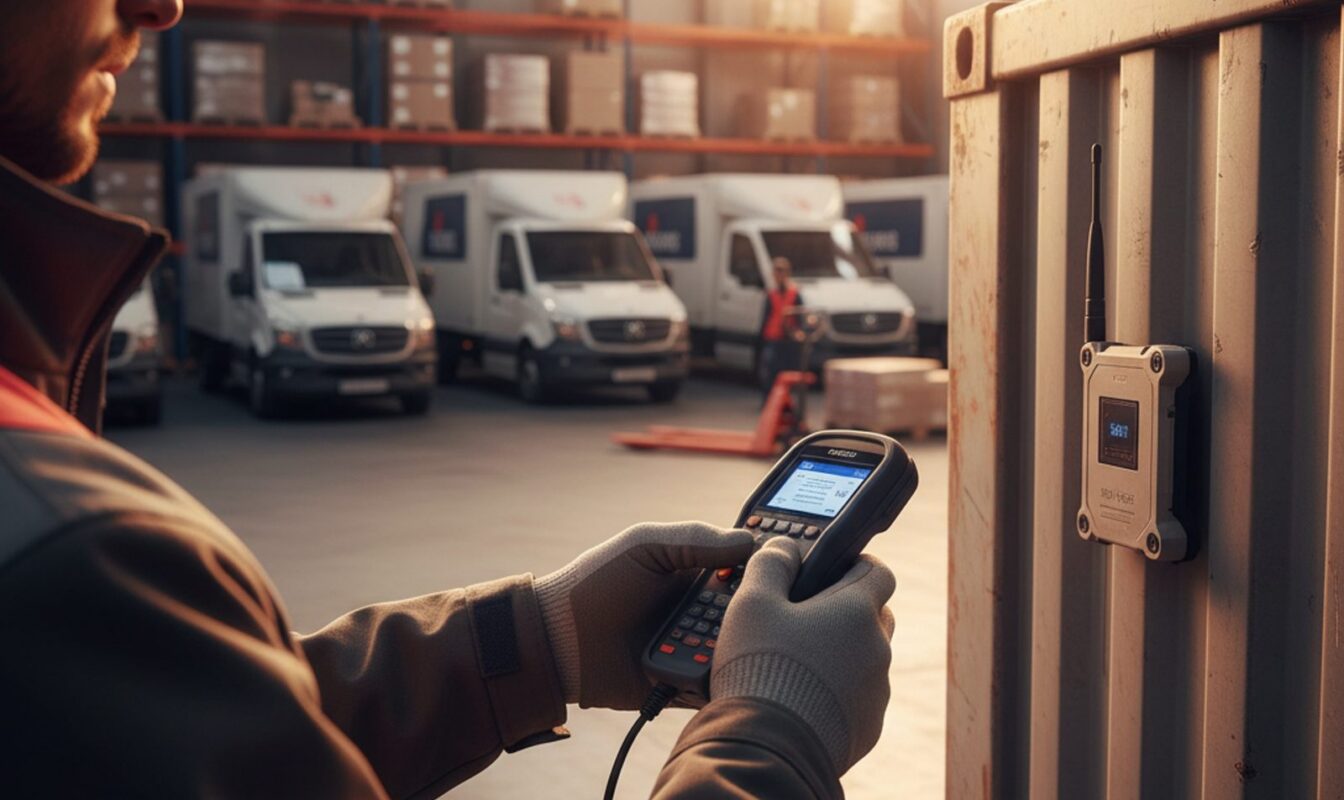
GPX Intelligence solves the problem that most warehouse software leaves open: knowing where inventory and assets physically are, in real time, the moment you ask. GPX combines GPS and Bluetooth Low Energy (BLE) tracking so a single platform reports asset locations both inside the warehouse and out on the road. BLE-enabled GPS devices act as a central hub that reports the location of every tagged asset nearby, which removes the heavy infrastructure changes that older indoor tracking systems demand.
For warehouse teams, that translates into measurable wins:
- Indoor and outdoor visibility: Track inventory, returnable containers, forklifts, and high-value tools from warehouse to worksite on one dashboard.
- Geofencing and dwell-time alerts: Get notified when assets leave a zone or sit idle too long, which cuts shrinkage and prevents loss.
- Low infrastructure overhead: The GPS plus BLE mesh approach delivers location intelligence without ripping out walls or installing dense beacon grids.
- Seamless WMS and ERP integration: GPX is engineered to connect with your existing warehouse management and ERP platforms, so physical location data flows into the systems your team already uses.
The GPX AssetTag is a compact BLE tag with a replaceable coin battery and a 4-year battery life, and the rugged AssetTrack device delivers up to a 10-year battery life. Together they create an affordable, scalable layer of real-time location intelligence on top of whatever inventory software you run. GPX is the visibility layer that makes every other system on this list more accurate.
This matters more than ever as warehouses adopt AI. An agentic AI system can reroute a forklift, reprioritize a pick, or update a delivery ETA on its own, but only if it knows where the physical assets actually are. AI cannot automate what it cannot see. GPX supplies that continuous spatial input through GPS and BLE, turning your AssetTags and trackers into the sensory feed that AI-driven logistics depends on.
2. Oracle NetSuite WMS: Best for Enterprise ERP Integration
NetSuite WMS is the warehouse module inside Oracle’s NetSuite ERP, which makes it a natural fit for companies that want inventory, finance, order management, and procurement under one roof. Because it is part of a full ERP suite, inventory data connects directly to accounting and demand planning without a separate integration project.
- Strengths: unified ERP, robust multi-location support, advanced reporting, and demand forecasting.
- Best for: mid-market and enterprise companies that already run or plan to run NetSuite as their system of record.
- Consider: implementation is a larger commitment and pricing sits in the enterprise range, so it rewards organizations with complexity that justifies it.
3. Fishbowl Inventory: Best for Manufacturing and QuickBooks Users
Fishbowl is one of the most widely adopted inventory platforms for manufacturing and distribution operations. Its barcode support, automatic reorder points, and deep QuickBooks integration make it a strong upgrade path for businesses that have outgrown accounting-software inventory but are not ready for a full enterprise ERP.
- Strengths: manufacturing work orders, barcode scanning, reorder automation, and tight QuickBooks sync.
- Best for: small to mid-sized manufacturers and distributors that want to reduce carrying costs and stop stockouts.
- Setup timeline: typically 2 to 5 weeks depending on configuration.
4. Cin7: Best for Omnichannel Retail and Distribution
Cin7 unifies inventory, point of sale, and order management in a single platform, which makes it a favorite for brands selling across multiple channels. If you ship from a warehouse while also selling through retail, marketplaces, and your own store, Cin7 keeps stock counts synced across all of them.
- Strengths: omnichannel sync, built-in POS and order management, strong marketplace and ecommerce connections.
- Best for: growing retail and distribution brands scaling across channels.
- Consider: the breadth of features suits businesses with genuine multi-channel complexity.
5. Zoho Inventory: Best for Small and Growing Businesses
Zoho Inventory delivers core inventory and order management at a price point that small businesses can adopt without a large budget. A free tier and low-cost paid plans lower the barrier to entry, and it connects cleanly to the wider Zoho ecosystem along with popular ecommerce channels.
- Strengths: affordability, fast setup, multi-channel selling, and tight Zoho CRM and Books integration.
- Best for: small and mid-sized businesses that need real inventory control without enterprise overhead.
- Consider: very large or highly automated warehouses will eventually outgrow it.
6. Sortly: Best for Visual, Mobile-First Inventory Tracking
Sortly takes a visual, photo-based approach to inventory that small teams adopt in hours rather than weeks. Each item carries a photo, custom fields, and a QR or barcode label, and the mobile app turns any phone into a scanner. For field service teams, small warehouses, and tool cribs, that simplicity is the entire value.
- Strengths: photo-based catalog, QR and barcode scanning, mobile-first design, and near-instant onboarding.
- Best for: small teams and field operations that need lightweight, visual inventory tracking.
- Consider: it is built for simplicity rather than high-volume fulfillment automation.
7. Manhattan Active Warehouse Management: Best for Large-Scale 3PL and Enterprise
Manhattan Active Warehouse Management sits at the enterprise end of the market, built for high-volume distribution centers and third-party logistics providers. It applies machine learning to slotting, labor planning, and order orchestration to squeeze efficiency out of operations that move enormous volumes every day.
- Strengths: AI-driven slotting and pick-path optimization, labor management, yard and dock coordination, and high-volume automation.
- Best for: large enterprises, 3PLs, and global logistics operations.
- Setup timeline: a longer enterprise implementation, often 10 weeks or more.
Other Notable Warehouse Inventory Management Software
The market runs deep, and the right fit depends on your niche. Beyond the seven above, these platforms earn regular mention in warehouse inventory management software comparisons:
- High-volume ecommerce fulfillment: Logiwa, ShipHero, and Deposco are built for fast-moving direct-to-consumer and B2B order flow.
- Third-party logistics (3PL): Extensiv 3PL Warehouse Manager and SnapFulfil serve providers that manage inventory for multiple clients.
- Small manufacturers and growing brands: Katana and inFlow Inventory offer approachable manufacturing and stock control.
- Large enterprise ecosystems: SAP Extended Warehouse Management, Microsoft Dynamics 365 Supply Chain Management, and Korber suit organizations already standardized on those platforms.
Whichever software you land on, a real-time location layer like GPX Intelligence works alongside it to keep physical and digital inventory in sync.
Key Features to Look for in Warehouse Inventory Management Software
Whatever your size, hold any platform to the same standard. The features below separate a system that pays for itself from one that becomes another data silo:
- Real-time inventory visibility: live counts that match the shelf, not yesterday’s snapshot.
- Barcode, QR, and RFID scanning: the foundation of accurate, fast receiving, picking, and counting.
- Multi-location and multi-warehouse support: a single view across every site and zone.
- Automated reorder points and alerts: triggers that prevent stockouts and trim excess inventory.
- Cycle counting and demand forecasting: ABC analysis and automated counts that hold accuracy high without shutting the floor down.
- Advanced fulfillment logic: multi-method picking, slotting, kitting, and cross-docking for faster, leaner order flow.
- Location and asset tracking: the ability to find inventory, equipment, and returnable containers on demand.
- Integration with ERP, TMS, ecommerce, and shipping: clean data flow that ends double entry.
- Cloud-native architecture: automatic updates, remote access, and a lower total cost of ownership than legacy on-premise systems.
- Mobile access and reporting: dashboards and analytics your team can act on from the floor.
How RTLS (BLE and GPS) Transforms Supply Chain Visibility and Accuracy
Inventory software tells you what the database says you have. A real-time location system (RTLS) tells you what is physically there and where it sits right now. That distinction is where accuracy lives. When a forklift equipped with a BLE gateway moves through the warehouse, it automatically updates the location of every tagged pallet and tote it passes, so your inventory record reflects reality instead of the last manual scan.
This is why GPX Intelligence complements rather than competes with the WMS and ERP platforms on this list. Layering GPS and BLE tracking onto your existing system delivers three results:
- Higher count accuracy: location updates happen continuously instead of at scheduled counts, which closes the gap between system and shelf.
- Less shrinkage: geofencing and dwell-time alerts flag assets that leave a zone or go idle, so loss gets caught early.
- End-to-end visibility: the same platform follows inventory from warehouse to transit to worksite, which removes the blind spots that pure software cannot see.
The Future of Warehousing: Agentic AI, Autonomous Execution and IoT
The next wave of warehouse software is already reshaping how operations run. The shift is from passive monitoring to autonomous execution. Four trends are pulling ahead in 2026:
- Agentic AI: Unlike traditional automation that follows fixed if-then rules, agentic AI reasons through disruptions, queries multiple systems, and executes workflows on its own, from rerouting a forklift to reprioritizing a pick wave in real time.
- IoT and connected sensors: BLE tags, GPS trackers, and environmental sensors stream live location, temperature, and condition data into one dashboard, giving AI the ground truth it needs to act.
- Warehouse robotics and automation: Autonomous mobile robots, automated storage and retrieval systems, and drones speed up picking and counting in high-volume facilities.
- AI supply chain analysts: Conversational tools, including the GPX Scout AI analyst, turn raw tracking data into plain-language answers and recommended actions.
The common thread is real-time location intelligence. Agentic AI, robotics, and predictive forecasting all depend on knowing exactly where every asset and SKU sits at any moment. That is the foundation the rest is built on, and AI cannot automate what it cannot see. GPX Intelligence delivers that foundation today with GPS and BLE tracking that feeds your existing systems.
How to Choose the Right Warehouse Inventory Management System for Your Business
The best system is the one that matches your size, volume, and complexity. Map your operation to the right fit using this guide:
- Small business or single warehouse: start with Zoho Inventory or Sortly for affordable, fast-to-deploy control.
- Manufacturer or QuickBooks-based distributor: Fishbowl gives you barcode workflows and reorder automation without enterprise weight.
- Omnichannel retailer: Cin7 keeps stock synced across stores, marketplaces, and your warehouse.
- Mid-market to enterprise on ERP: NetSuite WMS unifies inventory with finance and planning.
- High-volume 3PL or global enterprise: Manhattan Active WM brings AI-driven automation built for scale.
- Any operation that needs to know where assets physically are: add GPX Intelligence as the real-time location layer on top of your chosen software.
Then run a short checklist before you commit: confirm the integrations you depend on, ask for a realistic implementation timeline, evaluate the quality of support, and request a demo with your own data. The right decision comes from matching capability to your operational footprint, not from chasing the longest feature list.
Factor in the cost model too. Cloud-based systems run on predictable subscriptions, update automatically, and lower the total cost of ownership, while on-premise and fully personalized builds carry higher upfront cost and longer rollouts. Implementation timelines range from a few days for lightweight tools like Sortly and Zoho Inventory, to several weeks for mid-market platforms, to several months for enterprise systems. A real-time tracking layer like GPX deploys without ripping out existing software, so you add visibility without a long integration project.
See Your Inventory in Real Time with GPX Intelligence
Inventory software keeps the record. GPX keeps it honest. Add GPS and BLE location intelligence on top of any warehouse management system and turn your shelf counts into real-time certainty, indoors and out. Talk to the GPX Intelligence team to map a tracking solution to your warehouse and start protecting every asset on your floor.
Frequently Asked Questions (FAQs)
How much does warehouse inventory management software cost?
Pricing ranges widely. Tools like Zoho Inventory and Sortly offer free tiers and low-cost paid plans for small businesses, mid-market platforms like Fishbowl and Cin7 carry subscription pricing, and enterprise systems such as NetSuite and Manhattan use custom quotes based on scale. Location tracking solutions like GPX are quoted to match your hardware and platform needs.
Do I need barcode or RFID scanning for warehouse inventory management?
Yes for most operations. Barcode and RFID scanning reduce manual errors, speed up receiving and picking, and keep counts accurate, which matters most in medium to large warehouses with high SKU volumes. Real-time GPS and BLE tracking adds a further layer by reporting physical location continuously rather than only at the moment of a scan.
Will a real-time tracking system integrate with my existing WMS or ERP?
It should. GPX warehouse tracking solutions are engineered to integrate with existing warehouse management systems, ERP software, and other supply chain platforms, which creates one centralized view of inventory and assets without replacing the software your team already runs.
Is a cloud-based or on-premise warehouse inventory system better?
For most businesses, cloud-based systems win on cost and flexibility. They use predictable subscription pricing, update automatically, scale with your volume, and lower the total cost of ownership. On-premise and fully personalized systems give large enterprises deeper control and customization, with higher upfront cost and longer implementation. Match the model to your scale, IT resources, and growth plans.
How does Agentic AI change warehouse inventory management?
Traditional automation follows rigid if-then rules. Agentic AI in logistics reasons through disruptions, queries multiple systems, and executes autonomous workflows in real time, such as rerouting a forklift or updating delivery ETAs. It depends on live location data, which is why real-time tracking from a system like GPX is the input that makes agentic warehouse AI work.