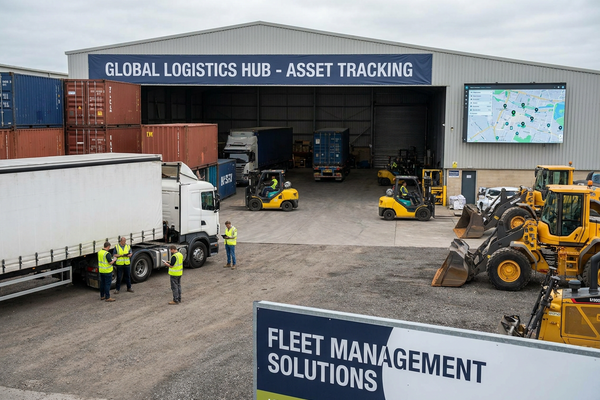


Every business owns assets that walk off the books. A drill that left the job site in the wrong truck. A laptop that never came back from a service call. A trailer of high-value freight that disappeared somewhere between the dock and the customer. The companies that win in 2026 are not the ones with the most expensive equipment. They are the ones that always know where their equipment is.
The numbers explain why. The global asset tracking market is worth USD 32.45 billion in 2026 and is growing at a 10.84 percent CAGR toward USD 54.29 billion by 2030, according to Mordor Intelligence. The threat side is climbing even faster. Cargo theft losses surged to nearly USD 725 million in 2025, a 60 percent jump over the prior year, as organized groups shifted to high-value, surgical targeting, per Verisk CargoNet.
So the question is no longer whether you need asset tracking. It is which of the leading solution types fits your assets, your environment, and your budget. This guide breaks down the top 7 asset tracking solutions side by side, the pain points each one solves, and a clear framework for choosing the right one.
Beyond Dots on a Map: Why 2026 Is the Enterprise Tipping Point for AI-Driven Asset Tracking
Asset tracking is the practice of monitoring the location, status, movement, and usage of physical assets in real time using connected hardware and software. A modern asset tracking solution combines three layers: a tag or tracker attached to the asset, a network that carries the signal (cellular, Bluetooth, RFID reader, or ultra-wideband), and a software platform that turns raw pings into maps, alerts, and decisions.
What changed in 2026 is the convergence of cheaper hardware, longer battery life, and AI on top of the data. Tracking is no longer a dot on a map you check after something goes missing. It is a live, queryable view of your entire fleet of assets. The strongest solutions now answer plain-language questions like “where is every generator assigned to the north crew” or “which assets have not moved in 72 hours” without anyone touching a spreadsheet.
The core capabilities buyers expect today include:
- Real-time location. Live position for outdoor assets and near real-time presence for indoor ones.
- Geofencing and alerts. Automatic notifications when an asset leaves an approved zone or moves after hours.
- Long battery life. Multi-year power so trackers do not become a maintenance burden.
- Theft recovery. Live tracking data that helps law enforcement recover stolen assets quickly.
- Utilization data. Insight into which assets are overworked, idle, or ready to be retired.
- Integration. APIs that push location data into the ERP, EAM, or fleet systems you already run.
Supply Chain Leakage: Quantifying the Real Pain Points of Equipment Blind Spots and Cargo Theft
Most organizations underestimate what blind spots cost them, because the losses hide inside a dozen different line items. Before you compare solutions, it helps to name the pain points that asset tracking is actually fixing.
- Shrinkage and theft. Tools, equipment, and freight disappear, and without live data the trail goes cold before anyone reports it missing.
- Equipment downtime. Crews lose hours hunting for a missing machine, then a second crew rents a duplicate the company already owns.
- Over-purchasing. When you cannot see what you have, you buy more. Many fleets carry 10 to 20 percent more equipment than they need.
- Manual audits. Annual inventory counts done by hand are slow, expensive, and outdated the day they finish.
- Compliance and chain of custody. Regulated industries need to prove where an asset has been, and gaps create audit risk.
- Customer trust. A late or lost shipment with no answers erodes the relationship faster than the dollar value of the load.
Three deeper pain points rarely make the brochure, yet they decide whether a deployment succeeds or quietly fails:
- Network sunsets and future-proofing. Carriers are phasing out older networks, and hardware tied to a dying band becomes scrap. In 2026, buyers insist on trackers built for the networks that will still be live in five years, namely LTE-M, NB-IoT, and 5G RedCap, so a fleet purchase does not turn into a forced re-buy.
- Battery fatigue at scale. Battery life is an operational bottleneck the moment you scale. A fleet of 5,000 assets on three-year batteries means swapping nearly 140 batteries every single month, an endless chase across sites. A 5-year replaceable battery like the one in the GPX AssetTag cuts that recurring labor roughly in half and keeps a tag in service across multiple deployment cycles.
- Data trapped in silos. Software fatigue is real. A tracking platform that cannot push location data into your ERP or EAM leaves your most valuable asset intelligence stranded in a standalone dashboard nobody opens. The fix is an open API that feeds the systems your team already lives in.
Every solution below attacks a different combination of these problems. The right fit depends on which ones are costing you the most.
The 2026 Buyer’s Guide: Deep-Dive Comparison of the Top 7 B2B Asset Tracking Solutions
The market is crowded, but nearly every offering falls into one of seven solution categories. The table below compares them at a glance, then each section explains where it wins and where it falls short. The hybrid GPS plus BLE row is highlighted because it is the category most B2B fleets are standardizing on in 2026.
| Solution | Best For | Coverage | Battery Life | Real-Time | Typical Cost |
|---|---|---|---|---|---|
| 1. GPS Asset Trackers | Outdoor, high-value mobile assets | Nationwide cellular | 1 to 5 years | Yes | $$$ |
| 2. BLE Asset Tags | Tools, equipment, indoor and yard assets | Short range via gateways or phones | Up to 5 years, replaceable | Near real-time | $ |
| 3. RFID Systems | High-volume checkpoints and inventory | Reader-dependent, centimeters to meters | Passive none, active 3 to 5 years | At read points | $$ |
| 4. RTLS and UWB | Precise indoor positioning | Indoor zones with fixed anchors | 2 to 5 years | Yes | $$$$ |
| 5. Hybrid GPS plus BLE (e.g., GPX) | Mixed fleets across indoor and outdoor | Cellular plus Bluetooth | Up to 5 years, replaceable | Yes | $$ |
| 6. Cargo and In-Transit Trackers | Shipments and theft recovery | Nationwide cellular | Single trip to 1 year plus | Yes | $$ |
| 7. AI Asset Intelligence Platforms | Fleet-wide visibility and prediction | Software layer over any hardware | Not applicable, software | Yes | $$$ |
1. GPS Asset Trackers
GPS trackers use satellite positioning and a cellular connection (often LTE-M or NB-IoT) to report an asset’s location anywhere there is mobile coverage. They are the gold standard for outdoor, high-value, mobile assets that travel beyond your own property.
They shine for fleet vehicles, trailers, heavy construction equipment, generators, and any asset where “it left the site” is the nightmare scenario. Live position plus geofencing means you know the moment an excavator rolls past its approved boundary, and the live feed gives police a real chance at recovery. The trade-off is power draw and cost. Continuous GPS reporting consumes more battery, so trackers either run larger batteries, recharge from the asset, or report on a schedule to stretch their life.
Power source is the deciding factor for assets that have no electrical connection of their own. The market splits into four common options, and the right one depends on where the asset sits and how often you can touch it:
- Wired or hardwired. Draws power from the vehicle or equipment for continuous, maintenance-free reporting. Best for engine-on fleet assets.
- Rechargeable battery. Long internal battery you top up periodically. A fit for assets that return to a depot.
- Solar harvesting. Built for trailers, containers, and remote equipment that sit outdoors for months, so the tracker effectively never needs servicing.
- Non-powered and long-life cell. For assets with no power at all, a low-energy tracker or tag with a multi-year battery is the answer.
Whatever the power source, demand a rugged enclosure. Look for an IP67, IP68, or IP69K rating so the tracker survives dust, water, vibration, and pressure washing on a real job site or loading dock.
2. Bluetooth Low Energy (BLE) Asset Tags
BLE tags are small, inexpensive, and built to last. They broadcast a low-energy signal that is picked up by nearby gateways, smartphones, or other tags, which makes them ideal for the hundreds of smaller assets that a GPS tracker would be overkill for: power tools, test equipment, IT hardware, medical devices, and bins.
The standout advantage is longevity and price. The GPX AssetTag, for example, delivers up to 5 years of battery life on a replaceable battery, so a tag outlives several deployment cycles without becoming maintenance overhead. The limitation is range. BLE alone gives you presence and proximity rather than precise outdoor coordinates, which is exactly why so many buyers pair it with cellular in a hybrid setup.
3. RFID Asset Tracking Systems
RFID uses radio tags read by fixed or handheld scanners. Passive tags carry no battery and cost cents apiece, while active tags broadcast their own signal over greater distances. RFID excels at high-volume, checkpoint-based tracking where assets pass a known reader, such as a gate, a doorway, or a tool crib window.
It is fast and cheap at scale, but it is not continuous location. RFID tells you an asset was at point A when it crossed the reader, not where it is right now. For organizations that need to confirm presence at fixed checkpoints rather than track movement across a region, it remains a workhorse.
Barcode and QR code scanning sit in the same family as the lowest-cost entry point. A printed label costs almost nothing, and any smartphone becomes a scanner, which makes barcodes ideal for check-in and check-out logging, audits, and IT asset registers. The limitation is that a person has to scan each item, so barcodes track ownership and status rather than real-time location. Many teams start with barcodes for inventory accuracy, then layer GPS or BLE on top for live visibility.
4. Real-Time Location Systems (RTLS and UWB)
RTLS delivers the most precise indoor positioning available, often down to a few centimeters using ultra-wideband (UWB) anchors installed throughout a facility. The real-time location system market reflects the demand, growing at a 23.91 percent CAGR toward USD 25.85 billion by 2031, per Mordor Intelligence.
RTLS is the right call for high-stakes indoor environments such as hospitals tracking infusion pumps or manufacturing lines tracking work in progress. The catch is infrastructure. You install and maintain a network of anchors, which makes RTLS the most capital-intensive option on this list and best reserved for facilities where pinpoint indoor accuracy genuinely pays for itself.
5. Hybrid GPS plus BLE Tracking Platforms
This is the category most B2B fleets are consolidating on, and for good reason. Hybrid solutions combine cellular GPS for outdoor, long-range visibility with Bluetooth for indoor and short-range presence, so a single platform follows an asset from the warehouse floor to the job site to the customer’s yard without losing the signal.
A hybrid approach solves the classic trade-off: GPS is great outdoors but power-hungry and weak indoors, while BLE is efficient and cheap but short range. Run them together and you get continuous coverage, multi-year battery life, and one dashboard instead of three. GPX is built around this model, pairing the long-life AssetTag with cellular tracking and a unified view, which is why mixed fleets gravitate to it when their assets refuse to stay in one place.
6. Cargo and In-Transit Shipment Trackers
Purpose-built for freight, these trackers travel inside or on a shipment and report location, route deviations, and tamper events in real time. With cargo theft losses up 60 percent year over year, this category moved from nice-to-have to essential for shippers and brokers moving high-value loads.
The value is in the alert and the recovery. A route-deviation notification the moment a trailer turns off course gives a dispatcher the chance to act before the load vanishes, and the live feed turns a stolen shipment into a recoverable one. Some are single-trip and disposable, others are reusable for ongoing lanes, so the choice depends on shipment value and frequency.
7. AI-Powered Asset Intelligence Platforms
The newest category is not hardware at all. AI asset intelligence platforms sit on top of your trackers and turn streams of location pings into answers and predictions. Instead of reading a map, an operations manager asks a question in plain English and gets the asset, the status, and the recommendation.
These platforms surface idle assets, flag unusual movement, predict maintenance needs before a breakdown, and automate the reporting that used to eat entire afternoons. The most advanced layer in full lifecycle management on top, tracking each asset from acquisition through utilization to retirement and feeding usage data into sustainability and ESG reporting that boards increasingly ask for. They are most powerful layered over a strong hardware foundation, because the intelligence is only as good as the data feeding it. For fleets already drowning in tracker data, this is the layer that converts visibility into decisions.
The Next-Gen Checklist: Non-Negotiable Features for Enterprise-Grade Asset Security
Once you know the category, the difference between a good solution and a frustrating one comes down to a short list of features. Pressure-test any vendor against these:
- Battery life and serviceability. Multi-year life is the baseline. A replaceable battery, like the 5-year cell in the GPX AssetTag, means a tag keeps working long after a sealed competitor has been thrown away.
- Indoor and outdoor coverage. Real assets move between both. A solution that only works in one environment will leave you with blind spots exactly where losses happen.
- Geofencing and instant alerts. The value of tracking is in the warning, not the history. You want a notification while you can still act, not a report after the asset is gone.
- Open API integration. Location data is most powerful inside the ERP, EAM, or fleet system your team already uses. Insist on documented APIs.
- An intelligence layer. Look for AI or agent-driven querying that answers questions instead of handing you raw coordinates.
- Rugged, weatherproof build. An IP67 or higher rating means tags survive heat, vibration, moisture, and rough handling on real job sites and docks.
- Security and compliance. For sensitive or regulated assets, look for SOC 2 certification, role-based access, and a full audit trail of every check-in and check-out.
- Offline and field-ready. Crews often work where coverage drops. The best apps capture scans and updates offline, then sync the moment a connection returns.
- Scalability and total cost of ownership. Pricing that still makes sense scaling from 50 assets to 5,000, judged on total cost of ownership over the device life, not just the sticker price.
Industry Vertical Deployment: Solving Asset Loss in Construction, Fleet Logistics, and Healthcare RTLS
The best solution is the one matched to how your industry actually loses assets.
Construction. Equipment moves between sites, sits idle on weekends, and is a prime theft target. Hybrid GPS plus BLE tracking covers tools in the gang box and excavators on the open lot from one platform, cutting both rental duplication and theft losses.
Fleet and automotive. Vehicles, trailers, and components need continuous outdoor location plus utilization data. GPS trackers and cargo trackers reduce unauthorized use, optimize routing, and protect high-value parts shipments bound for assembly plants.
Healthcare. Mobile medical equipment is expensive, constantly moving, and frequently misplaced across floors and departments. BLE and RTLS keep infusion pumps, monitors, and wheelchairs visible so clinical staff spend time on patients, not on searching.
In-transit logistics and supply chain. The freight itself is the asset, and it is under attack. In-transit trackers with route-deviation and tamper alerts protect loads end to end and turn theft from a write-off into a recovery.
How to Choose the Right Asset Tracking Solution: A Strategic TCO and Ecosystem Framework
With the categories clear, the decision becomes a structured one. Work through these questions in order and the right solution narrows itself down fast:
- Where do your assets live? Mostly outdoors and mobile points to GPS. Mostly indoors points to BLE or RTLS. Both points to a hybrid platform.
- How precise do you need to be? “Which building or yard” is a BLE or GPS job. “Which room or which bay” is where RTLS earns its higher cost.
- What is each asset worth and how many do you have? High value and low volume justifies premium GPS. High volume and lower value favors inexpensive BLE tags at scale.
- How long must the tracker last unattended? If you cannot service tags often, prioritize multi-year, replaceable batteries.
- What does it need to connect to? Confirm the platform integrates with your existing systems through an open API before you commit.
- Do you want data or decisions? If your team is already overwhelmed by tracker output, weight the AI intelligence layer heavily.
- What is the true cost over time? Weigh hardware, connectivity, software, and battery replacement together as total cost of ownership, not the upfront price alone.
- Can you pilot before you scale? The safest rollouts start with a small pilot on your highest-loss assets, then expand once the data proves out. Vendor support and implementation help matter as much as the hardware.
For most B2B operations with assets that refuse to stay in one place, the answer in 2026 is a hybrid platform with long-life tags and an intelligence layer on top. It is the configuration that covers the widest range of assets without forcing you to run three disconnected systems. The right choice is the one that gives you a single, live, trustworthy view of everything you own, so visibility stops being a project and becomes the default.
Track Every Asset From One Platform With GPX
GPX brings hybrid GPS plus BLE tracking, the 5-year replaceable-battery AssetTag, and an AI-driven view together so your team can see, query, and protect every asset from one place. Explore the GPX AssetTag to see the hardware, or get started to put trackers on the assets that have been quietly walking off your books.
Frequently Asked Questions (FAQs)
What is the most cost-effective asset tracking architecture for a mixed fleet in 2026?
For a mixed fleet that spans indoor and outdoor assets, a hybrid GPS plus BLE architecture is usually the most cost-effective choice. You put low-cost, long-life BLE tags on the high volume of smaller assets and reserve cellular GPS for the high-value items that travel, all reporting into one platform. That avoids paying for a connectivity subscription on every asset while still giving you a single, live view of everything you own.
Can Bluetooth Low Energy (BLE) asset tags completely replace cellular GPS trackers?
Not entirely. BLE tags are cheaper and last longer, and they are excellent for indoor presence, proximity, and short-range tracking without subscription fees. But BLE has limited range and cannot pinpoint an asset out on the open road or a remote site the way cellular GPS can. The strongest setups use BLE for the many and GPS for the mobile few, which is exactly what a hybrid platform delivers.
How do businesses use AI to mitigate the 60 percent surge in cargo theft?
With cargo theft losses up 60 percent in 2025, businesses are pairing in-transit trackers with AI that watches the data stream for them. The system learns normal routes and dwell times, then flags route deviations, unexpected stops, and tamper events the moment they happen, sending an alert while the load can still be intercepted. The live feed then gives law enforcement actionable data, turning a likely write-off into a recovery.
How long do asset tracker batteries last?
It depends on the technology and reporting frequency. GPS trackers typically run 1 to 5 years, while BLE tags last longer because they use less power. The GPX AssetTag delivers up to 5 years of battery life on a replaceable battery, which matters at scale. A 5-year cell roughly halves the battery-swap labor a 3-year cell would create across a large fleet, and you replace the battery instead of the whole tag.
How do I know which asset tracking solution is right for my industry?
Start with how your industry loses assets. Construction and fleet operations need outdoor GPS or hybrid coverage for equipment and vehicles. Healthcare benefits from BLE and RTLS for mobile medical devices indoors. In-transit logistics needs cargo trackers with theft alerts. Match the solution’s coverage and precision to your real-world environment, and confirm it integrates with the systems you already run.