Supreme Court’s Ruling on Tariffs for Supply Chains

On February 20, 2026, the U.S. Supreme Court ruled 6-3 in Learning Resources, Inc. v. Trump that the President cannot impose tariffs under the International Emergency Economic Powers Act. Chief Justice Roberts wrote that the power to impose tariffs is “very clearly a branch of the taxing power” reserved for Congress under the Constitution. The ruling invalidated both the Reciprocal Tariffs imposed in April 2025 and the Trafficking and Immigration Tariffs targeting imports from Canada, Mexico, and China.
The financial stakes are enormous. According to U.S. Customs and Border Protection data, more than $130 billion in IEEPA-based tariffs have been collected since 2025, with some estimates reaching $175 billion. More than 301,000 importers made over 34 million entries subject to these duties. The average U.S. tariff rate dropped from roughly 17% to approximately 9% the moment the ruling took effect. Within hours, the administration invoked Section 122 of the Trade Act of 1974 to impose a replacement 15% global surcharge, but this authority is legally capped at 150 days and expires on July 24, 2026.
For supply chain leaders, this is not a political headline. It is an immediate operational reset. Tariff rates have shifted, a refund window has opened, and a new 150-day surcharge clock is ticking. This guide breaks down what happened, what it means for your business, and what to do now.
What the Ruling Changes for Importers
The Court held that IEEPA does not grant the President authority to impose tariffs. This invalidates the legal basis for duties that had pushed the U.S. average effective tariff rate to nearly 17%, the highest level since the early 1930s. Research from the Federal Reserve Bank of New York found that nearly 90% of those costs were absorbed by American firms and consumers. The Tax Foundation estimated these tariffs added roughly $1,000 to household costs in 2025.
The practical effect hit immediately. Importers who paid duties under IEEPA authority over the past year may be eligible for refunds. On March 4, 2026, the U.S. Court of International Trade ordered CBP to begin processing refunds for all importers who paid IEEPA duties, not just those who filed lawsuits. The order directs CBP to liquidate all pending entries “without regard to the IEEPA duties.” The government is expected to appeal, but the process is now moving.
The Section 122 Replacement Surcharge
The administration moved fast. Within hours of the ruling, President Trump invoked Section 122 of the Trade Act of 1974 to impose a new 15% global surcharge on all imports. This authority exists specifically for balance-of-payments emergencies, but it comes with a hard constraint: Section 122 tariffs are legally capped at 150 days.
That creates a deadline. The surcharge expires on July 24, 2026, unless Congress votes to extend it. For importers, this means:
- The 15% surcharge applies to most imports effective February 24, 2026
- Products already subject to Section 232 steel and aluminum tariffs are generally excluded
- USMCA-qualifying goods from Canada and Mexico retain their exemptions
- The July 24 expiration is driving a front-loading surge as shippers rush to clear inventory before the rules shift again
Port Congestion and the Capacity Crunch
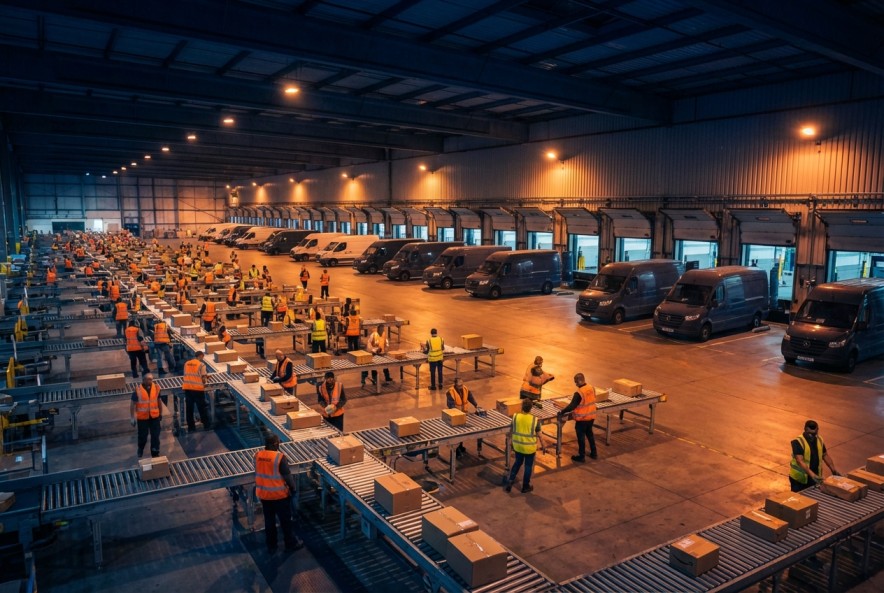
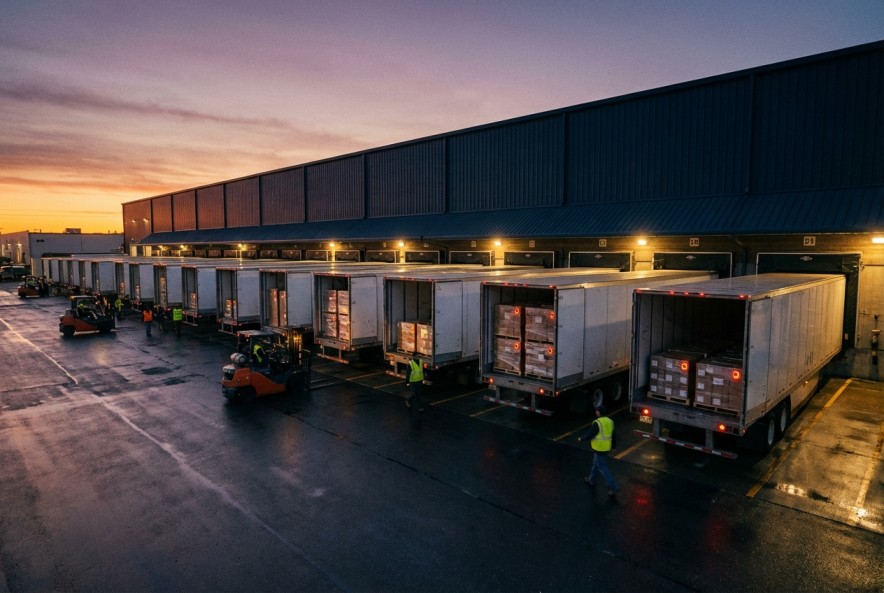
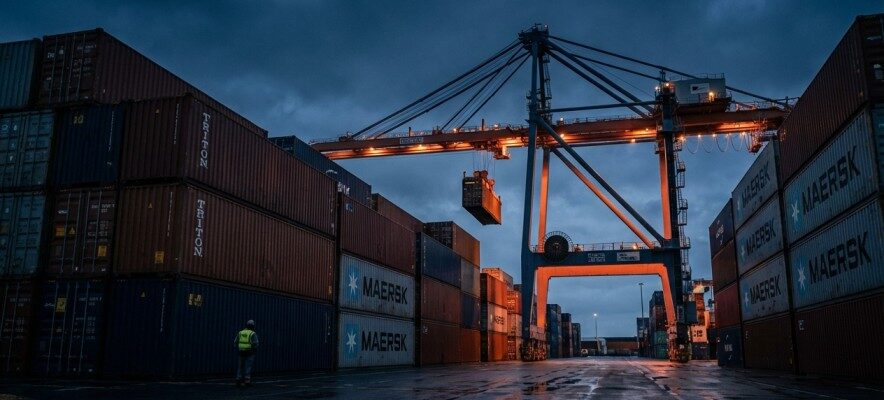
The 150-day window has triggered predictable behavior. Importers are accelerating shipments to clear customs before the Section 122 surcharge expires or transforms into something else. Domestic rail yards are approaching capacity limits. Chassis shortages are compounding dwell times at major ports from Long Beach to Savannah.
For your operation, this shows up as:
- Longer dwell times as terminals struggle to process the volume surge
- Demurrage and detention fees running $100 to $400 per day per container
- Spot rate increases as capacity tightens
- Carrier data going dark at handoff points, leaving you blind to actual shipment status
The companies that avoid margin erosion will be those with independent visibility into their freight, not those waiting for carrier portal updates that arrive hours or days late.
Refund Eligibility: What You Need to Document
The March 4 CIT order is a significant step, but questions remain about how CBP will process millions of affected entries. Importers should prepare now rather than wait for final guidance.
To position yourself for refunds:
- Sign up for an ACE Portal account if you do not have one. CBP is experiencing processing delays, and ACE access lets you pull your import data directly
- Register for ACH refunds through the ACE Portal. As of February 6, 2026, CBP only issues refunds electronically
- Pull your Entry Summary details report (ES-003) and filter for HTSUS codes 9903.01.XX and 9903.02.XX to identify IEEPA tariffs paid
- Confirm whether your entries are unliquidated, liquidated but not final (within 180 days), or fully final
- Consider filing protests for liquidated entries approaching the 180-day deadline to preserve your claim
Work with trade counsel to quantify your exposure. The refund process may take months to fully resolve, but companies that document their eligibility now will be first in line when the mechanism is finalized.
Why Visibility Matters More Than Ever
Policy volatility is not going away. The IEEPA ruling did not eliminate tariff risk. It shifted the legal basis. Section 122 expires in July. Section 232 and Section 301 tariffs remain in effect. The administration has signaled investigations under other authorities. For supply chain operators, the challenge is not predicting which tariff will apply next. It is maintaining operational control regardless of which policy is in effect.
When carrier data lags behind reality and port congestion creates multi-day blind spots, independent supply chain visibility is the only way to protect your margins:
- Eliminate dwell time fees. Use automated geofencing to flag containers the moment they enter the terminal. If a container sits beyond free time, your team gets an alert to prioritize drayage before demurrage compounds.
- Monitor transit deviations. Track shipments in real time as they navigate congested ports and rerouted lanes. Know when a vessel anchors unexpectedly before the carrier notifies you.
- Protect capital investments. If you are importing equipment at lower post-IEEPA rates, secure those assets with GPS tracking before they reach the job site. Equipment that moves after hours without visibility is a recovery problem waiting to happen.
What to Do Now to Get Maximum Benefit
The Section 122 clock is running. The refund window is open and expanding. Capacity is tightening. Beyond tariffs, global logistics routes are under pressure. The U.S.-Iran conflict has forced carriers to suspend Persian Gulf transits, adding thousands of miles and over $1 million in fuel costs per voyage rerouted around the Cape of Good Hope. These disruptions compound the Section 122 surge, making independent visibility even more critical.
Here is where to focus:
- Audit refund eligibility. Work with trade counsel to identify IEEPA-based entries. Pull your ACE data and quantify your exposure before the process gets crowded.
- Update landed cost models. Reconcile inventory valuation impacts and adjust purchase order cost structures for the 15% surcharge.
- Secure capacity now. Do not wait until June to book pre-July shipments. Capacity will be constrained by May.
- Deploy independent tracking. Attach sensors to high-value freight and equipment. Your own data stream is the only reliable navigation tool when carrier portals lag and policy shifts without warning.
For high-value freight and equipment, GPS and BLE trackers provide the real-time data carrier portals cannot. GPS SmartLabels offer a quick way to add an extra layer of security without overhauling your existing systems. Starting at $10 per unit, a single SmartLabel can cover a high-risk load with no long-term commitment.
The Supreme Court ruling resolved a legal question. It did not resolve the operational reality. Tariffs remain a variable input in global commerce. The companies that maintain visibility and documentation discipline will move faster and recover more accurately than those reacting to each headline.
Frequently Asked Questions (FAQs)
How can businesses recover tariffs paid under the invalidated IEEPA authority?
Importers must extract comprehensive entry data for all shipments between 2025 and February 2026. While the Supreme Court struck down the authority, refunds are not automatic. Companies should file protective protests with CBP to preserve their right to a refund while the reimbursement process is established through the Court of International Trade.
What is the difference between IEEPA and Section 122 for logistics planning?
IEEPA allowed for open-ended, permanent tariffs that created long-term sourcing uncertainty. Section 122 is a temporary measure legally capped at 150 days. This creates a hard expiration on July 24, 2026, which is driving the current volume surge as shippers rush to move inventory before the window closes.
How does the Section 122 surcharge interact with existing Section 232 duties?
Section 122 surcharges generally do not stack on top of current Section 232 steel or aluminum tariffs. However, for products where metal and non-metal content must be determined, the Section 122 surcharge may still apply to the non-metal portion. Importers should review HTSUS Chapter 99 annexes for correct classification.
Why are warehouse security risks increasing during the import surge?
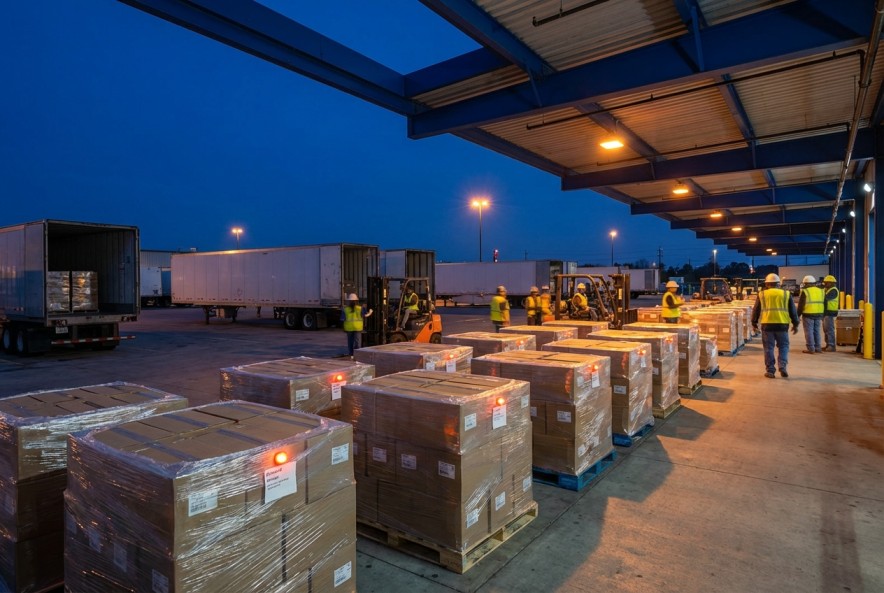
Overwhelmed distribution centers are prioritizing throughput over loss prevention. Organized crime groups are targeting backlogged facilities using fictitious pickup scams. Implementing GPS and BLE tracking at the shipment level verifies that goods have actually reached their destination amid the volume chaos.
How can real-time visibility mitigate the impact of port congestion on profit margins?
Demurrage fees can consume 30% of a shipment’s margin. Real-time visibility allows logistics teams to receive pre-arrival alerts and coordinate drayage before free time expires. Syncing tracking data with drayage partners ensures chassis and drivers are ready the moment a container is discharged, bypassing the gridlock that creates multi-thousand-dollar penalties.