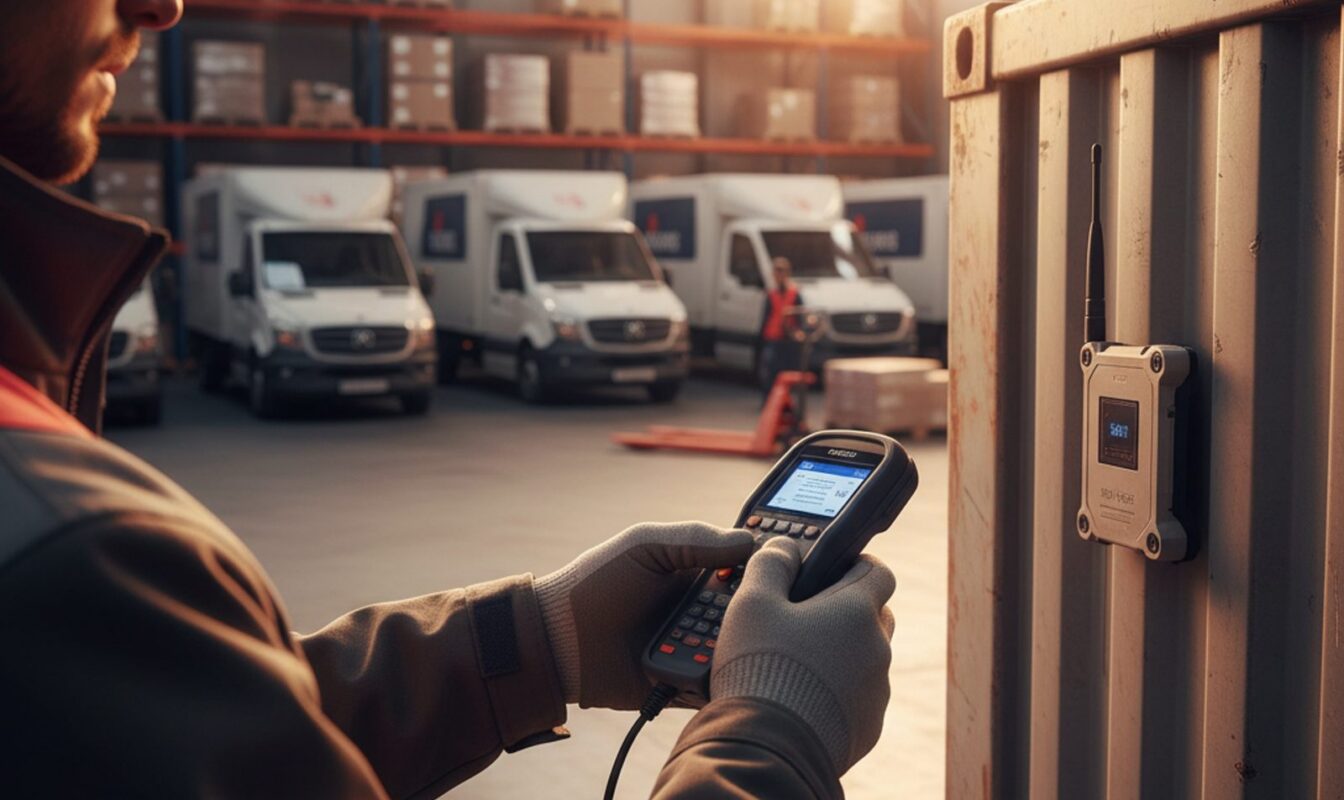


Every shipment that leaves a dock becomes a question: where is it now, and will it arrive on time? In 2026, that question gets answered in seconds instead of phone calls. Real-time shipment tracking has moved from a competitive advantage to a baseline expectation, and the gap between teams that see their freight live and teams that wait for status updates keeps widening.
This guide breaks down the top 7 shipment tracking solutions for 2026, from GPS hardware that rides inside the trailer to software platforms that aggregate carrier data across road, rail, ocean, and air. You will see what each one does best, the trade-offs that come with it, and a clear path to choosing the right fit for your operation.
What Is Real-Time Transportation Visibility (RTTVP) and IoT Tracking?
A shipment tracking solution is the technology that monitors goods as they move from origin to final delivery. It captures location, status, and condition data through GPS, IoT sensors, and carrier feeds, then turns that data into live updates your team and your customers can act on. In 2026 the category splits into two layers: real-time transportation visibility platforms (RTTVP) on the software side, and IoT GPS tracking devices on the hardware side.
There are two broad categories, and the strongest operations in 2026 use both:
- GPS tracking hardware. Physical trackers placed on or inside cargo, pallets, containers, and assets. These devices report exact location and, in many cases, temperature, humidity, and shock. This is the ground truth layer that proves where your freight actually is.
- Real-time transportation visibility platforms (RTTVP). Software that pulls data from carriers, telematics providers, customs systems, and sensors into one dashboard. These platforms specialize in predictive ETAs, exception alerts, and carrier performance analytics.
The difference matters. A transportation management system plans and books freight. A visibility platform tracks that freight once it is moving. GPS hardware verifies the location of high-value or sensitive cargo that carrier data alone cannot confirm. The right shipment tracking strategy combines the layer that fits your cargo, your lanes, and your customers.
Why Supply Chain Visibility and Agentic AI Are Non-Negotiable in 2026
Supply chains stretched across global networks face delivery windows that shrink every year, capacity that swings without warning, and customers who expect parcel-level transparency on freight-level shipments. Real-time tracking turns those forces from threats into manageable signals.
The payoff shows up fast:
- Fewer surprise delays. Predictive ETAs flag a late shipment before it misses the window, so your team reroutes or notifies the customer first.
- Lower detention and demurrage costs. Geofencing and dwell-time alerts catch idle assets and trailers before fees stack up.
- Protected high-value cargo. Live location plus shock and temperature data confirms that sensitive freight stayed safe and stayed within spec.
- Fewer “Where Is My Order” (WISMO) inquiries. Proactive status updates replace the calls and emails that ask where a shipment is. Industry research puts WISMO at roughly one in five support contacts in a normal month, and higher during peak season, so every automated update returns agent time and protects loyalty.
- Cleaner carrier scorecards. Historical lane and carrier data shows which partners deliver on promise and which drain margin.
Top 7 Supply Chain Visibility Platforms and GPS Trackers (2026 Comparison)
The seven solutions below cover the full spectrum, from purpose-built GPS hardware to enterprise visibility software. Use the comparison table first for a fast read, then dig into the breakdown for each.
| Solution | Type | Best For | Standout Capability |
|---|---|---|---|
| GPX Intelligence | GPS hardware plus tracking software | In-transit cargo, assets, and condition monitoring | End-to-end GPS trackers with temperature, humidity, and shock sensors plus custom geofencing |
| Project44 | Visibility platform | Large multimodal supply chains | AI-driven ETAs and door-to-door modal stitching |
| FourKites | Visibility platform | Global enterprises with complex networks | Predictive tracking and automated exception management |
| Tive | GPS hardware plus software | Sensitive and high-value shipments | Single-use trackers with live condition data |
| Shippeo | Visibility platform | Multimodal ETA accuracy | Machine learning ETA refinement across modes |
| Descartes MacroPoint | Visibility plus compliance | Cross-border and regulated freight | Visibility paired with customs and trade compliance |
| Roambee | GPS hardware plus software | Asset and condition intelligence | Sensor-driven cargo monitoring with risk scoring |
1. GPX Intelligence
GPX Intelligence delivers shipment tracking from the cargo up. Instead of relying only on carrier data feeds, GPX puts physical GPS trackers on the freight itself, then surfaces that location and condition data through a single tracking dashboard. This gives logistics teams the ground truth that software-only platforms cannot confirm on their own.
The GPX lineup covers the full range of in-transit needs:
- Disposable, battery-powered GPS trackers with integrated temperature, humidity, and shock sensors for sensitive, short-range shipments.
- Durable, long-battery and wired GPS trackers with the same sensor suite for long-range, continuous monitoring.
- The GPX AssetTag (BLE) for indoor and short-range asset visibility, with a 4-year battery life and a replaceable battery so a tag stays in service for years.
- Customizable geofencing with instant entry and exit alerts, so a shipment crossing a boundary triggers an action without anyone watching a screen.
GPX is built for operations that need to prove where their freight is and what condition it is in, across construction, fleet, healthcare, automotive, and in-transit logistics. It is the strongest fit when location accuracy and cargo condition both carry real weight.
2. Project44
Project44 aggregates data from carriers, sensors, and customs systems into one unified view of every shipment in transit. Its Modal Stitching feature tracks freight door-to-door and combines AI-driven ETAs across legs into a single timeline. Large supply chains use it to detect inefficiencies and coordinate partners across modes.
It suits enterprises that move high volumes across road, rail, ocean, and air and want predictive arrival data at scale. Setup and integration take time, and pricing reflects an enterprise-tier product.
3. FourKites
FourKites connects carrier and telematics data to show live movement across every transport mode. The platform leans into predictive ETAs and automated exception management, which means delays and disruptions get flagged and routed for action without manual monitoring. It also supports sustainability reporting, a growing requirement for many shippers.
FourKites fits large organizations managing complex global networks. As with other premium platforms, integration effort and cost scale with the size of the deployment.
4. Tive
Tive pairs single-use and reusable GPS trackers with a real-time platform, focused on sensitive and high-value shipments. The trackers report live location alongside temperature, light, and shock data, so teams know not just where a shipment is but whether it stayed within spec the whole way.
Tive works well for pharma, food, and other cargo where condition data is as important as location. Teams that need pure software visibility across thousands of standard freight lanes will look at the platform vendors instead.
5. Shippeo
Shippeo is a visibility platform that emphasizes ETA accuracy across ocean, road, rail, and air. It uses machine learning and a large carrier network to refine arrival predictions continuously and to flag potential disruptions before they hit. Companies that live and die by accurate ETAs gravitate toward it.
Shippeo serves shippers seeking multimodal visibility with strong exception monitoring. It is a software layer, so cargo-level condition monitoring still calls for GPS hardware alongside it.
6. Descartes MacroPoint
Descartes brings one of the most widely used freight visibility products in North America in MacroPoint, with tracking across truckload, less-than-truckload, and intermodal lanes through a large carrier network. What sets Descartes apart is the surrounding portfolio: customs filing, global trade compliance, and last-mile optimization that few pure visibility vendors match.
Descartes fits cross-border and regulated freight where customs and compliance sit at the center of the operation. The breadth of the platform can feel heavy for teams with simpler tracking needs.
7. Roambee
Roambee combines GPS sensor hardware with a software layer that scores risk and monitors cargo condition. It captures location, temperature, humidity, shock, and tamper data, then translates that into intelligence about which shipments need attention. The hardware-plus-software model gives it cargo-level ground truth similar to other device-based solutions.
Roambee suits operations that want sensor-driven asset and condition intelligence with built-in risk analysis. Teams comparing it against GPX should weigh device options, sensor suites, and how each platform handles geofencing and alerts for their specific lanes.
Carrier Handoffs Are Where Shipments Lose Visibility
Choosing a solution gets easier once you name the obstacles it has to clear. These are the issues logistics teams run into most in 2026:
- Blind spots between carrier handoffs. Carrier data goes dark at transfer points, leaving gaps exactly where freight is most at risk. GPS hardware on the cargo closes those gaps.
- Inaccurate ETAs. Static estimates ignore live traffic, weather, and dwell. Predictive ETA engines and live location data fix the guesswork.
- No proof of cargo condition. For temperature-sensitive or fragile freight, location alone is not enough. Integrated temperature, humidity, and shock sensors provide the record.
- Manual status chasing. Teams burn hours on check calls to carriers for updates. Automated alerts and geofencing return that time to higher-value work.
- Shipping exceptions caught too late. Around one in nine packages hits an exception such as a delay, reroute, or failed delivery. Without exception management that flags these the moment they happen, the first signal is an angry customer.
- Fragmented data across modes and carriers. Road, rail, ocean, and air data living in separate systems blocks a clear picture, and shippers using several carriers feel it most. Unified, multi-carrier dashboards stitch the modes together.
The Transition From Passive Monitoring to Agentic AI
In 2026, knowing a shipment is delayed is no longer enough. Traditional systems rely on a person to read the data and make the call, and the new bottleneck is alert fatigue: dashboards full of flags that no one has time to act on. Modern logistics teams want Agentic AI, the autonomous execution engines that do not just surface a disruption but reroute the shipment, update stakeholders, and run the exception workflow in real time without waiting for a human to step in. The shift is from passive monitoring to autonomous execution, and it is the clearest line between yesterday’s tracking and what buyers expect now.
Scope 3 Emissions and ESG Compliance Tracking
Logistics managers are now tasked with reporting carbon footprints, and blind spots in carrier handoffs do more than risk the cargo. They break verifiable sustainability and circular logistics reporting. GPS tracking data has become the primary source of truth for Scope 3 emissions calculation and ESG compliance, which turns route-level visibility into a reporting asset, not just an operational one.
Must-Have Features: Predictive ETAs, Digital Twins and Condition Sensors
When you evaluate the solutions above, measure each one against the capabilities that drive results:
- Real-time GPS location. Live position on the cargo, not just the last carrier scan.
- Condition sensors. Temperature, humidity, and shock monitoring for sensitive freight.
- Predictive ETAs and exception management. Arrival forecasts that update with live conditions, plus automatic flags and workflows when a shipment goes off plan, so the exception gets resolved before it reaches the customer.
- Customizable geofencing. Boundaries that trigger entry and exit alerts tied to your facilities and lanes.
- Multimodal and multi-carrier coverage. One view across road, rail, ocean, and air, and across every carrier you run.
- Proof of delivery (POD). Captured delivery confirmation that closes the loop and settles disputes fast.
- Agentic AI and autonomous execution. Systems that reroute, notify, and resolve exceptions on their own, not just send another alert to a busy inbox.
- Digital twin readiness. Clean, real-time data that can feed a virtual replica of your network for predictive simulation and disruption planning.
- Battery life and device durability. Trackers that last the length of the shipment, with options like the GPX AssetTag and its 4-year replaceable battery for long-running asset visibility.
- Analytics, reporting, and ESG data. Carrier scorecards, lane performance, historical data, and the route-level records that feed Scope 3 emissions and sustainability reporting.
- Integration. Clean connections to your TMS, ERP, and customer notification systems.
Ground Truth Data: Combining GPS Hardware With RTTV Platforms
The clearest split in this market sits between device-based solutions and software-only platforms. Each answers a different question.
Software visibility platforms answer “where does the carrier say my freight is” across thousands of lanes at once. They scale across modes and deliver predictive analytics, and they depend on the data carriers and telematics providers feed them.
GPS hardware answers “where is my freight, and what condition is it in” with a device that reports directly. This is the layer that matters most for high-value cargo, sensitive goods, and any shipment where a missed handoff or a temperature swing creates real loss.
The strongest 2026 operations layer both. They run a visibility platform for network-wide coverage and place GPS trackers on the shipments and assets that justify ground truth. GPX Intelligence supplies that hardware layer, with sensor-equipped trackers and the GPX AssetTag carrying a 4-year replaceable battery for assets that stay in rotation for years.
2026 Logistics Trends: Agentic AI, Autonomous Execution and ESG Reporting
The category is moving fast. Four shifts separate the solutions built for today from the ones built for the next five years, and they belong on your evaluation checklist.
- AI-powered automated visibility. The newest platforms do more than show a dot on a map. They detect exceptions from multiple data sources, predict ETAs with machine learning, and automate the carrier check calls and document chasing that used to eat broker and dispatcher hours. Tracking is shifting from passive monitoring to active management.
- Predictive ETAs as the baseline. Live traffic, weather, port congestion, and dwell now feed arrival forecasts that update in real time. Static estimates no longer clear the bar, and accurate ETAs have become the headline metric buyers measure vendors against.
- Cold chain and condition compliance. Regulated freight in pharma, food, and healthcare needs a verifiable record that temperature and handling stayed within spec from origin to delivery. Integrated temperature, humidity, and shock sensors turn condition data into compliance evidence, not guesswork.
- Sustainability and carbon visibility. Shippers face growing pressure to report emissions and prove ethical, efficient routing. Tracking data is becoming the source of truth for carbon footprint reporting, route efficiency, and ESG commitments, which makes visibility a sustainability tool as much as a logistics one.
GPX sits on the hardware side of these shifts. Sensor-equipped GPS trackers supply the condition evidence cold chain compliance requires and the route-level data that feeds efficiency and emissions reporting, while geofencing and exception alerts automate the work teams used to do by hand.
How to Choose the Right Shipment Tracking Solution
The right shipment tracking solution is the one that matches your cargo, your lanes, and your customers. Work through these questions in order, and the answer narrows quickly.
- What are you tracking? Standard freight across many carriers points toward a visibility platform. High-value, fragile, or temperature-sensitive cargo points toward GPS hardware with condition sensors.
- Do you need cargo condition data? If temperature, humidity, or shock matters, prioritize solutions with integrated sensors such as GPX, Tive, or Roambee.
- How many modes and lanes? Broad multimodal networks reward platforms like Project44, FourKites, and Shippeo. Specific high-stakes lanes reward device-based tracking.
- Does compliance drive your freight? Cross-border and regulated shipments favor a platform with customs and trade tooling like Descartes.
- What does the total picture cost? Weigh device cost, battery life, software fees, and integration effort together, not in isolation.
For most operations, the smart move is a combined approach: a visibility platform for network coverage and GPS trackers on the freight that earns ground truth. Match the layers to your cargo, and you turn shipment tracking from a status report into a competitive edge.
Track Every Shipment With GPX Intelligence
GPX Intelligence gives logistics teams the ground truth that carrier data alone cannot. With GPS trackers built for in-transit cargo, integrated temperature, humidity, and shock sensors, customizable geofencing, and the GPX AssetTag and its 4-year replaceable battery, GPX delivers end-to-end visibility across construction, fleet, healthcare, automotive, and in-transit logistics. See exactly where your freight is and what condition it is in, from origin to delivery. Talk to the GPX team today and put real-time tracking on every shipment that matters.
Frequently Asked Questions (FAQs)
1. What is the difference between an RTTVP and a GPS tracking device?
A Real-Time Transportation Visibility Platform (RTTVP), such as Project44 or FourKites, is a software layer that aggregates data from carrier systems to predict ETAs across multimodal networks. A GPS tracking device, such as GPX Intelligence, is physical IoT hardware attached directly to the cargo that provides independent ground truth on location, temperature, and shock, regardless of what the carrier reports.
2. How does Agentic AI improve shipment tracking?
Agentic AI moves supply chains from passive monitoring to autonomous execution. Instead of only sending a delay alert, an Agentic AI tracking system independently queries alternative routes, reassigns capacity, sends updated predictive ETAs to customers, and runs resolution workflows in real time, which removes the manual interpretation step that creates alert fatigue.
3. What is the best tracking solution for cold chain compliance?
For cold chain compliance in pharma, food, and healthcare, pure software platforms are not enough. You need hardware-based IoT solutions such as GPX Intelligence or Tive with integrated condition sensors. These devices produce verifiable logs of temperature, humidity, and shock that prove freight stayed within legal specifications from origin to destination.
6. How does shipment tracking reduce “Where Is My Order” (WISMO) inquiries?
Real-time tracking sends proactive status updates at every milestone, so customers and internal teams see where a shipment is without contacting support. Predictive ETAs and exception alerts flag delays before anyone asks, which cuts the volume of WISMO calls and emails and frees agents for higher-value work.