

Freight does not sit still anymore, and neither do customer expectations. A delivery window that used to be measured in days is now measured in hours — sometimes minutes, and the platforms that promise to keep shippers, carriers, brokers, and consignees on the same page have become the central nervous system of the modern supply chain. In 2026, real-time shipment visibility is no longer a competitive edge. It is table stakes.
What started a decade ago as a handful of startups stitching together carrier APIs has grown into a multi-billion-dollar software segment, and the conversation has moved on from “where is my truck” to “when will the AI tell me the truck is late before the driver even knows?” The leading platforms now layer generative AI, digital twin logistics, edge-computing IoT, and green-logistics visibility on top of the core tracking layer. The question is no longer whether to invest. The question is which platform fits your modes, your risk profile, and your ESG roadmap, and how to make sure the data feeding it is good enough to act on.
This guide breaks down the seven real-time shipment visibility platforms leading enterprise evaluations in 2026, what each one does best, the limitations to weigh, and how to match the right one to your operation.
Defining the 2026 RTTVP: From Simple Tracking to Predictive Supply Chain Orchestration
A real-time shipment visibility platform, formally an RTTVP (real-time transportation visibility platform), and increasingly described as a supply chain orchestration layer, is a cloud system that ingests live location, condition, and event data from in-motion shipments and turns it into signals the people downstream can act on. In 2026, the leading platforms have moved well past dashboards: they orchestrate decisions. Hyper-accurate predictive ETAs flow into customer-facing portals. Temperature breach alerts trigger automated workflows in the QA system. Geofence automation closes detention claims before the driver leaves the yard. The platform is becoming a digital twin of the moving supply chain.
The category sits at the intersection of four technologies:
- IoT hardware and edge computing: GPS trackers, BLE asset tags, cellular telematics units, and multi-sensor data loggers that ride with the shipment and report position, temperature, humidity, shock, tilt, light, and door-open events, with edge-computing logic that triggers alerts on the device itself, before the data ever hits the cloud.
- API-first visibility and carrier integrations: Modern API-first architectures that pull live milestones from trucking telematics providers, ocean carrier EDI feeds, rail and parcel networks, and customs systems, and push events back into TMS, ERP, and customer-facing systems in real time.
- AI-driven supply chain orchestration: Machine learning models for predictive ETAs, dwell-time forecasts, exception scoring, and increasingly, generative AI agents that summarize network health, answer natural-language questions, and recommend next actions for executives and ops teams.
- ESG and sustainability data layers: The same telemetry that powers operational visibility now feeds Scope 3 emissions reporting, green logistics dashboards, and ESG compliance data for audits and regulatory filings.
The best platforms blend all four. The seven category leaders below are differentiated less by whether they offer real-time tracking. They all do, and more by how deep they go in each layer, which modes they cover well, and which industries they have purpose-built workflows for.
Solving the 2026 Logistics Crisis: Cargo Theft, ESG Compliance, and the Demand for Hyper-Accurate ETAs
Several converging pressures have pushed real-time visibility from a “nice-to-have” reporting layer into a core operating system for logistics teams. The challenges these platforms address are not abstract. They show up in cash flow as detention and demurrage charges, in customer NPS as missed-window complaints, in regulatory exposure as cold-chain violations, and in P&L as written-off inventory and stolen loads.
- Hyper-accurate ETAs are now a service-level commitment. Retailers, hospitals, manufacturers, and DTC consumers increasingly write predicted-arrival accuracy directly into carrier scorecards. A 30-minute ETA miss that used to be a shrug is now a chargeback, and a churn signal. Last-mile precision, in particular, is becoming a competitive battleground.
- Cyber-hijacking and broker identity fraud are the new face of cargo theft. Strategic theft has moved from physical hijacking to digital impersonation, double-brokered loads, spoofed carrier credentials, fraudulent dispatch documentation, and outright account takeover at the brokerage layer. Software-only API feeds can be spoofed. A physical, carrier-agnostic device riding with the freight cannot. Geofence automation plus on-device alerting has become the foundation of cargo security posture in 2026.
- Cold-chain compliance is unforgiving. Pharma, biologics, fresh food, and specialty chemical shippers face FDA, FSMA, GDP, and EU-equivalent audits that demand continuous temperature evidence, not spot checks taken at the dock.
- ESG compliance data is now board-level. Scope 3 emissions reporting and green-logistics visibility have moved from CSR brochures to mandatory filings in multiple jurisdictions. The same telemetry visibility platforms capture for operational use is now the source of truth for sustainability audits, and the granularity of that data is increasingly scrutinized by regulators and investors alike.
- Customer service teams cannot scale on phone calls. Self-serve “where is my order” portals fed by live data deflect the inbound calls that used to consume entire shifts, freeing the team to handle real exceptions.
- Equipment utilization economics are tight. When equipment turns are the difference between a profitable lane and an unprofitable one, knowing exactly where every trailer, container, and chassis is at any moment is no longer an analytics question. It is a P&L question.
Each of the platforms below takes a different swing at this same set of challenges. The fit depends on which of them are the loudest in your operation.
The 2026 Leaderboard: Comparing the Top 7 AI-Powered Shipment Visibility Solutions
1. project44
project44 is widely regarded as the broadest multi-modal visibility platform on the market. Its Movement platform connects to well over a million carriers worldwide and covers truckload, less-than-truckload, parcel, ocean, rail, and air freight under a unified data model. The company’s defining strength is its sheer integration footprint, if a carrier exists somewhere in the world, project44 probably has a feed for it.
- Strengths: Largest carrier network in the category, mature ocean and parcel modules, strong predictive ETA models, robust analytics and benchmarking, deep TMS integrations.
- AI & ESG layer: Movement GPT, the platform’s generative AI assistant, enables natural-language queries across the entire network (“which loads are at risk of missing tomorrow’s appointments?”). A mature emissions visibility module supports Scope 3 reporting and green-logistics dashboards.
- Best for: Global enterprise shippers and 3PLs that need true multi-modal coverage across multiple regions, especially those running ocean, rail, and over-the-road on the same lanes.
- Watch for: Enterprise-grade pricing and a longer implementation runway than lighter-weight competitors. Smaller shippers can find the platform powerful but overbuilt for their scale.
2. FourKites
FourKites has long been project44’s chief rival and remains the visibility platform of choice for many North American CPG, retail, and food-and-beverage shippers. Its differentiator is the maturity of its yard, dock, and appointment workflows. It has invested heavily in turning raw visibility data into operational actions at the facility level.
- Strengths: Strong appointment scheduling and dock door integration, mature dynamic ETA models, broad North American carrier coverage, deep retail and CPG playbooks.
- AI & ESG layer: Generative AI agents and predictive lane intelligence built into the control tower; a well-developed sustainability dashboard for Scope 3 emissions tracking and carrier-level benchmarking.
- Best for: North American shippers with high-volume truckload operations and complex facility-level workflows where reducing dwell, detention, and yard turn times is the priority.
- Watch for: Ocean and parcel coverage, while improving, is generally considered a half-step behind project44 in geographic breadth.
3. Shippeo
Headquartered in Paris, Shippeo is the European visibility leader and has been expanding aggressively in North America. It is particularly strong in road freight across Europe, a notoriously fragmented carrier landscape that requires hundreds of telematics integrations to cover well, and offers solid multi-modal capability with one of the cleaner user experiences in the category.
- Strengths: Deep European road network coverage, strong cross-border and customs visibility, intuitive UI, fast-growing AI feature set, transparent carrier onboarding.
- AI & ESG layer: Active AI roadmap with predictive ETA refinement and natural-language insights; native CO2 Visibility module aligned to European CSRD and broader green-logistics reporting frameworks.
- Best for: Shippers with significant European volume, transatlantic operations, or anyone managing a high-mix carrier base across multiple EU countries.
- Watch for: North American carrier coverage is improving year over year but is still narrower than the U.S.-headquartered incumbents.
4. Tive
Tive takes a different architectural approach: it leads with its own purpose-built IoT trackers, single-use and reusable cellular devices with multi-sensor capability, and pairs them with a clean, modern visibility software layer. This makes Tive especially compelling for high-value, sensitive, or otherwise instrumented shipments where the customer wants device-level certainty, not just carrier-reported milestones.
- Strengths: Tightly integrated hardware-software stack, excellent for cold chain and high-value freight, strong shock and tilt monitoring, intuitive shipment-level UI.
- AI & ESG layer: Device-level AI alerting for shock, tilt, and condition events at the edge; shipment-level evidence trail directly underpins cold-chain ESG audits and chain-of-custody compliance.
- Best for: Pharma, biologics, specialty food, electronics, aerospace, and fine-art shippers who need verifiable shipment-level evidence and condition history.
- Watch for: Per-shipment device cost can add up at scale; the platform is purpose-built around its own hardware rather than being a pure multi-modal carrier-feed aggregator.
5. Overhaul
Overhaul has built its reputation around in-transit security and risk management for high-value cargo, pharma, electronics, luxury goods, aerospace, and defense. Its software pairs GPS and sensor data with a 24/7 risk operations center that intervenes when alerts fire. For shippers whose losses are measured in seven figures per incident, that human-in-the-loop response is the differentiator, not just the dashboard.
- Strengths: Best-in-class security and theft prevention, 24/7 monitored response, strong pharma GDP and chain-of-custody workflows, mature law-enforcement coordination across the U.S. and EU.
- AI & ESG layer: AI-driven risk scoring and anomaly detection fused with human risk-ops response; ESG and Scope 3 reporting available as a tier-two module for high-value lanes where chain-of-custody data is already captured.
- Best for: High-value, high-risk shippers, pharma, semiconductors, defense, luxury, fine art, where a single lost load is materially expensive.
- Watch for: Pricing reflects the managed-service model. Less of a fit for low-value, high-volume freight where unit-economics matter more than incident-level response.
6. Roambee
Roambee operates a “sensors as a service” model. It deploys its own multi-sensor IoT devices on a rental or subscription basis and combines that hardware telemetry with carrier feeds in a unified platform. It is one of the strongest hybrid hardware-plus-software offerings outside of Tive, with particular traction in global pharma, food, and specialty manufacturing networks.
- Strengths: Flexible sensor-as-a-service model, strong condition monitoring, global cellular and satellite coverage, reusable device economics.
- AI & ESG layer: AI insights engine for predictive condition and anomaly detection; CO2 and emissions reporting built on device-level distance, mode, and dwell data, useful for shippers whose ESG audits demand granular ground truth.
- Best for: Shippers who want device-level data without owning the hardware lifecycle, including pharma 3PLs and global manufacturers shipping into emerging markets.
- Watch for: Some customers prefer outright device ownership for long-tail tracking economics, especially when shipment volumes are high and lanes are repeatable.
7. Descartes MacroPoint
Part of the broader Descartes Systems Group, MacroPoint is one of the longest-running visibility platforms and remains a workhorse for brokerages, 3PLs, and shippers who value reliability and deep integration into the wider Descartes logistics suite, TMS, customs, routing, and global trade content. It is less flashy than the newer venture-backed entrants but enormously sticky in operations that already run on Descartes.
- Strengths: Deep brokerage and 3PL focus, mature carrier-onboarding workflows, native integration with Descartes TMS and customs products, decades of operational refinement.
- AI & ESG layer: AI and generative-AI features rolling out incrementally across the Descartes suite; emissions and ESG reporting strongest when paired with Descartes’ broader sustainability, customs, and global-trade modules.
- Best for: Brokerages, 3PLs, and shippers already standardized on Descartes infrastructure, or anyone prioritizing reliability and integration depth over UI polish.
- Watch for: User interface and AI-feature velocity are generally a step behind the venture-backed pure-plays. The product evolves more slowly, which is either a feature or a bug depending on your taste.
2026 RTTVP Comparison Table: AI Readiness, Modal Coverage, and Hardware Strategy
The table below summarizes how the seven platforms stack up across the dimensions that matter most in a 2026 evaluation, modal coverage, hardware strategy, AI and LLM readiness for natural-language and agentic workflows, and the standout strength buyers cite when they choose one over the others.
| Platform | Modal Coverage | Hardware Strategy | AI / LLM Readiness | Best Fit | Standout Strength |
|---|---|---|---|---|---|
| project44 | Truckload, LTL, parcel, ocean, rail, air | Carrier-feed first; hardware-agnostic | High, Movement GPT generative AI | Global enterprise shippers, large 3PLs | Largest multi-modal carrier network worldwide |
| FourKites | Truckload, LTL, ocean, rail, parcel | Carrier-feed first; integrates third-party IoT | High, generative AI agents, lane intelligence | North American CPG, retail, food & beverage | Mature yard, dock, and appointment workflows |
| Shippeo | Road, ocean, rail, air | Carrier-feed first; hardware-agnostic | Growing, active AI roadmap, predictive ETA | European-anchored shippers, transatlantic lanes | Deepest European road carrier coverage |
| Tive | Shipment-level across all modes | Own purpose-built cellular trackers | Moderate, edge AI for shock and condition | Pharma, biologics, electronics, high-value freight | Tight hardware-software integration, cold chain |
| Overhaul | Shipment-level across all modes | Third-party hardware + own software | Strong, AI risk scoring + human risk-ops | High-value, high-risk cargo | 24/7 risk operations center with active response |
| Roambee | Shipment-level + carrier feeds | Sensors-as-a-service rental model | Moderate, predictive condition AI insights | Global pharma, food, specialty manufacturing | Flexible global condition monitoring |
| Descartes MacroPoint | Truckload, LTL, ocean, intermodal | Carrier-feed first; hardware-agnostic | Emerging, incremental AI across the suite | Brokerages, 3PLs, Descartes-suite customers | Reliability and TMS-suite integration |
Bridging the ‘Visibility Gap’: Why Edge-Computing IoT Hardware is the Backbone of Reliable Data
Here is the part of the conversation most buyers underweight: a real-time visibility platform shows you only what its data layer tells it. Carrier feeds, ELD, EDI, ocean and rail milestones, are powerful at scale, but they have well-known gaps. They go quiet when a driver logs off. They lag by hours on cross-dock transfers. They tell you a container has entered a port but not whether the trailer it is sitting on has been opened. And on the long tail of carriers, small fleets, owner-operators, ad-hoc contractors, coverage thins out fast.
Worse, in the 2026 threat landscape, software-only data feeds are vulnerable to a category of attack that did not exist a decade ago: cyber-hijacking. Carrier credentials get spoofed. Loads get double-brokered to fraudulent carriers. Dispatch documentation is forged. The visibility platform faithfully reports what the API tells it, even when the API itself is lying. A physical, carrier-agnostic device riding with the shipment is the one thing that cannot be spoofed. It is a physical handshake between the shipper and the cargo, independent of whoever is driving and whoever is dispatching.
This is the gap edge-computing IoT hardware is built to close. Devices that process data locally, triggering shock, tilt, geofence, and condition alerts on the device itself rather than waiting for a cloud round-trip, give the visibility platform a continuous, tamper-resistant source of truth. The platform stays smart because the data stays alive.
This is where GPX Intelligence comes in. Our hardware is designed for the realities of long-haul, multi-mode freight:
- GPX AssetTag (BLE): A compact, ruggedized Bluetooth Low Energy asset tag with a replaceable battery and 4-year battery life, ideal for trailers, intermodal containers, reusable packaging, returnable assets, and high-volume in-transit visibility programs where total cost of ownership matters more than single-use convenience.
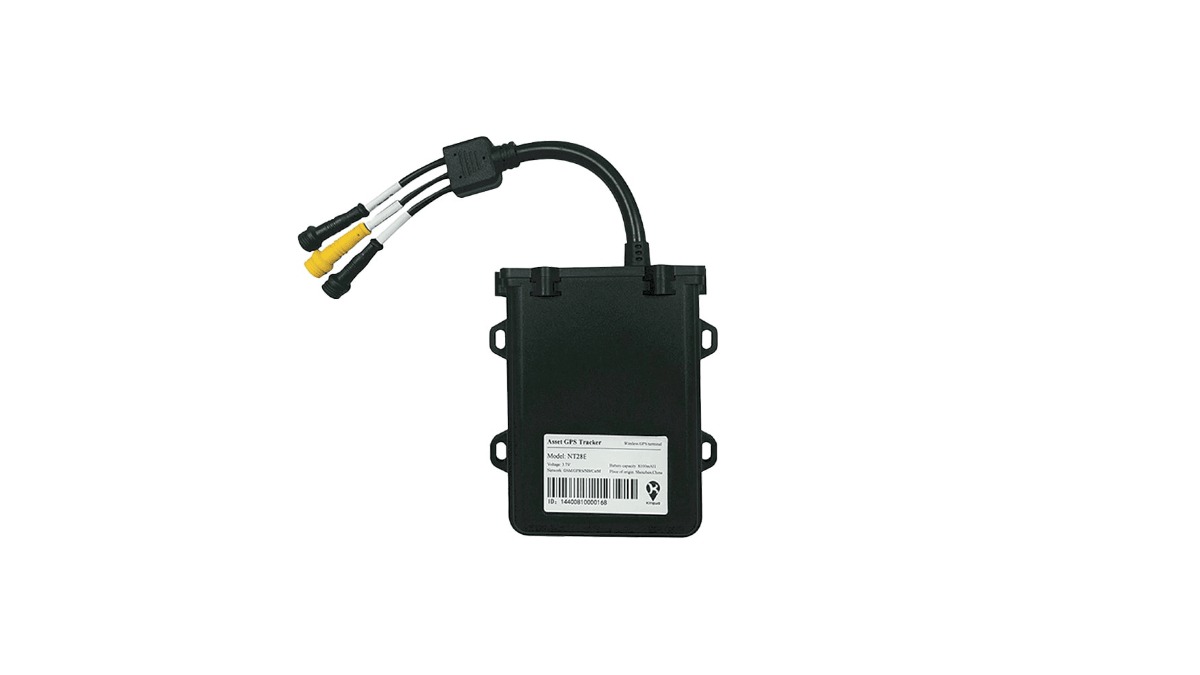
- GPS trackers with edge alerting: Cellular and hybrid devices engineered for long-duration shipments and harsh environments, with on-device alerting for shock, tilt, geofence breach, and temperature thresholds, alerts that fire in seconds at the edge, not minutes after a cloud round-trip.
- USA-engineered for cargo security posture: Built and supported in the USA, GPX hardware is the physical layer of a defensible cargo security posture, the device that proves a shipment is where it is supposed to be, even when the API feed says otherwise.
- API-first, platform-agnostic integrations: GPX device telemetry is built to feed directly into the visibility platforms reviewed above, your TMS, or your own analytics stack, so you are not locked into any single software vendor’s ecosystem.
The reason this matters: the same shippers paying six and seven figures a year for a visibility platform often discover, on a post-mortem of a lost or delayed load, that the gap was not in the software. It was in the data layer. The platform was working. The signal stopped, or worse, the signal was spoofed. Investing in a reliable, edge-aware hardware layer is what makes the platform investment pay off, and it is the single most overlooked decision in most enterprise visibility evaluations.
Decision Matrix: Selecting a Visibility Platform That Scales with Autonomous Logistics
There is no universally “best” platform in this category. There is only the platform that fits your network, your modes, and your risk profile. As autonomous freight tracking and AI-driven supply chain orchestration mature through the back half of the decade, the platform you choose today needs to scale into a future where agents, not analysts, are doing most of the querying. Use the following decision matrix to narrow the field quickly.
- Start with your modal mix. If 80% of your volume is North American truckload, FourKites or project44 will both serve you well. If you run heavy European road, Shippeo earns a serious look. If ocean and rail are central, project44’s breadth is hard to match. If most of your value sits in fewer, higher-stakes shipments, the hardware-led players, Tive, Roambee, Overhaul, change the calculus entirely.
- Match the platform to your dominant challenge. Dwell and dock chaos points to FourKites. Theft, cyber-hijacking, and high-value risk point to Overhaul. Cold chain and condition evidence point to Tive or Roambee. Brokerage and 3PL operations point to MacroPoint. Multi-region multi-modal complexity points to project44 or Shippeo.
- Audit your data layer before you sign. Ask the vendor, honestly, what percentage of your specific lanes and carriers they can cover via direct feed today. Anything below 85% means you should be planning a parallel IoT hardware deployment to fill the gap from day one, not as a phase-two afterthought.
- Pressure-test the AI and LLM story. Every vendor in this category will pitch generative AI, agentic workflows, and natural-language querying. The differences are real but only visible when you run your own data through their models. Insist on a structured proof-of-value with your shipments, your carriers, and your operational questions before committing.
- Build for autonomous and agentic workflows. The platform you choose in 2026 will, within 24 months, be queried by AI agents acting on behalf of your buyers, planners, and customer-service teams. Pick a platform with a credible API-first architecture and a clear roadmap for agent-readable data.
- Bake in ESG compliance data from day one. Scope 3 emissions reporting is becoming a board-level requirement and green-logistics visibility is a procurement screen for an increasing share of enterprise buyers. The data that powers operational visibility powers sustainability reporting, but only if the platform was architected to capture and expose it cleanly.
- Think total cost of ownership, not software license. The license is rarely the largest line item. Implementation, TMS and ERP integration, change management with carriers and internal teams, and, critically, the hardware that makes the platform useful all add up. Build a three-year TCO model before you sign anything.
The right answer for most shippers is rarely a single platform. It is a primary visibility platform paired with a reliable edge-computing hardware layer that keeps the data alive, and tamper-resistant, across every gap in the carrier-feed map. Choose with that pairing in mind, not as a software-only decision.
Power Your Real-Time Visibility Stack with GPX Intelligence
Whichever real-time shipment visibility platform you choose, your investment is only as good as the data flowing into it. GPX Intelligence builds the GPS trackers and BLE asset tags that keep your visibility stack alive across every mile, every mode, and every carrier handoff, with edge-computing alerting, USA-engineered hardware, and a 4-year battery life on the AssetTag that takes the device lifecycle off your worry list.
If you are evaluating platforms, replacing legacy hardware, or building a multi-year visibility roadmap, we would love to be part of the conversation. Talk to a GPX Intelligence specialist about a hardware layer that makes your visibility platform pay off.
Frequently Asked Questions (FAQs)
How do RTTVPs handle the “black hole” of carrier data gaps?
Most visibility platforms depend heavily on ELD and API feeds from carriers, which go quiet whenever a driver logs off, swaps trailers, or crosses into a region where their telematics provider has thin coverage. The 2026 industry standard is to supplement carrier-feed data with carrier-agnostic IoT hardware, purpose-built GPS trackers and BLE asset tags like the GPX AssetTag. That ride with the shipment and maintain a continuous data stream regardless of who is driving or which carrier owns the leg. Hardware is what closes the black hole that software alone cannot.
What is the most secure shipment visibility platform for high-value electronics?
For 2026, Overhaul leads the market for high-value electronics, semiconductors, and aerospace cargo because it pairs visibility software with a 24/7 risk operations center that actively intervenes when alerts fire. Tive is a strong number two for shipments that need device-level evidence without a managed-service layer. Both achieve maximum ROI when paired with USA-engineered GPS trackers that provide edge-computing alerts for shock, tilt, and geofence breach, a physical handshake layer that software-only platforms cannot replicate.
Do I still need IoT hardware if my visibility platform already has thousands of carrier integrations?
Yes, for most operations. Carrier feeds have predictable gaps, small carriers, cross-dock handoffs, port and yard dwell, driver-logoff blackouts, and condition data that carriers simply do not report. They are also vulnerable to spoofing and cyber-hijacking in ways a physical device is not. A dedicated hardware layer like the GPX AssetTag (BLE), with its replaceable battery and 4-year battery life, or a long-duration GPS tracker, gives you a carrier-agnostic, tamper-resistant source of truth that keeps your visibility platform smart even when the carrier feed goes silent. Hardware and software are complements, not substitutes.