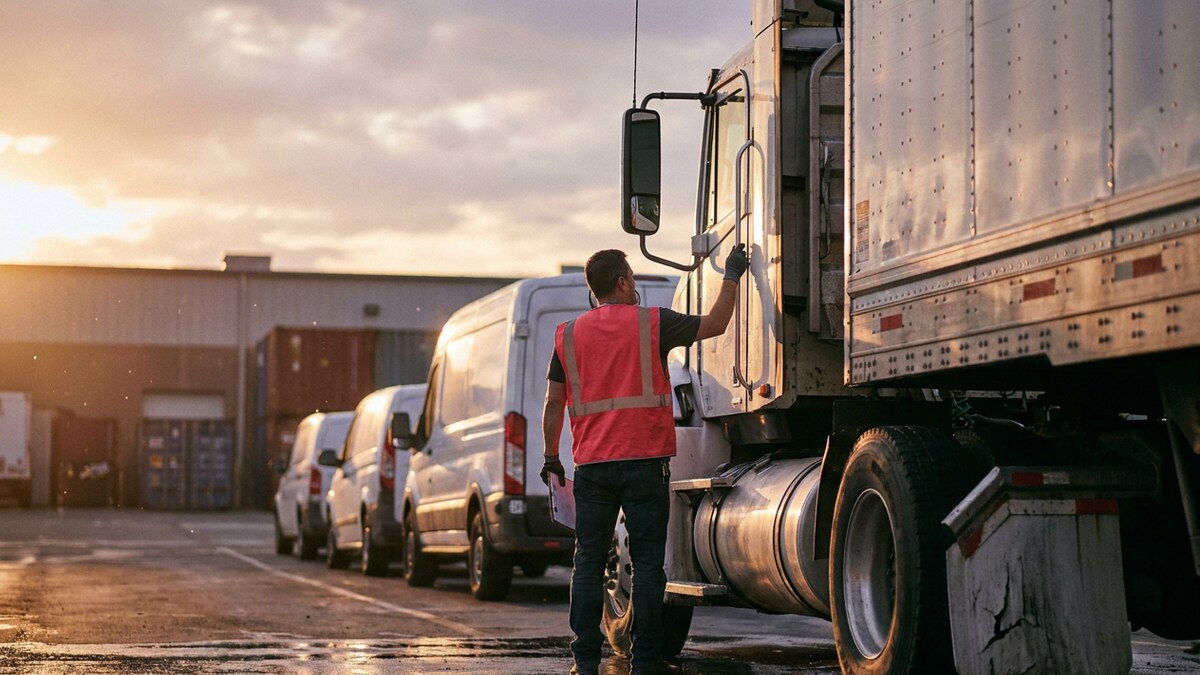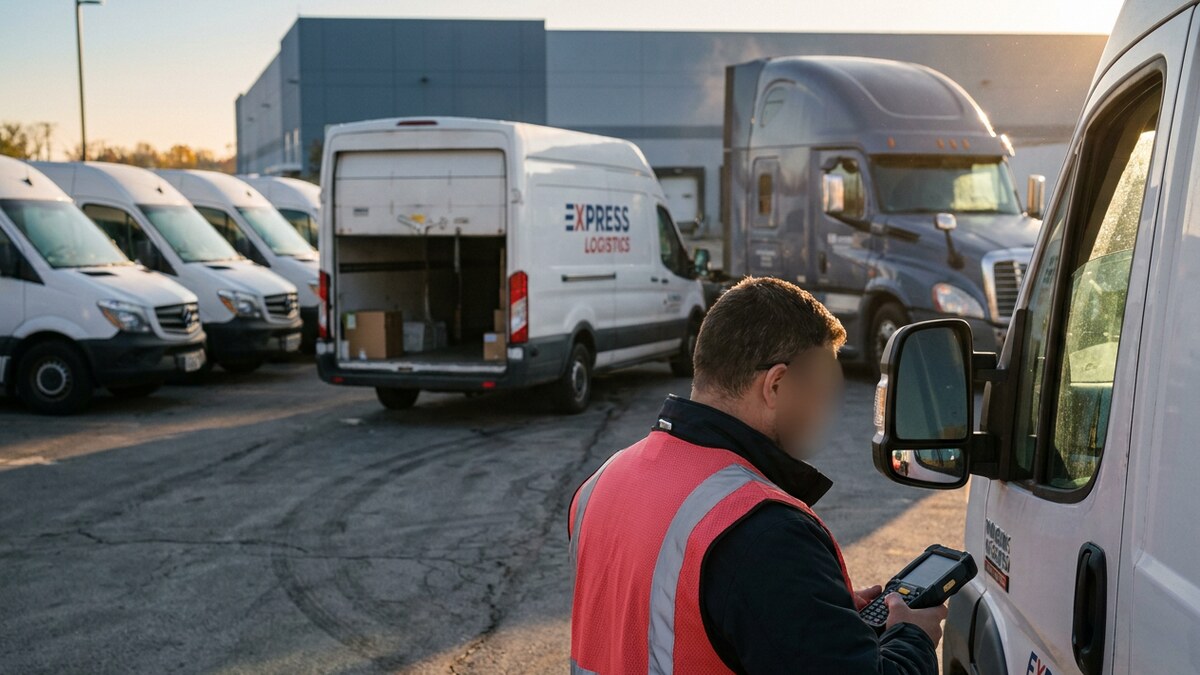


CargoNet recorded 3,625 cargo theft incidents across the United States and Canada in 2024, up 27 percent on 2023. Operations leaders feel that number every week. Missing shipments, damaged goods, and delivery windows nobody can prove.
A signature scrawled on a glass screen does not protect high-value equipment sitting on an open job site overnight. IHL Group puts the worldwide cost of inventory distortion at $1.7 trillion a year. Proof of delivery now has to cover location, condition, and time, not just a name on a screen.
This guide compares five electronic proof of delivery (ePOD) platforms. It also shows where driver-app evidence stops and asset-level evidence starts.
Key Takeaways
- Signatures and photos settle nothing when the asset disappears an hour after drop-off.
- Continuous location data gives you the hard record that chain of custody verification actually requires.
- Tags on the freight close the blind spot that driver-operated ePOD apps leave open.
- Verified location and condition evidence shortens freight claim dispute resolution and kills false claims before they turn into chargebacks.
| Software / Brand | Best For | Starting Price | Primary Evidence Type |
|---|---|---|---|
| GPX Intelligence | Universal asset & fleet tracking | SmartLabel as low as $13 per label | Continuous location and condition data from a tag on the cargo |
| Onfleet | High-volume local delivery routing | From $619 / month | Driver app signatures, photos |
| Route4Me | Dynamic route optimization | Plans from $9.99 / month | Signatures, photos, driver GPS |
| Detrack | Budget final-mile delivery receipts | $29 / driver / month | Signatures, barcode scans, photos |
| FarEye | Global 3PL and courier operations | Custom pricing | Predictive ETA, signatures |
| Logistimatics | SMB and personal asset tracking | Hardware from $24.99 | Live GPS tracking, geofences |
The Cost of Blind Spots in Final-Mile Logistics
Traditional proof of delivery rests entirely on the driver. The driver drops the equipment, snaps a photo, collects a signature, and closes the job. The record freezes at that moment.
Two hours later the asset is gone from an unsecured site. The signature recovers nothing. Your team still has to prove whether the load was stolen, restaged, or set down at the wrong gate.
An app-based GPS ping proves where the phone was. It says nothing about where the asset sits now. On a 40-acre plant, a close-up photo of a crate gives you no geography at all.
Dwell time starts its own argument. A 3PL bills detention, the shipper disputes the clock, and neither side holds a record of when the trailer actually arrived or when the last piece came off the deck. Geofenced automated sign-off settles it: arrival and departure post themselves with timestamps nobody had to key in.
Condition is the second gap. A pallet takes a hard drop in a cross-dock or sits four hours on a hot tarmac, and the photo at the door still shows intact shrink wrap. The damage surfaces days later when the receiver opens the crate, and by then the claim is a negotiation instead of a fact. Tamper-evident cargo tracking with onboard shock and temperature sensors records the event at the moment it happens.
The window between the delivery scan and the customer taking custody is the riskiest stretch of the trip. Closing it takes hardware on the freight, not another field in the driver app.
Proof of Delivery Software Compared
1. GPX Intelligence
GPX turns proof of delivery into continuous asset intelligence. The tracker rides on the cargo, so the evidence trail keeps running long after the truck pulls away.
The platform behind GPX shipment tracking fuses cellular, GPS, and BLE positioning. That multi-network connectivity holds location inside steel buildings and on remote job sites, where single-network trackers go dark. Scout AI answers plain-English questions such as “which deliveries moved after sign-off?” without a report builder.
Best for: Universal asset & fleet tracking with location evidence that outlasts the drop-off.
Starting price: SmartLabel as low as $13 per label; AssetTag Pro as low as $45/yr per tag with the hardware included.
Standout features: Scout AI analytics, real-time location updates, condition monitoring, and AssetTag Pro tags with a battery that lasts up to 3 years (up to 5 on AssetTag Pro Max).
Pros:
- Rides on the freight, so evidence does not depend on a driver’s phone.
- Keeps reporting location and condition after the delivery is marked complete.
- Scout AI flags unauthorized movement and delivery exceptions automatically.
2. Onfleet
Onfleet handles routing and dispatch for high-volume local delivery. Dispatchers assign stops, and drivers work the whole final mile inside one mobile app.
Drivers route to the stop, capture a signature, photograph the drop, and scan barcodes. Everything syncs back to the dispatch board in seconds.
Best for: High-volume local dispatch and consumer deliveries.
Starting price:$619 per month for the Launch plan.
Standout features: Route optimization, automated customer notifications, driver chat.
Pros:
- Automated SMS keeps receivers current on arrival times.
- Clean driver app cuts onboarding time for new contractors.
- Strong API for e-commerce storefront integrations.
Cons:
- The entry price shuts out smaller operations.
- Every piece of evidence depends on the driver’s battery and signal.
3. Route4Me
Route4Me leads with dynamic route optimization and treats proof of delivery as an add-on module. You upload the stop list, and the platform builds the most efficient path.
Drivers attach photos, capture signatures, and log notes at each stop. The modular setup lets you buy only the confirmation tools your fleet actually uses.
Best for: Teams chasing fuel savings and tighter routes.
Starting price: Plans from $9.99 per month.
Standout features: Marketplace add-ons, territory management, voice-guided driving directions.
Pros:
- Pay only for the modules you turn on.
- Strong routing algorithm that trims drive time and fuel burn.
- Long track record and a deep integration library.
Cons:
- Stacking the ePOD modules pushes the monthly cost up fast.
- Tracks the vehicle, never the cargo itself.
4. Detrack
Detrack is the budget entry in electronic proof of delivery (ePOD). You watch delivery vehicles on a live map while drivers log drop-offs in a lightweight app.
Drivers capture signatures, scan item barcodes, and take photos. The system generates a PDF delivery receipt for the customer the moment the stop closes.
Best for: Cost-conscious fleets that need instant digital paperwork.
Starting price:$29 per driver per month.
Standout features: Automated PDF delivery receipts, barcode scanning, vehicle tracking.
Pros:
- Low per-driver pricing scales cleanly for mid-sized teams.
- Deploys in days without backend integration work.
- Produces customer-ready documentation on job completion.
Cons:
- No native route optimization in the base tier.
- The interface lags behind enterprise platforms.
5. FarEye
FarEye serves large enterprise supply chains, 3PLs, and global courier networks. It runs as a control tower for the final mile with predictive ETAs and heavy workflow configuration.
Drivers record complex delivery conditions, manage returns, and capture electronic proof of delivery. Executives get a macro view of fulfillment performance across regions.
Best for: Global fleets that need deep workflow configuration.
Starting price: Custom enterprise pricing.
Standout features: Control tower analytics, predictive ETA, returns management.
Pros:
- Deep analytics for enterprise logistics leaders.
- Handles multi-leg, multi-carrier routing natively.
- White-label options give end customers a branded tracking experience.
Cons:
- Deployment runs long, and regional operators rarely have the bandwidth.
- Custom pricing prices out most mid-market shippers.
Put the Evidence on the Shipment, Not the Driver
Driver-operated software goes quiet the second the truck leaves. Attach the intelligence to the cargo and the record keeps writing itself, no matter who hauls the load.
SmartLabel is a peel-and-stick tracker for one-way shipments. At as low as $13 per label, it costs little to instrument every pallet, returnable container, or equipment drop, and the tag keeps reporting after the driver has left.
The payoff shows up on sprawling sites. You know which gate the pallet went through, which yard row it sits in, and whether it took an impact or a temperature spike in transit. That is chain of custody verification you hand to a claims adjuster, not a static photo.
Small operators need something lighter. Budget GPS options such as Logistimatics and Spytec cover a handful of assets with no integration project attached.
Where Delivery Evidence Goes Next
The shift from passive tracking to agentic asset intelligence is already underway. Systems no longer wait for a dispatcher to notice a problem. They open the exception, attach the evidence, and route it to the right person.
Expect the autonomous control tower to absorb proof of delivery entirely. Arrival, custody, condition, and dwell time all post themselves, and macro-resilience planning runs off that same clean data set.
Match the Evidence Standard to What You Put on the Truck
Start with the value of what you ship. Under a few hundred dollars per parcel, a driver app with signatures and photos does the job. Above that, you need evidence that survives the drop-off.
Then settle three questions: whether the evidence depends on a driver’s phone, whether location keeps reporting after sign-off, and whether condition data travels with the asset. Answer those three and the shortlist writes itself.
Modern logistics teams treat tracking as an intelligence layer, not a status page. If a digital signature no longer defends your shipments, talk to our team about putting continuous location and condition evidence on every load.
Frequently Asked Questions (FAQs)
How does proof of delivery software work?
The software digitizes electronic proof of delivery (ePOD). Drivers route to a stop, scan barcodes, photograph the dropped item, and collect a signature on screen. That record replaces the paper bill of lading with a digital bill of lading (eBOL) and syncs to a central dashboard, giving dispatchers an immediate record that the job closed.
Can delivery photos include GPS coordinates?
Yes. Most apps stamp photo metadata with the phone’s coordinates at capture time. That proves where the photo was taken and nothing more. Once the asset moves, those coordinates have no tracking value.
What is the difference between routing software and proof of delivery?
Routing software calculates the fastest, cheapest path between stops. Proof of delivery documents what happened at the destination. Many enterprise platforms bundle both, but they solve different problems.
How does SmartLabel replace manual delivery scans?
SmartLabel sticks to the cargo and reports location on its own. When the asset crosses the destination geofence, the system logs arrival time and exact coordinates on its own. That is geofenced automated sign-off, with no barcode scan and no driver photo required.
Are digital signatures legally binding for high-value shipments?
A digital signature establishes basic acknowledgment that goods changed hands. In a dispute over damage or missing items, that signature rarely carries the argument. Pair it with continuous location and condition data and freight claim dispute resolution moves from opinion to record.