
Smart pallet management is becoming non-negotiable—because pallets, totes, racks, and custom dunnage aren’t “cheap consumables,” they’re mobile inventory that quietly disappears when visibility breaks down. And with cargo theft trends continuing to rise (Overhaul recorded a 33% year-over-year increase in U.S. cargo theft incidents in Q2 2025), the cost of blind spots keeps climbing. In this guide, I’ll walk through a practical, operator-first approach to pallet tracking and returnable packaging management using the right mix of GPS for in-transit visibility, BLE for indoor/yard location, and RFID for fast verification at chokepoints, so you can shrink loss rates, tighten cycle times, and build a true chain of custody across suppliers and 3PLs. If you want a quick look at what “no gaps” visibility looks like with GPS + BLE, take a look at GPS and BLE network solutions.
Supply chains lose over 1 billion dollars annually in the automotive sector due to missing returnable packaging. Implementing smart pallet management using hybrid GPS and BLE reduces loss rates to under 3%. Every day, valuable returnable packaging disappears into the supply chain black hole.
A 300 dollar custom dunnage insert gets tossed in the trash. Totes worth 50 dollars each vanish at supplier sites. Automotive racks critical for production sit idle in forgotten corners of 3PL yards.
Industry estimates suggest that the annual replacement cost for lost or misplaced returnable packaging exceeds 1 billion dollars for the North American automotive sector alone. With cargo theft incidents up 33% year-over-year in Q2 2025, and returnable asset loss rates averaging 10% annually, companies are bleeding millions in preventable losses.
GPS and BLE tracking technology can transform these passive assets into intelligent, trackable components of your supply chain. Stop treating packaging as an afterthought. It is time to implement proactive pallet management strategies that turn a massive cost sink into a competitive advantage.
At a Glance
- Pallets, totes, racks, and custom dunnage are mobile inventory that disappears quietly when visibility breaks down.
- U.S. cargo theft rose 33% year-over-year in Q2 2025, raising the cost of every blind spot in your returnable fleet.
- GPS covers in-transit visibility, BLE handles indoor and yard location, and RFID speeds verification at chokepoints.
- Combining all three technologies shrinks loss rates, tightens cycle times, and builds chain of custody across suppliers and 3PLs.
- Choosing the right tracking mix depends on where each asset type is most at risk in its journey.
Essential Technologies for Pallet Tracking and Asset Recovery
Effective pallet management requires a blended approach using the strengths of different tracking technologies. The goal is to create a complete digital chain of custody from the warehouse floor to international transit. This setup supports the transition toward a supply chain digital twin.
BLE for Indoor and Yard Visibility
BLE technology has matured dramatically, making it the ideal solution for tracking returnable packaging within facilities and yards. It excels precisely where GPS fails. This allows for zero-touch asset recovery in dense industrial environments.
Modern BLE tags are low-cost (2 to 10 dollars at volume) and boast battery life extending beyond 5 years on a single coin cell. This makes them economical for high-quantity deployments of totes and containers. BLE tags transmit a signal picked up by fixed gateways or by telematics devices on forklifts.
This provides accurate location data inside warehouses, containers, and complex buildings. It solves the “last mile” tracking problem for ambient IoT sensors. Use BLE for managing container dwell time at dock doors and verifying the presence of custom dunnage before shipment.
GPS for Global Transit Monitoring
While BLE excels indoors, GPS remains the standard for long-distance transit visibility. It provides the necessary data for AI-driven predictive logistics during high-value asset movements.
Use GPS devices on high-value assets like large crates, automotive racks, or international shipping containers. GPS provides continuous, real-time location and theft recovery capabilities across borders. This ensures you always know the location of your most critical assets.
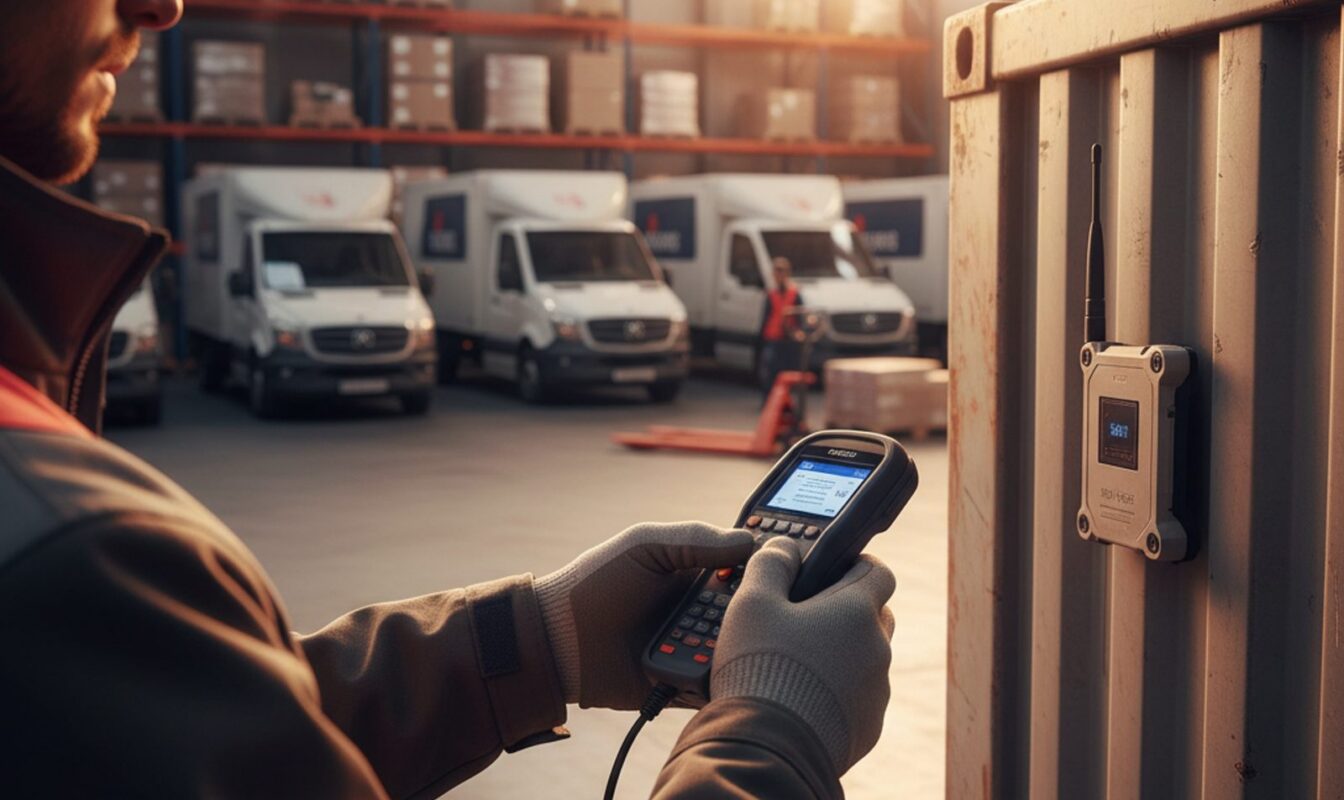
The most advanced pallet management systems combine both technologies. A GPS unit tracks the truck or shipping container globally. A BLE gateway built into the GPS unit monitors the individual pallet tracking tags inside, providing complete visibility from origin to destination.
RFID and Slip-Sheet Integration
Not every asset needs a battery-powered tracker, but every chokepoint needs automated monitoring. Hybrid systems often incorporate passive components to balance cost and performance.
Use low-cost Passive RFID tags on pallets or slip sheets to create automated verification points at docks. When an item passes through a dock door, an RFID reader instantly confirms its identity. This ensures the correct materials are loaded.
Switching to slip sheets reduces asset cost from 15 to 25 dollars per pallet down to 1 dollar per slip sheet. However, without proper dock verification systems, the risk of load failure increases. Smart pallet management uses technology to mitigate these trade-offs.
Satellite-Bluetooth for Infrastructure-Free Tracking
Emerging technology is changing global pallet tracking. By enabling standard BLE chips to communicate directly with Low-Earth Orbit (LEO) satellites from 600 kilometers away, the need for regional cellular infrastructure is eliminated.
Global visibility for containers in ocean transport becomes a reality. This technology provides coverage in remote locations where cellular access is poor. It becomes economically feasible to track every high-value tote and container globally without installing expensive gateways.
What Holds Teams Back From Returnable Asset Tracking
Implementing these solutions is not without its operational and technical pain points. Recognizing these challenges upfront is critical for a successful smart pallet and container management strategy.
Managing Operational and Cultural Resistance
The single greatest hurdle to successful implementation is often people. Technology alone cannot bridge the gap between manual processes and automated systems.
Warehouse and logistics personnel are accustomed to the manual, established flow. Introducing new technology and new SOPs can be met with resistance. They may perceive the system as adding complexity.
Frame the system as a tool that reduces manual search time and ensures on-time materials for production. Training should focus on the benefit to the worker rather than just the management.
Technical Hurdles and Data Silos
Effective asset tracking relies on a seamless blend of hardware and software. A breakdown in any link creates a blind spot in your logistics data.
GPS is great for long haul, but it fails inside a metal trailer or a congested urban yard. Relying only on GPS provides a last-known location rather than current visibility. The necessary hybrid approach demands a software platform that can merge distinct data streams into a single timeline.
This provides the foundation for McKinsey insights on supply chain resilience. Under-investment in gateway coverage at critical choke points renders the entire system ineffective. You get sporadic data points instead of a continuous chain of custody.
Hardware Durability and Battery Maintenance
The harsh supply chain environment is unforgiving to electronics. Devices must withstand physical abuse and extreme conditions.
Trackers are exposed to extreme temperatures, vibration, and washdowns. Low-cost devices often have high failure rates. This leads to data gaps and the unexpected cost of manual replacement.
Marketing often promises 5 years of battery life, but this is usually under ideal conditions. Real-world active tracking can cut this by 50% to 75%. Managing a fleet of thousands of devices with unpredictable battery replacement schedules is a major operational cost.
Key Performance Indicators (KPIs) for Pallet Management
Tracking data only matters if it drives measurable operational and financial improvements. These key performance indicators transform tracking from a cost into a profit center.
- Cycle Time: Track average days from shipment to return. Target is under 14 days for domestic and 30 for international.
- Dwell Time: Monitor how long assets sit idle. Target is less than 3 days at any stop.
- Utilization Rate: Measure active moving assets versus idle ones. Target is above 70% utilization.
- Loss Rate: Calculate monthly shrinkage. Target is under 2% monthly loss rate.
- Cost Avoidance: Document financial losses prevented. Case studies show up to 3.2 million dollars in annual savings.
Choosing Which Containers, Totes, and Dunnage to Track
Building a successful strategy starts with identifying your highest-loss lanes and assets. Focus your initial deployment on high-value containers, custom dunnage, or automotive racks where the replacement cost is highest. This ensures your pilot program demonstrates immediate ROI.
Establish clear response protocols for every alert type before you deploy hardware. A tracking device that sends an alert with no subsequent action is a wasted investment. Your team must know exactly what to do when an asset dwells too long or leaves a geofence.
Integrate your tracking data into your WMS or ERP systems from day one. Standalone maps provide visibility, but integrated data drives automated decision-making. This automation is what eventually allows for a 20% to 30% reduction in safety stock inventory.
Finally, prioritize ruggedized hardware and redundant gateway coverage at dock doors. The cost of replacing a cheap, broken sensor often exceeds the initial savings. A robust strategy treats every container as a smart, data-generating asset that protects your bottom line.
Frequently Asked Questions (FAQs)
What is the best technology for tracking returnable containers?
The best approach is a hybrid system using GPS for long-distance transit and BLE for indoor or yard visibility. This combination ensures you never lose sight of assets when they enter metal trailers or warehouses. High-volume, low-cost items typically use BLE tags, while high-value racks often require GPS.
How do I stop losing shipping totes and custom dunnage?
Implement geofencing and dwell-time alerts to identify exactly where assets are being held or discarded. By using micro-BLE tags embedded in dunnage, you can receive instant alerts if a component leaves a designated area without its authorized container. This proactive monitoring reduces loss rates from 10% down to less than 3%.
What is the difference between active and passive pallet tracking?
Passive tracking, like RFID, requires a manual scan or an antenna gateway to record a location at a specific point in time. Active tracking, which includes BLE and GPS, uses battery-powered sensors to broadcast location data continuously. Active systems are superior for automated inventory and real-time theft recovery, whereas passive systems are best for low-cost checkpoint verification.
Does a smart pallet management system require a monthly fee?
Most real-time GPS tracking systems require a monthly subscription to cover cellular data costs. This connectivity allows the device to transmit location coordinates from the field to your management platform. BLE-only systems may have lower fees but require a network of local gateways to function.
Can tracking systems integrate with my existing ERP or WMS software?
Yes, modern asset tracking platforms provide APIs and pre-built connectors for major ERP and WMS providers. Integrating this data allows you to automate inventory counts and trigger replenishment orders based on real-time location. This connectivity is essential for achieving a supply chain digital twin.
Why is smarter pallet and container tracking more urgent heading into 2026?
U.S. cargo theft incidents rose 33% year-over-year in Q2 2025 according to Overhaul, which means every blind spot in a returnable-packaging fleet now carries a measurable and rising cost to margins.