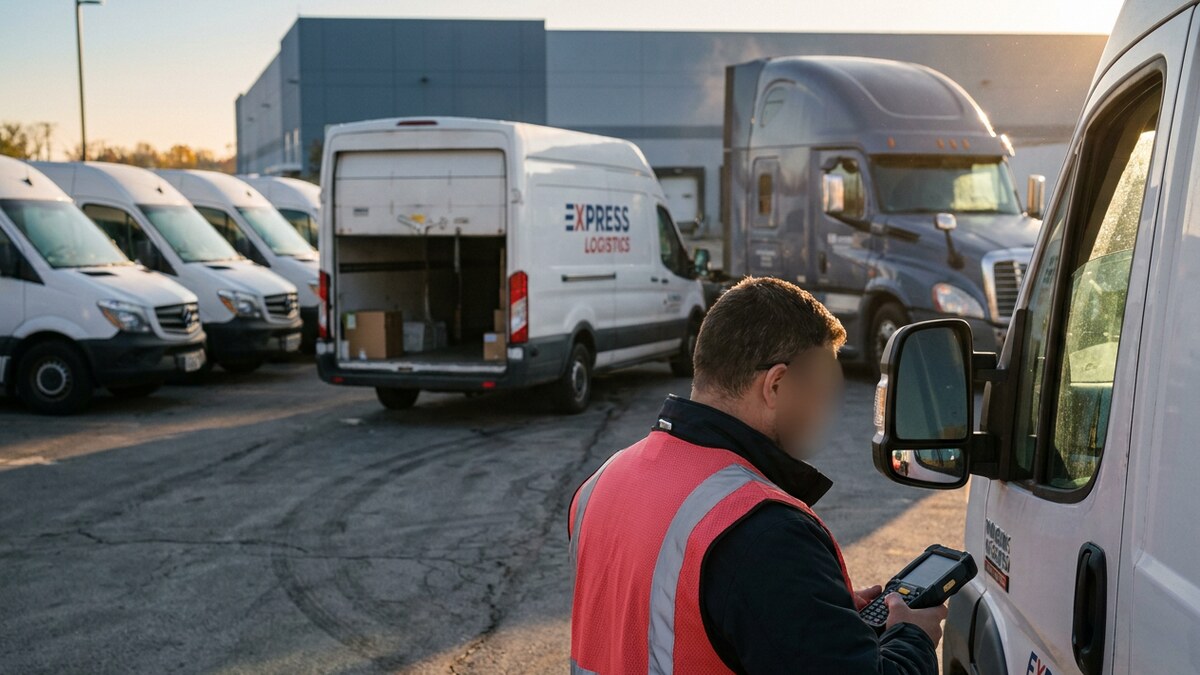


For Original Equipment Manufacturers (OEMs), location intelligence has moved from a “nice to have” accessory to a core product feature. Buyers of vehicles, construction machinery, trailers, medical equipment, and connected industrial assets now expect to see where their assets are, how they are performing, and when they need service, all in real time. That expectation puts pressure on OEMs to embed GPS tracking and telematics directly into the products they ship, or to partner with a provider who can deliver it under their own brand.
The challenge is that not every GPS tracking solution is built for OEM-scale deployment. Consumer trackers and one-off aftermarket devices rarely survive the integration, certification, and lifecycle demands of a manufacturer shipping thousands of units a year. This guide breaks down the top 7 GPS tracking solutions OEMs should evaluate in 2026, the pain points each one solves, and a clear framework for choosing the right approach for your product line.
Why OEMs Are Shifting from Basic GPS to Embedded IoT Telematics
The shift toward connected assets is being driven by recurring revenue, not just convenience. When an OEM embeds GPS tracking and telematics, the relationship with the customer no longer ends at the point of sale. It becomes an ongoing, data-driven subscription that supports predictive maintenance, theft recovery, usage-based billing, and warranty validation.
Several forces are accelerating this trend across automotive, construction, fleet, and equipment manufacturing:
- Recurring revenue and aftermarket monetization: Connected tracking turns a one-time hardware sale into a high-margin software and data subscription. Some OEMs go further and negotiate a revenue-share arrangement with their tracking provider, earning ongoing income from every subscription tied to the products they ship.
- Customer demand for visibility: Fleet operators, rental companies, and logistics providers now treat real-time location data as a baseline requirement when comparing equipment brands.
- Closed-loop asset management: Manufacturers that rely on returnable containers, racks, and pallets lose real money when those assets disappear. Embedded tracking closes the loop, so reusable transport assets cycle back instead of vanishing into a customer’s yard.
- Theft and loss prevention: Embedded tracking improves recovery rates and lowers insurance costs, and many insurers offer premium discounts for tracked assets, which becomes a powerful selling point for the OEM.
- Predictive maintenance and uptime: Pairing GPS location with engine hours, sensor data, and diagnostics helps OEMs reduce downtime and strengthen service contracts.
- Compliance and reporting: Industries such as construction, healthcare logistics, and automotive transport increasingly require auditable location and chain-of-custody data.
The result is a clear strategic question for product leaders: build, buy, or partner. The seven solution types below map directly to that decision.
Where OEM Telematics Integration Usually Gets Stuck
Before comparing solutions, it helps to define what “OEM-ready” actually means. The requirements are different from a single business buying a handful of trackers off the shelf. OEMs are designing tracking into a product that must scale, certify, and last for years in the field.
The most common pain points OEMs raise during evaluation include:
- Integration complexity: Hardware that does not play well with existing wiring harnesses, CAN bus systems, or product enclosures creates expensive engineering rework.
- Fragmented data and no single API: Many trackers ship raw data with no clean, documented API, forcing OEMs to build middleware just to surface location on their own platform.
- White-label limitations: Off-the-shelf apps carry someone else’s brand, which undercuts the OEM’s customer relationship and recurring revenue model.
- Power and battery constraints: Hardwired assets, battery-powered trailers, and unpowered equipment each demand a different power strategy.
- Connectivity and longevity: Devices tied to sunsetting 2G or 3G networks become e-waste, so future-proof LTE and low-power IoT connectivity matters.
- Signal interference and product design: A tracker buried inside a metal enclosure or dense assembly can lose GPS reception, so antenna placement has to be planned into the product design, not solved after tooling is locked.
- Data privacy and compliance: Location data is regulated. OEMs collecting it must account for frameworks such as CCPA and GDPR, secure the data in transit and at rest, and be clear with end users about what is tracked and why.
- Certification and durability: Trackers must survive vibration, dust, temperature swings, and water exposure, and may need carrier or regulatory certifications.
- Total cost of ownership: Per-device cost, data plans, activation, and support all compound across thousands of units.
With those requirements in mind, here are the top 7 GPS tracking solutions OEMs are evaluating today.
The 7 Best OEM Location Intelligence & Asset Tracking Solutions
No single architecture wins for every product. The seven solution types below span the full range of OEM needs, from deeply embedded vehicle telematics to lightweight tags for the smaller assets that travel with the machine.
1. Embedded Telematics Modules (CAN Bus & OBD-II Integration)
Embedded telematics modules are designed to be built directly into the asset during manufacturing rather than added after the fact. These modules integrate with the vehicle or machine’s electrical system and often connect to the CAN bus to pull diagnostics, engine hours, fuel data, and fault codes alongside GPS location.
This is the gold standard for automotive OEMs, heavy equipment manufacturers, and connected vehicle programs because the tracker becomes an invisible, native feature of the product. Buyers do not see a third-party box bolted on; they see a smart, connected machine.
Best fit for: automotive manufacturers, construction and agricultural equipment OEMs, and any product where deep diagnostics and a seamless, factory-installed experience are priorities. The tradeoff is higher upfront engineering investment and longer integration timelines.
2. White-Label Fleet Management & GPS Software Platforms
A white-label platform lets an OEM deliver a fully branded tracking experience, web dashboard, and mobile app without building the software stack from scratch. The OEM’s logo, colors, and domain front a proven backend, which protects the customer relationship and the recurring revenue stream.
For manufacturers that want to monetize connectivity quickly, white-label is often the fastest path to market. It removes the multi-year cost of building mapping, geofencing, alerts, reporting, and user management in-house.
Look for platforms that offer:
- Configurable branding across web and mobile, not just a logo swap
- Multi-tenant account structures so the OEM can manage dealers and end customers
- Built-in geofencing, alerts, utilization, and maintenance reporting
- A documented API so the OEM can extend the platform over time
Best fit for: OEMs that want to launch a connected offering fast and own the brand experience without committing to full custom software development.
3. Next-Gen Cellular IoT Trackers (5G, LTE Cat-M1, & NB-IoT)
Cellular trackers remain the workhorse of OEM telematics because they deliver near real-time location anywhere there is cellular coverage. The connectivity choice within this category matters more than most teams expect.
- 5G: The top tier for high-bandwidth use cases such as video telematics and dash cams, where large data volumes move in near real time.
- 4G LTE: The dependable baseline for assets that need frequent updates, rich data, or firmware over-the-air updates, and the fallback layer beneath 5G.
- LTE Cat-M1 and NB-IoT: Low-power, low-bandwidth options ideal for battery-powered or infrequently reporting assets, with better building penetration and longer device life.
- LPWAN (LoRaWAN): Long-range, low-power networks that suit large fixed sites and dense deployments where running cellular on every unit is not cost effective.
- Satellite: The fallback for assets that travel beyond cellular coverage, such as equipment on remote job sites, rail, or open water, where a dropped connection is not acceptable.
Two capabilities now separate a future-proof OEM tracker from a commodity device:
- eSIM and eUICC for global connectivity: OEMs ship worldwide, and nobody wants to swap SIM cards by hand on the assembly line or in the field. Trackers built on eUICC technology can switch carrier profiles over the air, so the same hardware roams seamlessly whether a tractor lands in Brazil or Germany.
- Edge AI for smarter reporting: Pinging the cloud every second drains both battery and data budgets. The best 2026 trackers run Edge AI on the device, processing data locally and only alerting the cloud when something matters, such as a crash, a geofence breach, or an engine fault.
The critical OEM consideration is future-proofing. Devices built on 2G or 3G are already obsolete in many markets, so any new program should standardize on LTE and low-power IoT bands, with 5G reserved for high-bandwidth needs, to protect the lifespan of fielded units. For unpowered or remote assets, pairing the radio with a solar or long-life battery option removes the dependence on a wired power source.
Best fit for: powered vehicles, trailers, and mobile equipment that move across wide geographies and need reliable, ongoing connectivity.
4. BLE Asset Tags & Beacons for Indoor/Outdoor Micro-Location
Not every asset an OEM ships is a powered vehicle. Tools, attachments, containers, smaller equipment, and high-value components often need lightweight, low-cost tracking where running a cellular device on every item is impractical. This is where Bluetooth Low Energy (BLE) asset tags shine.
BLE tags pair with cellular gateways or smartphones to report location, which makes them ideal for non-warehouse indoor visibility, yard management, and tracking the many small assets that travel with a larger machine. The GPX AssetTag is built for exactly this layer of visibility, with a replaceable battery and a 4-year battery life that keeps total cost of ownership low across large deployments.
Best fit for: OEMs that ship clusters of assets, attachments, or accessories and want affordable, scalable visibility for items that do not justify a full cellular tracker on each unit.
5. Ruggedized IoT Trackers for Heavy Construction & Mining Equipment
Construction, mining, and heavy equipment live in punishing environments. Dust, vibration, moisture, extreme temperatures, and rough handling will destroy a consumer-grade device in weeks. Ruggedized GPS trackers are engineered with sealed, high-IP-rated enclosures, wide operating temperature ranges, and vibration tolerance to survive years on a job site.
For equipment OEMs, ruggedized tracking does more than report location. It supports utilization billing, theft recovery on remote sites, geofencing for unauthorized movement, and maintenance scheduling based on actual engine hours.
The ROI story for construction and heavy-equipment customers is unusually concrete, which makes it a strong selling point for the OEM:
- Theft prevention and recovery: Equipment theft is a multi-billion dollar problem on job sites, and geofencing plus real-time alerts help stop and recover stolen machines.
- Equipment utilization: Run-time data exposes idle and underused assets, so customers can right-size their fleet, redeploy gear, or avoid unnecessary rentals.
- Worker safety: Driver-behavior and machine-use data help correct high-risk habits and support safety programs.
- Off-road fuel tax refunds: In the United States, fuel burned by off-road equipment can qualify for federal and state tax credits, and GPS run-time data provides the usage records needed to support those claims.
Best fit for: construction, agricultural, and industrial equipment manufacturers whose assets operate outdoors in harsh conditions and frequently sit on unsecured sites overnight.
6. API-First Telematics Platforms for Custom Cloud Integrations
For OEMs that already have a customer-facing app or operations platform, the priority is not another dashboard. It is clean, reliable data they can pull into their own software. API-first telematics platforms expose well-documented endpoints and webhooks so location, status, and sensor data flow straight into the OEM’s existing systems.
This approach solves one of the biggest OEM frustrations: fragmented data with no easy way to integrate. A strong API layer lets engineering teams surface live location inside their product, automate alerts, and feed analytics or billing systems without building custom middleware.
When evaluating an API-first solution, OEMs should confirm:
- Real-time streaming or webhook support, not just batch exports
- Clear documentation, sandbox access, and developer support
- Scalable rate limits that fit a large fielded fleet
- Secure authentication and role-based access controls
Best fit for: OEMs with in-house development capacity who want to own the user experience and embed location data into their own connected-product platform.
7. Hybrid Environmental Sensors (GPS + Condition Monitoring for Supply Chain)
Increasingly, OEMs need more than a dot on a map. Hybrid solutions combine GPS location with IoT sensors that monitor temperature, shock, humidity, door status, tilt, and more. This unlocks true in-transit visibility and supply chain visibility, which matters for automotive transport, healthcare logistics, and high-value or sensitive cargo.
By layering condition data on top of location, OEMs and their customers can prove chain of custody, detect damage in transit, and trigger automated alerts the moment an asset moves outside defined parameters. For manufacturers serving regulated or quality-sensitive industries, this combination is becoming a competitive differentiator.
This is also the layer that powers closed-loop tracking of returnable transport assets. Reusable containers, racks, totes, and pallets cycle constantly between an OEM, its suppliers, and its customers, and they are easy to lose track of. Tagging them and watching them move through the supply chain reduces shrinkage, shortens cycle times, and protects the pool of reusable assets the OEM has already paid for.
Best fit for: OEMs serving in-transit logistics, automotive distribution, cold chain, and supply chains where the condition of the asset is as important as its location.
Solving the Toughest OEM Telematics Hurdles: Power, Connectivity, and Compliance
Choosing a solution type is only half the work. Building tracking into a manufactured product introduces engineering, connectivity, legal, and market hurdles that a single business buying off-the-shelf trackers never faces. The good news is that each one has a well-worn solution.
- Product design and enclosure constraints: The tracker has to fit the form factor, survive assembly, and still reach the sky. Solve it by planning antenna placement and module location during industrial design and prototyping, not after the tooling is finalized.
- Signal interference: Metal housings, dense components, and other electronics can block or degrade GPS reception. External or strategically positioned antennas, shielding, and early field testing keep accuracy reliable.
- Power and battery life: Battery-powered and unpowered assets need a tracker tuned for low-power reporting and sleep modes, plus solar or long-life batteries where possible. On-device Edge AI helps here too, since processing data locally and only transmitting meaningful events cuts both power draw and data costs.
- Global connectivity across borders: OEMs that ship internationally cannot swap SIM cards by hand. Specifying eSIM and eUICC hardware lets a single device switch carrier profiles over the air, so the same product roams cleanly in every market it lands in.
- Data security, privacy, and compliance: Location data triggers obligations under regulations like CCPA and GDPR, and enterprise buyers in healthcare logistics and heavy fleet increasingly require their cloud and API vendors to be SOC 2 compliant. Encrypt data in transit and at rest, define clear retention policies, and confirm your platform partner meets these standards.
- Consumer perception: Tracking can raise privacy concerns. Frame the feature around the value it delivers to the owner, such as theft recovery, uptime, and warranty support, and give users visibility and control.
The fastest way through these hurdles is to partner with an experienced GPS provider rather than building everything in-house. A good partner contributes proven hardware, global connectivity, and a compliant platform, supports prototyping and testing, and de-risks the timeline, freeing the OEM to focus on its core product while still owning the customer relationship.
OEM GPS Tracking & Telematics Solutions Compared
The table below summarizes how the seven solution types compare across the criteria that matter most to OEM product and engineering teams. Use it as a quick reference, then weigh each option against your specific asset type, deployment scale, and integration capacity.
| Solution Type | Best For | Connectivity | Power / Battery | OEM Integration Effort |
|---|---|---|---|---|
| Embedded telematics modules | Automotive and heavy equipment OEMs | 4G LTE | Hardwired to asset | High |
| White-label tracking platform | Fast branded launch | Device dependent | Software layer | Low to medium |
| Cellular GPS trackers | Powered, wide-area mobile assets | 4G LTE, Cat-M1, NB-IoT | Wired or rechargeable | Medium |
| GPX AssetTag (BLE asset tag) | Near-asset and non-warehouse indoor visibility | BLE via gateway or phone | Replaceable battery, 4-year battery life | Low |
| Ruggedized GPS trackers | Construction and heavy equipment | 4G LTE | Wired, solar, or long-life battery | Medium |
| API-first telematics platform | OEMs with in-house development | Device dependent | Data layer | Medium to high |
| Hybrid GPS plus IoT sensors | In-transit and supply chain visibility | 4G LTE, Cat-M1 | Wired or rechargeable | Medium to high |
How to Choose the Right OEM Asset Tracking Architecture
There is no single best tracker for every OEM. The right choice depends on your asset, your customers, and how much of the experience you want to own. To narrow the field quickly, work through these questions in order:
- What are you tracking, and where does it live? Powered vehicles point toward embedded or cellular trackers. Harsh outdoor equipment needs ruggedized hardware. Clusters of smaller assets and indoor environments favor BLE tags like the GPX AssetTag.
- How much do you want to own the brand and experience? If recurring revenue and customer ownership matter, prioritize white-label or API-first solutions over generic third-party apps.
- What is your integration capacity? Teams with engineering bandwidth can pursue embedded modules and API-first builds. Teams that need speed should lean on white-label platforms.
- Do you need condition data, not just location? If quality, compliance, or chain of custody matters, a hybrid GPS plus IoT sensor solution is worth the added complexity.
- Is the solution future-proof? Confirm modern LTE and low-power IoT connectivity, over-the-air update support, and a clear device lifecycle so your fielded units do not become obsolete.
The strongest OEM programs rarely rely on a single device type. They combine an embedded or cellular tracker on the primary asset with BLE tags on the surrounding gear, all surfaced through one branded, API-connected platform. The goal is complete visibility across the entire product ecosystem, not just the headline machine.
Build a Future-Proof OEM GPS Strategy With GPX Intelligence
GPX Intelligence helps OEMs design and deploy GPS tracking that scales with their products, from rugged cellular trackers and the long-life GPX AssetTag to a branded, API-driven platform you can call your own. If you are evaluating how to add connected tracking to your next product line, our team can help you map the right mix of hardware, connectivity, and software to your assets and your revenue goals. Reach out to GPX Intelligence to start the conversation and see what OEM-ready tracking looks like for your business.
Frequently Asked Questions (FAQs)
What is the difference between OEM telematics integration and aftermarket GPS?
OEM telematics integration embeds the hardware and software directly into the vehicle or equipment during manufacturing on the assembly line, often connecting straight to the CAN bus. Aftermarket GPS is a post-sale add-on installed later. OEM integration delivers deeper diagnostic data, a cleaner user experience, and lets the manufacturer capture recurring subscription revenue.
How do equipment OEMs monetize white-label GPS software?
OEMs monetize white-label platforms by shifting from a one-time hardware sale to a Software-as-a-Service model. With branded portals, the OEM can charge end users a monthly subscription for premium features such as predictive maintenance alerts, theft recovery, and fleet utilization reporting, and some also earn a revenue share on the provider’s subscriptions.
Which cellular network is best for battery-powered OEM trackers?
For battery-powered assets, LTE Cat-M1 and NB-IoT are the industry standards. Unlike high-bandwidth 4G and 5G, these Low Power Wide Area Network (LPWAN) technologies use minimal energy to transmit data, extending tracker battery life for years while providing strong penetration through buildings and metal containers.
Will 4G LTE be sunset for GPS trackers?
While 2G and 3G networks have largely been retired, 4G LTE and its IoT variants like Cat-M1 are expected to stay active well into the 2030s. OEMs designing products today should ensure their hardware is at least 4G LTE capable, and consider 5G where high-bandwidth use cases such as video telematics apply.
How long does the GPX AssetTag battery last?
The GPX AssetTag is engineered for a 4-year battery life, and the battery is replaceable. That combination keeps total cost of ownership low across large OEM deployments, since tags can be refreshed rather than discarded when the battery reaches the end of its service life.