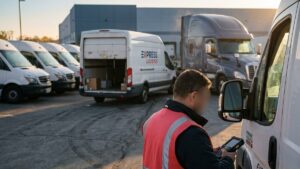


A lost shipment is more than a missing box. It is lost revenue, a broken SLA, a spike in insurance premiums, and hours of staff time spent chasing a trail that went cold. Across construction sites, fleet operations, healthcare cold chain logistics, and automotive supply lines, goods disappear in the gaps between carrier handoffs where supply chain visibility breaks down. The good news is that most lost shipments follow predictable patterns, and IoT asset tracking now closes the blind spots that used to swallow freight whole.
This guide breaks down what defines a lost shipment, where freight goes missing in transit, the hidden cost to your margins, and how GPS, BLE, RFID, and AI work together to secure cargo end to end. By the end, you will know exactly how to scale the right shipment tracking solution for your operation.
What Defines a Lost Shipment vs. Delayed Freight in Supply Chain Visibility?
A lost shipment is any cargo, container, or asset that fails to reach its destination and cannot be located through standard tracking records. A delayed shipment, by contrast, is late but still visible and recoverable. The dividing line is real-time supply chain visibility: a shipment with a live signal is rarely lost for long, while a shipment that drops off the record the moment it leaves a facility becomes a candidate for permanent loss.
Three states matter for any logistics director:
- Delayed freight: The goods are late, but their location is known and recoverable.
- Lost shipment: The location is unknown, the trail has gone dark, and recovery requires investigation or a write-off.
- Stolen shipment: A lost shipment caused by theft, which is the fastest-growing share of cargo loss across high-value freight lanes.
Get visibility right and most “lost” shipments are simply delayed shipments you can find. Lose visibility and a delay quietly becomes a loss.
Supply Chain Blind Spots: Where Do Shipments Go Missing in Transit?
Shipments do not vanish in one place. They slip through a series of handoffs where ownership, scanning, and visibility break down. Mapping these blind spots shows you exactly where to install protection.
A typical journey passes through several risk zones:
- Origin and loading: Mislabeling, incorrect manifests, and loading the wrong trailer set the shipment up to fail before it moves.
- Line haul and transit: Route deviations, unscheduled stops, and theft happen far from any scanner.
- Carrier handoffs (the 3PL black hole): When cargo moves from an LTL carrier to a last-mile delivery truck, the API connection between their systems breaks and the scan record fails to transfer. The shipment goes dark in the gap between two software platforms. GPX hardware bypasses that software breakdown entirely by keeping the asset connected to the satellite and cellular network directly, so the goods stay visible even when the carrier systems do not talk to each other.
- Transfer hubs and cross-docks: High-volume sorting facilities are where most goods get misrouted or absorbed into the wrong outbound load.
- Last mile: The final leg carries the highest density of stops and the highest rate of misdelivery and porch theft.
- Receiving and put-away: A shipment can arrive on site and still be lost if it is never logged, signed for, or placed in the right location.
The pattern is consistent. Loss spikes wherever a shipment changes hands and no one captures its position at that moment. Continuous location data turns these blind handoffs into a visible, recoverable chain of custody.
Top Causes of Freight Loss, Misrouting, and Cargo Theft
Lost freight rarely comes down to a single failure. It is a stack of small breakdowns. These are the causes that show up most frequently across logistics operations.
- Human error and mislabeling: Wrong barcodes, swapped labels, and manual data entry mistakes route shipments to the wrong destination.
- Carrier handoff gaps: When a load moves between carriers, scan and API records fail to sync, creating a visibility void that hides both delays and theft.
- Cargo theft: Organized freight theft targets high-value and unmarked loads at rest stops, unsecured yards, and during staged or fictitious pickups. Cargo theft prevention is now a board-level concern as loss events climb across major freight corridors.
- Misrouting at sorting hubs: A single mis-sort at a busy cross-dock can send a shipment hundreds of miles in the wrong direction.
- Damaged or unreadable labels: Weather, abrasion, and printing faults make labels unscannable, dropping the shipment off the digital record.
- Cold chain failures: In healthcare and food logistics, a temperature excursion ruins the goods even when they physically arrive, which is a loss in every sense that matters.
- No live tracking on the asset itself: When tracking depends only on scan points, every gap between scans is a place where the shipment can disappear.
Notice the thread running through every cause: each one creates a moment where no one knows where the goods are. Eliminate that moment, and you eliminate most freight loss.
The Hidden ROI of Real-Time Tracking: SLA Penalties, Customer Churn, & Margins
The replacement value of the goods is the smallest part of the bill. The full cost reaches deep into margins, labor, and customer trust, which is exactly why real-time freight tracking delivers fast ROI.
- SLA penalties: Missed service-level agreements in healthcare, automotive, and construction logistics trigger contractual financial penalties on every late or lost load.
- Customer churn: A single lost order pushes buyers toward competitors and erodes the repeat business your margins depend on.
- Insurance premium mitigation: Proving a continuous chain of custody with GPS and BLE data drastically lowers commercial freight insurance premiums and speeds up claim payouts, because the carrier can show exactly where the goods were at every moment.
- Labor drain: Staff hours spent investigating, filing claims, and reshipping replacements pull your team off revenue work.
- Direct loss: The value of the goods, plus shipping costs and insurance deductibles.
- Reputation damage: Public complaints and poor reviews compound the financial hit.
Add these layers together and the true cost of a lost shipment frequently runs several times the value of the goods themselves. Real-time tracking does not just recover assets. It protects the SLA compliance, insurance position, and customer relationships that drive your bottom line.
Next-Gen IoT Asset Tracking: How GPS, BLE, RFID, and AI Secure Cargo
Preventing lost shipments comes down to one principle: never let the goods leave your sight. Four IoT asset tracking technologies make that possible, and each one secures a different part of the journey.
GPS Tracking for Real-Time Freight Location
GPS trackers attach to vehicles, containers, trailers, and high-value assets, reporting live position over cellular networks and feeding directly into telematics integration with your fleet systems. GPS answers the most important question during transit: where is my freight right now? It delivers continuous outdoor visibility across an entire route, which makes it the backbone of in-transit and over-the-road tracking.
BLE Tracking with Zero-Maintenance Visibility
Bluetooth Low Energy (BLE) tags broadcast a short-range signal that gateways and mobile devices detect, filling the indoor and close-proximity gaps where GPS weakens. The GPX AssetTag delivers a 4-year replaceable battery, which means zero-maintenance visibility across long deployments. Fleet managers no longer schedule constant battery swaps or pull assets out of service to keep them tracked. Tag the carton, tote, or asset once and keep it visible for years across warehouses, yards, and vehicles.
RFID Tracking for High-Volume Verification
RFID tags carry a unique ID that readers capture as goods pass through a chokepoint such as a dock door or gate. RFID excels at high-speed, high-volume verification, confirming that the right items moved through the right point at the right time. It hardens the scan record at every transfer, which directly targets the misrouting and handoff failures behind so many losses.
AI for Predictive Logistics
AI is the layer that turns location data into foresight. By analyzing live and historical tracking data, AI spots route deviations, flags unexpected dwell time, predicts delays before they become losses, and pinpoints the lanes and stops where theft and misrouting cluster. Instead of telling you a shipment is already gone, predictive logistics warns you while there is still time to act.
GPS vs. BLE vs. RFID: Choosing the Best B2B Freight Tracking Solution
No single technology covers the entire journey on its own. The strongest defense layers them together so the goods stay visible from the loading dock to the final delivery. The table below compares how each one performs.
| Technology | How It Works | Best For | Typical Range | Key Strength | Main Limitation |
|---|---|---|---|---|---|
| GPS | Satellite positioning transmitted over cellular networks | In-transit and over-the-road freight tracking | Global, outdoor | Live location anywhere on the route | Weak signal indoors |
| BLE (GPX AssetTag) | Short-range Bluetooth signal read by gateways and devices | Indoor, yard, and asset-level visibility | Up to 100 meters | 4-year replaceable battery and zero-maintenance visibility | Needs nearby gateways or readers |
| RFID | Tag IDs captured by readers at fixed chokepoints | High-volume scanning at docks and gates | A few centimeters to several meters | Fast, bulk verification of items | Only reports at fixed read points |
| AI | Analyzes live and historical data to predict risk | Prediction, alerts, and route intelligence | Software layer across all data | Warns of loss before it happens | Depends on quality tracking data |
Eliminating Logistics Blind Spots: Pros & Cons of Real-Time Trackers
Choosing the right mix means weighing the trade-offs. Here is an honest look at where each technology eliminates blind spots and where it falls short.
GPS Tracking
- Pros: Continuous outdoor location, strong theft recovery, telematics integration, and route monitoring across long distances.
- Cons: Higher cost per unit than tags, signal loss inside buildings, and dependence on cellular coverage.
BLE Tracking
- Pros: Low cost per tag, zero-maintenance visibility from the 4-year replaceable battery in the GPX AssetTag, and precise indoor and asset-level tracking.
- Cons: Short range that requires gateways to capture and relay the signal.
RFID Tracking
- Pros: Rapid bulk reads, low tag cost, and reliable verification at fixed points.
- Cons: No live location between read points and infrastructure cost for readers.
AI Intelligence
- Pros: Predictive alerts, anomaly detection, and continuous improvement of routes and security.
- Cons: Requires clean, consistent tracking data to deliver accurate results.
Predictive Logistics: How AI Prevents Cargo Theft Before It Happens
The shift from reactive to predictive logistics is the most important change in shipment security today. Traditional tracking tells you a shipment is missing after the fact. AI flips that timeline by acting on the warning signs first.
Here is how AI prevents cargo theft and loss in practice:
- Route deviation alerts: The moment a vehicle leaves its expected path, AI raises a flag so a dispatcher responds before the goods disappear.
- Dwell-time anomalies: Unexpected stops at unscheduled locations are a classic theft signal, and AI catches them in real time.
- Predictive delay scoring: AI forecasts which shipments are at risk of breaching their SLA window, allowing early intervention.
- Loss-pattern mapping: By studying historical data, AI identifies the specific lanes, hubs, and stops where shipments go missing, so you harden those points first.
- Automated handoff verification: AI cross-checks scan and location data at every carrier transfer and alerts you when the records do not match.
When AI runs on top of layered GPS, BLE, and RFID data, the result is a system that does not just find lost shipments. It stops them from becoming lost in the first place.
Enterprise Implementation: Scaling Your Shipment Tracking Hardware
The right solution depends on your goods, your routes, and where your losses actually happen. Use this framework to scale shipment tracking hardware across an enterprise operation.
- Map where your shipments go dark. If loss happens on the road, prioritize GPS. If it happens inside facilities and during handoffs, prioritize BLE. If it happens at dock and gate transfers, prioritize RFID.
- Match the tracker to the asset value. Use GPS for high-value, mobile, and high-risk loads. Use BLE tags such as the GPX AssetTag for the broad base of cartons, totes, and assets where cost per unit and zero-maintenance battery life matter.
- Plan for the full journey, not one leg. The strongest deployment layers GPS for transit, BLE for indoor and asset-level visibility, and RFID for chokepoint verification.
- Insist on an AI intelligence layer. Choose a platform that turns raw location data into predictive alerts, not just a map with dots on it.
- Build for telematics integration. Hardware should feed cleanly into the fleet and supply chain systems your team already runs.
- Confirm scalability. The platform should grow from a pilot to a full fleet without re-architecting, and the 4-year battery in the GPX AssetTag keeps large rollouts running without constant servicing.
The right shipment tracking solution closes your specific visibility gaps from end to end. For most enterprise operations, that means a layered system where GPS, BLE, RFID, and AI each secure the part of the journey they handle best.
Stop Losing Shipments and Start Tracking Everything That Matters
Lost shipments are a solved problem when you give every asset a voice and every route an intelligent watchdog. GPX combines real-time GPS tracking, the zero-maintenance BLE AssetTag, and AI-driven predictive logistics into one platform built to keep your cargo visible from origin to delivery. Talk to the GPX team today and turn lost shipments into a problem your business no longer has.
Frequently Asked Questions (FAQs)
1. What is the difference between a lost shipment and delayed freight?
A lost shipment has no known location and the tracking trail has gone dark, while delayed freight is late but still visible and recoverable. Real-time location data is what separates the two, because a shipment with a live signal is rarely lost for long.
2. Where do most shipments go missing in the supply chain?
Most shipments go missing during carrier handoffs, where the API connection between two systems breaks and the scan record fails to transfer. These blind spots between an LTL carrier and a last-mile truck are where freight goes dark and theft and misrouting hide.
3. How does IoT asset tracking prevent cargo theft?
IoT asset tracking prevents cargo theft by keeping a continuous live signal on the goods through GPS, BLE, and AI. Route-deviation and dwell-time alerts flag a theft attempt the moment it starts, giving dispatchers time to respond before the cargo disappears.
4. How long does the GPX AssetTag battery last?
The GPX AssetTag runs on a 4-year replaceable battery, which delivers zero-maintenance visibility across long deployments. Fleet managers tag an asset once and keep it tracked for years without pulling it out of service for battery swaps.
5. Can shipment tracking lower freight insurance costs?
Yes. Proving a continuous chain of custody with GPS and BLE data lowers commercial freight insurance premiums and speeds up claim payouts. Carriers that show exactly where the goods were at every moment carry less risk and settle disputes faster.
What hidden costs does a lost shipment create beyond the value of the missing freight?
A lost shipment triggers a broken SLA, a spike in insurance premiums, and hours of staff time chasing a trail that went cold, costs that often exceed the replacement value of the goods themselves.
Which industries face the highest exposure to lost shipments in transit?
Construction sites, fleet operations, healthcare cold chain, and automotive supply lines face the greatest exposure because goods cross multiple carrier handoffs where supply chain visibility gaps are widest.