How to Boost Supply Chain Efficiency and Productivity with Modern Visibility Tools


Supply chain efficiency doesn’t usually break because teams aren’t working hard—it breaks because they’re working with incomplete, delayed, or disconnected information. In 2026, productivity gains come from removing the “guesswork moments” that slow down docks, inflate detention fees, and force teams into constant status-chasing. The fastest operations are tightening coordination with modern visibility tools that turn shipment movement into real-time, decision-ready data. When you can spot exceptions early and respond before delays compound, your network starts running like a system instead of a scramble. That’s exactly why operating without clear data is no longer sustainable.
Operating a logistics network without clear data is a recipe for failure. For years, many organizations functioned with a significant gap in their operations. Once a shipment left the warehouse, it effectively disappeared until it reached the customer dock. Those days are over. In the current market, supply chain visibility is not just a technical term: it is the difference between a profitable business and one struggling with high operational costs.
The stakes are at an all-time high. Recent statistics indicate that 94% of Fortune 1000 companies experienced major supply chain disruptions recently. Research also shows that companies with end-to-end visibility are twice as likely to recover from disruptions quickly. Despite these benefits, only about 6% of firms feel they have total visibility into their entire value chain.
To move the needle on productivity and efficiency, you must stop guessing and start seeing. Here is how visibility tools transform your logistics from a cost center into a strategic powerhouse.
What is Supply Chain Visibility?
Before analyzing the methods, we must define the concept. Supply chain visibility (SCV) is the ability to track individual components, sub-assemblies, and final products as they travel from the supplier to the manufacturer and eventually to the end consumer.
It requires having real-time data ready for immediate use. Instead of calling a carrier to check truck status or emailing a supplier regarding a purchase order, a visibility platform provides a single pane of glass view. This digital transformation allows your team to stop acting like investigators and start acting like strategic planners.
1. Crushing Inefficiencies at the Loading Dock
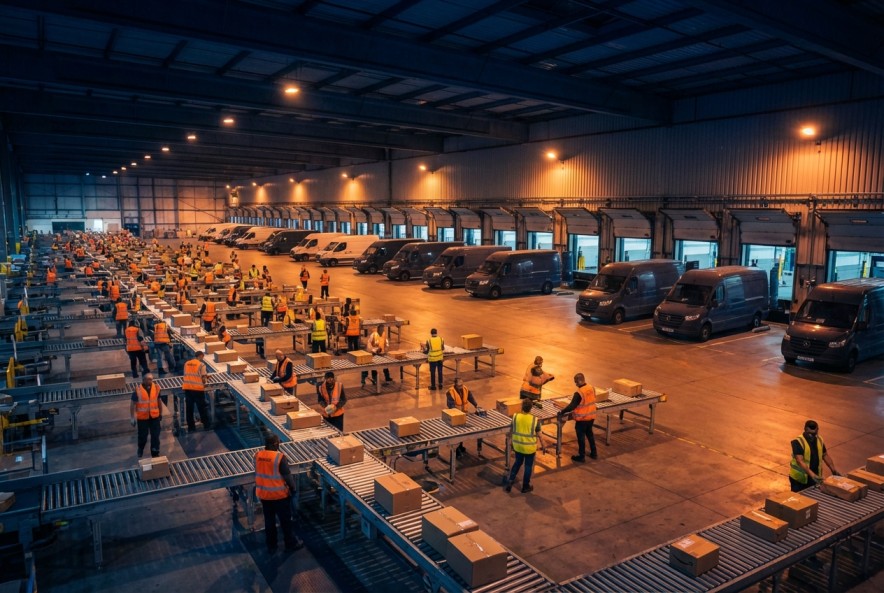
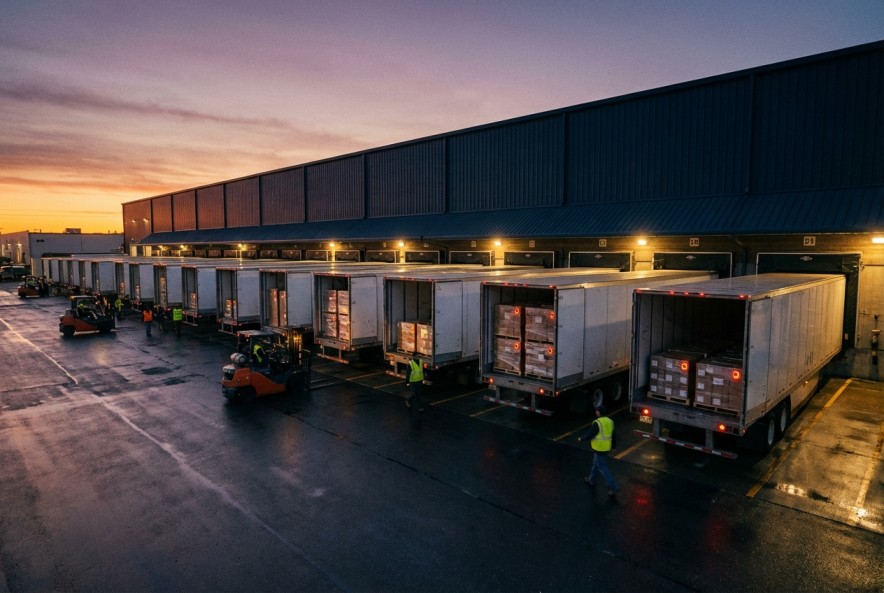
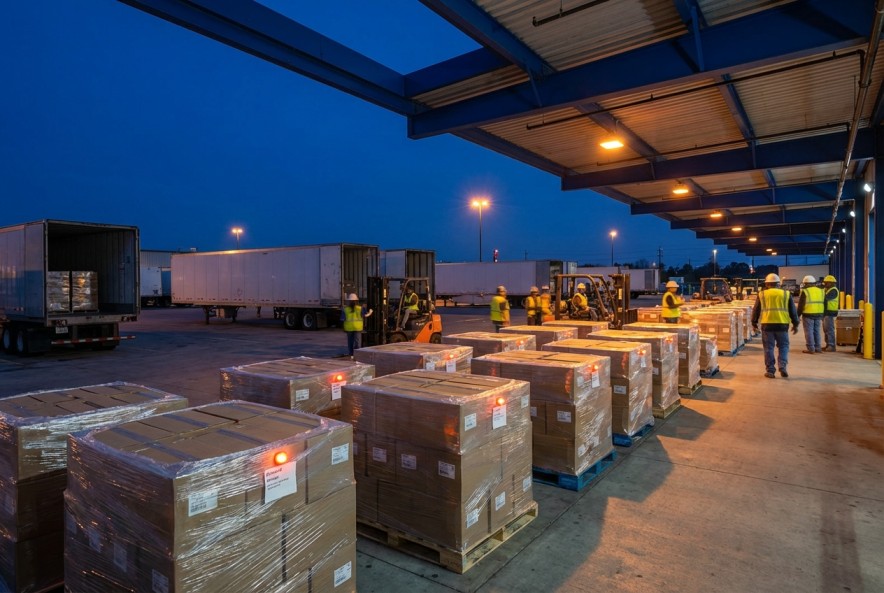
The loading dock is often where efficiency fails. Between driver delays, manual paperwork, and missed appointments, the warehouse floor can quickly become a bottleneck.
When you implement real-time transportation visibility (RTTV), you gain access to predictive ETAs. A warehouse manager can know three hours in advance that a truck is delayed by traffic. Instead of having a crew of ten people waiting idle, they can shift to other tasks, such as inventory cycle counting or preparing different outbound loads.
By syncing visibility tools with your Warehouse Management System (WMS), you reduce detention and demurrage fees. These costs drain margins simply because a truck sat idle for too long.
2. Transforming “Just-in-Case” into “Just-in-Time”
For years, Just-in-Time (JIT) manufacturing was the standard. Then, global shocks forced a move toward Just-in-Case inventory, which led to warehouses filled with safety stock. While this prevents stockouts, it is a significant drain on working capital.
Visibility tools help you find the optimal balance. When you have high-fidelity data on in-transit inventory, you do not need to hoard extra pallets. You can see exactly where raw materials are on the ocean or the highway. This level of inventory optimization ensures you have exactly what you need at the right time, boosting your inventory turnover ratio and freeing up cash for business growth.
3. Enhancing Labor Productivity through Automation
One of the primary killers of productivity is manual labor in the office and on the warehouse floor. If your logistics team spends hours every day sending status emails, it is a waste of human talent.
Visibility platforms automate the track and trace process. By using IoT sensors and GPS tracking, the system updates itself automatically. This allows your staff to focus on exception management. Instead of reviewing 1,000 shipments that are on time, they only handle the five that are delayed. This proactive approach allows a smaller team to manage a much larger volume of freight, increasing labor productivity.
4. Better Decision Making with Data Analytics
Data is the new fuel for the industry, but it must be refined. Modern visibility tools do more than show dots on a map: they provide deep data analytics and business intelligence.
By reviewing historical performance data, you can identify which carriers are consistently late, which routes have frequent delays, and which suppliers are the most reliable. This is not just hindsight: it is predictive analytics. For instance, if data proves that a specific port experiences 20% more congestion on Fridays, you can adjust procurement schedules to arrive on Tuesdays. This kind of strategic sourcing and transportation management makes your operation leaner and more resilient to market volatility.
5. Improving the Customer Experience
B2B customers now expect the same transparency as B2C shoppers. They want to know the location of their orders without making a phone call.
Providing customers with a visibility portal or automated notifications builds trust. It also reduces the load on your customer service team. When a customer sees that their shipment is 50 miles away and arriving in two hours, they remain satisfied. This transparency improves your On-Time, In-Full (OTIF) delivery metrics, which is critical for maintaining major retail contracts.
6. Managing the “Bullwhip Effect”
In a fragmented supply chain, a small change in consumer demand can lead to massive swings in production and inventory orders. This is the bullwhip effect. It creates extreme inefficiency and wastes resources.
End-to-end visibility acts as a stabilizer. When every stakeholder, from the raw material supplier to the retailer, looks at the same real-time data, communication lags disappear. You can respond to demand shifts in days rather than weeks, keeping production schedules tight and supply chain agility high.
Choosing the Right Visibility Partner
The market is full of software options, but not all tools are equal. To improve supply chain efficiency, you need a solution that integrates with your existing Enterprise Resource Planning (ERP) and Logistics Service Providers (LSPs).
Look for these specific features:
- Multimodal Tracking: You need one platform that monitors ocean, air, rail, and over-the-road (OTR) freight.
- Machine Learning (ML): Tools that learn from traffic patterns, weather, and historical delays to provide accurate arrival times.
- Scalability: As your business grows and your global supply chain becomes more complex, your visibility tool must scale with you.
- User-Friendly Interface: If the technology is difficult to use, your team will not adopt it.
The Strategic Advantage of Visibility in Improving Supply Chain Productivity
We are living in an era of permanent uncertainty. From geopolitical risks to climate change impacting shipping lanes, change is the only constant.
By investing in visibility tools, you are buying resilience rather than just software. You are giving your team the power to cut through noise, eliminate waste, and drive productivity to new heights. Efficiency is about working smarter. It is about knowing that your logistics operations are optimized, costs are controlled, and customers are happy. In the race for market share, the company that sees the furthest and reacts the fastest wins.
Stop guessing. Start seeing. And watch your supply chain efficiency rise.
Frequently Asked Questions (FAQs)
How does real-time visibility reduce detention fees?
Real-time visibility provides predictive ETAs that allow warehouse managers to align labor schedules with actual truck arrivals. This prevents trucks from waiting for open bays, which eliminates the primary cause of detention charges.
What role do IoT sensors play in inventory management?
IoT sensors provide live location and condition data for goods in transit. This removes the need for safety stock padding because managers have certainty about when raw materials or finished products will arrive at the facility.
Can visibility tools help mitigate the bullwhip effect?
Yes. By sharing a single source of truth across the entire supply chain, every partner sees actual demand in real time. This prevents the over-ordering and inventory spikes caused by communication delays and distorted data.
How do predictive ETAs improve labor planning?
Predictive ETAs allow managers to see delays hours before they occur. Instead of having workers stand idle at a dock for a delayed shipment, they can be reassigned to picking, packing, or inventory counts, maximizing labor hours.
Why is a “single pane of glass” view important for logistics?
A single pane of glass view consolidates data from different carriers and modes into one interface. This eliminates the need to check multiple portals, reducing manual errors and allowing the team to manage by exception rather than constant manual tracking.