

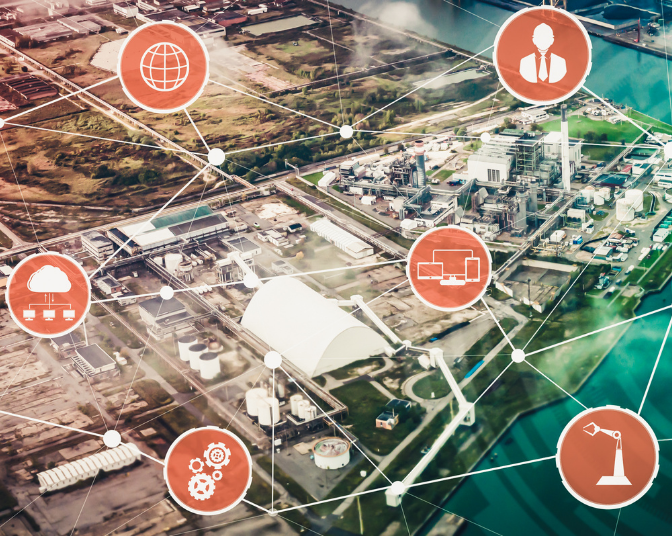
High-tech manufacturing operations face extreme risks when relying on outdated logistics frameworks. Producing next-generation semiconductors or medical devices requires a pace of change that traditional systems cannot support. A single missed shipment or a factory delay often results in billion-dollar assembly lines reaching a complete standstill.
Supply chain digitalization has transitioned from a theoretical discussion to a mandatory survival tactic. Data indicates that 94% of companies experienced direct revenue hits due to supply chain disruptions last year. High-tech firms face unique pressures: while a standard manufacturer may lose $50,000 for every hour of unplanned downtime, a high-tech facility loses significantly more because of component costs and production complexity.
Technical leaders are investing in modern supply chain technology to transition from reactive defense to predictive modeling. This shift focuses on the following six areas.
What You Need to Know
- 94% of companies experienced direct revenue losses from supply chain disruptions last year.
- High-tech facilities lose far more per hour of downtime than standard manufacturers due to component costs.
- A single missed shipment can bring billion-dollar assembly lines to a complete standstill.
- Supply chain digitalization has shifted from a theoretical discussion to a mandatory survival tactic.
- Modern leaders invest in technology to move from reactive defense to proactive operational control.
1. Shedding Light on the “Black Hole” of Logistics
A lack of visibility into deep-tier suppliers remains a significant bottleneck. Many manufacturers understand their own internal warehouse data but lack insight into tier-2 or tier-3 suppliers. Because high-tech products require hundreds of specialized parts, a failure at a small capacitor factory in Southeast Asia can halt an entire operation in North America or Europe.
To mitigate this, firms are adopting visibility and traceability tools powered by Internet of Things (IoT) sensors and cloud computing. These technologies enable real-time tracking and the creation of a digital twin. This virtual copy of the supply chain allows managers to simulate “what-if” scenarios, identifying how port strikes or weather patterns will affect schedules before the physical impact occurs. This provides the level of transparency required for global operations.
2. Trading Guesswork for AI-Powered Precision
Demand forecasting in the high-tech sector is difficult due to rapid shifts in consumer preferences. Overproduction leads to millions in obsolete inventory, while underproduction results in lost market share. Manufacturers are replacing manual spreadsheets with artificial intelligence and machine learning.
These tools analyze big data and advanced analytics, ranging from social media trends to global economic shifts. AI-driven forecasting can reduce logistics costs by 15% and lower inventory levels by as much as 35%. This agile and resilient approach allows companies to pivot production cycles within days rather than months.
3. Solving the Labor Gap with Smart Automation
The manufacturing industry faces a predicted shortage of 2.1 million skilled workers by 2025. For high-tech companies that require extreme precision, this labor gap is a crisis. This talent shortage drives the adoption of warehouse automation and robotics.
Autonomous mobile robots (AMRs) now manage heavy lifting, while cobots (collaborative robots) work alongside human technicians to handle delicate electronic components. These systems are not designed to replace personnel but to increase operational efficiency and ensure accuracy when the labor market is constrained.
4. Fortifying the Digital Fortress
Connected supply chains create larger surfaces for cyberattacks. High-tech manufacturing is a primary target for corporate espionage, and recent data shows the sector faces 40% more cyberattacks than other industries. Consequently, modern supply chain technology is now integrated with advanced cybersecurity.
Organizations use blockchain technology to create secure, unchangeable records of component origins. This ensures that counterfeit parts do not enter the production line. Additionally, integrated risk management software helps firms maintain compliance with ESG (Environmental, Social, and Governance) regulations, which are increasingly important in global trade.
5. Meeting the Need for “Right Now”
In the B2B manufacturing sector, customers expect total transparency and rapid delivery. Supply chain management software that connects directly to customer portals provides real-time updates. This level of connectivity builds trust and provides a competitive edge. When a manufacturer guarantees a delivery date based on autonomous data collection and confirmed stock, they consistently win high-value contracts. Technical standards for these integrations can be reviewed through the Association for Supply Chain Management (ASCM).
6. Building a Greener, More Circular Future
Sustainability has moved beyond public relations to become a core business requirement. High-tech manufacturing is energy-intensive and requires rare materials. Digital tools assist with logistics optimization by identifying the most fuel-efficient shipping routes.
Furthermore, technology enables a circular economy. By tracking product lifecycles, companies can reclaim and recycle expensive metals from older devices. These sustainable practices are integrated into strategic sourcing plans that protect long-term brand equity and material availability.
Selecting Supply Chain Technology That Secures Market Leadership
The period of siloed data and reactive management is over. High-tech manufacturers now recognize that the supply chain is a primary indicator of business health. By investing in modern supply chain technology, firms are securing insurance against a volatile global market.
Adopting these technologies is a strategic requirement for maintaining market leadership. Organizations that integrate supply chain digitalization into their core business model will achieve the speed and precision needed to outpace competitors. Those that remain tied to legacy systems will likely experience increasing operational friction and diminishing market share.
Frequently Asked Questions (FAQs)
Why is a robust high-tech supply chain strategy critical in 2026?
A specialized strategy is essential because high-tech products face unique risks, such as rapid obsolescence and complex component sourcing. A modern strategy integrates technology to ensure speed, resilience against global disruptions, and protection of high-value intellectual property.
How does AI forecasting reduce inventory costs for high-tech firms?
AI tools analyze historical data and current market trends to predict demand with higher accuracy than manual methods. This precision allows manufacturers to maintain lower safety stock levels, which can reduce total inventory overhead by up to 35%.
What is the role of a digital twin in risk management?
A digital twin acts as a virtual simulation of the physical supply chain. It allows data scientists to model potential disruptions, such as logistics bottlenecks or supplier failures, and develop contingency plans before those risks impact the physical production line.
How does warehouse automation address the current labor shortage?
Automation tools like AMRs and cobots take over repetitive or physically demanding tasks. This allows the existing workforce to focus on high-value technical roles, ensuring that production quotas are met despite a shortage of 2.1 million skilled workers.
Why is cybersecurity a priority for modern supply chains?
As supply chains become more connected through IoT and cloud platforms, they become targets for intellectual property theft. Modern tech stacks integrate encryption and blockchain to ensure that data remains secure and part origins are verified.