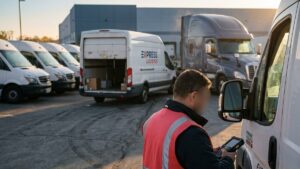

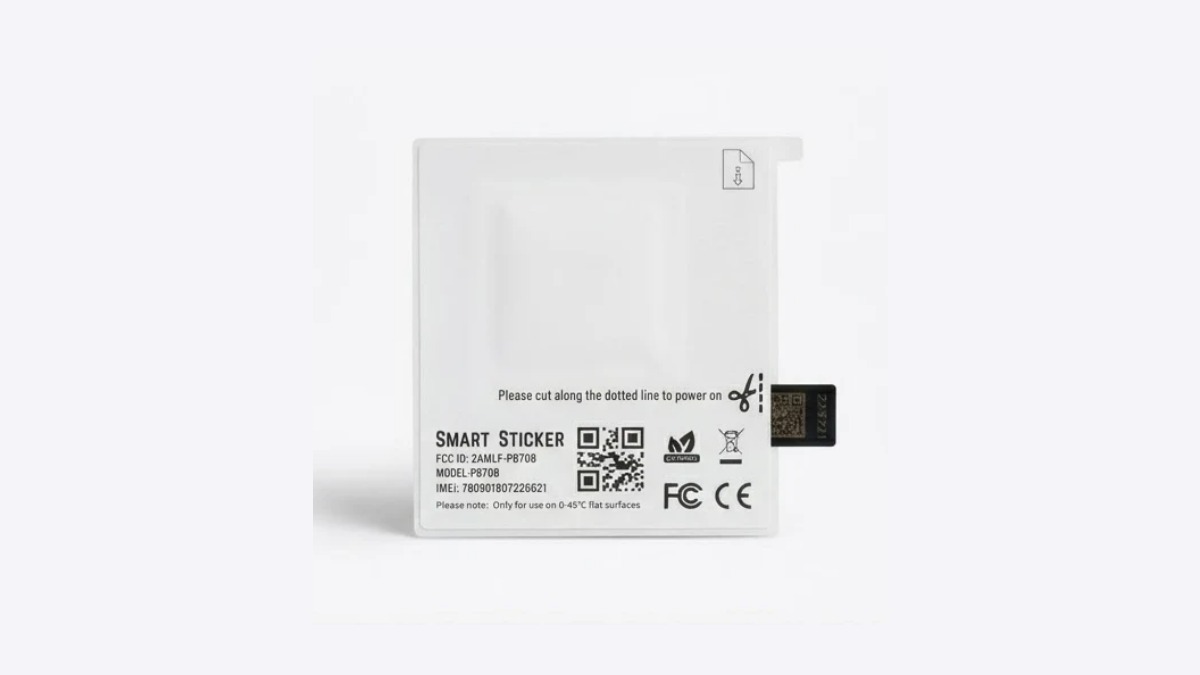
Within the first week of running a GPX SmartLabel pilot, Kingdom Freight Solutions caught a $250,000 cargo theft in real time. The driver’s phone was pinging in Oklahoma. The SmartLabel attached to the actual freight was sitting in a Dallas yard. Two hours later, the owner of Kingdom Freight was on-site with Grand Prairie police, watching them arrest the driver and recover the load.
Five weeks earlier, a separate GPX customer, an international precious metals shipper, used the same SmartLabel technology to recover a $425,000 stolen truck the same day it went missing.
Two recoveries. Five weeks apart. Nearly $1 million in shipments protected by trackers that cost less than the lunch bill on a sales call.
This is the story of how that happened, why traditional carrier tracking failed in both cases, and what shipper-level visibility actually looks like when freight goes off-script. The numbers behind the broader trend make the case for why every high-value load needs an independent layer of tracking. Cargo theft losses surged 60% in 2025 to nearly $725 million, even as overall incident volume held steady, because organized crime groups are now hunting almost exclusively for high-value freight. The average stolen shipment in 2025 was worth $273,990, a 36% jump in a single year.
If you move freight worth more than a quarter million dollars, you are inside the target zone. And the financial damage extends far beyond the lost cargo itself. Without independent tracking, shippers are left fighting months-long battles with insurance adjusters, paying skyrocketing premiums, and dealing with furious end-customers. That is assuming the claim is not denied entirely due to lack of proof.
Carrier Tracking vs. Independent Supply Chain Visibility: Why Your Freight is Vulnerable
Most shippers cannot independently verify where their freight actually is at any given moment. They rely on carrier portals, driver-reported locations, and ELD pings. All three data streams come from the same source: the people moving the load. That dependency is the vulnerability sophisticated theft operations exploit every day.
Here is what carrier-only tracking misses:
- A driver reports a phone GPS location to dispatch while the actual truck moves elsewhere. Spoofing is trivial when no one is comparing the carrier’s data against an independent source.
- A shipment is split between two trailers, with only the smaller portion delivered. The customer notices the shortage hours or days later, after the stolen freight is already gone.
- A forged manifest swaps in a different driver and tractor for the same trailer. The carrier’s system shows what the carrier wants you to see.
- An entire load is diverted to a secondary yard, offloaded, and resold before the destination calls to ask where the shipment is.
In every one of those scenarios, the carrier’s tracking shows compliance. The freight does not. Without a second source of truth, the discrepancy never surfaces until the loss is already final.
The Kingdom Freight recovery and the precious metals recovery both started the same way: a discrepancy between what the carrier was reporting and what the SmartLabel was actually showing. That discrepancy is impossible to detect without an independent tracker on the freight itself.
The two case studies in this article are not coincidental. CargoNet’s 2025 analysis identifies food and beverage as the single most-targeted cargo category last year, with theft volume jumping 47%, and metals as the fastest-growing target, with theft up 77% on sustained copper and precious metal demand. Kingdom Freight was hauling a load for a prominent meal prep customer. The anonymous customer was a precious metals and alloys shipper. If you ship in either category, the recoveries documented below are the new baseline expectation, not an exception.
Real-Time Cargo Theft Recovery: Defeating Split-Load Freight Fraud in Under 2 Hours
Kingdom Freight Solutions LLC is a freight brokerage running full-truckload semis across the United States. The owner started a SmartLabel pilot to get independent visibility on his loads. He did not expect to need it within seven days.
The Setup
On March 24, 2026, Kingdom Freight tendered a $500,000 load. Somewhere along the route, the driver and an accomplice executed a textbook split-load theft. They divided the shipment across two trailers. Half kept moving toward the intended destination. The other half was driven to a yard in the Dallas area, in the North Richland Hills and Bedford corridor along Highway 121, to be offloaded and sold off.
The plan: deliver enough of the load that the customer would not catch the shortage until the stolen freight had already disappeared.
The Catch
The owner was watching the live load and saw something that should have been impossible. The driver’s reported phone location was pinging along the planned route through Oklahoma. The SmartLabel attached to the actual freight was sitting in Dallas. Two locations. Same shipment. One of them was lying.
He called his GPX account team. The GPX team jumped on the account in real time, pulled the location data, and confirmed with engineering that the SmartLabel reading was accurate. The advice from his account manager was direct: “The only other time I’ve seen this happen, it was a theft.”
The tracker updated every 30 to 60 minutes. GPX advised the owner not to chase a moving target. When the semi finally parked at a yard, GPX sent him exact coordinates.
The Recovery
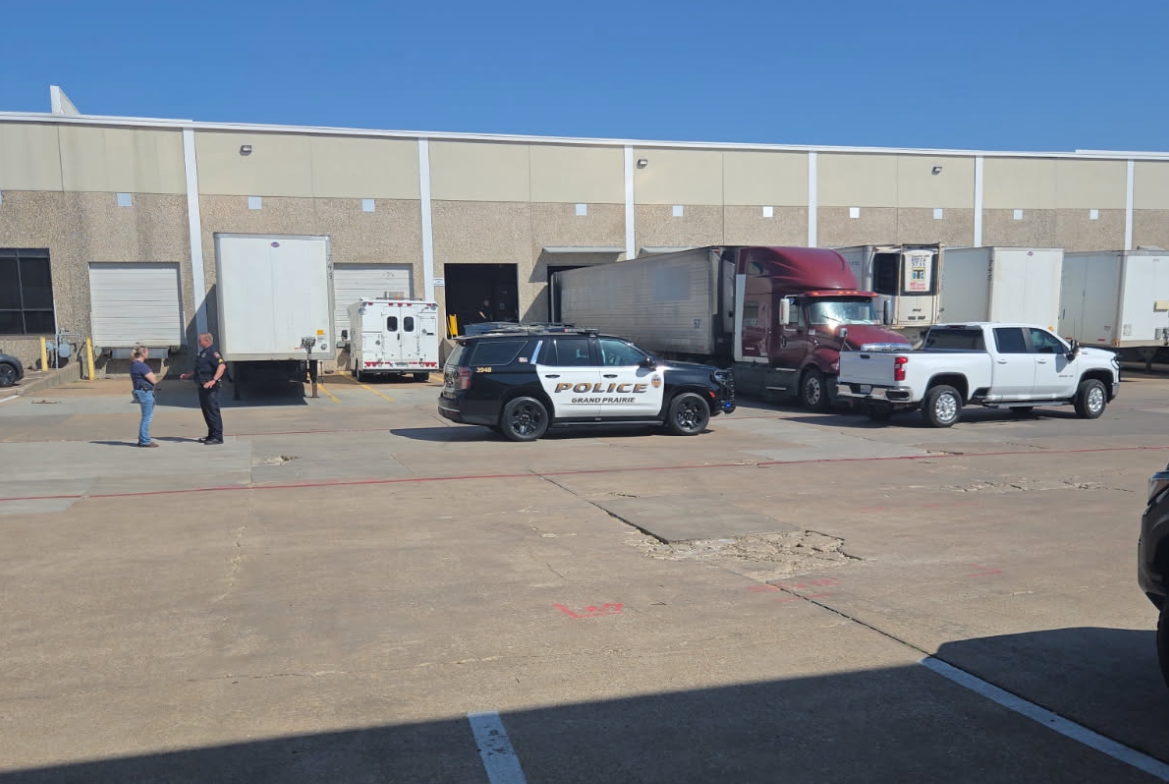
The owner was about 15 minutes away. He drove to the location, blocked the semi-truck with his pickup, and called Grand Prairie police. The driver was arrested on scene. The recovered load was transferred to another truck and delivered safely.
One outcome no one had planned for: when officers searched the truck, they found four other customers’ stolen goods on board. A single SmartLabel-triggered recovery turned into five.
Total elapsed time from detection to arrest: roughly two hours.
“GPX helped us recover a $250,000 stolen load in under 2 hours. I started with GPX just to get basic visibility on my shipments. A few weeks in, I’m watching a live load and notice the driver’s phone is pinging in one state while the GPX tracker is showing the shipment somewhere else entirely. I called my team at GPX immediately. They jumped in, helped me pull real-time location data, and within 2 hours we had the truck and driver located. When law enforcement got there, not only did they recover our $250,000 load, they found additional stolen goods on the same truck. Without that tracker, we never would have known until it was too late. GPX paid for itself a thousand times over on a single shipment.”
A.J. Gutierrez, Kingdom Freight Solutions LLC
High-Value Freight Tracking: A $425K Same-Day Stolen Cargo Recovery
Roughly five weeks earlier, on or around February 17, 2026, an international precious metals and alloys shipper running a multi-modal load to Florida lost a full truck. The shipment carried $425,000 in material. The truck never made the run.
The SmartLabel did its job. The tracker showed the truck deviating from the expected southeast route and heading toward Oklahoma instead. The customer flagged the alert, contacted local law enforcement, and shared the tracker’s location data. The truck had stopped at a rest area.
By the time officers arrived, the full load was still onboard. The vehicle was recovered. The metals were redirected and delivered to the correct customer that same day. No insurance claim. No lost revenue. No ripple effect through the rest of the supply chain.
“When one of our shipments stopped reporting along its expected route, we were concerned we might be dealing with a theft. Using the SmartLabel tracking data, we were able to quickly pinpoint the actual location of the load, coordinate with authorities, and recover $425,000 worth of material before it was lost. The visibility and accuracy of the SmartLabel made a critical difference in resolving the situation quickly.”
International metals shipper (anonymous)
How GPX SmartLabels Power IoT Freight Tracking and Loss Prevention
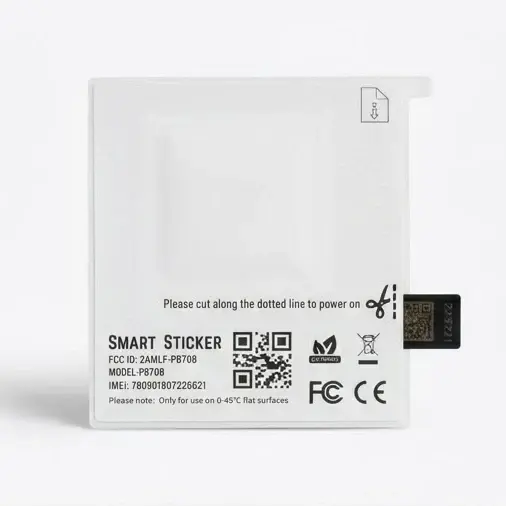
A GPX SmartLabel is a single-use, peel-and-stick tracker about the size of a standard shipping label. It runs on a global cellular network, activates with a tear of a perforated tab, and reports location independent of the carrier, the driver, or the truck. The tracker stays with the freight from origin to destination, regardless of how many handoffs the load goes through.
One label per shipment is the typical baseline. For high-value freight, multiple labels per load is the recommended practice, exactly because of the split-load risk Kingdom Freight encountered.
Pricing starts as low as $10 per unit. On a $500,000 shipment, that is 0.002 percent of cargo value. The math is not subtle.
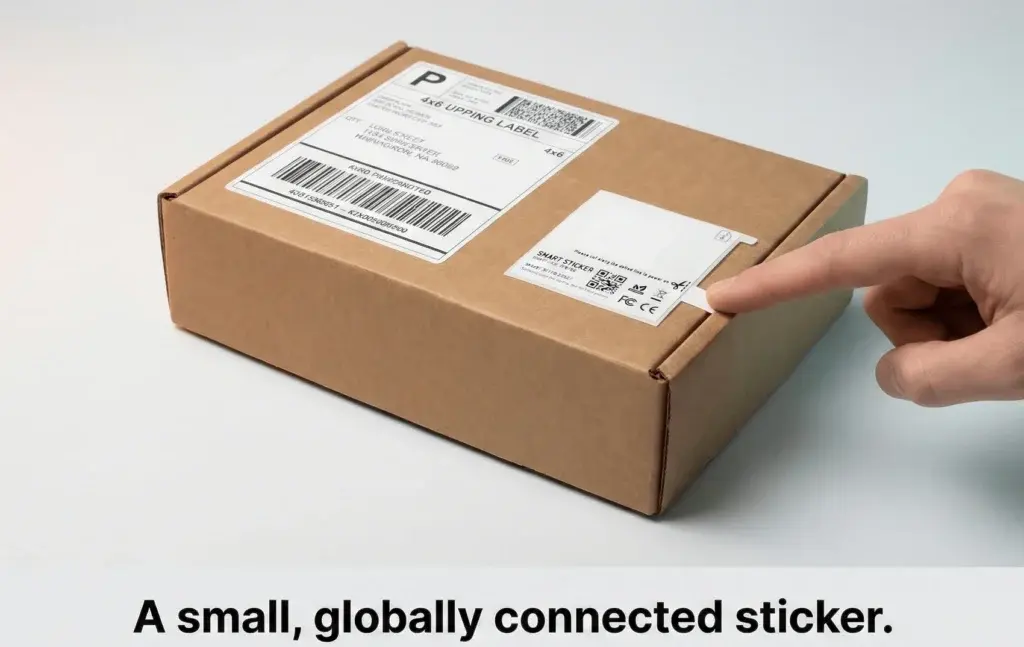
The tracker is half the answer. The other half is the GPX Shipments feature, which converts raw location pings into actionable alerts.
The Shipments feature works in three steps:
- The customer defines the start point and the expected end point for the load.
- GPX generates the expected route based on travel patterns and sets geofences at origin, destination, and intermediary points along the way.
- The system fires alerts the moment the freight does something it was not supposed to do.
Three alert conditions trigger automatically:
- Late pickup or late delivery. The freight has not arrived where it was supposed to be by the expected time.
- Unexpected stops or extended idling. The shipment has parked outside expected parameters, off-route or for too long.
- Route deviation. The freight has left the expected travel corridor.
Route deviation caught the precious metals theft. The combination of unexpected location plus the manual cross-reference against the driver’s reported phone position caught the Kingdom Freight split. Different schemes, same underlying signal: the freight is not where the carrier says it is.
Carrier Tracking vs. GPX Independent Tracking
This is the fundamental question every shipper moving high-value freight has to answer. Where does your location data come from, and is it independent of the people moving the load?
| Factor | Carrier-Provided Tracking | GPX SmartLabel + Shipments |
|---|---|---|
| Source of location data | Carrier ELD or driver phone | Independent cellular tracker on the freight |
| Visibility through driver and tractor handoffs | Often lost | Continuous, follows the freight |
| Visibility on split loads | None | Maintained on whichever portion carries a label |
| Spoofing resistance | Low. Driver controls the data source. | High. Tracker is sealed inside the cargo. |
| Route deviation alerts | Manual review or none | Automatic, real-time, geofenced |
| Insurance claim documentation | Carrier-supplied logs | Independent third-party audit trail |
| Response support during incident | Carrier dispatch | GPX account team in real time |
| Cost per shipment | Bundled in carrier rate | Starting at $10 per SmartLabel |
The recoveries documented in this article were possible because the customers had a second source of truth. Without independent tracking, both losses would have been written off as standard supply chain crime, and the trail would have gone cold inside 24 hours.
Building a Next-Gen Cargo Theft Prevention Strategy for 2026 and Beyond
The lesson from these two recoveries is not that SmartLabel trackers are magic. The lesson is that independent visibility, the ability to verify a shipment’s location without trusting the carrier’s data, is the difference between an insurance claim and a recovery.
Three principles for shippers moving high-value freight:
Track the goods, not the truck. Carrier tracking moves with the cab, and it dies the moment the trailer is unhooked. Your freight moves with the trailer, and increasingly across multiple trailers. Independent shipment-level tracking through supply chain visibility tools closes the gap that organized theft operations have learned to exploit.
Run multiple trackers per load on high-value shipments. The Kingdom Freight split would have been even harder to catch with a single tracker on the wrong half of the load. Two SmartLabels per shipment, distributed across the cargo, makes split-load theft mathematically harder to pull off and dramatically improves recovery odds when it happens.
Wire alerts to action, not to a dashboard. The recoveries in this story happened because the owner was watching the live load, the GPX team responded inside an hour, and the customer was prepared to act on the data. Visibility without response is a logbook. Visibility wired to a real escalation protocol is a recovery.
Cargo theft is no longer an opportunistic crime. CargoNet’s annual analysis confirms that organized criminal groups are running it as a business, with operational sophistication that matches the freight they target. The shippers who recover their loads are the ones who fight back with infrastructure that does not depend on the carriers being honest.
If you move freight valued above $250,000 per shipment, you are already on the target list. The only remaining question is whether you can prove where your cargo is when something goes wrong.
Talk to a GPX loss prevention expert about protecting your supply chain.
Frequently Asked Questions (FAQs)
How do you track a split-load cargo theft?
The only way to track a split-load cargo theft is by deploying independent, shipment-level IoT trackers directly inside the freight. When part of the load gets diverted to a separate vehicle or yard, the tracker on the stolen portion continues reporting from its actual location while the carrier’s vehicle tracking stays with the cab. The discrepancy between carrier-reported location and shipment-level tracker location is the signal that something is wrong. In the Kingdom Freight recovery, this exact mismatch, the driver’s phone in Oklahoma versus the SmartLabel in Dallas, surfaced the theft within hours of pickup.
What is the difference between carrier tracking and independent freight tracking?
Carrier tracking reports the location of the truck or driver from the carrier’s own systems, while independent freight tracking reports the location of the cargo itself from a separate device sealed inside the shipment. Carrier tracking comes from the company moving your freight, typically through ELD data or driver phone GPS, which means spoofed locations, falsified manifests, or dropped trailers go undetected by the carrier’s own system. Independent freight tracking, like a GPX SmartLabel, attaches directly to the cargo and reports location through a separate cellular network. The tracker stays with the freight through every handoff, transload, and yard transfer. When the two sources disagree, you have evidence. When you only have one source, you have a story.
How much does a SmartLabel tracker cost per shipment?
GPX SmartLabel tracking starts as low as $10 per shipment, making the cost roughly 0.002 percent of a $500,000 high-value freight load. On a half-million-dollar shipment, that is less than the cost of a fast food meal to protect the entire load. For high-value or split-risk shipments, the recommended practice is multiple SmartLabels per load to ensure visibility survives even when part of the cargo is diverted.
How quickly can a stolen shipment be recovered with GPS tracking?
Stolen shipments can be recovered in under two hours using real-time IoT freight tracking with route deviation alerts, as Kingdom Freight Solutions demonstrated in March 2026 when GPX SmartLabels surfaced a $250,000 split-load theft within hours of pickup. Recovery speed depends on three factors: how quickly the deviation alert fires, how fast the customer escalates to law enforcement, and how accurate the tracker’s location data is. In the Kingdom Freight recovery, the SmartLabel updated every 30 to 60 minutes, the GPX account team confirmed the alert within minutes, and the freight was recovered roughly two hours after detection. The international metals shipper recovered $425,000 in cargo on the same day the route deviation alert fired. Both timelines beat the typical insurance claim cycle by weeks.
Do I need a long implementation to start using SmartLabel trackers?
No long implementation is required to deploy GPX SmartLabel freight tracking. SmartLabels are peel-and-stick disposable trackers that activate by tearing a perforated tab, which is why Kingdom Freight Solutions caught a $250,000 cargo theft within the first week of starting their pilot. Setup involves attaching the tracker to the freight, configuring origin and destination points in the GPX Shipments feature, and setting geofence parameters. There is no carrier integration required, no driver training, and no software install on the carrier’s side. The tracker works regardless of which carrier or vehicle moves the load.
How did a SmartLabel expose a driver who had stolen the freight?
The driver’s phone was pinging in Oklahoma while the SmartLabel attached to the actual freight showed it sitting in a Dallas yard. That location discrepancy flagged the theft in real time and led to an on-site arrest two hours later.
What types of high-value cargo have SmartLabel pilots helped recover?
Within five weeks, GPX SmartLabel pilots helped recover a $250,000 general freight load stolen by a driver and a $425,000 stolen truck carrying precious metals, protecting nearly $1 million in shipments combined.