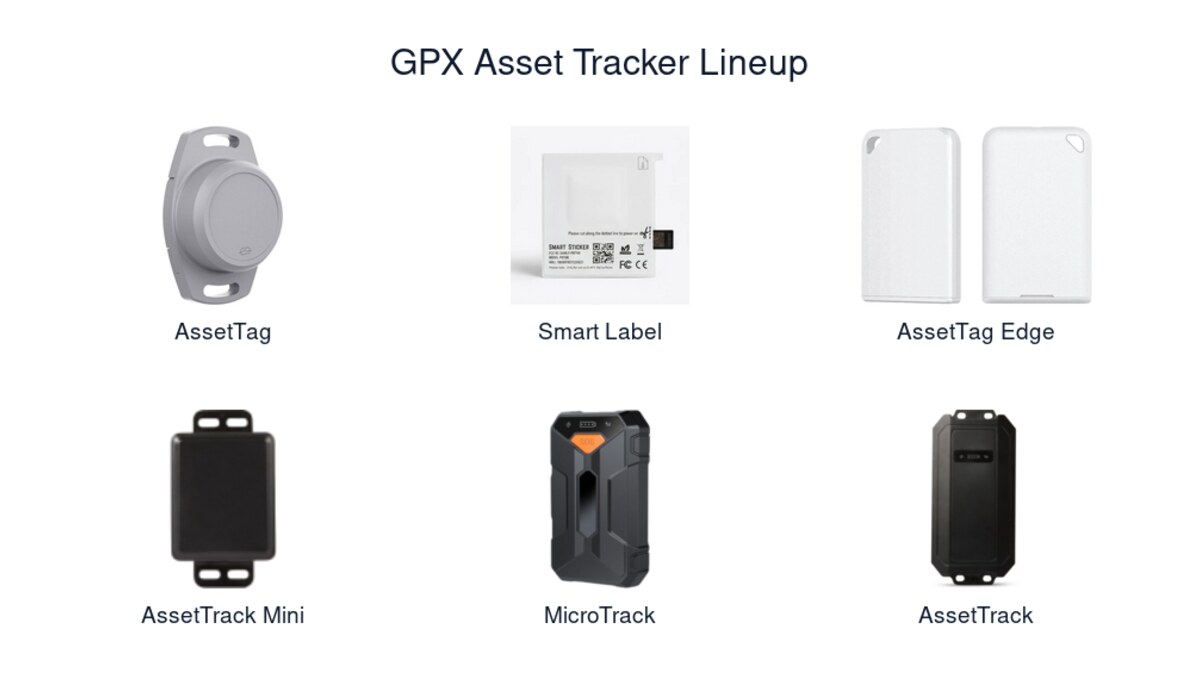


Choosing the right GPS tracker is harder than it looks. Pick wrong, and you lose sight of high-value assets, take on more risk, and lose money. The challenge isn’t finding a dot on a map. It’s getting accurate, timely data you can act on. Cargo theft keeps rising, so a strong tracking strategy protects your assets and your margins. Cargo theft incidents jumped 57% from 2022 to 2023, according to a National Insurance Crime Bureau (NICB) report.
The financial hit from these gaps is real. A McKinsey analysis found companies lose nearly 45% of one year’s profit every decade to severe supply-chain disruptions. The right tracking technology shifts you from reacting to problems to preventing them. That means safer assets, steadier operations, and stronger margins. Here are the factors that decide which tracker fits your operation.
| Tracker Type | Power Source | Common Use Cases | Key Advantage |
|---|---|---|---|
| AI-Powered Multi-Sensor | Hardwired or Long-Life Battery | Enterprise assets, fleet management, supply chain logistics, and heavy equipment | Predictive insights and multi-network coverage |
| Consumer/SMB Tracker | Rechargeable Battery | Vehicles, pets, personal items | Simplicity and low cost |
| OBD-II Plug-In | Vehicle Power (OBD Port) | Fleet vehicles, personal cars | Easy installation, access to vehicle data |
| Hardwired | Direct Vehicle/Asset Battery | Commercial fleets, heavy machinery | Permanent, tamper-resistant installation |
| Disposable Smart Label | Single-Use Battery | In-transit parcels, returnable assets | Low cost, peel-and-stick deployment |
How Do GPS Trackers Work? A Quick Overview
A GPS tracker pinpoints its location using the Global Positioning System. It reads signals from multiple satellites and calculates position from how long each signal takes to arrive. But location data means nothing if you can’t access it.
To send its coordinates, the tracker uses a communication network. Usually that’s cellular (4G LTE-M or 5G), but satellite networks cover remote areas with no cell service. Some trackers add Bluetooth Low Energy (BLE) for precise short-range and indoor tracking. The device pushes this data to a cloud platform. You open a web browser or mobile app and see the asset’s location, history, and status in real time.
Key Factors to Consider When Choosing a GPS Tracker
The best GPS tracker matches your operational needs. Define those needs before you evaluate any device. Start with these areas.
Asset Type & Value
What are you tracking? That answer drives every other decision. A GPS tracker for a car or a piece of construction equipment needs more than a disposable package tracker. For high-value, powered assets like a trailer, a hardwired device delivers constant power and reliability. For high-volume, low-value items like shipping pallets, a peel-and-stick disposable tracker makes more sense. For luggage or pets, pick a small rechargeable device.
Power Source: Battery vs. Hardwired vs. Plug-in
The power source sets the tracker’s lifespan and how hard it is to install.
- Battery-Powered: These go anywhere and suit assets with no power source, like containers, trailers, and personal items. Choose multi-year battery life to cut down on maintenance.
- Hardwired: These wire into the asset’s electrical system for constant power. They are the most reliable choice for vehicles and heavy machinery, with set-and-forget operation.
- OBD-II Plug-In: These plug into the On-Board Diagnostics (OBD-II) port in most vehicles built after 1996. Installation takes seconds, and many pull vehicle diagnostics alongside location.
Connectivity & Coverage
A tracker is only as good as its signal. Think about where your assets go. If they stay in cities and suburbs, a cellular tracker (4G/5G) covers you at a lower cost. If they cross remote regions or oceans with no cellular service, you need satellite connectivity. The best platforms run multiple networks and switch between cellular and satellite automatically, keeping visibility constant at the lowest cost.
Data & Reporting Needs
How often do you need updates? A cross-country shipment of sensitive goods needs a faster ping rate, say every minute, than a stationary generator on a job site that checks in once a day. Faster pings give you more detail but drain battery and data faster. Decide what you need: live breadcrumb tracking or periodic check-ins. Good platforms let you change ping rates remotely to balance detail against battery life.
Durability & Environmental Conditions
Assets take a beating. A tracker on a refrigerated container faces harsher conditions than one in a climate-controlled warehouse, which makes temperature range central to cold chain monitoring. Check the Ingress Protection (IP) rating. An IP67 rating means the device is dust-tight and survives submersion in water. Factor in temperature range, vibration resistance, and whether you need a tamper-proof enclosure.
Software Platform & AI Features
Hardware is only half the equation. The software turns raw location data into decisions you can act on. A basic platform shows dots on a map. An AI-powered IoT asset tracking platform like GPX delivers predictive ETAs, maintenance alerts, route optimization, geofencing alerts, and automated reports. Pick a platform that is easy to use, connects to your ERP, WMS, and existing telematics-of-record systems, and includes tools like Scout AI that monitor assets and flag exceptions before they turn into problems.
Common Challenges with Traditional GPS Tracking
Legacy tracking systems create their own problems. The biggest is data overload with no insight. A steady stream of location pings does nothing if someone has to watch a screen around the clock to catch an anomaly. That is the ceiling of dots-on-a-map systems. They only react, telling you a problem already happened.
Other headaches pile up fast. Poor battery management on wireless devices creates maintenance work and tracking gaps when a battery dies without warning. A tracker that goes dark the moment it leaves cellular range leaves blind spots on long-haul shipments. Many platforms lock you into one-size-fits-all reporting that ignores the KPIs your business actually cares about. A tool that should drive efficiency turns into a source of frustration.
Three more challenges surface as operations scale. Integration comes first: bolting location data onto existing ERP, TMS, and fleet management systems without spawning new data silos is work many platforms don’t support. Scalability comes second: a tool that manages fifty units cleanly can buckle when the asset pool grows into the thousands, multiplying maintenance and administrative load. Data security comes third: location and operational data is sensitive, and a platform without SOC 2 compliant controls exposes your operation to real cyber risk.
What’s Next: The Future of Asset Intelligence
Tracking is moving past simple location data into predictive and prescriptive intelligence. The next wave centers on multi-sensor fusion and agentic asset intelligence. It combines GPS with temperature, humidity, shock, and light sensors to show an asset’s full condition and environment.
AI-powered platforms read this data in real time to spot patterns and predict outcomes. Instead of telling you a shipment is late, the system warns you it is at risk of being late from traffic, weather, or an unexpected delay, then suggests another route. That shift from reacting to managing lets you fix problems before they reach customers or your bottom line. Low-cost disposable Smart Labels now make it affordable to track assets at a scale that wasn’t possible before.
How to Know Which GPS Tracker Fits Your Operations
The right tracking solution shapes your efficiency and profit, so treat the choice as strategic. Start with an honest audit of your operations. Don’t start with devices. Start with your problems.
First, map what you track, where it goes, and the conditions it faces. Second, define success. Do you want to cut theft, improve asset utilization, give customers accurate ETAs, or automate compliance reporting? Your goals set your feature list. Third, judge the whole platform, not just the hardware. The real value sits in the alerts, analytics, and AI-driven insights. Fourth, check whether the provider can grow with you, with a range of hardware and flexible data plans that scale as you do.
Follow this process and you stop buying a commodity device. You invest in an operational intelligence system that pays you back.
Want to see how AI-powered asset intelligence moves you beyond dots on a map? Talk to our team and see what predictive visibility delivers for your operation.
For simpler consumer or small-business needs, budget GPS brands like Logistimatics or Tracki cover basic vehicle and personal tracking, though without the scale, multi-year battery life, and analytics that a business-grade platform provides.
Frequently Asked Questions (FAQs)
How do GPS trackers work?
A GPS tracker reads signals from satellites to calculate its exact location. It then sends that data over a cellular or satellite connection to a software platform, so you can view the asset on a map from a computer or phone.
How does an enterprise GPS tracking system deliver ROI?
Enterprise platforms deliver ROI by cutting theft and loss, improving asset utilization, and automating manual reporting. Recovering high-value assets, reducing downtime, and giving customers accurate ETAs all protect margins. With predictive ETAs and Scout AI flagging exceptions early, teams prevent costly disruptions instead of reacting to them.
What is the difference between a consumer tracker and an enterprise platform?
Consumer trackers, like those for pets or luggage, keep things simple and follow one item. Enterprise platforms like GPX run business operations, tracking thousands of assets with analytics, fleet management, AI-driven alerts, and integration with your other systems.
How accurate are modern GPS trackers?
Commercial-grade GPS trackers land within about 2.5 meters (8 feet) under open sky. Tall buildings, dense foliage, and indoor spaces reduce that accuracy. Advanced systems blend GPS, Wi-Fi, and cellular tower data to sharpen location in dense urban areas.
What does AI-powered asset tracking mean?
AI-powered asset tracking goes past showing location. It analyzes location, sensor data, and historical trends to deliver predictive insights. That includes forecasting arrivals, flagging unusual activity, predicting maintenance, and automating alerts before problems hit.