
According to Forbes citing McKinsey research, companies that collaborate effectively with their suppliers achieve 5 to 10 percent lower costs and 7 to 10 percent higher revenue than peers, and in some industries suppliers account for more than 80 percent of total product value. Yet 42 percent of executives cite a lack of real-time data as their biggest limitation when responding to a disruption, and more than 40 percent of organizations still have limited or no visibility into Tier 1 supplier performance. According to the World Economic Forum, supply chain disruptions lasting longer than a month now occur every 3.7 years on average and can cost businesses up to 45 percent of a year’s profit over the course of a decade.
The pattern behind those numbers is not a technology problem. It is a collaboration problem. IDC research cited across the industry shows that 75 percent of companies’ collaboration efforts are still a “work in progress.” Suppliers, carriers, 3PLs, distributors, and customers are still trading status updates through email threads, EDI files refreshed once a day, and phone calls that turn ETAs into guesses. Every handoff is a place where data dies, trust erodes, and exceptions compound.
The companies pulling ahead in 2026 are rebuilding their networks around shared, real-time data. They treat the supply chain as one connected operation rather than a chain of disconnected partners. This guide breaks down how to improve supply chain collaboration networks step by step, the three types and three maturity levels of collaboration, the technologies that make it possible, the challenges that derail most programs, and how to choose the right collaboration strategy for your operation.
What Is a Supply Chain Collaboration Network (SCCN) in 2026?
A supply chain collaboration network is a connected, multi-enterprise system where trading partners share live data, decisions, and workflows across the planning, sourcing, manufacturing, logistics, and fulfillment lifecycle. Instead of every partner working from a private copy of the truth, everyone operates from the same shared signal. Industry analysts increasingly refer to the underlying technology category as a Supply Chain Collaboration Network, or SCCN, defined as a many-to-many platform built on cloud architecture that supports a community of trading partners, provides supply chain visibility, and enables analytics across the extended network.
That signal includes:
- Real-time inventory positions across plants, distribution centers, and in-transit shipments
- Live shipment location, condition, and predictive ETA
- Order status, change orders, and exceptions
- Forecasts, capacity commitments, and constraint signals
- Quality, sustainability, and compliance data tied to specific lots, assets, and shipments
The shift is from communication (sending updates back and forth) to collaboration (acting on the same data at the same time). A modern collaboration network is built on three layers: a data layer that connects systems and IoT devices, an intelligence layer powered by AI and analytics, and a workflow layer that turns shared insight into joint action. Industries leading this shift include automotive, aerospace, construction, healthcare, food and beverage, and high-value in-transit logistics.
Vertical vs. Horizontal Supply Chain Collaboration: Key Differences
Before building or improving a collaboration network, leaders need to know which type of collaboration they are actually pursuing. The three recognized models are vertical, horizontal, and full. Most operations need a blend of all three, but each one has a distinct purpose, set of partners, and design pattern.
Vertical Collaboration is cooperation between different levels of the supply chain. A manufacturer working with its Tier 1 and Tier 2 suppliers on shared forecasts is vertical. So is a distributor working with its retailers on joint replenishment, or a 3PL working with a shipper on guaranteed capacity. Vertical collaboration is the most common starting point because the partners already have a contractual relationship. The classic example is the long-running Walmart and Procter and Gamble partnership, where shared point-of-sale data and joint planning cut stockouts and freed up working capital on both sides.
Horizontal Collaboration is cooperation between companies at the same level of the chain, often including direct competitors. Two manufacturers sharing transportation capacity, two retailers pooling cold chain assets, or two carriers sharing backhaul routes are all horizontal plays. The cited Land O’Lakes and Coca-Cola partnership to reduce empty miles on shared lanes started as a conversation at an industry event and turned into measurable savings on both fleets. Horizontal collaboration is harder to set up because of antitrust and data sensitivity, but the upside is significant because the partners are usually fighting the same constraint (capacity, sustainability, or cost).
Full Collaboration blends vertical and horizontal across the entire network. Consumer goods companies like Unilever, working through industry bodies like the Consumer Goods Forum, have used full collaboration to advance shared sustainability and Scope 3 emissions goals across both suppliers and competitors. Full collaboration is the most strategically powerful model and the hardest to operate because it requires governance, neutral data infrastructure, and aligned incentives across parties that do not always share interests.
Cross-functional collaboration, sometimes listed as a fourth type, sits inside the enterprise. It is the coordination between procurement, planning, operations, finance, and customer service that has to be in place before any external collaboration can scale. Without it, every external partner ends up talking to a different version of your company.
The Supply Chain Maturity Model: Moving from Silos to Strategic Partnerships
Once you know which type you are pursuing, the next question is how deep the collaboration goes. The maturity model widely cited by Supply Chain Digest and others lays out three levels, and most operations sit somewhere between Level 1 and Level 2.
- Level 1, Transaction Integration. Partners automate basic business transactions like purchase orders, advance ship notices, and invoices through EDI or APIs. This is plumbing, not collaboration. It removes manual re-keying but does not change the underlying decisions.
- Level 2, Information Sharing. Partners exchange operational data including forecasts, inventory levels, production plans, and exceptions. Decisions are still made independently, but they are informed by better data. Most digital collaboration programs land here.
- Level 3, Strategic Collaboration. Partners jointly plan and decide on forecasts, network design, capacity commitments, pricing, and shared risk and reward. This is where the McKinsey 5 to 10 percent cost savings and 7 to 10 percent revenue gains actually show up.
The honest assessment is that the McKinsey Supplier Collaboration Index, developed with Michigan State University, finds most buyers and suppliers are aligned on strategic intent but fall short on the execution of value creation, value sharing, and governance. Moving from Level 1 to Level 2 is a technology and process problem. Moving from Level 2 to Level 3 is a trust, incentive, and contracting problem. Both stages need the same foundation: shared real-time data that everyone can verify.
How Real-Time Visibility Solves Multi-Tier Supply Chain Disruptions
For most of the last decade, supply chain leaders treated collaboration as a soft skill. In 2026, it is a hard capability tied directly to margin, working capital, and customer retention. The reasons are stacking up fast.
Disruption is the baseline, not the exception. Extreme weather became the single largest cause of supply chain disruption in 2025, surpassing cyber outages for the first time in nearly a decade. Tariffs, geopolitical conflict, port congestion, and labor shortages are now structural costs rather than temporary shocks. Companies cannot plan their way out of volatility. They have to sense and respond their way through it, and that requires partners moving in lockstep.
Visibility gaps are now financial liabilities. When a customer asks where their order is and your CSR has to forward the question to a 3PL who has to ping a carrier who has to call a driver, you have already lost. McKinsey’s 2025 supply chain risk pulse shows the majority of companies still understand their risks only up to Tier 1. Tier 2, Tier 3, and beyond are blind spots, and that is where most disruptions originate.
Customers expect transparency as a baseline. 44 percent of logistics executives now cite increasing consumer demand for transparency as a primary driver of corporate strategy. B2B buyers expect the same Amazon-grade tracking experience for a $2 million capital asset that they get for a $20 phone case. If you cannot deliver it, a competitor will.
AI changes the economics of collaboration. Companies that successfully implement AI-driven supply chain initiatives have reported revenue increases of 5 percent or more within months. A European automotive case study cited by industry analysts shows 7 percent stock savings, 13 percent delivery performance improvement, and 10 percent transportation cost reduction when manufacturers centralized visibility and collaborated across supplier tiers. The Hackett Group has documented that strong supplier relationships reduce supply chain disruptions by 20 percent. Coupa research shows 63 percent of manufacturers with excellent collaboration report on-time delivery of more than 95 percent, and a 2012 Deloitte survey found that collaborative organizations were 38 percent more likely to achieve or surpass their performance expectations. Those numbers are not theoretical. They are what happens when partners stop guessing.
The Bullwhip Effect & The True Cost of Supply Chain Blind Spots
Most operations leaders know collaboration is weak. What they often miss is how much that weakness actually costs in cash, working capital, and customer lifetime value. The hidden costs show up in five places.
- Inventory bloat and the bullwhip effect. When partners do not share live demand or capacity signals, every node hedges by holding extra safety stock. Forecast distortions amplify with each tier upstream in what economists call the bullwhip effect. A poorly coordinated network can easily carry 20 to 40 percent more inventory than a coordinated one, locking up working capital and inflating obsolescence.
- Expedited freight. Late visibility means late decisions. Late decisions mean air freight, premium carriers, and overtime instead of standard service. Every missed connection on the inbound side becomes a premium spend on the outbound side.
- Penalty spend and chargebacks. Retailers, OEMs, and government buyers now embed real-time delivery and labeling compliance into their contracts. One missed window can wipe out the margin on an entire shipment.
- Customer churn. B2B customers do not call to complain when ETAs are wrong. They quietly start dual-sourcing and shift volume to the partner who delivers transparency.
- Compliance and regulatory exposure. Scope 3 emissions, Uyghur Forced Labor Prevention Act enforcement, food safety traceability, and cold chain reporting all require partner data flowing in near real time. Without collaboration, your audit trail is whatever the supplier remembers to email you.
The compounding effect is the part that hurts. Each of these costs feeds the next. Inventory bloat ties up cash that should be funding digital investment. Expedited freight makes margins thin. Thin margins force decisions that reduce service quality. Reduced service quality drives churn. Most leaders see the symptoms one at a time. Few connect them back to the same root cause: a collaboration network that was never designed for real-time data sharing.
Overcoming Tier-N Visibility Challenges in Global Logistics
Even leadership teams that commit to collaboration run into the same recurring obstacles. Recognizing them up front is the difference between a 90-day rollout and a two-year stall.
Data silos and incompatible systems. Every partner runs a different mix of ERP, TMS, WMS, MES, and homegrown tools. Without a connective tissue layer, every integration is custom and every change breaks something downstream.
Trust deficits. Partners worry that sharing forecast data, inventory levels, or capacity constraints will be used against them in the next pricing negotiation. The result is intentionally vague data, which makes collaboration cosmetic.
Tier-N visibility gaps. Most platforms collect data from Tier 1 suppliers. The disruptions that actually shut you down come from Tier 2, Tier 3, and beyond, where you have no contractual leverage and limited insight.
Scope 3 ESG audit exposure. Regulatory fines are now a bigger threat than delayed shipments. With the SEC, California SB 253, and European CSRD enforcing Scope 3 emissions reporting, your collaboration network must produce an automated, auditable chain-of-custody for every shipment, lot, and lane. You cannot build an ESG report on estimated carrier data. Auditors increasingly demand sensor-level proof of route, mode, and dwell time, and operations without that data are paying penalties or restating reports.
Geopolitical and nearshoring risk. As companies hastily nearshore operations to Mexico, Central America, and other regional hubs, they are relying on untested Tier 2 and Tier 3 suppliers with no historical performance baseline. Real-time GPS tracking and BLE proximity data are the only way to mitigate the risk of these unverified regional handoffs. Without that ground truth, every shipment is a leap of faith.
Master data quality. McKinsey research notes that only 53 percent of supply chain leaders rate their master data quality as adequate. Bad part numbers, mismatched location codes, and inconsistent units of measure quietly destroy collaboration value before it starts.
Inaccurate ETAs. When predictive ETAs are wrong by hours, every downstream plan based on them is wrong by hours. Dock scheduling, labor planning, and customer commitments all suffer from the same root.
Cold chain and condition exceptions. Pharmaceuticals, biologics, food, and high-value electronics demand real-time temperature, humidity, shock, and tamper data. Most operations still discover excursions after the shipment lands, when the damage is already done.
Change management fatigue. Procurement, planning, and operations teams have already absorbed multiple platform rollouts. New collaboration tools die when they are layered on top of existing workflows rather than embedded into them.
Core Pillars of High-Performing Supply Chain Collaboration Networks
Operations that consistently get collaboration right share five structural pillars. None of them is a tool. They are design choices.
1. A shared data backbone. Every partner reads from and writes to a common multi-enterprise platform rather than maintaining private copies. The platform handles identity, permissions, version control, and event streaming. Whether the data originates in an ERP, a TMS, an IoT tag on a returnable container, or a barcode scan on a job site, it ends up in the same network.
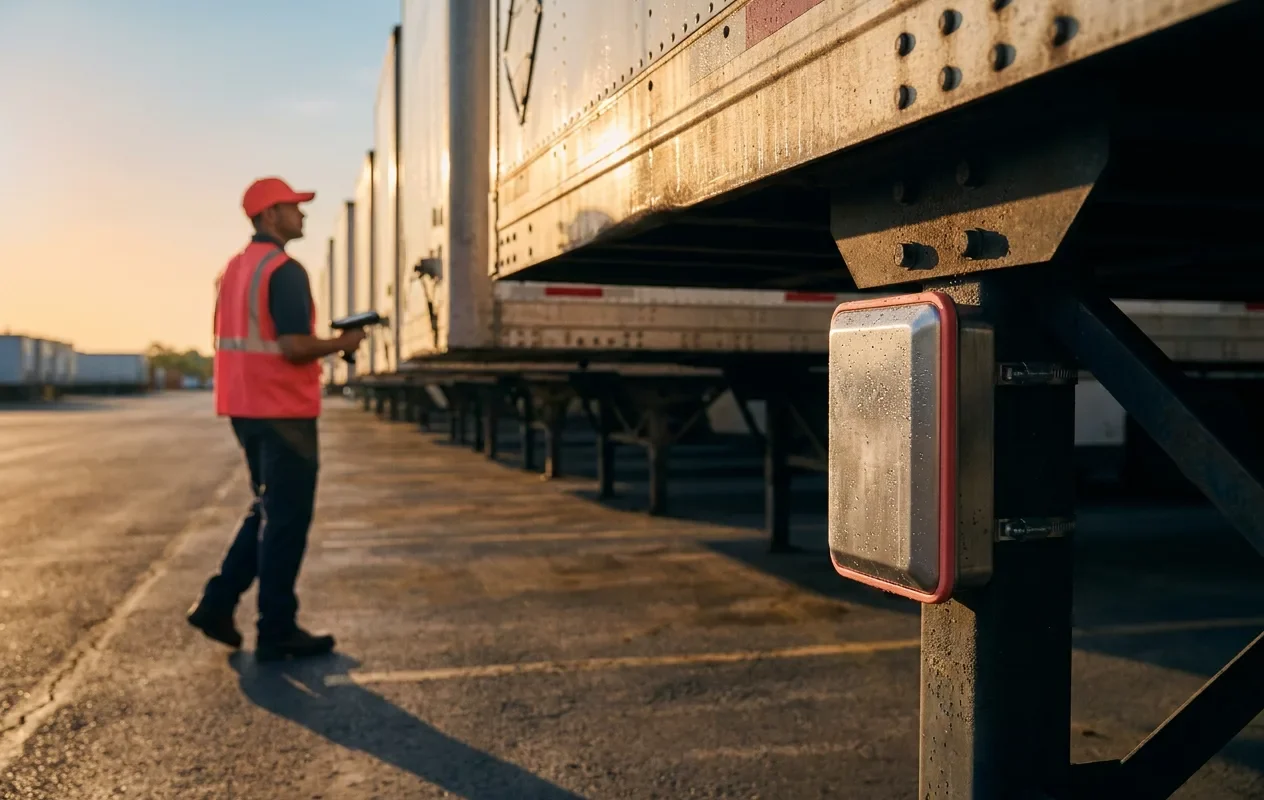
2. Real-time IoT and tracking signals. Static data is yesterday’s data. High-performing networks instrument the physical layer with GPS trackers, BLE tags, and condition sensors so that location, condition, dwell time, and exception events flow continuously. This is where the asset tracking layer plugs into collaboration: the same tag that proves a container is on the right truck also confirms the supplier shipped on time and the receiver got the right SKU.
3. AI-driven decisioning and predictive ETAs. Visibility without decision support is just a wall of dashboards. Modern networks pair their data backbone with AI that flags exceptions, predicts ETAs, scores supplier risk, and recommends actions. Predictive ETAs that learn from weather, traffic, port congestion, and historical lane performance turn collaboration from reactive to proactive.
4. Aligned incentives and governance. Technology alone never produces collaboration. Contracts, scorecards, and joint KPIs have to reward shared outcomes. The best networks define mutual service-level agreements and run quarterly business reviews against the same data both sides can see.
5. Joint workflows, not just shared dashboards. Collaboration goes live when partners co-execute. A delayed inbound shipment automatically triggers a labor reschedule at the receiving plant. A capacity shortfall at one supplier auto-routes the order to the backup. A temperature excursion at hour eight of a 24-hour run triggers a recovery plan before the cargo is lost.
How to Improve Supply Chain Collaboration: 8 Proven Strategies
The strategies below are sequenced to compound. Start at the top, and each step makes the next one cheaper and faster.
1. Map your collaboration network end to end. Document every partner, system, data flow, and handoff from raw material to end customer. Most teams discover they have 30 to 50 percent more partners than they thought, and that the highest-risk dependencies sit in places no one is monitoring.
2. Define the shared data model. Before you connect anything, agree with your top partners on canonical definitions for SKU, location, shipment, milestone, and exception. Master data discipline is unglamorous and pays for itself within the first quarter.
3. Instrument the physical layer. Add IoT visibility to assets, containers, and shipments that matter. This is where GPS trackers, BLE tags, and condition sensors create the ground truth that every digital workflow depends on. For high-value or sensitive cargo, condition monitoring is no longer optional.
4. Move from EDI to event-driven APIs. Batch EDI is fine for invoicing. It is not fine for live operations. Replace nightly file drops with event-driven APIs that push updates the moment something changes.
5. Build a control tower with predictive ETAs. Centralize incoming signals into a single view where exceptions are escalated automatically rather than spotted manually. Predictive ETAs powered by AI replace the “we will get back to you” loop that kills customer trust.
6. Embed AI co-pilots for planners and CSRs. Give your humans an AI analyst that answers questions in natural language. “Which of my inbound shipments will miss the dock window today and what should I do about it?” should take five seconds, not five emails.
7. Align KPIs and incentives. Rewrite supplier and carrier scorecards around shared metrics. Track perfect order rate, on-time-in-full, exception cycle time, and partner data quality. Make the data visible to both sides.
8. Run joint exercises against disruption scenarios. The companies that respond fastest to disruption are the ones that have rehearsed. Quarterly war games with your top three suppliers and three carriers expose weak handoffs before the next port closure does.
The hierarchy matters. Skipping the data model step almost guarantees that your IoT and AI investments produce noise instead of signal.
Real-World Examples of Supply Chain Collaboration in Action
The case studies below show what high-performing collaboration looks like in practice across each of the three types covered earlier. None of them required exotic technology. All of them required shared data, aligned incentives, and the willingness to act on the same signal.
- Walmart and Procter and Gamble (vertical). One of the longest-running collaboration partnerships in retail. By sharing point-of-sale data and replenishment signals directly with P&G, Walmart reduced stockouts on high-velocity SKUs and let P&G plan production against actual demand instead of order patterns. Both sides cut inventory and improved service.
- Land O’Lakes and Coca-Cola (horizontal). Two non-competing shippers identified overlapping lanes where one company was running empty miles back to a yard while the other needed capacity in the same direction. Combining loads cut empty miles, reduced cost-per-mile for both shippers, and lowered fuel-related emissions on shared routes.
- Unilever and the Consumer Goods Forum (full). Unilever has used a full collaboration model that includes both its supplier base and its competitors through industry bodies to advance Scope 3 emissions reduction, sustainable raw materials sourcing, and shared logistics. Industry-wide problems require industry-wide collaboration, even with competitors.
- Cisco and Intel (vertical, visibility-driven). Cisco and Intel synchronized production planning and shared real-time visibility across their joint network, allowing both companies to respond faster to component shortages and customer demand swings during multiple disruption cycles.
- Chassis Brakes International (cross-functional). A global automotive components manufacturer used a unified collaboration platform to rationalize its supplier base by more than 50 percent, standardize purchase requisition and purchase order processes, and integrate procurement with its ERP for end-to-end visibility. The lesson is that internal cross-functional collaboration is a prerequisite for external scale.
The common thread across every one of these examples is shared real-time data flowing across organizational boundaries. The technology stack varied, but the operating principle did not.
How IoT, AI, and Logistics Digital Twins Power Next-Gen Networks
The 2026 collaboration stack runs on three tightly coupled technologies. None of them works alone.
IoT is the ground truth. GPS trackers provide live location for vehicles, trailers, and high-value equipment. BLE tags provide low-cost, long-life proximity tracking for returnable containers, tools, and parts. Condition sensors track temperature, humidity, shock, and tamper events for sensitive cargo. The signal density these devices generate is what makes collaboration meaningful. Without it, partners are still trading opinions about where assets are and what condition they are in.
Real-time visibility platforms turn signal into shared state. Modern visibility platforms ingest data from carriers, ELDs, IoT devices, EDI feeds, and partner APIs, then unify it into a single live map of the network. The platform handles partner identity, role-based permissions, and data quality scoring so that everyone sees the same accurate picture.
AI and agentic systems turn shared state into action. Over 62 percent of organizations are already experimenting with agentic AI for supply chain operations, including inbound logistics agents that reroute shipments, exception-handling agents that triage delays, and supplier-risk agents that trigger backup sourcing before a stockout. Layered on top of a shared data backbone, these agents reduce the manual cycle time on collaboration tasks by 60 to 80 percent and free planners to focus on strategic decisions.
The data hallucination risk. Here is the catch nobody talks about. AI supply chain tools are useless if they are fed bad data. Without the ground-truth physical signal provided by IoT devices like deploying industrial BLE AssetTags or peel-and-stick Smart Labels, your AI control tower will simply hallucinate ETAs faster. Agentic AI without sensor-driven data is worse than no AI at all, because it produces confident answers from stale inputs. The fix is non-negotiable: AI requires clean, live, sensor-driven data flowing in continuously.
The futuristic direction is clear: collaboration networks are converging with logistics digital twins. Within the next two to three years, leading operations will run live digital replicas of their physical networks that simulate disruption scenarios, recommend mitigations, and execute decisions across partners with human approval in the loop.
Traditional vs Modern Supply Chain Collaboration: A Side-by-Side Comparison
The table below compares legacy collaboration patterns against a modern, IoT-and-AI-enabled collaboration network. Use it as a self-assessment scorecard.
| Capability | Traditional Collaboration | Modern Collaboration Network (GPX-Enabled) |
|---|---|---|
| Data Sharing | Email, phone, batch EDI | Event-driven APIs, live IoT signal from Smart Labels, AssetTag, and AssetTrack devices |
| Visibility Depth | Tier 1 only | Multi-tier visibility down to lot, container, and asset level |
| ETA Accuracy | Carrier-reported, often hours off | AI-predicted, continuously refined against live signal |
| Condition Monitoring | Post-arrival inspection | Live temperature, humidity, shock, tamper alerts in-transit |
| Exception Handling | Manual triage, email escalation | Automated alerts plus AI co-pilot recommendations |
| Partner Onboarding | Custom integrations, weeks per partner | Standard APIs and peel-and-stick Smart Labels deployable in hours |
| Audit and Compliance | Manual record reconstruction | Automatic chain-of-custody trail for Scope 3, food safety, and pharma |
| Decision Speed | Days to weeks | Minutes to hours, with Scout AI natural-language queries |
How GPX Powers Supply Chain Collaboration Across Partners
GPX Intelligence is built specifically for the multi-partner, multi-tier, real-time data model that modern collaboration networks require. The platform connects shippers, carriers, 3PLs, suppliers, and customers around shared live signal from the physical layer, with permissions and identity built in from day one.
Three GPX products do most of the heavy lifting inside a collaboration network.
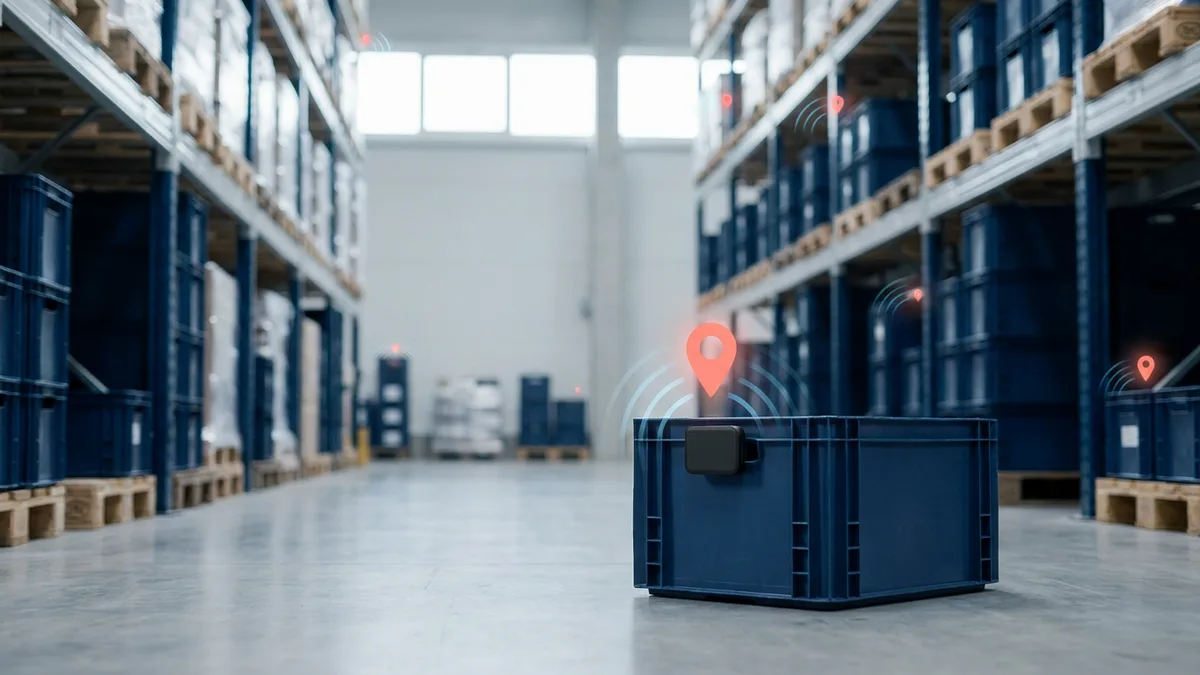
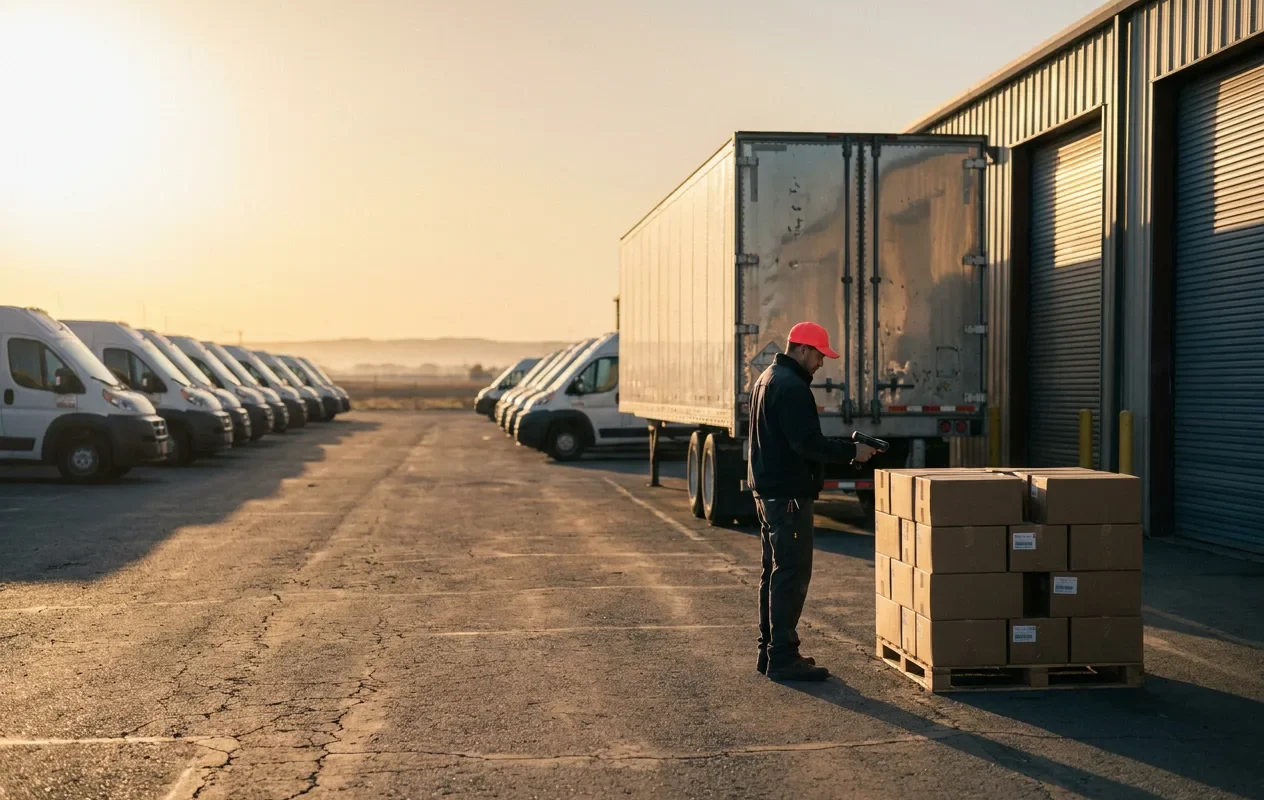
Smart Labels are peel-and-stick disposable BLE trackers, sub-1mm thick, priced at around $9.75, with 30 to 45 days of battery life. They are designed for one-way shipment tracking where hardware retrieval is impractical. For a collaboration network, Smart Labels are the easiest way to onboard a new partner. There is no install step, no charging, no reverse logistics. A supplier sticks a label on a carton and the entire network sees it the moment it moves.
AssetTag and AssetTag Edge are rugged IP67-rated BLE tags with a 5-year replaceable battery. They mount via adhesive, screws, or zip ties on returnable containers, construction equipment, medical devices, automotive parts, and any indoor or yard asset that needs proximity tracking. They give Tier 1 and Tier 2 partners a low-friction way to participate in the network for years on a single device.
AssetTrack GPS devices deliver up to 10 years of battery life on a single charge with daily reporting, plus WiFi positioning for indoor accuracy and multi-network connectivity across 4G/5G, BLE, and satellite. AssetTrack covers the long-haul, in-transit, and cross-border lanes where cellular alone falls short.
Stitching all three together is the GPX platform with Scout AI, a built-in natural-language analyst. Planners and customer service teams ask questions in plain English (“Which inbound shipments from Supplier B will miss tomorrow’s dock window?” or “Which lanes had the most temperature excursions last quarter?”) and get answers in seconds. The platform is OS-agnostic, runs on top of more than 3 billion interconnected Bluetooth gateways globally, and integrates with major ERP, TMS, and WMS systems by API. GPX serves over 50 industries with SOC 2 compliant security. Major automotive manufacturers using the platform track over 246,000 returnable containers with a 95 percent recovery rate and $2.1 million in annual savings, hitting an 18x ROI on container fleets alone.
How to Choose the Right Supply Chain Collaboration Strategy for Your Operation
There is no single right collaboration network. The right one depends on the shape of your business, your partner mix, and the specific risks you cannot afford to absorb. Use this eight-question decision framework to match strategy to operation.
1. Which type of collaboration are you actually trying to build? Vertical collaboration with your direct suppliers needs strong contracts and shared forecasts. Horizontal collaboration with peers (even competitors) needs neutral data infrastructure and antitrust-clean governance. Full collaboration needs both, plus industry-body participation. Get the type right before you choose the platform.
2. Where does your value chain start and end? If most of your risk sits in long, multi-tier inbound flows (automotive, electronics, aerospace), prioritize Tier 2 and Tier 3 visibility and supplier risk monitoring. If most of your risk sits on the outbound side (healthcare, food, retail), prioritize in-transit visibility and predictive ETAs.
3. How sensitive is your cargo? Cold chain, pharma, biologics, and high-value electronics require condition monitoring at the SKU or pallet level. Static GPS is not enough. You need temperature, humidity, shock, and tamper data flowing continuously.
4. What is the asset retrieval economics? One-way shipments, e-commerce parcels, and high-volume cartons favor disposable Smart Labels. Returnable containers, construction equipment, and yard assets favor multi-year BLE tags like AssetTag. Long-haul trailers and high-value mobile assets favor GPS trackers like AssetTrack.
5. How fragmented is your partner base? If you work with 5 suppliers and 3 carriers, a tightly integrated control tower with deep APIs may be enough. If you work with 500 suppliers across 30 countries, you need a multi-enterprise platform with self-service onboarding so partners can plug in without a six-month integration project.
6. What regulatory pressure are you under? Scope 3 emissions, UFLPA compliance, FSMA 204 food traceability, and DSCSA pharma traceability all require partner data flowing in near real time. Make sure your collaboration network produces an automatic audit trail rather than a quarterly scramble.
7. What collaboration maturity level can you realistically reach in 12 months? If you are still on Level 1 (basic transaction integration), do not chase Level 3 strategic collaboration directly. Lock in Level 2 information sharing first with your top 10 partners. Maturity is sequenced, not skipped.
8. How fast do you need to move? A full multi-enterprise rollout is a multi-quarter program. Most teams need an early win in 60 to 90 days. The fastest path is usually instrumenting your highest-risk lane with Smart Labels or AssetTag, plugging the data into a control tower, and proving ROI before scaling.
The right collaboration strategy is the one that closes your biggest visibility gap, removes the most manual handoffs, and pays for itself inside two quarters. Everything else is sequencing.
Start Building Your Collaboration Network with GPX
If your operation runs on email threads, batch EDI, and “we will get back to you” ETAs, you are paying for poor collaboration in working capital, expedited freight, and customer churn whether you can see it on the P&L or not. GPX Intelligence brings real-time IoT visibility, AI decisioning, and multi-partner workflows into a single platform designed for the way modern supply chains actually move. Talk to the GPX team about a 90-day pilot on your most critical lane and see what shared, live data does to your service levels, exception cycle time, and partner trust.
Frequently Asked Questions (FAQs)
What is supply chain collaboration and how is it different from supply chain integration?
Supply chain integration is about connecting systems so data flows between partners. Supply chain collaboration goes further. It is about partners acting on the same data at the same time to make joint decisions. Integration is plumbing. Collaboration is co-execution. A modern collaboration network needs both, but integration alone will not produce the service-level improvements that collaboration does.
How does IoT asset tracking improve supply chain collaboration?
IoT devices like GPS trackers, BLE tags, and condition sensors create the ground-truth signal that every digital workflow depends on. When all partners read the same live data about where an asset is, what condition it is in, and when it will arrive, the typical sources of friction (status update emails, conflicting ETAs, late exception escalation) disappear. GPX Smart Labels, AssetTag, and AssetTrack devices feed that signal into a shared platform so suppliers, carriers, and customers operate on the same picture.
What are the 3 types of supply chain collaboration?
The three recognized types are vertical, horizontal, and full. Vertical collaboration is cooperation between different levels of the chain, like a manufacturer working with its Tier 1 and Tier 2 suppliers, or a shipper working with a 3PL. Horizontal collaboration is cooperation between companies at the same level, often including competitors sharing transportation capacity, warehousing, or cold chain assets. Full collaboration blends both, often through industry consortia, to solve shared problems like Scope 3 emissions or empty miles. Most modern collaboration networks combine all three, layered on top of cross-functional internal alignment.
How can AI improve supply chain collaboration in real time?
AI improves collaboration in three ways. It predicts ETAs more accurately by combining IoT signal with weather, traffic, and historical lane data. It flags exceptions automatically and recommends actions to planners and CSRs. And it answers natural-language questions across the network in seconds, replacing email chains and report builders. GPX’s Scout AI lets users ask questions like “Which lanes had the most temperature excursions last quarter?” and get answers immediately, which compresses decision cycles from hours to minutes.
How does IoT reduce the bullwhip effect in supply chains?
IoT devices like GPS trackers and BLE tags provide real-time, ground-truth visibility into inventory and in-transit assets. By sharing this live signal across the network, partners stop panic-ordering safety stock based on outdated forecasts, which directly neutralizes the bullwhip effect. Demand distortions no longer amplify upstream because every tier is reading the same physical reality at the same time, rather than reacting to an inflated order from the tier below.
What is Tier-N visibility in supply chain management?
Tier-N visibility is the ability to track materials, risks, and shipments beyond your direct (Tier 1) suppliers, deep into Tier 2, Tier 3, and raw material providers. Most disruptions originate below Tier 1, where buyers have no contractual leverage and minimal data. Modern collaboration networks use multi-enterprise platforms and IoT tracking like GPX AssetTag and Smart Labels to illuminate these deep-tier blind spots, which has become a regulatory requirement under frameworks like UFLPA and Scope 3 emissions reporting.
What is the difference between a control tower and a collaboration network?
A traditional supply chain control tower gives a single company visibility into its own operations. A supply chain collaboration network (SCCN) is a multi-enterprise platform where data, AI insights, and workflows are shared simultaneously across suppliers, carriers, and buyers to execute joint decisions. A control tower is single-player. An SCCN is multi-player. The most resilient operations run a control tower on top of an SCCN so that internal visibility and external collaboration share the same data backbone.
How long does it take to see results from a supply chain collaboration initiative?
A focused pilot on a single high-risk lane or asset class typically produces measurable results in 60 to 90 days. Quick wins usually show up as reduced expedited freight spend, fewer chargebacks, and faster exception cycle times. A full multi-enterprise rollout across all partners and tiers is a multi-quarter program, but the cost of waiting is rarely justified. Most operations recover the cost of an initial GPX deployment in working capital and avoided premium freight before the second quarter ends.