
Cargo Theft Prevention: Tips and Strategies for Shippers
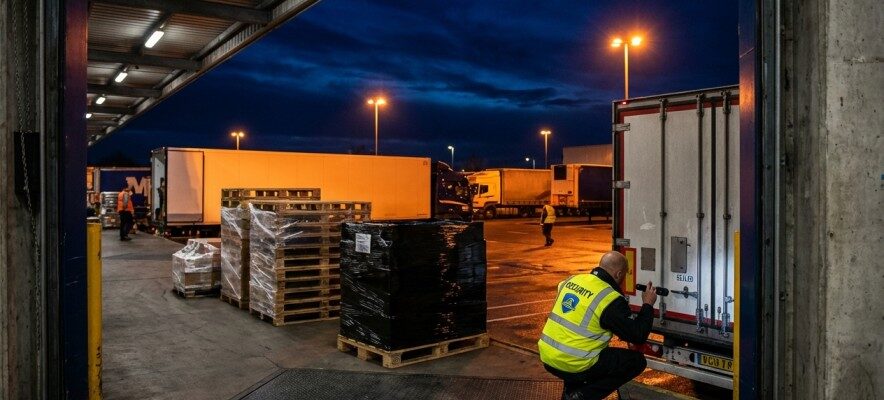

Traditional logistics security is failing because it defends against a version of cargo theft that no longer exists. Criminal syndicates have traded bolt cutters for forged digital credentials and automated load board scripts. The thieves running these operations look exactly like legitimate carriers until the moment your freight disappears.
Cargo theft losses recently hit nearly $725 million, with the average incident costing $273,990. Stopping these schemes is difficult because every verification layer has a gap. Carrier vetting databases lag behind newly registered shell companies. ELD-based tracking follows the tractor, not the trailer. Dock protocols assume the paperwork matches the person. Criminals exploit these gaps systematically, which is why shippers who rely on legacy carrier portals are effectively blind to the high-yield business model of modern theft rings.
This guide focuses on the hardware, data integration, and verification protocols that stop theft before a load disappears.
The Theft Methods That Are Draining Shippers
Modern cargo criminals are not breaking trailer doors and running. They are running coordinated operations that look exactly like legitimate logistics activity until the load disappears.
The most common tactics fall under strategic cargo theft, which covers any scheme where criminals use deception rather than force. This includes fictitious pickup where criminals pose as legitimate carriers using forged DOT and MC credentials, double brokering where a load is quietly re-brokered to an unauthorized carrier without the shipper’s knowledge, and business email compromise where hackers gain access to legitimate company emails to intercept shipment tenders and redirect deliveries. The common thread across all of them is a gap in verification.
How to Verify a Carrier From the Load Board Through the Dock
Strategic cargo theft succeeds because identity verification breaks down at two points: when the load is tendered and when the driver arrives at pickup. Closing both gaps requires a unified approach that starts the moment a carrier bids on freight.
Thieves use automated scripts to monitor digital freight matching platforms for high-value loads. The moment a premium shipment appears, their bots bid using stolen or newly registered motor carrier credentials that pass basic verification checks. These fraudulent carriers often have clean FMCSA records because the MC number was legitimately issued, then immediately sold or hijacked. The paperwork looks perfect. The insurance certificate is valid. The only problem is that the company behind it has no trucks and no intention of delivering your freight.
Counter this by requiring automated carrier vetting software that goes beyond FMCSA database checks. Look for tools that verify identity, cross-reference insurance history, flag recently issued MC numbers, and confirm operating history before tendering any shipment. If a carrier won a bid but has zero verifiable load history in the past 90 days, treat that as a red flag regardless of what their paperwork shows.
At the dock, run through these steps without exception:
- Verify the driver’s CDL, DOT number, and MC number against FMCSA records before touching the load
- Cross-reference the carrier’s contact number against what is on file with your broker, not the number the driver gives you at the dock
- Check that the carrier name on the truck door matches the BOL. A mismatch is one of the clearest signs of a double-brokered load
- Use a secure pickup code system where a unique code is required at pickup and only shared through verified channels
Facility Security and Physical Deterrents
Facility security is the first physical layer of protection and one of the most overlooked areas by shippers focused only on in-transit risk. Control dock access so only authorized personnel can enter loading areas. Install cameras at gate entry and dock doors positioned to capture facial detail. Limit who has access to shipment details and pickup schedules.
Use high-security bolt seals or electronic smart seals on every trailer door that send an immediate alert the moment they are cut. Pair your seals with physical hardware like kingpin locks, air cuff locks, and landing gear locks on every high-value trailer. These devices add a visible deterrent layer that slows a thief down long enough for an alert to fire and a response to reach them.
For high-value departures, apply a no-stop rule for the first 200 miles. Traveling four hours before stopping outlasts the patience of most origin-zone theft crews who tail trucks from the yard waiting for the first fuel or food stop.
Why Carrier Tracking Goes Blind and What Shipment-Level Hardware Actually Sees
Most shippers assume the carrier’s tracking system is watching their freight. It is not. Carrier tracking follows the truck or the driver’s device, not your specific goods. The moment a trailer is dropped in a yard, transferred to a second carrier, or sits at a terminal overnight, the signal disappears. That gap is exactly when theft happens.
Here is what you are working with when you rely on carrier tracking alone:
- Location updates every two to four hours, not in real time
- Tracking tied to the tractor, not the trailer or the goods inside it
- No alerts for unplanned stops or route deviations
- Zero visibility at terminals, drop yards, and handoff points
- No movement history if a dispute or insurance claim follows
Real-time GPS tracking deployed at the shipment level travels with the cargo itself through every handoff and every leg of the journey. It does not matter which carrier is moving it or how many times it changes hands. Your visibility never goes dark.
Here is what shipment-level hardware does while your freight moves:
- Transmits live location updates every few minutes regardless of which vehicle is carrying the load
- Fires geofence alerts the moment a shipment leaves an approved route or enters an unauthorized zone
- Sends dwell alerts when a load sits stationary in an unplanned location longer than expected, one of the clearest early signs of drop-and-hook theft
- Logs door access events so unauthorized entry is detected the moment it happens
- Builds a full timestamped movement history usable for insurance claims and law enforcement
Power Management and Battery Life for Long Dwells
Technical buyers evaluating covert trackers need assurance that the device will stay active for the entire journey, including extended dwells at terminals, cross-docks, and weekend yard holds. Motion-activated reporting is the key to extended battery life. When the trailer is moving, the tracker transmits at frequent intervals. When the trailer sits stationary, the device drops into a low-power monitoring state and wakes instantly on motion detection.
This power management approach ensures devices remain operational through multi-week shipments, ocean container transits, and rail intermodal moves where cargo may sit untouched for days between active legs. Before committing to hardware, verify the manufacturer’s stated battery life against your longest lane and your worst-case dwell scenario, not your average shipment profile.
How BLE Sensors Detect Theft Before the Trailer Moves
GPS tracking tells you where the trailer is. Bluetooth Low Energy sensors tell you what is happening inside it. BLE light sensors, humidity detectors, and temperature probes mounted inside the cargo space provide environmental monitoring that catches theft attempts before the tractor ever moves.
When a trailer door opens at an unauthorized location, the BLE light sensor detects the sudden change in ambient light and triggers an immediate alert. This catches theft attempts at truck stops, drop yards, and overnight parking locations where criminals typically cut seals and inspect cargo before deciding whether to take the entire load or cherry-pick high-value items.
For temperature-sensitive freight, BLE environmental monitors serve a dual purpose. They satisfy cold chain compliance requirements while also detecting unauthorized access. A sudden temperature spike in a refrigerated trailer parked at a secure yard at 2 AM tells you the door was opened, even if the GPS shows the trailer has not moved an inch.
Defeating GPS Signal Jamming and Spoofing
Organized theft rings know that shippers use GPS tracking. Their countermeasure is signal jamming, using illegal broadcasting devices to block cellular and GPS frequencies within a localized radius. When the jammer is active, standard tracking hardware goes silent. Your dashboard shows the last known location, but the trailer could be anywhere.
Modern anti-jamming tracking hardware detects signal interference and responds automatically. When the primary cellular or GPS frequency is blocked, the device switches to low-frequency fallback networks or alternative transmission protocols to push its coordinates. Some units store location data locally during a jamming event and transmit a burst of historical coordinates the moment the interference ends, giving your team a breadcrumb trail even through a blackout window.
If your current tracking hardware does not include anti-jamming capabilities, treat high-value loads through known theft corridors as priority candidates for upgraded devices.
Data Security and Encrypted Transmission
Tracking data reveals the real-time location of high-value assets. If that transmission is not secured, criminals can intercept the signal and use your own visibility tools against you. Enterprise-grade tracking hardware encrypts location data from the device through the cellular network to the platform dashboard.
Before selecting a tracking provider, verify that the platform uses end-to-end encryption for all data transmission and that access controls allow you to restrict dashboard visibility to authorized personnel only. The same data that helps your security team recover a stolen load becomes a liability if it leaks to the wrong hands.
TMS API Integration for Automated Theft Detection
A tracking device that sends data to a standalone portal creates a visibility gap. Your dispatcher monitors the TMS. Your security team monitors the tracking app. Neither sees the complete picture without toggling between systems, and that friction slows response times when minutes matter.
Modern tracking platforms solve this with TMS API integration. Location data flows directly into your Transportation Management System the moment it is transmitted. The system automatically correlates the live GPS position with the scheduled route and issues instant automated alerts to the security team the second a geographic anomaly occurs. No manual monitoring required. No separate login. No delay between detection and notification.
For operations managing high-rate freight across multiple lanes, this integration layer is what makes real-time tracking operationally viable. Dwell alerts, geofence breaches, and route deviations appear on the same dashboard your team already watches.
Is Your Cargo on Their List? The Commodities Thieves Target Most
Not every load carries the same risk. Knowing which commodities are highest on criminal target lists helps you allocate your security resources where they matter most.
| Commodity | Risk Level | Why Thieves Target It | Key Protection |
|---|---|---|---|
| Enterprise Electronics | Very High | High resale, easy to move fast | Covert GPS, geofence alerts |
| Food and Beverage | High | Evidence disappears quickly, hard to trace | Real-time tracking, secure yards |
| Pharmaceuticals | Very High | High value, black market demand | Full shipment visibility, tamper alerts |
| Copper and Metals | High | Easy to scrap and sell anonymously | Facility security, outbound GPS |
| Automotive Parts | Medium-High | High demand, hard to identify once separated | Carrier vetting, route monitoring |
Response and Recovery: The 24-Hour Window
A real-time alert is only as valuable as the response behind it. 90% of successful cargo recoveries happen within the first 24 hours. Every minute between the alert and the response is a minute that criminals use to create more distance.
Lock in these steps before your next high-value load departs:
- Assign a specific person responsible for receiving and acting on theft alerts at any hour
- Establish a protocol for immediate driver contact the moment an alert triggers
- Know your insurance carrier’s notification requirements so documentation begins within minutes
- Use your tracking platform’s movement history to give law enforcement an accurate last-known-location fast
Cargo theft often crosses multiple jurisdictions within hours, and local departments do not always have visibility into regional theft patterns or active recovery operations happening two states away. Data-sharing networks like CargoNet and the Transported Asset Protection Association (TAPA) exist specifically to speed up multi-jurisdictional recoveries. These consortiums aggregate theft reports, track criminal patterns across regions, and coordinate with law enforcement agencies nationwide. When you report a theft through CargoNet, the alert goes out to law enforcement contacts across the likely recovery corridor simultaneously, not sequentially.
For shippers moving high-value freight regularly, membership in these networks should be part of your theft response infrastructure, not an afterthought once something goes missing.
How to Stack the Right Layers So Cargo Theft Has No Way In
Cargo theft prevention works best as a layered system. No single measure stops every threat, but combining the right tools and protocols closes most of the gaps criminals rely on.
Start at the carrier vetting stage using AI tools before a load is even assigned. Build secure pickup protocols into your standard operating procedure so verification is never skipped. Extend your tracking layer to the shipment itself using supply chain visibility tools that cover the full journey from warehouse through final delivery. Set geofence alerts on every high-value load before it departs. Select hardware that supports Firmware Over-the-Air (FOTA) updates so your anti-jamming protocols and power management settings can be updated remotely as criminal tactics evolve.
Brief your team on current strategic cargo theft tactics. Most schemes have a human element that technology alone cannot close. A warehouse employee who recognizes a suspicious pickup, a driver trained to identify fictitious stop requests, and a team that drills consistent security protocols are as important as any alert system. Layer the human awareness on top of the technology, and you cover the gaps that neither can close alone.
Adding shipment-level tracking does not require a major infrastructure investment. A single GPX SmartLabel starting as low as $10 per unit delivers real-time visibility, geofence alerts, and tamper detection on any outbound load. For shippers looking to close the visibility gap without committing to an enterprise rollout, one label per high-value shipment is where theft prevention starts.
Frequently Asked Questions (FAQs)
How do BLE sensors detect cargo theft before a trailer is moved?
Bluetooth Low Energy (BLE) sensors provide environmental monitoring inside the trailer. Shippers use BLE light sensors, humidity detectors, and temperature probes to trigger immediate alerts if trailer doors are opened in an unauthorized location. This catches theft attempts at truck stops or drop yards before the tractor even moves.
What is GPS signal jamming and how can shippers defeat it?
Signal jamming occurs when criminals use illicit broadcasting devices to block cellular and GPS frequencies, preventing trackers from sending location data. Shippers can defeat this by deploying tracking hardware equipped with anti-jamming technology. These devices automatically detect signal interference and switch to low-frequency fallback networks to transmit their coordinates.
How does TMS API integration speed up stolen freight recovery?
A Transportation Management System (TMS) API integration allows tracking data to flow directly into a central dashboard. Instead of relying on manual monitoring, the system automatically correlates the live GPS location with the scheduled route and issues instant automated alerts to the security team the second a geographic anomaly occurs.
How do criminals exploit digital load boards to intercept cargo?
Thieves use automated scripts to monitor digital freight matching platforms for high-value loads. They then use stolen or newly registered motor carrier credentials to win the bid. Shippers must counter this by using automated carrier vetting software to verify identity, insurance, and operating history before tendering the shipment.
What is the 200-mile no-stop rule for high-value freight?
The no-stop rule requires drivers to travel at least 200 miles or four hours from the pickup point before stopping for fuel or rest. This strategy outlasts the patience of origin-zone theft crews who typically tail trucks from the warehouse waiting for an immediate opportunity to strike.
How do electronic smart seals improve on-dock security?
Electronic smart seals go beyond traditional bolt seals by integrating with your tracking platform. If the seal is cut or tampered with, it triggers an immediate digital alert with a GPS timestamp, allowing your security team to respond to a breach while the cargo is still at the terminal or yard.