Inventory Management: How It Works, Benefits & Future Trends


Inventory management is the discipline that keeps cash from sitting idle and customers from hearing “out of stock.” It’s more than counting units—it connects purchasing, storage, fulfillment, and forecasting so every team works from the same truth. When that truth is wrong or delayed, businesses overbuy, miss sales, and spend more on labor and expedited shipping to recover. The best programs pair clear processes with modern tools that improve accuracy, automate routine decisions, and surface issues early. Because the most expensive inventory problems are usually the ones you don’t notice until they’ve already hit the bottom line.
Revenue leakage often starts with what businesses can’t see. Poor inventory visibility can quietly drain a significant portion of annual earnings, while companies with strong inventory controls operate with lower costs and far fewer stockouts. When inventory data is inaccurate or delayed, teams make reactive decisions that lead to excess stock, missed sales, and wasted capital.
Modern operations require more than just knowing where products are located. It requires a synchronized approach where real-time data informs every stage of the supply chain, from procurement to final delivery. Without this high-level coordination, businesses struggle to maintain the agility needed to respond to sudden shifts in consumer demand or global logistical disruptions.
Inventory management: the strategic process of ordering, storing, tracking, and controlling stock: has moved from a back-office task to a critical competitive requirement. Let’s see how effective inventory control works, the financial advantages it delivers, and the technologies that are reshaping how modern operations manage inventory with greater precision and confidence.
Understanding Inventory Management: Definition and Fundamentals
What is Inventory Management?
Inventory management is the systematic process of organizing your entire product ecosystem, ensuring you have the right products in the right quantities at the right locations. It encompasses everything from procurement and warehousing to fulfillment and analytics, creating a seamless flow of goods throughout your business.
Why Reliable Inventory Management Matters in Today’s Market
In today’s volatile market, where 72% of SMEs report unpredictable delivery times, effective inventory management has evolved from a back-office function to a strategic imperative. This is because, as we’ve seen, poor inventory practices can lead to significant revenue loss and tied-up capital.
Types of Inventory in Business Operations
Understanding your inventory categories is the foundation of effective management:
- Raw Materials: Unprocessed inputs for manufacturing
- Work-in-Progress (WIP): Partially completed products
- Finished Goods: Completed products ready for sale
- Maintenance, Repair, and Operations (MRO): Supporting supplies
- Safety Stock: Buffer inventory against supply chain disruptions
Each category demands different handling, storage, and turnover targets. One-size-fits-all approaches inevitably lead to inefficiency and lost profits.
Why Reliable Inventory Management Matters in Today’s Market
The stakes have never been higher. Excess inventory ties up an average of 38% of business working capital—dead money that could fuel growth or innovation. Meanwhile, stockouts drive 70% of affected customers directly to competitors.
With consumer expectations rising and global supply chains perpetually vulnerable, precision inventory management isn’t just good business—it’s survival.
The Business Impact: Key Benefits of Strategic Inventory Management
Cost Reduction and Improved Cash Flow
Optimized inventory transforms your balance sheet immediately. By reducing excess stock, you’ll slash holding costs (typically 20-30% of inventory value annually) while freeing capital for strategic initiatives.
Companies implementing advanced inventory management report 10-30% reductions in inventory costs while maintaining or improving service levels. One distribution company saved $1.2 million annually just by eliminating emergency shipments after implementing GPS-enabled tracking.
Enhanced Customer Satisfaction and Loyalty
When you can confidently promise availability and delivery dates, you transform the customer experience from hope to certainty. Businesses with real-time inventory tracking achieve 99%+ order accuracy rates, converting one-time buyers into loyal advocates.
Companies with superior inventory management see 15-20% lower cart abandonment rates and 23% higher customer retention than industry averages—metrics that directly impact revenue and growth.
Optimized Warehouse Operations and Efficiency
Efficient inventory management transforms your warehouse operations. Order picking speed increases 25-50% with precise location data, while receiving processes accelerate by 30% with mobile scanning technology.
One mid-sized fulfillment center reduced workforce requirements by 20% while increasing order volume by 40% after implementing comprehensive tracking—efficiency gains that directly improve margins.
Data-Driven Decision Making and Forecasting
Real-time inventory visibility enables predictive capabilities that transform decision-making from reactive to proactive. Companies leveraging advanced analytics report forecast accuracy improvements of 10-20%, while those using AI-powered systems reduce forecasting errors by up to 50%.
This precision translates directly to leaner inventories and improved service levels across all channels.
Reduction in Stockouts and Overstock Situations
Modern tracking systems make the perpetual inventory dilemma—too much or too little—manageable. Businesses implementing automated reorder points and real-time monitoring reduce stockouts by 50-80% while cutting excess inventory by 20-30%.
One electronics retailer using real-time tracking for in-transit inventory identified a trending product early and captured $5 million in additional revenue by adjusting inventory levels before competitors recognized the opportunity.
Top Inventory Management Challenges and How to Overcome Them
Supply Chain Disruptions and Unpredictability
Today’s volatile global environment makes disruptions the norm rather than the exception.
Solution: Implement multi-source supply strategies and real-time visibility tools like GPS tracking for early detection of bottlenecks, allowing proactive rerouting before delays cascade throughout your supply chain.
Inaccurate Forecasting and Demand Planning
Traditional forecasting methods fail to capture rapidly changing demand patterns.
Solution: Deploy AI-powered demand sensing with machine learning algorithms that incorporate real-time sales data, social media trends, and even weather forecasts to enable dynamic inventory adjustments based on actual consumption.
Manual Processes and Human Error
Manual inventory processes suffer from error rates as high as 35% in paper-based systems.
Solution: Implement automated data capture through barcode scanning, RFID, and IoT sensors integrated with cloud-based inventory management systems for near-perfect accuracy.
Multi-Channel Inventory Synchronization
Selling across physical stores, e-commerce platforms, and marketplaces creates complex synchronization challenges.
Solution: Deploy centralized inventory management systems with real-time integration across all sales channels to prevent overselling and optimize inventory distribution.
Balancing Stock Levels Across Multiple Locations
Determining optimal stock distribution across multiple warehouses or retail locations exceeds human capacity.
Solution: Leverage advanced inventory optimization algorithms that factor in geographic demand patterns, shipping costs, and service requirements, supported by real-time location intelligence.
Inventory Management Methods and Systems: Finding Your Fit
Traditional Inventory Management Methods
- Just-in-Time (JIT): Receiving goods only when needed for production or sales. Ideal for predictable demand but vulnerable to disruptions.
- Economic Order Quantity (EOQ): Mathematical model calculating optimal order quantities by balancing ordering and holding costs. Perfect for stable demand patterns.
- ABC Analysis: Prioritizes inventory by value: A items (20% of inventory, 80% of value) receive highest control, B items moderate oversight, C items minimal attention.
- FIFO, LIFO, and FEFO: First-In-First-Out, Last-In-First-Out, or First-Expired-First-Out rotation methods determining which stock moves first.
- Vendor-Managed Inventory (VMI): Suppliers monitor and replenish your stock, simplifying operations while ensuring availability.
Modern Inventory Management Technologies
- Inventory Management Software: Centralizes all inventory data and operations with real-time visibility, automated alerts, and comprehensive reporting.
- Cloud-Based Systems: Provide anywhere, anytime access without hardware requirements, scaling seamlessly with business growth.
- AI-Powered Optimization: Algorithms analyze vast datasets to identify patterns invisible to humans, generating dramatically more accurate demand forecasts.
Implementing Modern Inventory Tracking Technologies
| Technology | Accuracy Level | Relative Cost | Best Use Case | Key Limitation |
|---|---|---|---|---|
| Barcode Systems | High (Manual) | Low ($) | Retail and Small Warehouses | Requires direct line-of-sight |
| RFID | Near-Perfect | Medium ($$) | High-volume distribution centers | Signal interference with metal/liquids |
| GPS Tracking | Pinpoint (Global) | High ($$$) | Fleet management and transit monitoring | Outdoor use only; high power usage |
| BLE/IoT | Room-Level | Medium ($$) | High-value asset tracking (Indoor) | Limited range (30-50 meters) |
Barcode Systems: The Foundation of Inventory Tracking
Barcode scanning provides cost-effective, reliable tracking for businesses of all sizes. Implementation costs range from $3,000-$25,000 for small to mid-sized operations, with ROI typically achieved within months through improved accuracy and efficiency.
Barcode labels cost pennies (typically $0.01-$0.05 each), and mobile scanning applications have dramatically reduced hardware requirements, making this the ideal starting point for businesses transitioning from manual processes.
RFID Technology for Automated Inventory Management
RFID tags can be read without direct line-of-sight and scanned simultaneously—increasing counting speed by up to 95% over barcode systems. While passive RFID tags cost more than barcodes ($0.10-$1.00 per tag), implementation costs have fallen by 60% since 2020.
For high-volume operations, the efficiency gains often justify the investment within 12-18 months, with one retail chain reducing annual inventory counting costs from $275,000 to just $45,000 after implementation.
GPS, BLE, and IoT for Real-Time Inventory Visibility
For businesses managing mobile assets or high-value inventory, advanced tracking technologies provide unprecedented control:
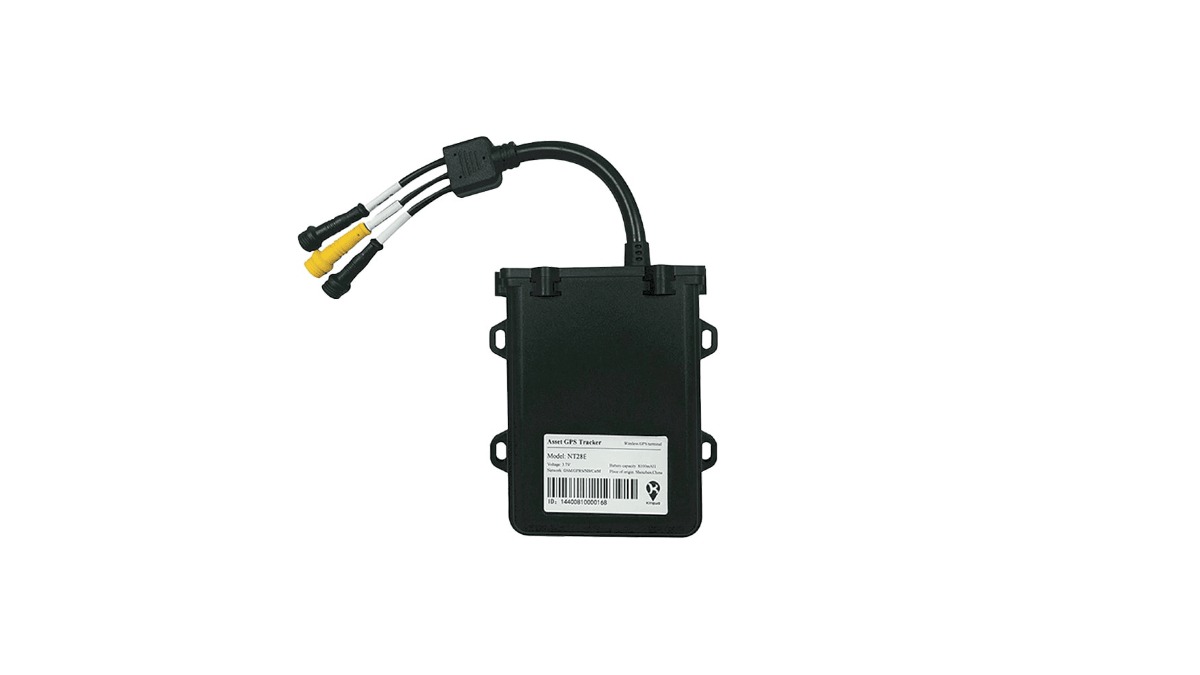
GPS Tracking: Provides global positioning for vehicles, trailers, and containers. Platforms like GPX Intelligence combine location data with predictive analytics to transform logistics operations, monitoring international shipments with pinpoint accuracy.
Bluetooth Low Energy (BLE): Offers indoor asset location within warehouses or retail environments. BLE beacons ($15-30 each) provide room-level accuracy with minimal infrastructure.
IoT Sensors: Monitor not just location but condition—temperature, humidity, shock—preventing damage to sensitive inventory like pharmaceuticals or electronics while documenting compliance.
These technologies deliver actionable intelligence on asset utilization, route efficiency, and environmental conditions, with rapidly improving ROI as implementation costs continue to fall.
Inventory Management Software: Choosing the Right Solution
- Key Features: Prioritize real-time visibility, integrated scanning, demand forecasting, comprehensive reporting, automated alerts, multi-location management, and mobile accessibility.
- Cloud vs. On-Premise: Cloud platforms offer lower upfront costs ($100-$1,000/month), automatic updates, and anywhere accessibility. On-premise systems provide greater control and customization at higher initial cost ($5,000-$100,000+).
- Integration Capabilities: Ensure seamless connection with your technology ecosystem—ERP, e-commerce, POS, accounting, and shipping systems—through pre-built integrations and robust APIs.
- Scalability: Assess capacity limitations, cost structure as volume increases, and international capabilities. Cloud-based systems typically offer the greatest scalability with tiered pricing aligned to business growth.
Inventory Management Is Evolving: Trends That Matter Most
- AI and Machine Learning: Advanced algorithms generate demand forecasts with up to 50% greater accuracy than traditional methods, with adoption growing 275% year-over-year as costs decrease and implementation simplifies.
- Blockchain: Distributed ledgers verify authenticity and provenance while reducing paperwork and preventing counterfeiting, with implementation now accessible to mid-sized businesses starting at $5,000-$20,000.
- Automation and Robotics: Automated storage systems and autonomous robots transform warehouse operations, working 24/7 with near-perfect accuracy. While full automation requires significant investment, modular approaches allow phased implementation with faster ROI.
- Sustainable Practices: Environmental initiatives including AI-optimized ordering, packaging reduction, and local sourcing deliver both environmental benefits and tangible financial returns.
- Omnichannel Optimization: Unified inventory management across all channels provides real-time synchronization, with retailers reporting 15-25% inventory reduction and 20-30% higher full-price sell-through after implementation.
Take Your Inventory Management to the Next Level
With ongoing global tensions, shifting trade policies, changing tariffs, and constant supply chain disruptions, managing inventory has become more challenging than ever. Businesses can no longer rely on static forecasts or manual processes to keep operations running smoothly. Visibility, accuracy, and adaptability are now critical to navigating uncertainty and maintaining control over inventory.
In this environment, modern inventory management is a necessity, not an upgrade. Technologies like RFID, GPS asset tracking, and AI-driven demand forecasting help companies respond faster, reduce risk, and make smarter decisions with limited capital. Failing to act carries real costs, from lost customers due to stockouts to cash locked in excess inventory. Strengthening inventory management today is an investment in stability, resilience, and long-term competitiveness.
Frequently Asked Questions (FAQs)
What is a good inventory turnover ratio?
A good turnover ratio depends on the industry. Strong performers often fall between 5–10, with some retailers exceeding that. The key is improvement over time. What’s healthy for manufacturing may be risky for grocery or perishable goods. Focus on optimizing turnover for your business model rather than chasing a fixed number.
How does inventory management reduce costs?
Effective inventory management lowers carrying costs, reduces emergency shipping, prevents stockouts, and frees up cash tied up in excess inventory. By keeping stock levels aligned with demand, businesses improve service while reducing wasted spend.
What are common inventory management techniques?
Common techniques include ABC analysis to prioritize high-value items, cycle counting for accuracy, FIFO or FEFO rotation to reduce obsolescence, and just-in-time replenishment. The best results come from combining multiple methods into a unified approach.
How can technology improve inventory management?
Technology improves visibility and accuracy through barcodes, RFID, GPS tracking, and IoT sensors. Advanced analytics and AI help forecast demand more accurately, increasing inventory turns, lowering costs, and improving product availability.