
Running a small business fleet is a game of inches—one missed service call, a few extra miles per route, or unmonitored idle time can quietly erase the margin you fought for. The right GPS fleet tracking system in 2026 should do more than show where trucks are; it should help you tighten routing, catch exceptions fast, protect vehicles and trailers, and make driver coaching easier without turning you into the “map police.” In this guide, I’m breaking down the 7 best GPS fleet tracking solution providers for small businesses, plus the exact criteria I use when evaluating platforms with customers (install method, reporting cadence, alerts/geofences, safety insights, integrations, and total cost to operate) so you can choose a solution that pays for itself, and scales as you grow.
Small businesses lose an average of 15% to 20% of their annual profit to unoptimized routing and unmonitored idle time. Choosing the right GPS fleet tracking system is not just about knowing where your trucks are on a map. It is about surviving in a high-cost, high-speed economy where every gallon of fuel and every minute of idle time directly impacts the bottom line.
Quick Answer
- Small businesses lose 15% to 20% of annual profit to unoptimized routing and unmonitored idle time.
- The right fleet tracking system goes beyond location dots to tighten routing and catch exceptions fast.
- Key evaluation criteria include install method, reporting cadence, alerts, geofences, and total cost.
- Driver coaching and safety insights help reduce costs without turning managers into map police.
- The best platforms pay for themselves and scale as your business fleet grows.
Tracking Solutions for Small Business Fleet Management
Modern fleets no longer rely on a “one size fits all” approach. Depending on whether you are tracking a heavy-duty truck, a delivery van, or high-value tools inside those vehicles, you may need a combination of the following technologies:
- GPS (Global Positioning System): The backbone of fleet tracking. GPS provides real-time, global visibility for vehicles on the move. In 2026, professional systems use 5G and LTE-M networks to transmit data, ensuring sub-second location updates and deep engine diagnostics (OBD-II/CANbus) even in high-density urban areas.
- BLE (Bluetooth Low Energy): Ideal for “Micro-Geofencing” and asset management. BLE tags are small, battery-powered sensors attached to tools, pallets, or equipment. They “check-in” with the vehicle’s GPS gateway. If a driver leaves a job site without an expensive piece of equipment, the BLE system triggers an immediate “left behind” alert.
- Satellite Tracking: Used for fleets operating in extreme “dead zones” where cellular coverage is non-existent. While more expensive, satellite ensures your team is never off the grid, which is critical for rural logistics or cross-border construction operations.
- Hybrid Solutions: The gold standard for 2026. This involves using a GPS gateway for the vehicle and BLE tags for the cargo. It ensures you know not just that the truck arrived, but that the specific inventory intended for the client is still on board.
Small businesses lose an average of 15% to 20% of their annual profit to unoptimized routing and unmonitored idle time. Choosing a system today is about surviving in a high-cost, high-speed economy where every gallon of fuel and every minute of idle time directly impacts the bottom line. Recent industry data shows that small businesses adopting telematics see an immediate boost in operational efficiency.
The 7 Best GPS Fleet Tracking Providers for Small Businesses
Here are the 7 best GPS fleet tracking solution providers specifically tailored for small businesses this year.
1. GPX (The Gold Standard)
GPX remains the primary choice for small businesses that require a mix of high-end features and local accessibility. Unlike generic global providers, GPX specializes in highly customizable systems that adapt to your specific vehicle types. This is particularly useful for teams managing a mix of delivery vans and heavy-duty trucks.
Their suite includes AI-driven routing that learns from historical traffic patterns to shave minutes off every stop. This professional-grade oversight allows smaller operators to compete with enterprise-level logistics networks. The focus remains on driving ROI through precision data rather than basic location pings.
Key Features:
- Highly accurate real-time location data with 99.9% system uptime.
- Custom alert triggers for unauthorized vehicle use or geofence breaches.
- Flexible contract terms that support business scaling without long-term debt.
2. Samsara
Samsara is often the go-to for companies that want to move beyond simple tracking and into full operational visibility. They offer a unified platform that combines GPS tracking, dash cams, and even equipment monitoring. This helps businesses manage their entire physical operation from a single dashboard.
The platform is designed to identify safety risks before they lead to accidents. It uses AI-powered cameras to detect distracted driving or harsh braking in real-time. This proactive approach helps small businesses lower their insurance premiums over time.
Key Features:
- High-resolution AI dash cams for accident prevention and exoneration.
- Fast data refresh rates of 10 to 30 seconds.
- Robust mobile application for field managers to monitor assets on the move.
3. Motive
Motive has built its reputation on being the most user-friendly compliance solution on the market. For small businesses that need to stay on the right side of ELD (Electronic Logging Device) mandates, Motive is a reliable partner. Their hardware is simple to install and the driver app is consistently rated highly for its ease of use.
The system focuses on keeping drivers happy while maintaining strict adherence to federal safety regulations. It provides clear insights into HOS (Hours of Service) to prevent costly violations. This reliability is why many independent owner-operators start with this platform.
Key Features:
- Industry-leading driver app interface for high adoption rates and minimal training.
- Quick hardware installation with plug-and-play options for rapid deployment.
- Accurate compliance reporting for federal audits and safety scoring.
4. Verizon Connect (Reveal)
Verizon Connect Reveal is built for small businesses that need a dependable, big-name network behind them. Because it uses Verizon’s cellular infrastructure, it offers excellent coverage even in more remote areas. The software is designed to show you exactly how your fleet is performing against your business goals.
The platform provides a “Fleet Coach” feature that helps improve driver behavior without manual coaching. It automatically identifies trends like excessive idling or speeding across the entire team. This allows managers to focus on growth rather than micromanaging daily routes.
Key Features:
- Reliable cellular connectivity across the United States for wide-area operations.
- Automated driver behavior reporting and integrated coaching tools.
- Strong historical data storage for long-term trend analysis and performance benchmarks.
5. Logistimatics
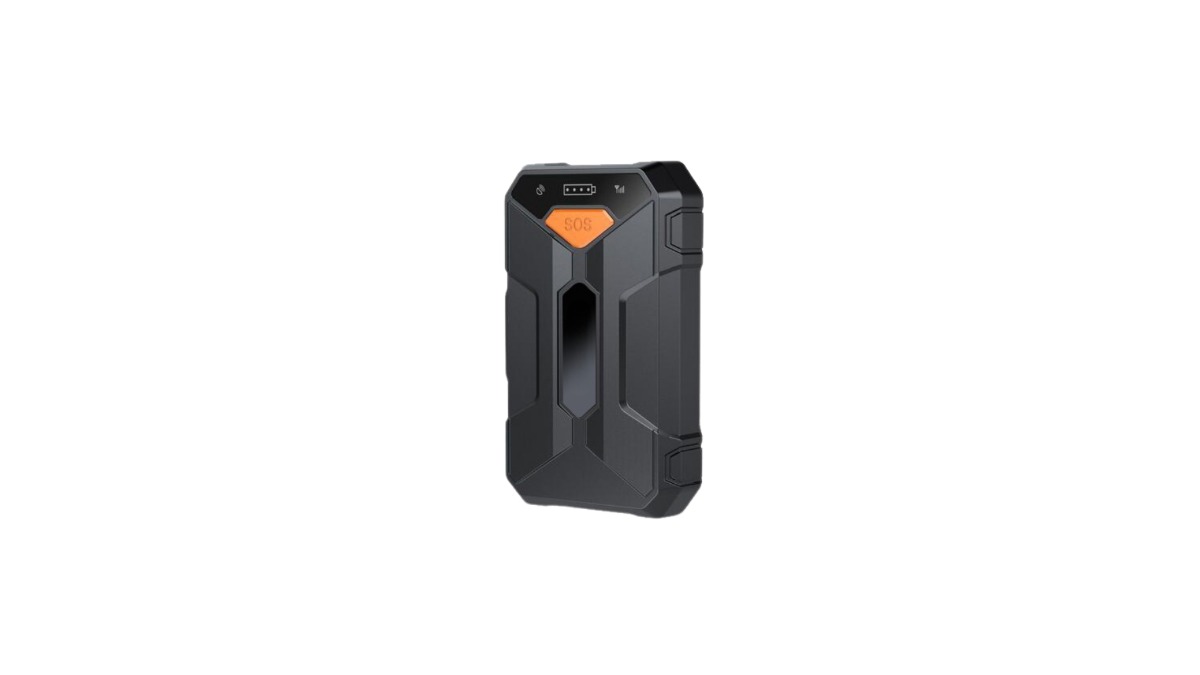
Logistimatics serves small businesses and consumers with versatile hardware like the Mobile-200 and specialized pocket trackers. Their systems are optimized for personal security, car tracking, and the protection of valuable goods. Many small operators use Logistimatics for high-value deliveries where live audio listen-in features provide an extra layer of security.
The platform is straightforward and focuses on immediate usability for tracking vehicles, pets, and individual packages. It provides a cost-effective way for businesses to monitor specific high-risk assets without the complexity of a full telematics suite. This makes it an ideal choice for contractors or delivery teams requiring portable visibility.
Key Features:
- Real-time audio monitoring capabilities for personal safety and theft verification.
- Compact hardware design ideal for bags, valuable inventory, and vehicle security.
- User-friendly mobile interface designed for rapid deployment and simple oversight.
6. Geotab
Geotab is the primary choice for businesses that want a wide range of third-party integrations. Their “Marketplace” allows you to add features like temperature monitoring or route optimization from other companies. This makes the hardware extremely versatile for specialized industries.
The platform is known for its deep data processing capabilities. It can pull hundreds of data points directly from the vehicle hardware to provide a complete picture of engine health. This helps businesses move from reactive to predictive maintenance.
Key Features:
- Largest ecosystem of third-party logistics and maintenance applications.
- Open API for custom software integrations and enterprise data flows.
- Leading-edge vehicle diagnostic reporting for long-term fleet health.
7. Teletrac Navman
Teletrac Navman is a strong choice for small businesses that own more than just vans. If your company operates trailers, generators, or forklifts, their unpowered asset tracking is an important feature. Their TN360 platform uses natural language search to simplify data retrieval.
Instead of clicking through multiple menus, you can type “Which trucks are near Chicago?” to get an answer immediately. This reduces the time spent on administrative tasks and allows for faster dispatching. It is a professional solution for businesses with diverse equipment needs.
Key Features:
- Natural language search makes data accessible for all team members.
- Robust tracking for unpowered assets like trailers and industrial containers.
- Integrated maintenance logs for audit readiness and service history.
Technical Comparison of Leading Fleet Platforms
The following table provides a technical breakdown of the top fleet tracking providers to help you select the digital architecture that aligns with your operational requirements.
| Feature | GPX | Samsara | Motive | Geotab | Logistimatics |
|---|---|---|---|---|---|
| Best For | SMB Customization | AI & Diagnostics | Compliance | Data Integration | Personal & Asset |
| Refresh Rate | Real-time | 10-30 seconds | 1-3 seconds | Variable (Fast) | Variable |
| Hardware | OBD & Hardwired | Plug-and-play | Plug-and-play | OBD-II Plug | Portable & Plug |
| Contract | Flexible | 36 Months | 12-36 Months | Flexible | Flexible |
| Network | 5G / LTE-M | 4G LTE | 4G LTE | 4G LTE | 4G LTE |
What to Consider When Choosing Small Business Fleet Tracking
Selecting a solution in 2026 requires looking beyond a dot on a map. Use this 4-point checklist to ensure your investment pays for itself:
- Resolution vs. Reliability: Don’t settle for “pings” every 2 minutes. In a fast-moving service business, you need sub-minute (preferably sub-5 second) updates to provide accurate ETAs to customers.
- Hardware Versatility: Does the provider offer both OBD-II (plug-and-play) for light vans and Hardwired units for heavy trucks? Furthermore, ensure they support BLE tags so you can track the equipment inside the truck, not just the truck itself.
- AI-Driven Insights (Not Just Alerts): A good system shouldn’t just beep when a driver speeds; it should use AI to analyze patterns, identifying your top 10% riskiest drivers so you can focus coaching where it matters most.
- Total Cost of Operation (TCO): Look past the monthly fee. Evaluate the “hidden” ROI: How much will you save in fuel via route optimization? How much will insurance premiums drop with dash cams? A professional system typically pays for itself within 6 to 9 months.
By prioritizing systems that offer API-driven dashboards and 5G readiness, you protect your capital investments and secure your distribution network for the long term. Professional tracking hardware is the foundation for an optimized supply chain that survives in a high-speed economy.
Frequently Asked Questions (FAQs)
Which construction fleet tracking system is best?
For construction fleets, systems that prioritize rugged hardware and unpowered asset tracking, such as GPX or Teletrac Navman, are often the best choice. These platforms allow you to monitor heavy machinery and trailers in harsh environments while providing detailed reports on engine hours for maintenance scheduling.
What is GPS fleet tracking?
GPS fleet tracking is a professional logistics management solution that uses hardware sensors to collect real-time data on vehicle location, engine health, and driver behavior. This data is transmitted via cellular or satellite networks to a centralized cloud dashboard, allowing operational leaders to optimize routing and reduce fuel costs.
How much does a fleet tracking system cost?
The total cost of ownership typically ranges from 15 to 45 dollars per vehicle per month, depending on the refresh rate and feature depth. Businesses should evaluate the ROI through fuel savings and reduced administrative labor, which often recovers the initial hardware cost within 6 to 9 months.
How does GPS fleet tracking work?
Tracking hardware connects to the vehicle’s diagnostic port or battery to triangulate position using GNSS satellites. This coordinate data, along with engine telematics, is encrypted and transmitted over 4G or 5G networks to a web-based platform where it is processed into maps and actionable alerts.
What’s the most reliable fleet tracking system?
Reliability in fleet tracking is defined by 99.9% platform uptime and hardware that can withstand industrial usage. GPX and Verizon Connect are frequently recognized for their network stability and consistent data reporting, ensuring that your fleet remains visible even in fringe coverage areas.