Supply Chain Challenges and Resilience Strategies

If it feels like “business as usual” has disappeared from supply chain and logistics, you’re not imagining it — today’s supply chain challenges aren’t just delays, they’re a compound problem of shifting trade policy, tighter labor capacity, rising security risk, and customer expectations that keep climbing. In the field, I see the same pattern: when visibility is fragmented across portals, emails, and spreadsheets, teams end up reacting late, paying more, and burning time chasing answers instead of running the operation. This article breaks down the biggest modern challenges (visibility gaps, volatility, cyber risk, network changes like nearshoring, and ESG pressure) and the supply chain resilience strategies that actually work — including how real-time location intelligence and exception-based alerts help you act earlier, reduce avoidable costs, and keep service levels steady when conditions change fast.
If you feel like the ground is shifting beneath your feet, you are not alone. Modern logistics operations have officially retired the phrase “business as usual” from the industry lexicon. We are currently operating in a sector where 94% of companies report that supply chain disruptions have directly slashed their revenue.
It is not just about shipping delays anymore. We are seeing a “perfect storm” of high-interest rates and a geopolitical environment where 82% of businesses are actively battling the impact of new tariffs. In fact, U.S. customs collections reached a record $195 billion last fiscal year, nearly tripling previous historical benchmarks. Surviving the current climate is not about waiting for things to “calm down”: it is about building a system that thrives on chaos. Here is a look at the biggest hurdles facing the industry right now and the tactical ways you can move past them.
1. The Death of “Good Enough” Visibility
For years, companies treated supply chain visibility as a “nice-to-have” feature. Currently, with only 6% of businesses achieving full end-to-end transparency, the lack of data has become a massive financial drain. If you cannot see it, you cannot manage it, and you certainly cannot save it when things go sideways.
How to Overcome It: You need to stop guessing and start tracking at the granular level. Technical solutions from providers like GPX or Samsara provide the real-time visibility required to recover lost assets and eliminate “black holes” in your transit lanes. When you use BLE-enabled sensors and GPS trackers, you are not just reacting to a late shipment: you are predicting it. Modern leaders are now using this data to achieve asset recovery rates north of 95%, turning what used to be a “cost of doing business” back into profit.
2. The Bullwhip Effect on Steroids
Demand volatility has reached a fever pitch. One month you are facing a stockout because of a viral trend: the next, you are paying for “dead stock” to sit in a warehouse. This inventory management challenge is usually a symptom of data silos: your sales team is looking at one spreadsheet while your logistics team is looking at another.
How to Overcome It: The fix is data-driven decision-making powered by AI and machine learning. You need a “single source of truth” that everyone can access. Instead of hiring a team of analysts to crunch numbers for weeks, you can use automated supply chain analysts, such as Scout by GPX or similar intelligence tools from Trimble. This kind of actionable intelligence allows for inventory optimization that keeps your cash flow lean and professional.
3. The $4.91 Million Supply Chain Breach
As we move toward Industry 5.0, we are connecting more IoT devices than ever. While this is great for data, it is a target for hackers. Supply chain compromise has become the second costliest attack vector, with an average breach cost exceeding $5 million. A single breach at a third-party vendor can now cripple your entire operation.
How to Overcome It: Cybersecurity in logistics is no longer just an IT problem: it is an operational one. You must vet your tech partners’ enterprise-grade security protocols. Enterprise platforms like GPX or Motive build their tracking hardware with a “security-first” mindset. By ensuring your location data is encrypted and your hardware is tamper-proof, you protect yourself from the logistics disruptions that follow a data breach. Do not let your tracking solution be the “back door” for a cyberattack.
4. Nearshoring and the Map Re-Write
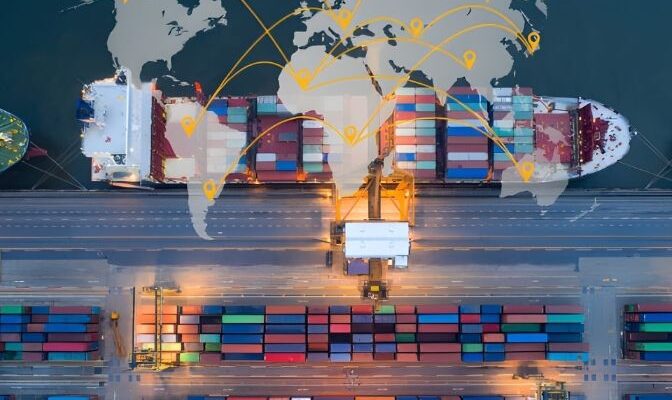
Global trade routes are being rewritten in real-time. Driven by international politics, 43% of companies are now shifting more of their footprint to the U.S. and Mexico. This shift toward reshoring and nearshoring is useful for long-term resilience, but the transition period is messy.
How to Overcome It: Flexibility is your only defense. As you move to dual sourcing strategies, you need a platform that can handle multi-modal tracking across different regions and carriers. Whether your goods are moving by rail in Mexico or by truck in the Midwest, you need a unified view. Modern tracking solutions help you maintain supply chain traceability through these transitions, ensuring that “moving closer to home” does not mean losing control of your strategic sourcing.
5. The Labor Gap and the Digitization Crisis
The labor shortage is no longer a temporary hurdle: it is a structural shift. Shockingly, 90% of supply chain leaders believe they currently lack the talent and skills needed to achieve their digitization goals. You cannot just “hire your way out” of inefficiency anymore because the specialized talent simply is not there.
How to Overcome It: This is the year of the augmented connected workforce. You do not need to replace your people: you need to give them better tools so they can do more with less. By using supply chain automation to handle the “where is my stuff” check-ins, you free up your existing team to handle high-level risk management. When your system automates reporting and geofencing alerts, your staff stops chasing data and starts using it to drive business strategy.
6. The Regulatory Surge: ESG and Sustainability Compliance
Global regulators have shifted from voluntary reporting to mandatory disclosures regarding environmental impact. Companies now face the massive technical challenge of tracking carbon footprints across thousands of sub-tier suppliers. Failure to provide accurate ESG data can result in heavy fines and restricted market access.
How to Overcome It: You must treat sustainability data with the same rigor as financial data. Utilizing IoT and blockchain-enabled tracking allows for the immutable logging of transit emissions and ethical sourcing verification. By integrating these metrics into your primary dashboard, you transform a compliance burden into a mark of industry authority and brand trust.
Building a Resilient Future: Proven Strategies to Overcome Challenges
Achieving operational stability in an era of constant change requires a shift from reactive logistics to proactive strategy. Businesses that successfully maintain high fulfillment rates do not rely on a single solution: they build a multi-layered defense. This approach ensures that when one link in the chain fails, the rest of the system remains functional.
- Diversify Sourcing and Transit: Move away from single-source dependencies. Implementing a dual-sourcing model across different geographic regions prevents a single regional conflict or weather event from halting production.
- Invest in Technical Interoperability: Ensure your tracking, ERP, and warehouse management systems speak the same language. Data silos are the primary cause of the bullwhip effect: unified data prevents overcorrection.
- Prioritize Zero-Trust Security: Treat your supply chain as a digital asset. Demand end-to-end encryption from every hardware provider and software vendor to prevent a single point of failure from compromising your entire network.
- Adopt Augmented Workflows: Instead of searching for non-existent labor, provide your current team with automated alerts. This allows a smaller staff to manage larger fleets by only intervening when the system flags a deviation from the plan.
- Operationalize ESG Data: Use sustainability tracking not just for compliance, but as a method of route optimization. Efficient routes reduce both fuel costs and carbon footprints, creating a direct link between sustainability and profitability.
The future of supply chain management is not about predicting the next crisis: it is about being prepared for anything. By breaking down data silos, embracing AI, and demanding real-time visibility, you can turn these challenges into a competitive advantage. From theft recovery to route optimization, the right technology is built to scale with your business strategy and ensure field adoption across your entire network.
Frequently Asked Questions (FAQs)
What factors drive modern supply chain instability?
Geopolitical shifts, labor shortages, and extreme weather patterns are the primary drivers of disruption. Additionally, the rapid rise of cyberattacks on logistics providers creates significant operational risks for global trade.
How does real-time tracking improve profit margins?
Real-time tracking allows businesses to eliminate transit “black holes” and recover lost or stolen assets with high success rates. By identifying delays early, companies can adjust downstream operations to avoid late fees and inventory stockouts.
What are the financial risks of a logistics cyberattack?
A data breach can cost a company millions in direct recovery fees and operational downtime. Beyond the immediate financial loss, these incidents can damage long-term partner trust and expose sensitive proprietary trade data.
How does shifting production closer to the U.S. impact resilience?
Nearshoring reduces transit times and minimizes exposure to volatile global shipping lanes. While the transition requires initial capital, it provides more control over quality and faster response times to domestic demand shifts.
Can automated data analysis solve inventory imbalances?
Yes. Automated tools process massive datasets to identify stock bottlenecks and predict future requirements. This prevents the “bullwhip effect” by ensuring that procurement matches actual market consumption rather than outdated forecasts.