GPS Trackers for Theft Prevention of Shipments, Assets, and Equipment


From job sites to warehouses to in-transit freight, theft is no longer an occasional headache—it’s an operational risk that can wipe out margin, timelines, and customer trust in minutes. The good news is that modern GPS trackers aren’t just “dots on a map”; paired with cellular connectivity, geofences, and tamper/motion alerts, they help teams spot suspicious movement early and respond while recovery is still realistic. In this guide, we’ll break down what actually matters in a commercial-grade tracker, how GPS tracking reduces theft risk in real operations, and which options make the most sense in 2026. Whether you’re protecting a single high-value shipment or managing a fleet of mobile assets and equipment, the right setup turns visibility into prevention. With that context, it’s worth looking at how today’s theft patterns are reshaping the supply chain.
Cargo theft has become one of the fastest ways for a supply chain to lose margin, time, and customer trust—often in a single incident. What’s changed is not just how often it happens, but how targeted it’s become, with organized groups going after the highest-value loads and easiest handoff points. That reality is pushing shippers, logistics teams, and field operators to think beyond cameras and insurance and invest in prevention and rapid recovery. In this guide, we’ll break down how GPS tracking actually reduces theft risk in the real world, what features matter most, and which tracker options are best suited for commercial use. And to understand why this is now a board-level problem, start with what the theft data is telling us.
Cargo theft is no longer just a volume problem; it is now a value problem. CargoNet recorded 772 cargo theft incidents across the United States and Canada in Q3 2025, but the real alarm is financial. The total value of stolen goods reached $111.88 million, and the average stolen shipment doubled to $336,787, driven by organized crime targeting high-value items like enterprise hardware, crypto mining equipment, and copper.
This shift means businesses are not just losing more shipments; they are losing their most expensive ones. Traditional tools like paperwork, cameras, and insurance only react after the damage is done. By the time a loss is discovered, the shipment is already gone.
GPS tracking changes this dynamic. Instead of discovering theft after the fact, companies can detect unauthorized movement, track assets in real time, and recover stolen shipments before they disappear into resale networks. That is why GPS trackers have become a core layer of modern theft prevention for shipments, equipment, and mobile assets.
How GPS trackers prevent theft in real operations
GPS tracking is often misunderstood as a simple location tool. In reality, it is a complete theft detection and response system. When a tracker is attached to a shipment, container, tool, or piece of equipment, it creates a live digital footprint that follows that asset everywhere it goes. This footprint allows businesses to see movement, location, and behavior that would otherwise be invisible.
The first way GPS prevents theft is through real-time visibility. A shipment that is supposed to be sitting in a warehouse should not suddenly appear on a highway at two in the morning. A piece of construction equipment that should be on a job site should not move after working hours. When GPS tracking is in place, these movements trigger immediate alerts instead of being discovered days later.
The second way GPS prevents theft is through geofencing. A geofence is a virtual boundary placed around a location such as a warehouse, yard, job site, or delivery route. If an asset leaves that boundary without authorization, the system sends an alert instantly. This allows security teams, operations managers, or even law enforcement to respond while the theft is still in progress.
The third way GPS prevents theft is through tamper detection. High-quality commercial trackers include sensors that detect vibration, movement, or attempts to remove the device. This is critical because professional thieves know to look for tracking devices. A tracker that can report tampering gives companies a warning that something is wrong before the asset disappears.
The final and most important role of GPS is recovery. If something is stolen, GPS does not just tell you that it is missing; it tells you where it is. This allows companies to provide law enforcement with precise location data, route history, and timestamps. In many cases, this is the difference between a stolen asset being written off and being recovered within hours.
Why theft has become a supply chain crisis
Theft is not random anymore; it is organized, data-driven, and targeted. Criminal networks monitor shipping schedules, distribution centers, and high-value routes. They know which products resell easily and which equipment is hardest to trace. They exploit gaps between carriers, warehouses, and end customers.
Global supply chains have become more complex, with more handoffs, more subcontractors, and more last-mile delivery partners. Each handoff creates an opportunity for loss. In construction and rental industries, equipment often sits unattended in open areas, making it easy to steal and difficult to track.
Insurance does not solve this problem. While insurance may reimburse part of a loss, it does not cover downtime, missed deadlines, customer dissatisfaction, or the cost of replacing equipment. It also does nothing to stop repeat theft. GPS tracking changes the economics of theft. When criminals know assets are traceable, the risk increases. When companies can locate stolen goods in real time, losses drop dramatically. This is why GPS has become a core layer of modern security for mobile assets.
Best GPS Trackers for Theft Prevention in 2026
Not all GPS trackers are built for commercial theft prevention. Many devices on the market are designed for pets, personal vehicles, or casual consumer use. Businesses that ship goods, operate job sites, or manage valuable equipment need tracking systems that can survive harsh environments, run for weeks or months without charging, and provide reliable data across long distances. The following GPS trackers are among the most widely used for theft prevention in professional operations.
GPX Intelligence
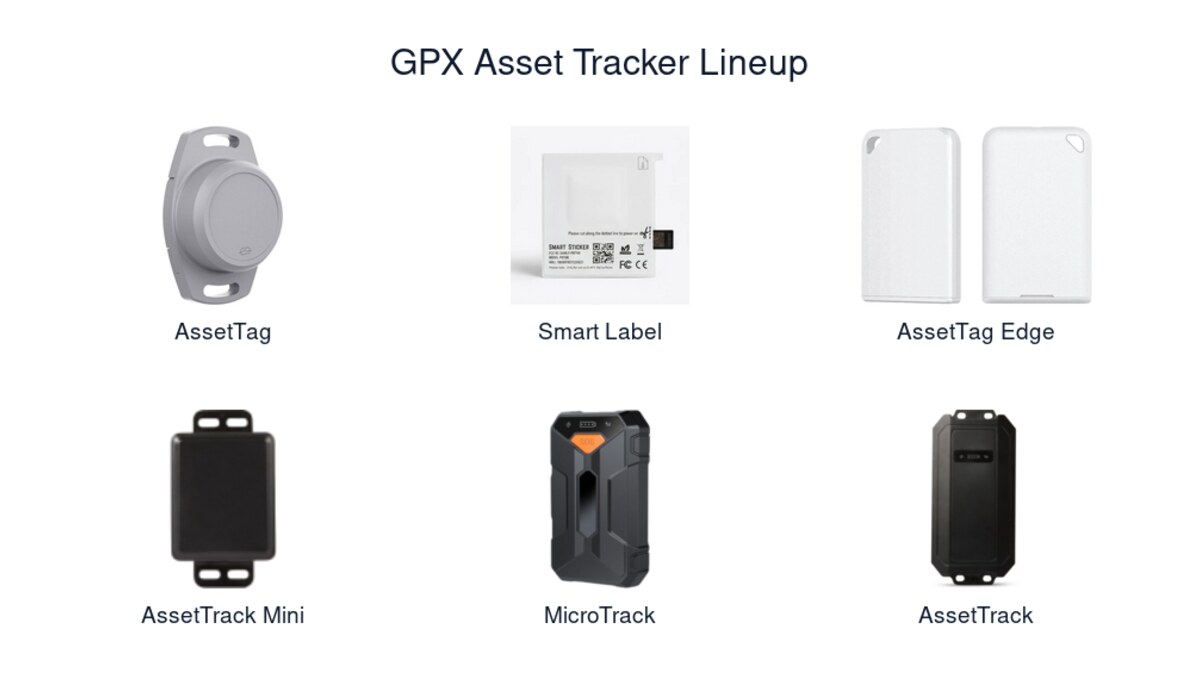
GPX is built specifically for protecting shipments, equipment, and high-value mobile assets in logistics, construction, healthcare, and rental operations. Unlike consumer tracking devices, GPX is designed to function as part of a full loss prevention system. It combines GPS and cellular connectivity to provide real-time tracking across cities, countries, and remote regions, making it suitable for both domestic and international use.
Its long battery life allows it to operate through multi-week shipments and extended field deployments without requiring frequent recharging. The device is compact and discreet, allowing it to be hidden inside crates, pallets, containers, and equipment housings without being easily detected or removed.
What truly differentiates GPX is its cloud-based software platform. Users can view every asset on an interactive map, define geofences around warehouses and job sites, receive alerts for unauthorized movement, and access complete movement histories for audits, investigations, and insurance claims. This transforms GPS tracking from a passive map into an active theft prevention and recovery system.
Features
- GPX offers real-time GPS and cellular tracking.
- Long-life internal batteries designed for extended deployments.
- Customizable geofencing and alerting.
- Tamper and motion detection.
- A cloud-based asset management dashboard.
- Historical route tracking.
- Support for shipment, equipment, and inventory-level use cases.
Pros
- GPX is optimized for shipments, equipment, and non-powered assets rather than just vehicles.
- It provides enterprise-grade visibility without requiring complex installation.
- Its software platform makes it easy for teams to monitor, investigate, and recover stolen assets quickly.
Cons
- GPX is not intended for casual consumer use.
- It is designed for professional operations, which means it may be more advanced than what an individual user or hobbyist needs.
LandAirSea 54
LandAirSea 54 is a compact GPS tracker commonly used for tracking vehicles, trailers, and other large mobile assets. It is magnetically mounted, which makes it easy to deploy on metal surfaces such as truck frames or trailer undercarriages. The device provides location updates through cellular networks and is often chosen for its small size and simple setup. While it works well for vehicle tracking, it is not specifically designed for tracking individual shipments, pallets, or enclosed equipment. The LandAirSea platform allows users to view tracked assets on a map and receive basic alerts. However, its software is more focused on single-unit tracking rather than large-scale asset management across supply chains.
Features
- LandAirSea 54 includes GPS and cellular tracking.
- Magnetic mounting.
- Basic location reporting.
- Web and mobile access to tracking data.
- Simple alerting for movement and location changes.
Pros
- The device is small, easy to install, and works well for tracking vehicles and trailers.
- It is a good option for users who need a simple tracking solution with minimal setup.
Cons
- It is not optimized for long-term asset tracking inside shipments or equipment.
- Battery life and software tools are more limited for enterprise theft prevention use cases.
SpyTec GL300
SpyTec GL300 is a portable GPS tracker commonly used for vehicle tracking and personal monitoring. It is popular among individuals and small businesses that want to keep an eye on cars, drivers, or other moving assets. The device uses cellular connectivity to provide location updates and is typically powered by a rechargeable battery that requires regular charging. While the GL300 is effective for monitoring vehicles, it is not designed for hiding inside shipments or equipment. Its form factor and battery life make it less suitable for extended logistics or industrial deployments.
Features
- SpyTec GL300 offers GPS and cellular tracking.
- Real-time location updates.
- Mobile and web access.
- Rechargeable battery-powered operation.
Pros
- It is easy to use, relatively affordable, and works well for tracking vehicles and people.
- The mobile app is simple and accessible.
Cons
- Battery life is limited for long-haul or long-term tracking.
- It is not designed for concealed asset tracking or enterprise-level theft prevention.
Samsara Asset Tracking
Samsara provides enterprise-level asset tracking as part of a larger fleet and operations management platform. It is widely used by large logistics and transportation companies that need deep integrations with vehicle telematics, driver management, and compliance systems. Samsara’s asset tracking capabilities are powerful but are designed to fit within a complex software ecosystem. For companies that only need theft prevention for shipments or equipment, Samsara can be more complicated and expensive than necessary. It is best suited for large fleets with dedicated IT and operations teams.
Features
- Samsara offers GPS asset tracking.
- Cellular connectivity.
- Integration with fleet and vehicle data.
- Geofencing.
- Reporting tools.
- Enterprise-level dashboards.
Pros
- The platform is very powerful and integrates well with fleet management systems.
- It is suitable for large organizations with complex operational needs.
Cons
- It is costly and complex to deploy.
- Many companies only need theft prevention and asset tracking rather than a full fleet management suite.
Logistimatics
Logistimatics provides portable GPS trackers used for vehicles, trailers, and some mobile assets. The company offers a range of tracking devices and software tools that allow users to see asset locations and receive alerts. Logistimatics is often used by small to mid-sized businesses that want basic tracking without enterprise-level complexity. While it works well for certain vehicle and asset tracking scenarios, it is not specifically designed for logistics workflows such as pallet-level tracking, shipment monitoring, or hidden device deployment.
Features
- Logistimatics offers GPS and cellular tracking.
- Portable battery-powered devices.
- Web-based tracking dashboards.
- Basic alerting for movement and location.
Pros
- It provides flexible tracking options and is easier to deploy than large enterprise platforms.
- It is suitable for businesses that want simple asset visibility.
Cons
- It lacks the logistics-focused workflows, concealment options, and recovery-oriented software that systems like GPX provide for theft prevention.
What makes a GPS tracker effective for theft prevention
A GPS tracker is only as good as its ability to operate reliably in the real world. Several factors determine whether a tracker will actually prevent theft or simply record it after the fact.
Battery life is critical. A tracker that dies after a few days is useless for long-haul shipments or equipment that sits in the field. Commercial-grade trackers like GPX are designed to operate for weeks or months on a single charge.
Signal reliability matters just as much. A tracker must be able to transmit data across cities, highways, warehouses, and rural areas. Cellular-based GPS systems provide much wider coverage than short-range Bluetooth trackers.
Alerts and geofencing are what turn tracking into prevention. A good system does not require someone to constantly watch a map. It sends automatic notifications when something moves, leaves a zone, or is tampered with.
Mounting and concealment are also important. The best trackers can be hidden inside assets so they cannot be easily removed. GPX is designed to be discreet and flexible in how it is installed.
Finally, the software platform must be easy to use. Teams need to quickly see where assets are, what has moved, and what needs attention. A complex interface defeats the purpose of real-time tracking.
Different theft risks for shipments, equipment, and vehicles
Shipments are vulnerable to cargo theft, rerouting, and warehouse losses. Thieves often target high-value freight during transit or while it is waiting at distribution centers. GPS tracking allows companies to see if a shipment deviates from its route or stops in suspicious locations.
Construction and industrial equipment face job site theft. Tools, generators, compressors, and heavy machinery are often stolen after hours or during weekends. A GPS tracker makes it possible to detect movement and locate stolen equipment quickly.
Rental assets are at risk of being kept, resold, or moved without authorization. GPS tracking provides proof of location and usage, making it easier to enforce contracts and recover assets. Each of these scenarios benefits from the same core capability, which is knowing where an asset is at all times.
Recovering Stolen Assets with GPS
When an asset is stolen, GPS data becomes a powerful recovery tool. Instead of filing a report with no information, companies can provide law enforcement with exact coordinates, travel history, and time stamps. This makes it much easier to locate and recover stolen goods.
In many cases, stolen equipment or shipments are recovered within hours because the tracker leads authorities directly to the location. This not only saves the asset but also reduces insurance claims, downtime, and customer impact. GPX provides detailed tracking logs that can also be used for legal and insurance purposes. This creates a clear chain of custody and proof of where an asset has been.
Frequently Asked Questions (FAQs)
What is the average battery life of a commercial GPS tracker?
Commercial trackers are engineered for longevity, often lasting weeks or months on a single charge. This extended duration is essential for monitoring long-haul shipments or assets stored in remote field locations where frequent recharging is operational.
Do GPS trackers work inside steel shipping containers?
Standard GPS signals can be blocked by thick metal, but advanced commercial units utilize cellular triangulation and Wi-Fi sniffing to maintain visibility. Placing the device near container vents or using door-mounted units ensures consistent signal transmission during transit.
Is a monthly subscription required for GPS tracking?
Yes, most enterprise-grade trackers require a subscription to cover cellular data costs and platform access. This fee supports the real-time connectivity, cloud storage, and alert systems necessary for active theft prevention and asset recovery.
How does GPS tracking differ from Bluetooth tags?
GPS provides global real-time location data via cellular networks, whereas Bluetooth tags rely on being within range of a mobile device. For high-value theft prevention, GPS is superior because it tracks assets independently across highways, cities, and borders.
Can law enforcement use GPS data to recover stolen goods?
Yes, precise GPS coordinates and time-stamped route history are actionable evidence for police. Providing live location data significantly increases the speed of recovery and provides the necessary probable cause for law enforcement to intervene at a specific location.